How much does solar panel maintenance cost in 2026?
Solar panel maintenance costs are near-zero most years — roughly $150–$350 for an occasional professional cleaning and $1,500–$3,000 for an inverter replacement around year 12–15.
By Taylor Crouse — Founder, Helios Energy GlobalPublished
Quick answer
- Routine annual maintenance costs $0–$150 for most Southern California homeowners who rinse panels themselves a few times a year.
- Professional panel cleaning runs $150–$350 per visit; most systems need it 1–2 times per year in dusty inland areas, less near the coast.
- The one significant cost is inverter replacement at years 12–15: string inverters run $1,500–$3,000 installed; microinverters typically carry a 25-year warranty and may never need replacing during your panel's life.
- Remote monitoring is included with virtually every modern installation — no subscription fee from Helios.
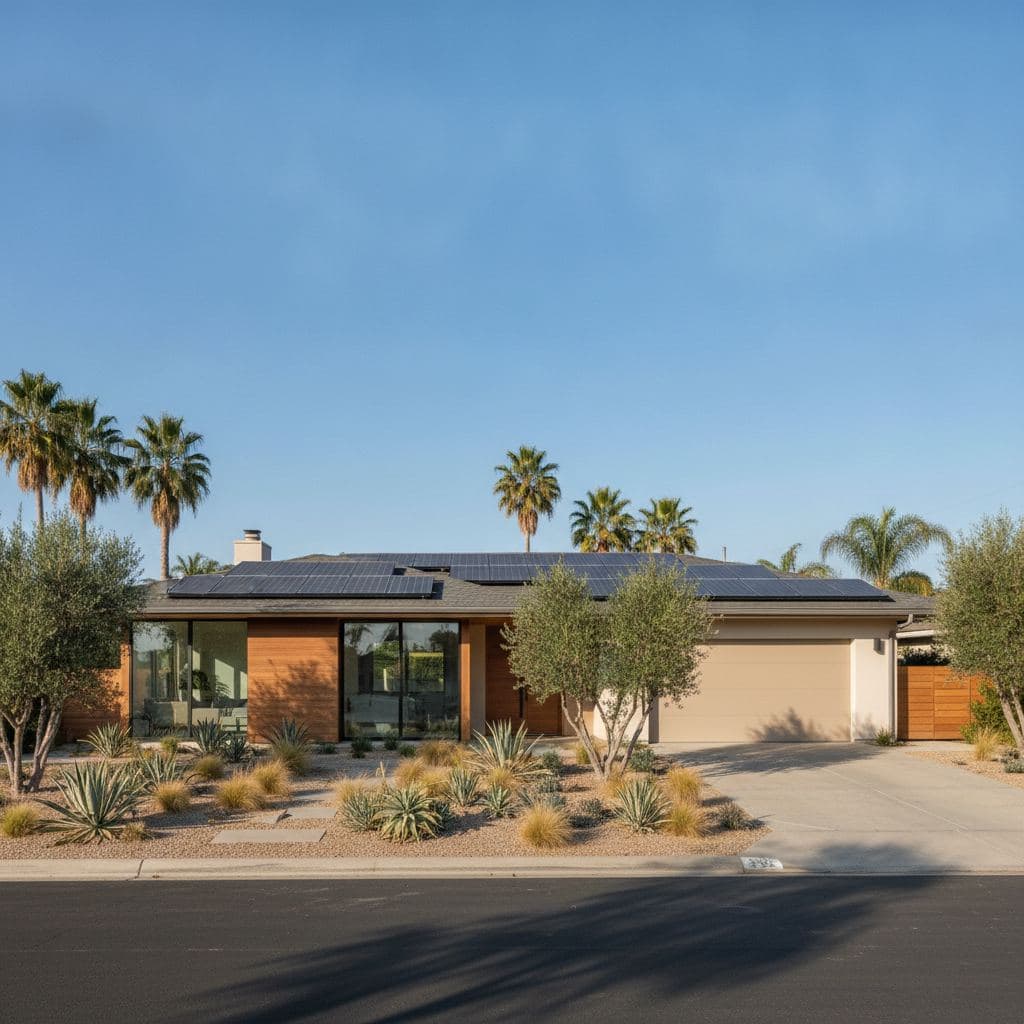
For most Southern California homeowners, solar maintenance costs less than $300 per year — and many years, nothing at all. The single largest expense over a system's 25-30 year life is one inverter replacement, which typically runs $1,500–$3,000 installed and lands somewhere around years 12–15.
Last verified: August 2026 by Helios Energy Global.
Solar panels have no moving parts, which is the core reason maintenance is so low. Rain handles most cleaning in wetter climates, but Southern California's dry season and Santa Ana wind events mean dust and particulate buildup are real — and worth addressing. The good news: a garden hose and 20 minutes handle it most of the time.
What you'll actually spend, year by year
Most years break into two buckets: nothing, or a cleaning visit. Inverter replacement is a one-time event, not an annual line item. Here's how the numbers stack up over a typical 25-year system life.
| Cost item | Frequency | Estimated cost | Notes |
|---|---|---|---|
| DIY panel rinse | 2–4× per year | $0 | Garden hose, early morning |
| Professional cleaning | 1–2× per year | $150–$350 per visit | Inland SoCal; coastal less often |
| Annual monitoring (remote) | Ongoing | $0 | Included with modern installs |
| String inverter replacement | Once, ~yr 12–15 | $1,500–$3,000 installed (est.) | Depends on brand and system size |
| Microinverter replacement | Rarely, if ever | $200–$400 per unit (est.) | 25-yr warranty standard |
| Panel inspection / tune-up | Every 3–5 years | $150–$350 (est.) | Optional but recommended |
| Roof penetration re-seal | Once, ~yr 15–20 | $100–$300 (est.) | Depends on roof type and age |
| Tree trimming (if needed) | Varies | $300–$1,500 (est.) | Not a solar cost per se, but shading matters |
All costs are estimates for Southern California as of 2026. Your actual costs depend on system size, location, and equipment.
Cleaning: the only routine task that costs money
Southern California's sunshine is the reason solar works so well here — and also the reason dust accumulates. Particulate matter from the 405, wildfire ash during fire season, and Santa Ana wind events deposit a film on panels that can reduce output by 5–25% if left unaddressed, according to NREL research on soiling losses in arid climates.
How often you actually need cleaning depends on where you live:
- Coastal (Santa Monica, Malibu, Manhattan Beach): Marine layer moisture helps rinse panels naturally. Professional cleaning once a year, or DIY twice a year, is usually sufficient.
- Inland valleys (San Fernando Valley, San Gabriel Valley, Pomona): Drier, dustier, more wildfire smoke exposure. Consider professional cleaning twice a year or DIY monthly rinsing during dry season.
- High desert (Palmdale, Lancaster, Victorville): Highest soiling rates. Professional cleaning 2–3 times per year can pay for itself in recovered output.
DIY cleaning is simple and free. Use a garden hose — no pressure washer — in the early morning before panels heat up. Avoid soap; it leaves residue. If your roof pitch makes safe access difficult, hire a professional rather than risk a fall.
Professional cleaning services in Los Angeles County typically charge $150–$350 depending on system size and roof accessibility. Some solar companies bundle annual cleaning into a maintenance plan; ask about this when you review your system design and savings estimate.
Inverter replacement: the one real expense
Panels themselves are remarkably durable — most manufacturers warranty them for 25 years at 80–85% of original output, and real-world performance data suggests they keep producing well beyond that. The weak link in the chain is the inverter.
String inverters (one central unit)
A string inverter converts DC power from your panels into AC power your home uses. Most string inverters carry a 10–12 year warranty, with premium brands offering 12–15 years. Expect to replace it once during a 25-30 year system life.
Installed replacement cost: approximately $1,500–$3,000 depending on system size and brand. Budget for this at the front end of your ownership math — it's not a surprise if you plan for it.
Microinverters (one per panel)
Microinverters — like those from Enphase, which we commonly install — sit behind each individual panel and convert power at the source. They carry 25-year warranties that match panel life, meaning replacement during your system's productive years is unlikely. If one unit fails, only that panel is affected; the rest of the system keeps running. When a microinverter does need replacing, the per-unit cost is roughly $200–$400 installed (estimate).
Power optimizers + string inverter hybrids
Some systems pair panel-level optimizers with a central string inverter. The optimizers typically carry 25-year warranties; the central inverter still follows the 10–15 year replacement schedule.
If you're deciding between inverter types, our solar equipment guide walks through the tradeoffs in detail.
Monitoring: included, not extra
Every system Helios installs includes remote monitoring — you get a smartphone app that shows real-time production, historical output, and alerts if something goes wrong. There's no monthly subscription fee.
Monitoring matters because it catches problems early. A single underperforming panel, a loose connection, or an inverter fault that goes unnoticed for months can quietly cost you hundreds of dollars in lost production. With monitoring, you know within hours.
What to watch for in your monitoring app:
- Daily production lower than expected — could indicate soiling, shading from new tree growth, or a failing component
- Individual panel underperformance (if you have microinverters or optimizers) — often a sign of a failing unit or a shading issue
- Inverter fault alerts — act on these promptly; most inverter warranties require timely service calls
Does maintenance differ by utility?
Mostly no — panel cleaning, inverter replacement, and monitoring are the same regardless of whether you're on SCE, LADWP, SDG&E, or a municipal utility. But your utility does affect how quickly you recover maintenance costs through bill savings.
SCE customers pay approximately 34–35¢/kWh on time-of-use rates, with peak pricing from 4–9 PM. Under NEM 3.0 (Net Billing Tariff), SCE customers export surplus power at lower avoided-cost rates, which makes battery storage more valuable. Higher rates mean every percentage point of output you recover through cleaning has more dollar value.
LADWP customers pay an effective rate in the 26–31¢/kWh range and still benefit from retail-rate net metering — LADWP is a municipal utility and is not subject to NEM 3.0. Lower rates than SCE, but the math still strongly favors keeping panels clean and performing well.
Other municipal utilities (Pasadena PWP, Burbank, Glendale, Anaheim APU, Riverside RPU) each run their own net metering programs. If you're on one of these, ask us to pull the current tariff details when we build your custom design.
What about battery maintenance?
If you've added a home battery — like a Tesla Powerwall 3 or Enphase IQ Battery — maintenance requirements are similarly minimal. Batteries are sealed units with no user-serviceable parts. Keep the unit clear of debris, ensure ventilation isn't blocked, and let the monitoring app flag any issues. Battery warranties typically run 10 years; replacement after that is a separate cost to plan for. See our battery storage page for full details.
Frequently asked questions about solar panel maintenance cost
How often do solar panels need to be cleaned in Los Angeles?
In most of Los Angeles, once or twice a year with a garden hose is sufficient for coastal and mid-city locations. Inland areas — the San Fernando Valley, Pomona, the high desert — benefit from more frequent rinsing, especially during dry season and after Santa Ana wind events. If you're near a wildfire or construction zone, clean promptly after ash or dust events.
Will my homeowner's insurance cover solar panel damage?
Most standard homeowner's policies cover solar panels as a permanent fixture of the home, but coverage limits and deductibles vary. Review your policy specifically for panels, inverters, and roof penetrations. Some insurers require a rider or policy update after installation — confirm with your insurer before and after your system goes live.
Do solar panels need servicing every year?
There's no mandatory annual service requirement, but a professional solar panel inspection every 3–5 years is a reasonable practice. This typically includes checking electrical connections, verifying mounting hardware torque, inspecting roof penetrations for sealant integrity, and reviewing monitoring data for anomalies. It's not expensive — roughly $150–$350 for a standard visual and electrical check — and can catch issues before they become costly.
What happens if a panel breaks or cracks?
Panel manufacturers warranty against defects for 25 years; physical damage from impact (hail, falling debris) is typically a homeowner's insurance claim, not a warranty claim. Cracked panels should be replaced promptly — a cracked cell can create hot spots that degrade surrounding cells. Individual panel replacement costs roughly $300–$600 installed depending on panel model and roof access.
Is there any maintenance required for the roof under the panels?
Panels actually protect the roof sections they cover from UV degradation and weather. However, the sections of roof around the panels still age normally. When your roof eventually needs replacement, panels will need to be temporarily removed and reinstalled — a cost of roughly $5,000–$7,000 for a 20-panel array ($250–$350 per panel). Factor this in if your roof is more than 10 years old before installation. Our roof types guide covers what to expect by material.
Does adding a battery change my maintenance costs?
Not meaningfully. Batteries are sealed, solid-state units that require no regular maintenance beyond keeping the area around them clear and monitoring the app for alerts. The main financial consideration is battery replacement after the warranty period (typically 10 years), which is a separate cost from panel maintenance.
Are there any California rebates that offset maintenance costs?
There are no current rebates specifically for maintenance. The SGIP (Self-Generation Incentive Program) residential battery incentive is waitlisted in 2026 — not currently accepting new residential applications. The federal 30% residential solar tax credit expired December 31, 2025, and does not apply to 2026 purchases. Some utilities offer bill credits for solar production, which indirectly offset the cost of keeping your system performing well. Check DSIRE for the current incentive landscape.
Next steps
- Solar panel repair — when maintenance turns up a fault: flat diagnostic, any brand, six Southern California counties
- Book a free consultation and custom design — we'll size your system, walk through realistic 25-year cost-and-savings projections including maintenance, and answer questions specific to your utility and location.
- Explore solar panel cost and financing options — see how maintenance fits into the full ownership picture.
- Learn how NEM 3.0 affects SCE customers — and why battery storage changes the math.
- Compare solar vs. battery under NEM 3.0 — especially relevant if you're on SCE.
- See our battery storage options — including Tesla Powerwall 3 and Enphase IQ Battery details.
- Check if we serve your area — Helios serves Santa Monica and surrounding Southern California communities.
More guides
Can you add a battery to an existing solar system in California? Yes — here's how it works in 2026
Yes — almost any existing solar system can take a battery, you keep your NEM 1.0/2.0 status, and installed costs run roughly $14,000-$18,500 per unit.
ReadBest Solar Companies in La Crescenta-Montrose, CA (2026): Honest Rankings for Foothill Homeowners
La Crescenta-Montrose sits in the Crescenta Valley foothills under LADWP service — not SCE, not NEM 3.0. This guide ranks the 10 best solar installers for 2026 and explains exactly what that means for your payback.
ReadBest Solar Companies in Palm Springs, CA (2026): Desert Engineering Meets Midcentury Design
Palm Springs gets roughly 350 sunny days and six peak sun hours — some of the highest production numbers in America — but SCE's NEM 3.0, 115°F heat, and historic-district review make installer selection genuinely consequential. Here's how to choose.
ReadGet a free consultation and custom design.
No pressure, no obligation — the owner reviews every design we send.