Solar by roof type
The best solar installer for your roof type.
Every roof can go solar — but how we mount, flash, and waterproof the array changes with the roof. Shingle, metal, tile, flat, slate, and wood shake each need a different method to stay leak-free and keep your roof warranty intact. Find your roof below to see exactly how Helios does it, and what it means for cost.
Reviewed by Taylor Crouse, Founder — mechanical engineer, 1,000+ SoCal installs across every roof type.
Find your roof.
Pick your roof type for an honest, technical look at how the install works, what to watch for, and where it lands on cost.
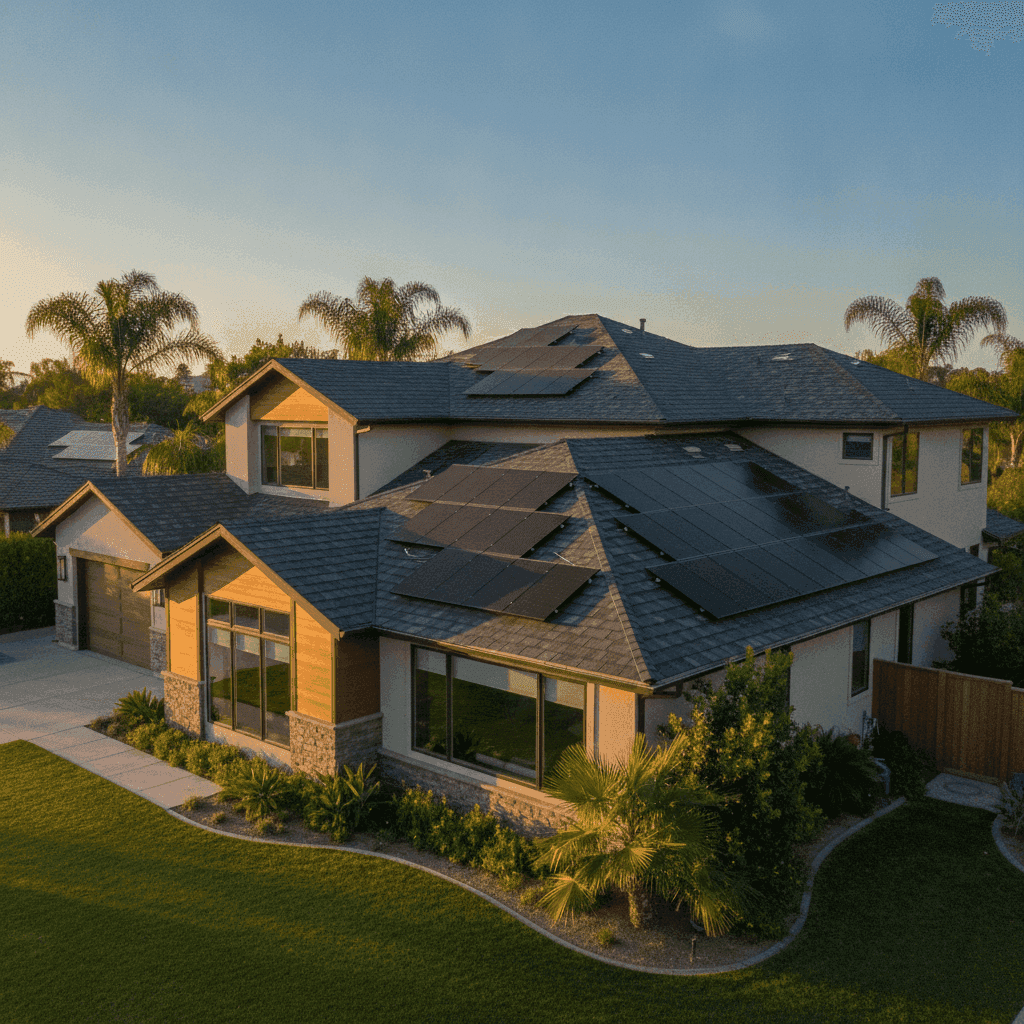
Asphalt / Composite Shingle
If you have an asphalt or composite shingle roof and want solar in Southern California, you have the easiest, most cost-effective roof to work with. Shingle is the most common residential roof in the country and the most solar-friendly — mounting hardware is standardized, crews install it every day, and a clean, leak-free job is straightforward when it is done right. This is the bread-and-butter roof, and the one most of our SoCal installs land on.
Solar on a asphalt roof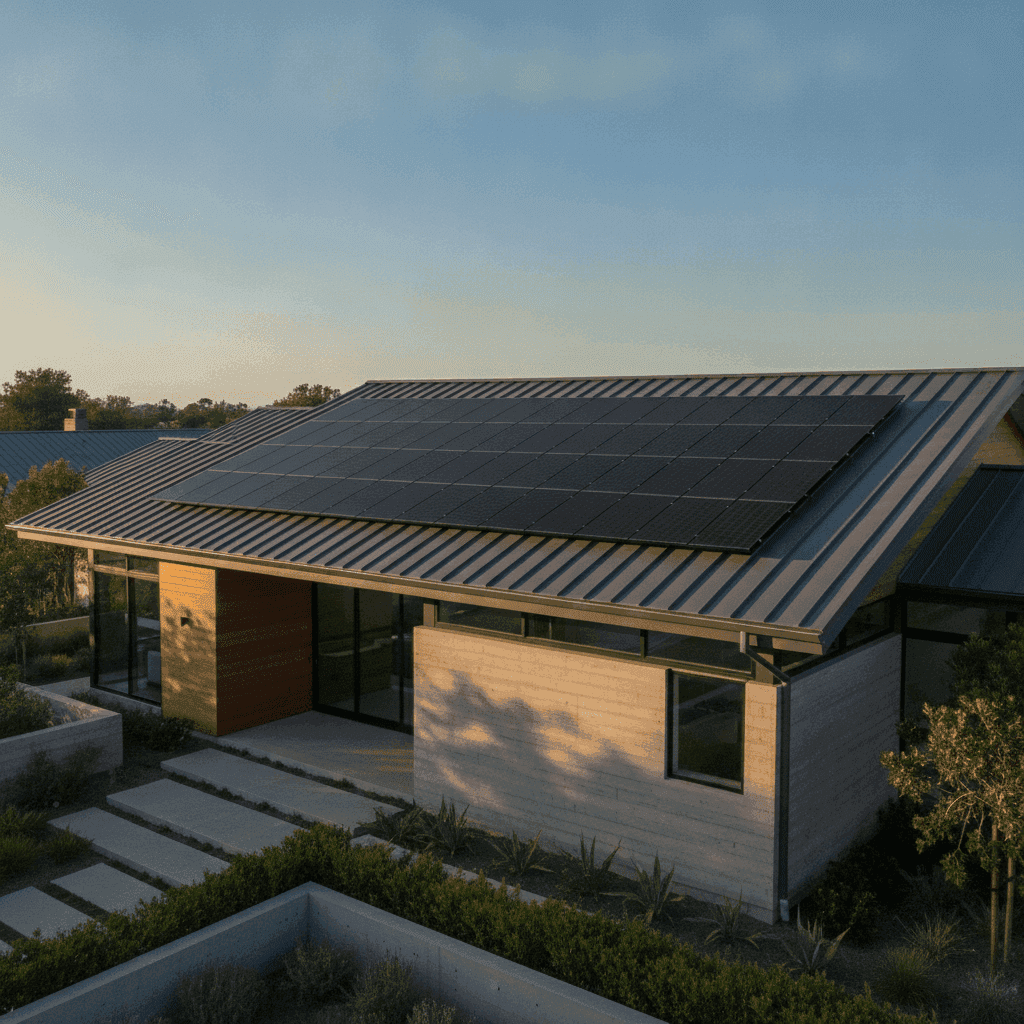
Metal / Standing-Seam
If you have a metal roof — especially a standing-seam roof — and want solar in Southern California, you may have the best possible roof for it. On standing-seam, panels can be mounted with no holes drilled into the roof at all, which keeps it watertight and makes the install fast. A metal roof also lasts as long as or longer than the panels, so the two systems age together instead of the roof failing first.
Solar on a metal roof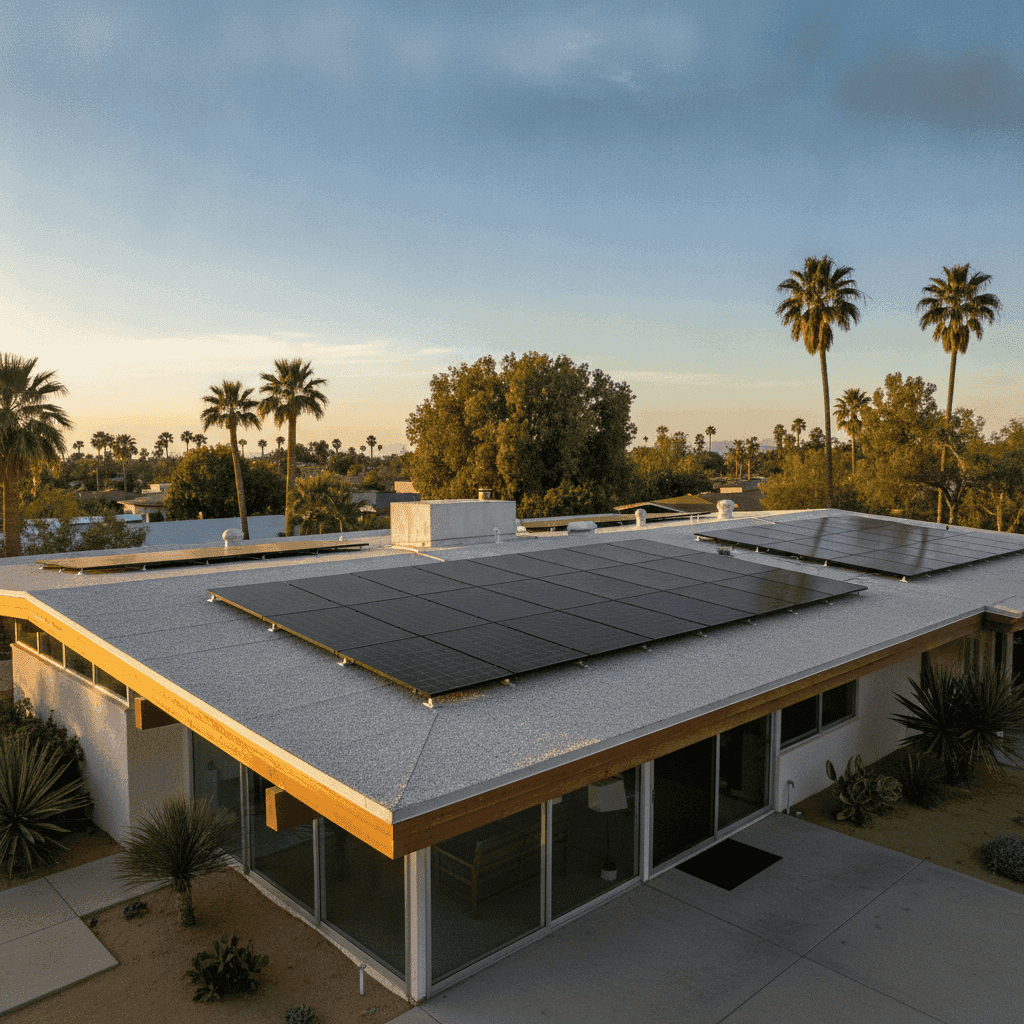
Flat / Low-Slope (Concrete, EPDM/Rubber, TPO, Foam)
If you have a flat or low-slope roof — concrete, EPDM rubber, TPO, or sprayed foam — and want solar in Southern California, panels are absolutely an option, but the approach is different from a pitched roof. Because the roof is nearly level, panels are tilted on racks to catch the sun and shed water, and the install has to protect the roof membrane and respect how the roof drains. Done thoughtfully, a flat roof can host a clean, high-producing array.
Solar on a flat roof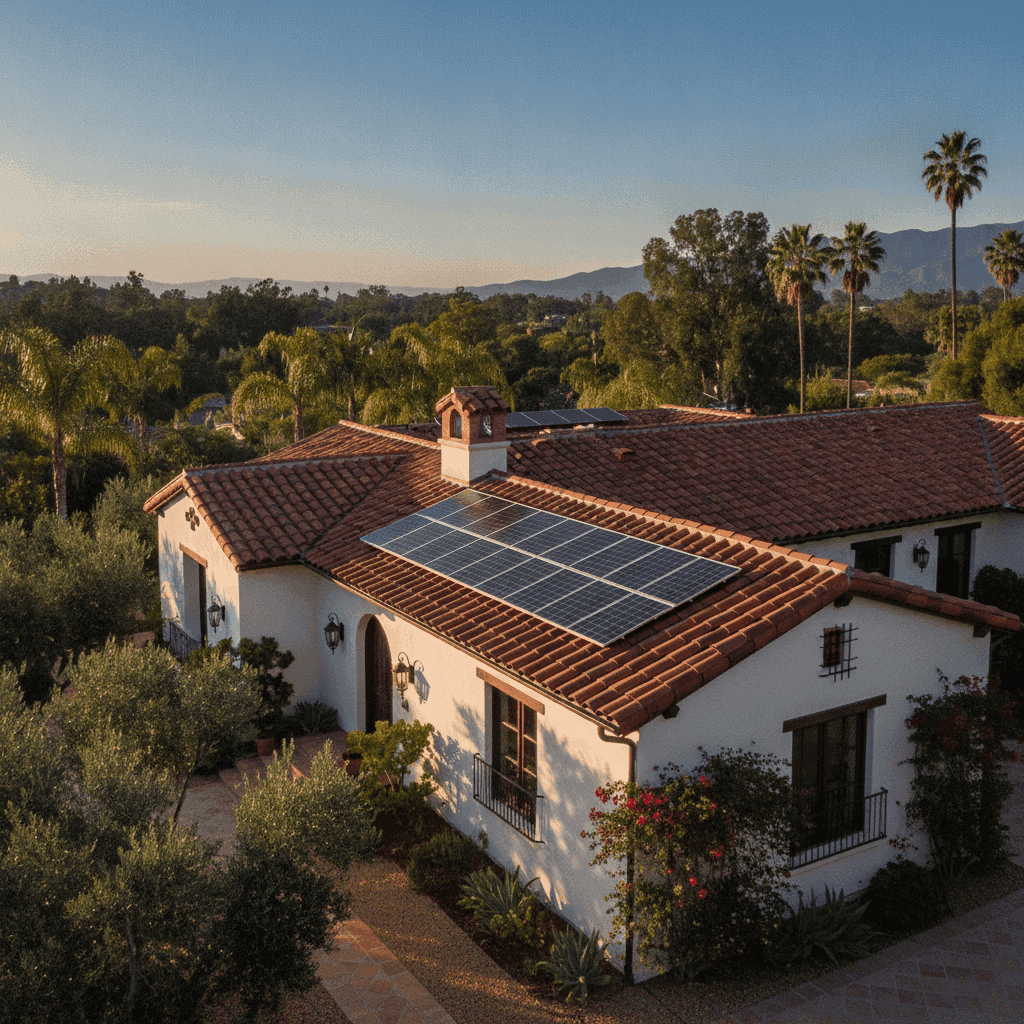
Clay & Spanish (Barrel) Tile
If you have a clay or Spanish barrel tile roof and want solar in Southern California, you have one of the most beautiful — and most demanding — roofs to work on. These tiles are stunning but brittle, and they are everywhere on SoCal Spanish-style homes. Solar absolutely works on clay tile; it just takes a skilled crew and the right tile-specific hardware to do it without cracking tiles or creating leaks.
Solar on a clay roof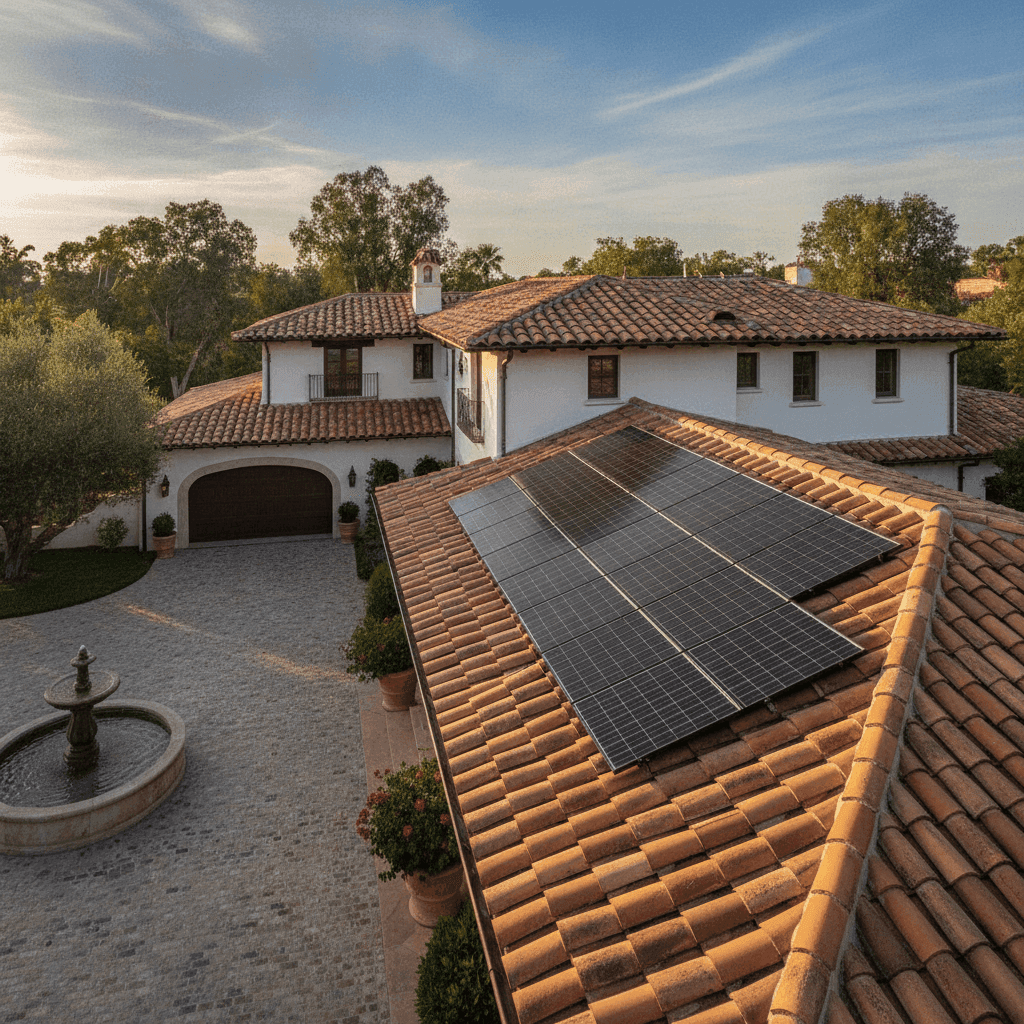
Terra-Cotta (Fired-Clay Mission & Barrel) Tile
If your home wears a terra-cotta roof — the warm, earthen fired-clay mission and barrel tile that defines Southern California's Spanish Colonial and Mediterranean architecture — you can absolutely go solar, but this is the most heritage-sensitive roof we work on. True terra-cotta is kiln-fired clay with the color baked all the way through, and on many SoCal homes the tile is decades old, hand-laid, and no longer manufactured in that exact run. Solar works beautifully on it; the whole game is mounting an array without cracking irreplaceable tile or disturbing the roof's character.
Solar on a terra-cotta roof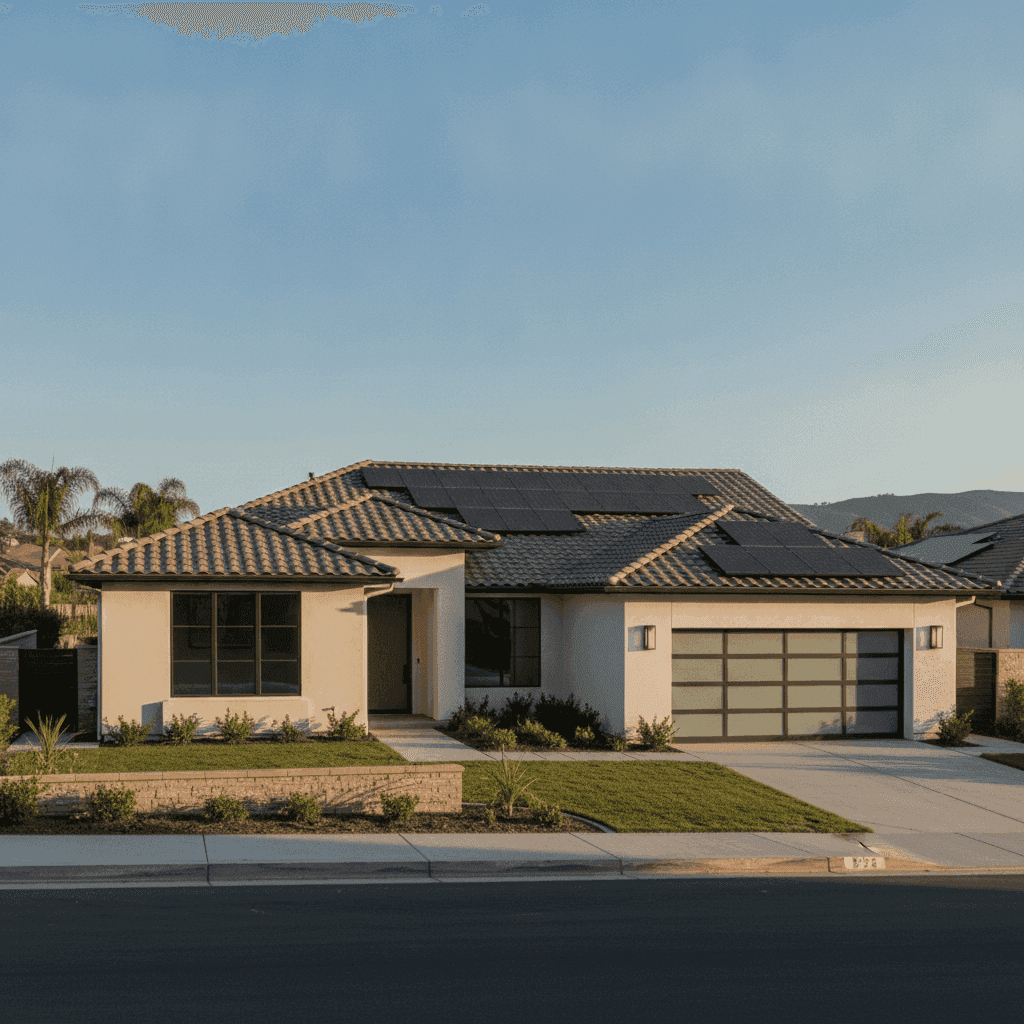
Concrete Tile (Flat & Profiled)
If you have a concrete tile roof and want solar in Southern California, you are in good company — concrete tile is one of the most common roofs on SoCal tract homes. The install approach is similar to clay tile, but concrete is sturdier and less brittle, so there is less breakage risk and the cost sits comfortably between shingle and clay. It is a very workable roof for a well-equipped crew.
Solar on a concrete roof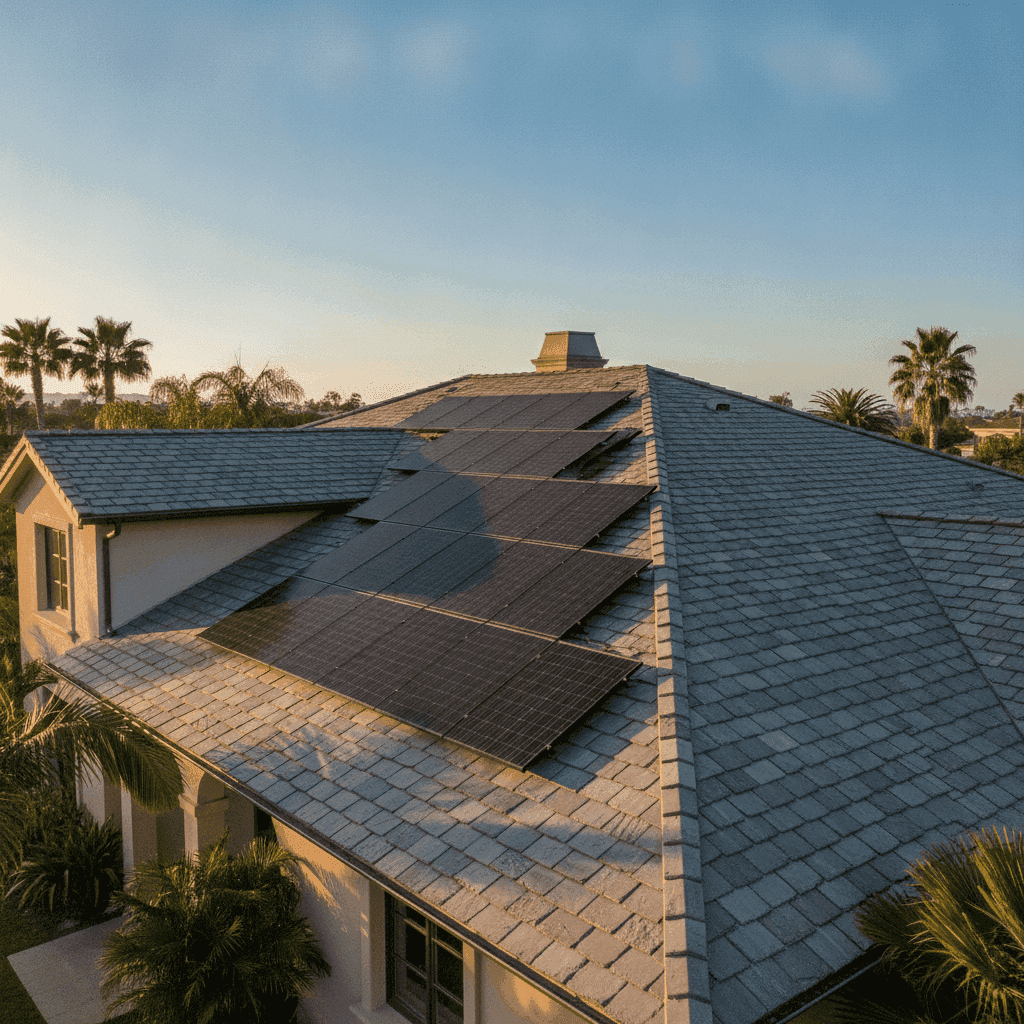
Slate
If you have a slate roof and want solar in Southern California, you have a premium, extremely durable roof — and the most demanding common residential roof to mount solar on. Slate is brittle and unforgiving; a careless step or a wrong fastener cracks a tile that is expensive to replace. With specialized slate hooks and an experienced crew, though, solar goes on cleanly and the result is exceptionally long-lived, because slate easily outlasts the panels.
Solar on a slate roof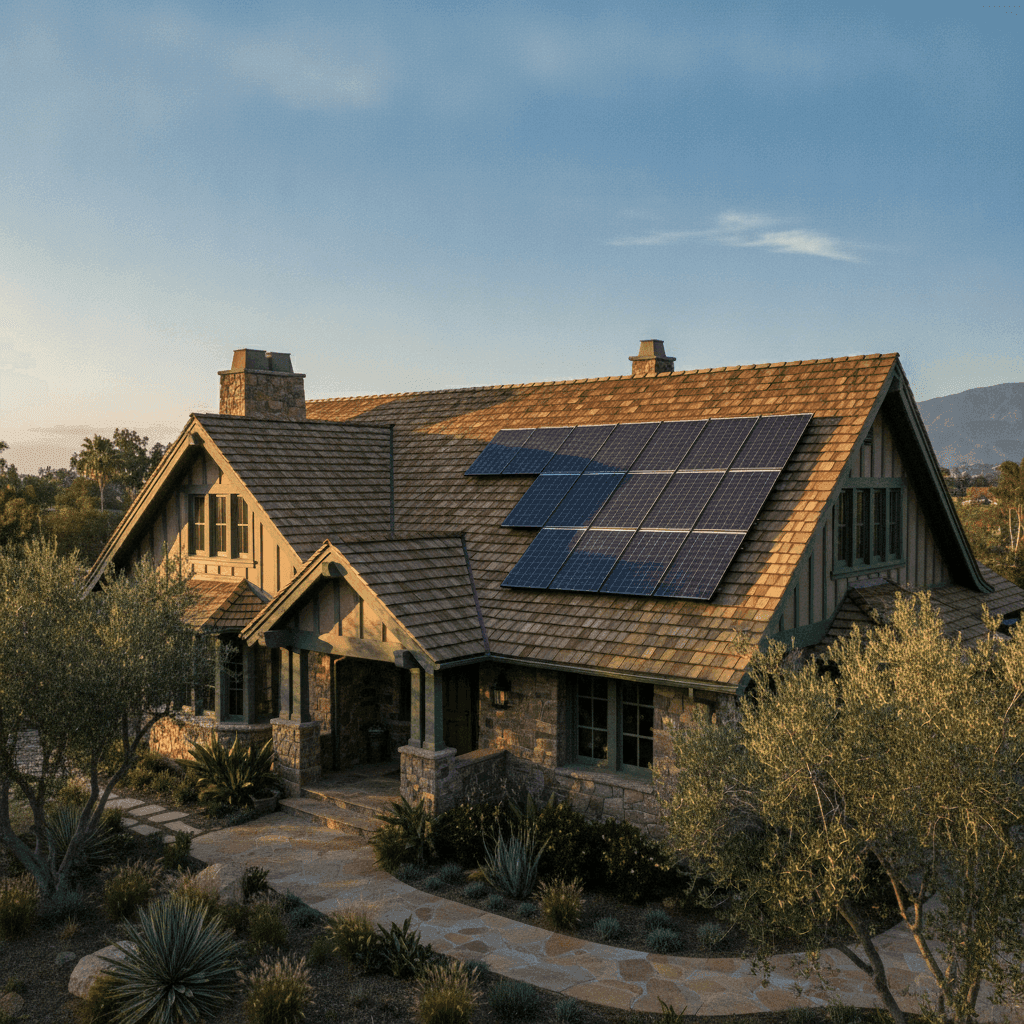
Wood Shake / Shingle
If you have a wood shake or wood shingle roof and want solar in Southern California, it is possible — but it is the roof that calls for the most caution. Wood is brittle and splits, and, just as importantly, it carries fire-code considerations that other roofs do not. Some jurisdictions restrict or prohibit rooftop solar on wood shake, especially in high fire areas. The honest answer is that it depends on your roof and your local code, and sometimes the right recommendation is to re-roof first.
Solar on a wood roofReady to look at your own roof?
Once you know how solar works on your roof, these are the next steps to real numbers for your home.
Residential solar
How we design and install home solar across Southern California.
Run your savings
Model solar-only vs. solar+battery payback for your home and utility.
Get a free design
The owner reviews every custom design before it reaches you.
Serving homeowners across Southern California, including Los Angeles and Anaheim. See all service areas
Not sure how your roof will work?
Tell us your roof and we will tell you exactly how we would install on it — no pitch, no obligation. Get a free, custom design from a team that has installed on every roof type.