Solar Panel Inspection in California: Cost, Checklist, and Pre-Sale Reports (2026)
A solar panel inspection in Southern California typically costs $150–$350 and covers production output, inverter health, roof penetrations, and wiring. A pre-sale report adds lease/loan status and NEM tariff verification — the six items that most affect buyer confidence and appraised value.
By Taylor Crouse — Founder, Helios Energy GlobalPublished
Quick answer
- A solar panel inspection in Southern California typically costs $150–$350 for a standard visual + electrical check; thermal imaging or drone add-ons push that to $300–$600.
- The inspection covers six areas: production output, inverter health, roof penetrations, wiring/conduit, ownership/financing status, and NEM tariff verification.
- Order one before selling or buying a home, when production drops, after roof work, or every 3–5 years as a checkup.
- NEM 2.0 grandfathering transfers to the buyer for the remainder of the 20-year term (per CPUC D.14-03-041) — confirming this in writing before listing is one of the highest-value steps a seller can take.
- There is no federal tax credit for solar purchased in 2026; the 30% residential credit expired December 31, 2025.
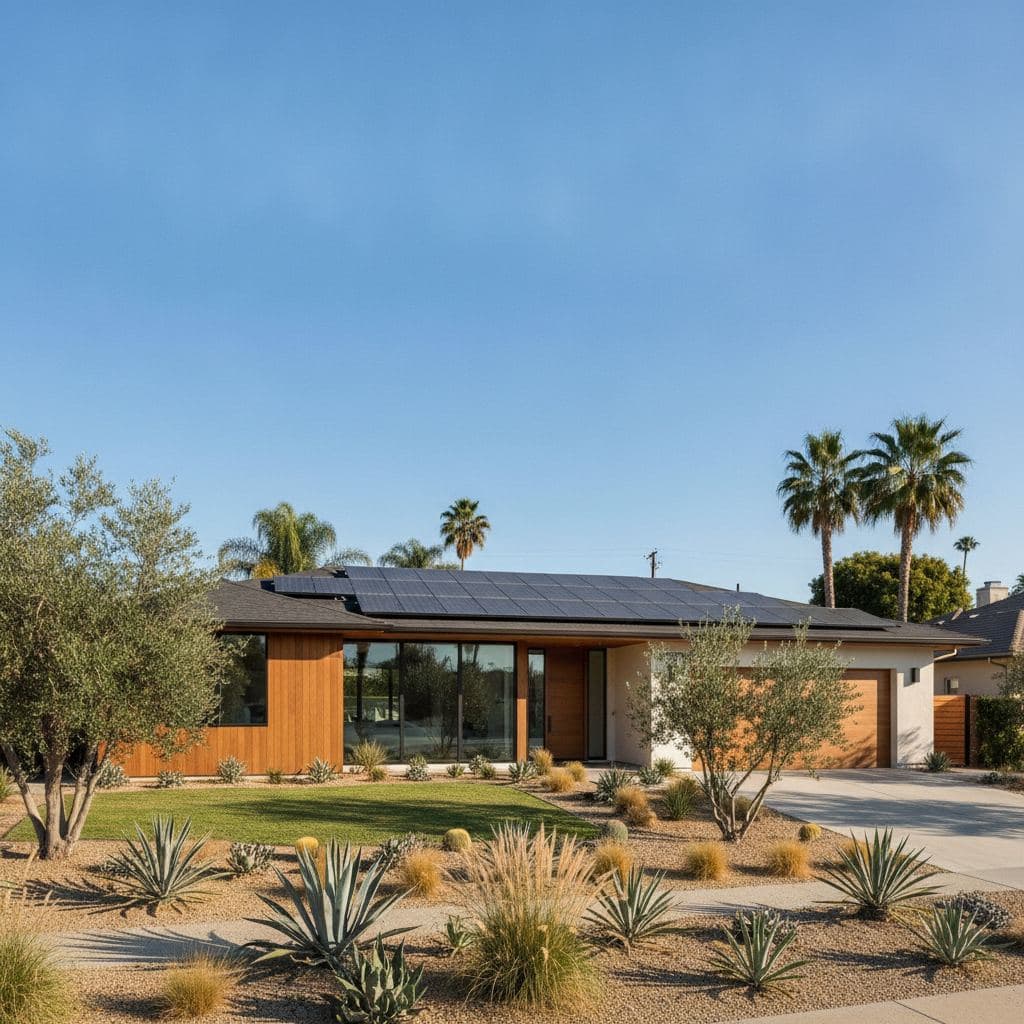
A solar panel inspection in Southern California runs approximately $150–$350 for a standard inspection and can reach $300–$600 when thermal imaging is added. Most are ordered ahead of a home sale: done before listing — not during escrow — an inspection gives sellers documented answers to the six questions every buyer's agent will ask, reduces the chance of a last-minute renegotiation, and gives appraisers the production data they need to support a higher value.
Last verified: September 2026 by Helios Energy Global.
When to get a solar panel inspection
A licensed solar or electrical contractor can inspect a system at any point, but five situations account for most requests:
- Before listing a home for sale. The most common reason, and the focus of most of this guide: the report feeds the disclosure packet and the appraisal.
- Before buying a home with solar. A buyer's inspection confirms production, ownership, and the net metering tariff before you inherit the system. See our guide to buying a house with solar in California.
- When production drops or the monitoring app shows a fault. An inspection finds whether the cause is an inverter, a shaded string, or a wiring fault before you pay for a repair. See our solar repair and maintenance page.
- After roof work or storm damage. Panels that were removed and reinstalled, or a roof that took wind damage, should be checked for cracked glass, loose mounts, and disturbed flashing.
- As a periodic checkup. There is no mandatory annual service, but a professional inspection every 3–5 years is a reasonable practice. Our solar panel maintenance cost guide covers what that visit includes.
What a solar panel inspection covers
A standard inspection covers the first four items below. A pre-sale or pre-purchase report adds the last two, which are paperwork checks rather than hardware checks.
1. Production output check
The inspector pulls 12 months of monitoring data — from the inverter's app or the utility's interconnection portal — and compares actual kilowatt-hours generated against the original system design estimate. A system producing within 5–10% of its design target is healthy. A larger gap signals panel degradation, shading from new tree growth, or inverter faults. This number goes directly into the listing's energy disclosure and is what appraisers use when they apply the income approach to solar value.
2. Inverter health and warranty status
Inverters are the most failure-prone component of a residential solar system. The inspector checks error codes, firmware version, and remaining warranty. String inverters (common on systems installed before 2018) typically carry 10-year warranties; microinverters (Enphase) and power optimizers (SolarEdge) often carry 25-year warranties. Knowing the warranty status before listing prevents a buyer from using a failing inverter as a price-chip during escrow.
3. Roof penetrations and flashing
Every panel mount creates a roof penetration. The inspector checks each penetration for cracked or missing flashing, rust staining, or sealant failure — the same items a home inspector will flag. Catching a failed flashing before listing is a $200–$500 repair; catching it during escrow often costs more in buyer credits than the repair itself.
4. Wiring, conduit, and DC disconnect
The inspector verifies that conduit runs are intact and properly secured, that the DC disconnect is accessible and labeled, and that the main panel was correctly updated to accommodate the solar interconnection. If a main-panel upgrade was done at installation, the inspector confirms it was permitted and finaled. Unpermitted electrical work is a mandatory TDS disclosure item.
5. Ownership and financing status
This is the item that most often derails escrow. The inspector — or your listing agent — should pull the property title and confirm whether the system is:
- Owned outright (simplest transfer; buyer inherits the system)
- Financed with a solar loan (UCC-1 fixture filing may appear on title; must be paid off or assumed)
- Under a lease or PPA (requires utility and company approval to transfer; buyer must qualify)
- Subject to a PACE lien (appears as a property tax assessment; if a PACE lien such as through CalFirst or a similar program is attached to the property, it must be disclosed and addressed before or at closing since it appears as a property tax assessment )
Confirming this before listing lets the seller prepare the transfer paperwork in parallel with the marketing period, so it's ready when escrow opens.
6. NEM tariff verification
Pursuant to CPUC Decision D.14-03-041, customer-generators are allowed to remain on the NEM 2.0 tariff for 20 years from the date they interconnected, or they are permitted to switch to the current tariff. The inspector (or your agent) should pull the utility account and confirm whether the system is on NEM 2.0, NEM 3.0 (the Net Billing Tariff), or — for LADWP customers — LADWP's own retail-rate net metering program.
On December 15, 2022, the CPUC adopted D.22-12-056, establishing the Net Billing Tariff (NBT) as a successor to NEM 2.0. The NBT applies to customers who submit an interconnection application on or after April 15, 2023. Systems that interconnected before that date — the majority of solar homes currently on the market in Southern California — are on NEM 2.0, and that status is worth documenting clearly.
If you sell your house, the NEM 2.0 grandfathering transfers to the new owner for the remainder of the 20-year period. This makes NEM 2.0 solar systems a genuine selling point in California real estate.
What a solar panel inspection costs in Southern California
On average, a solar panel inspection costs $200, with most homeowners paying between $150 and $350. Prices may vary based on system size, inspection type, and regional labor rates.
Inspections in California, New York, and Hawaii tend to run 20–40% higher than the national average.
The rates for an inspection in California range from $140 to $300 — though this can cost more if you need to remove panels already in place. Add thermal imaging or a drone sweep and the total can reach $300–$600. Roofs that are steep, multi-story, or otherwise hard to access may require special equipment or extra labor, increasing the cost by $50 to $100.
| Inspection type | Typical Southern California cost | What it adds |
|---|---|---|
| Standard visual + electrical check | $150–$300 | Panel condition, wiring, inverter codes, roof penetrations |
| Thermal imaging (handheld) | $250–$450 | Hotspots, micro-cracks, cell failures invisible to the eye |
| Drone-assisted thermal sweep | $350–$600 | Full-array coverage without roof access; useful for complex roofs |
| NEM/utility account review only | $75–$150 (some installers include free) | Tariff status, PTO date, 12-month production history |
| Full pre-listing package (all of above) | $400–$700 (estimate) | Everything needed for TDS and appraiser packet |
All figures are estimates for Southern California (SCE and LADWP service areas). Costs vary by system size, roof pitch, and provider.
Why realtors order a pre-sale inspection before the listing goes live
Most solar disputes in California real estate transactions come down to one of three gaps: the seller didn't know the system's actual production, the buyer's agent didn't understand the NEM tariff, or the lease or PACE lien wasn't surfaced until escrow was already open. A pre-listing inspection closes all three gaps in a single site visit.
California sellers are required to complete a Transfer Disclosure Statement (TDS) and, in most cases, a Natural Hazard Disclosure report. The TDS must include information about the solar system — whether owned, financed, leased, or subject to a PPA. Getting the inspection done before you fill out the TDS means you're disclosing facts, not guesses.
California law requires residential sellers to deliver a Transfer Disclosure Statement (TDS), Natural Hazard Disclosure (NHD), and Seller Property Questionnaire (SPQ) on virtually every 1–4 unit home sale, regardless of whether you're selling "as-is." Solar panels visible on the roof but absent from the systems checklist is one of the most common TDS defects agents encounter, and it's entirely avoidable.
How NEM 2.0 status affects your listing price
This is the most undervalued number in California solar real estate right now. NEM 2.0 grandfathering runs for 20 years from the system's Permission to Operate (PTO) date. The CPUC set the 20-year term in Decision D.22-12-056.
A system turned on in 2019 is grandfathered through roughly 2039; a system from 2023 is grandfathered through roughly 2043.
Why does the remaining term matter to a buyer? Because
export credits under NEM 3.0 dropped from retail rate ($0.30/kWh) to avoided cost rates ($0.04–$0.08/kWh).
SCE's average residential rate is approximately 35¢/kWh as of January 2026. A buyer who inherits a NEM 2.0 system gets retail-rate credits on their exports; a buyer who installs new solar today gets a fraction of that. That's a real, quantifiable annual savings difference — and it belongs in your listing's disclosure package, not buried in fine print.
SCE vs. LADWP — the tariff difference matters:
- SCE customers: NEM 2.0 vs. NEM 3.0 (Net Billing Tariff) is the key distinction. NEM 3.0 applies to customers of California's three largest investor-owned utilities: PG&E, SDG&E, and Southern California Edison. Confirm the tariff on the SCE account before listing.
- LADWP customers: LADWP is a municipal utility and is not subject to CPUC's NEM 3.0. LADWP still offers retail-rate net metering under its own program. Confirm the LADWP interconnection agreement and net metering status separately — the CPUC documents do not govern LADWP accounts.
- Other SoCal munis (Pasadena PWP, Burbank, Glendale, Anaheim APU, Riverside RPU): Each runs its own net metering program independent of CPUC NEM rules. Verify the specific tariff with the relevant utility.
See our NEM 3.0 explained guide and the solar vs. battery under NEM 3.0 guide for the full picture on how tariff status affects buyer economics.
How solar affects the appraisal
California appraisers are required to consider solar when valuing a home, but the method depends on ownership structure and whether the system is owned or leased.
Owned systems: Appraisers typically use the income approach (present value of future utility savings) or the cost approach (depreciated replacement cost), or both. A clean inspection report with 12 months of verified production data gives the appraiser the inputs they need. Without it, many appraisers default to $0 contributory value rather than guess.
Leased or PPA systems: Most appraisers assign minimal or no value to a leased system because the buyer is inheriting a payment obligation, not an asset. The lease transfer process (which requires lender and lessor approval) must be disclosed and documented before the appraisal.
NEM status in the appraisal: Appraisers increasingly note NEM tariff status in the addendum. A system with 10+ years of NEM 2.0 remaining is a stronger income-producing asset than an identical system on NEM 3.0. Having the PTO date and tariff confirmation in writing — from the utility, not just the seller's memory — supports a higher appraised value.
For more on how solar affects home value in Southern California, see our guides on buying a house with solar in California and selling a house with solar panels in California.
The disclosure checklist: what goes in the TDS packet
California law provides a standard format, as referred to in Civil Code §1102, which must be used by sellers in making disclosures to prospective homebuyers. The "Transfer Disclosure Statement" can be obtained from your California real estate agent.
For a home with solar, the TDS packet should include:
- System ownership documentation — purchase contract, installer invoice, or lease/PPA agreement
- Financing disclosure — UCC-1 fixture filing search result (if a solar loan was used), or payoff statement
- PACE lien search — confirmation from the county tax assessor that no PACE assessment is attached
- NEM/interconnection confirmation — utility account screenshot or letter showing the tariff (NEM 2.0, NBT, or municipal equivalent) and PTO date
- 12-month production report — pulled from the inverter monitoring platform (Enphase Enlighten, SolarEdge, SMA Sunny Portal, etc.)
- Inspection report — dated within 6 months of listing, from a licensed California contractor (CSLB C-46 Solar license or C-10 Electrical)
- Permit and inspection records — city/county building permit, electrical inspection sign-off, and utility interconnection approval
- Warranty documents — panel, inverter, and workmanship warranties with remaining term noted
- HOA approval (if applicable) — California Civil Code restricts HOAs from prohibiting solar installations, but any HOA approval or variance documentation should be included in your disclosure package
Timing: when to order the inspection
Best practice: 3–6 weeks before listing. This gives you time to:
- Receive the inspection report
- Make any minor repairs (failed flashing, loose conduit, inverter firmware update)
- Pull the NEM/interconnection confirmation from the utility
- Assemble the full disclosure packet before the TDS is signed
- Share the packet with the listing agent for MLS remarks
Ordering during escrow — the most common mistake — compresses all of this into a 17-day contingency window and gives buyers a reason to renegotiate if anything is found.
What happens to the NEM agreement when the home sells
Generally yes — the tariff follows the interconnected system, so the buyer inherits the remaining years. If 6 of 20 are used, roughly 14 remain. Verify the tariff and PTO date with the utility during escrow.
The transfer process for SCE, PG&E, and SDG&E typically works as follows:
- Seller notifies the utility of the pending sale (usually handled by the escrow officer or the solar installer)
- Buyer submits a new interconnection application or a transfer form — the utility links the existing NEM agreement to the new account
- The NEM tariff and remaining grandfathering years carry over automatically; the buyer does not need to reapply under NEM 3.0
AB 942 is not law as of August 2026. The bill would have ended NEM 2.0 grandfathering early — including a provision that grandfathering would not transfer on home sale. That transfer-ending provision was removed in 2025, and the bill has not passed. Existing 20-year grandfathering terms are intact.
LADWP transfers follow a separate process through LADWP's Customer Service — confirm the steps with LADWP directly, as the utility's net metering program operates independently of CPUC rules.
For lease or PPA systems, the transfer requires written approval from the solar company. Most major lessors (SunPower, Sunrun, Tesla Energy) have standard transfer packets; allow 2–3 weeks for processing.
Does a solar panel inspection affect the system's warranties?
No — a visual and electrical inspection by a licensed contractor does not void panel or inverter warranties. Warranty voidance typically requires unauthorized physical modifications to the system. If the inspector finds a fault covered under the existing workmanship or equipment warranty, having the report in hand actually makes it easier to file a warranty claim before the sale closes, rather than leaving it as the buyer's problem. See our solar repair and maintenance page for what's typically covered.
Key numbers at a glance
| Item | Southern California figure | Notes |
|---|---|---|
| Standard solar panel inspection cost | $150–$350 | Visual + electrical; CA labor premium applies |
| With thermal imaging | $300–$600 (estimate) | Drone adds $75–$200 to base fee |
| NEM 2.0 grandfathering period | 20 years from PTO date | Per CPUC D.14-03-041 |
| NEM 3.0 export credit (SCE) | ~$0.04–$0.08/kWh | vs. ~$0.25–$0.30/kWh under NEM 2.0 |
| SCE average residential rate (2026) | ~34–35¢/kWh | TOU peak 4–9 PM |
| LADWP effective rate (2026) | ~26–31¢/kWh | Municipal utility; retail-rate net metering |
| Solar install cost (SoCal, 2026) | ~$2.50–$3.50/W before incentives | See /solar-panel-cost for full breakdown |
| Federal residential solar tax credit | Expired Dec 31, 2025 | No credit available for 2026 purchases |
Frequently asked questions about solar panel inspections in California
How much does a solar panel inspection cost?
A standard visual and electrical inspection in Southern California typically runs $150–$350. Adding handheld thermal imaging or a drone sweep brings the total to roughly $300–$600, and a full pre-listing package with the utility account review runs about $400–$700 (estimate). Steep, multi-story, or hard-to-reach roofs add to the price.
Do solar panels need to be inspected?
There is no mandatory annual inspection for a home solar system once it has passed its permit inspection and received Permission to Operate. A professional check every 3–5 years is a reasonable practice, and an inspection is worth ordering sooner if production drops, after roof work, or before a sale or purchase.
What does a solar panel inspection include?
Four hardware checks: 12 months of production data against the design estimate, inverter error codes and warranty status, every roof penetration and its flashing, and the wiring, conduit, and disconnects. A pre-sale or pre-purchase report adds two paperwork checks: who owns or finances the system, and which net metering tariff it is on.
Do I legally have to disclose solar panels when selling my California home?
California sellers are required to complete a Transfer Disclosure Statement (TDS) and, in most cases, a Natural Hazard Disclosure report. The TDS must include information about the solar system — whether owned, financed, leased, or subject to a PPA. Omitting known solar details — including a lease obligation or a PACE lien — is a material nondisclosure under California Civil Code §1102 and exposes the seller to post-close liability.
Does NEM 2.0 automatically transfer to the buyer, or does the buyer have to reapply?
The NEM 2.0 tariff follows the interconnected meter and the property, not the original account holder. Generally yes — the tariff follows the interconnected system, so the buyer inherits the remaining years. The buyer opens a new utility account and the existing NEM agreement is linked to it; they do not reapply under NEM 3.0. Confirm the transfer steps with the specific utility (SCE, SDG&E, or LADWP) during escrow.
What's the difference between a pre-sale solar inspection and a standard home inspection?
A standard home inspector will note that solar panels are present and may flag obvious roof or electrical issues, but they rarely pull inverter monitoring data, verify NEM tariff status, or check permit records for the interconnection. A dedicated solar inspection — done by a CSLB-licensed solar or electrical contractor — covers all six areas above and produces a report formatted for the TDS disclosure packet and the appraiser.
Will a solar lease hurt my sale price or make the home harder to sell?
It can complicate the transaction, but it doesn't automatically reduce the price. The key factors are the remaining lease term, the monthly payment, and whether the buyer can qualify for the transfer. Buyers who can't assume the lease may require the seller to buy out the contract — costs vary widely by company and remaining term. Getting the lease documents and a buyout quote before listing gives you options rather than surprises.
Can the buyer lose NEM 2.0 grandfathering after they purchase the home?
The main thing that can reset a system to NEM 3.0 is a large system expansion — beyond a one-time 1 kW or 10% allowance. Confirm with your utility before adding panels. Adding a battery to an existing NEM 2.0 system is generally allowed without a tariff change — provided the configuration and interconnection comply with your utility's current rules; confirm before installing.
How does a solar inspection affect the appraisal?
A clean inspection report with 12 months of verified production data gives the appraiser documented evidence to apply the income approach to solar value. Without it, many appraisers assign $0 contributory value rather than estimate. The NEM tariff status — NEM 2.0 vs. NEM 3.0 — is increasingly noted in appraisal addenda because it directly affects the annual savings the buyer can expect.
Does a pre-sale inspection cover the battery if there is one?
Yes, if specified. Ask the inspector to include the battery in the scope: state of health (capacity remaining), firmware version, warranty status, and whether the battery is properly permitted and interconnected. Under CPUC Decision D.22-12-056, existing NEM 1.0 and NEM 2.0 customers can add battery storage to their existing system without triggering a transition to NEM 3.0. Your grandfathered tariff is preserved. Documenting this for the buyer is a selling point.
Next steps
- Book a free consultation and custom design — we review your system's production data, NEM status, and disclosure readiness at no charge
- Solar panel repair — if the inspection turns up a fault, we can quote a repair before listing
- Read our guide to buying a house with solar in California — share with your buyer's agent
- Read our guide to selling a house with solar panels in California — the full seller playbook
- Understand NEM 3.0 and what it means for your home's solar value
- See full solar panel cost ranges for Southern California — useful context for buyers comparing owned vs. new-install economics
Sources
- CPUC Net Energy Metering and Net Billing page (D.14-03-041, D.22-12-056) — March 21, 2023
- CPUC Net Billing Tariff page (D.22-12-056) — December 15, 2022
- Angi Solar Panel Inspection Cost 2026 — July 9, 2026
- Today's Homeowner Solar Panel Cost California 2026 — May 22, 2025
- California TDS Seller Disclosure Requirements (Civil Code §1102) — August 2, 2026
More guides
Solar Inverter Replacement Cost in California (2026): String, Micro, and Hybrid
Replacing a residential solar inverter in Southern California costs roughly $1,000–$2,500 installed for a string inverter, $150–$350 per unit for a single microinverter, and $3,000–$6,000 installed for a hybrid inverter swap — before any utility reconnection or panel-upgrade costs.
ReadHow many watts does a microwave use? (2026 numbers)
Most household microwaves draw 900–1,700 watts while running, costing SCE customers roughly $4–$10/month depending on size and usage habits.
ReadLADWP Rates Explained: Tiers, Zones, TOU, and Why Your Bill Looks Like That (2026)
LADWP's standard residential rate (R-1A) is tiered by usage, zone, and season — in summer 2026 it runs from about 26.4¢/kWh in Tier 1 to about 41¢ in Tier 3. Here's how the tiers, the Power Access Charge, the adjustment factors, and the TOU and EV options actually fit together, and why solar still gets retail-rate net metering in LA.
ReadGet a free consultation and custom design.
No pressure, no obligation — the owner reviews every design we send.