Solar panel warranties explained: what's actually covered in 2026
Solar warranties come in four layers: a 25-year panel product warranty, a performance guarantee of ~84-92% output at year 25, an inverter warranty, and installer workmanship.
By Taylor Crouse — Founder, Helios Energy GlobalPublished
Quick answer
- Your solar system carries four separate warranties: panel product (typically 25 years), panel performance (~84-92% of rated output guaranteed at year 25), inverter (10-25 years), and installer workmanship (1-25 years — it varies wildly; Helios offers 10).
- Panels degrade about 0.25-0.5% per year; NREL puts the median at ~0.5%. The performance warranty is your floor.
- Battery warranties differ sharply: Tesla Powerwall 3 is 10 years to 70% capacity, Enphase IQ 5P is 15 years/6,000 cycles to 60%, FranklinWH aPower 2 is 15 years to 70% with a 60 MWh throughput cap.
- If your installer goes out of business, manufacturer warranties survive — the workmanship warranty dies with the company.
- Most warranties transfer to a home's new owner, but some (like Enphase's battery warranty) require a form and a fee within 30 days.
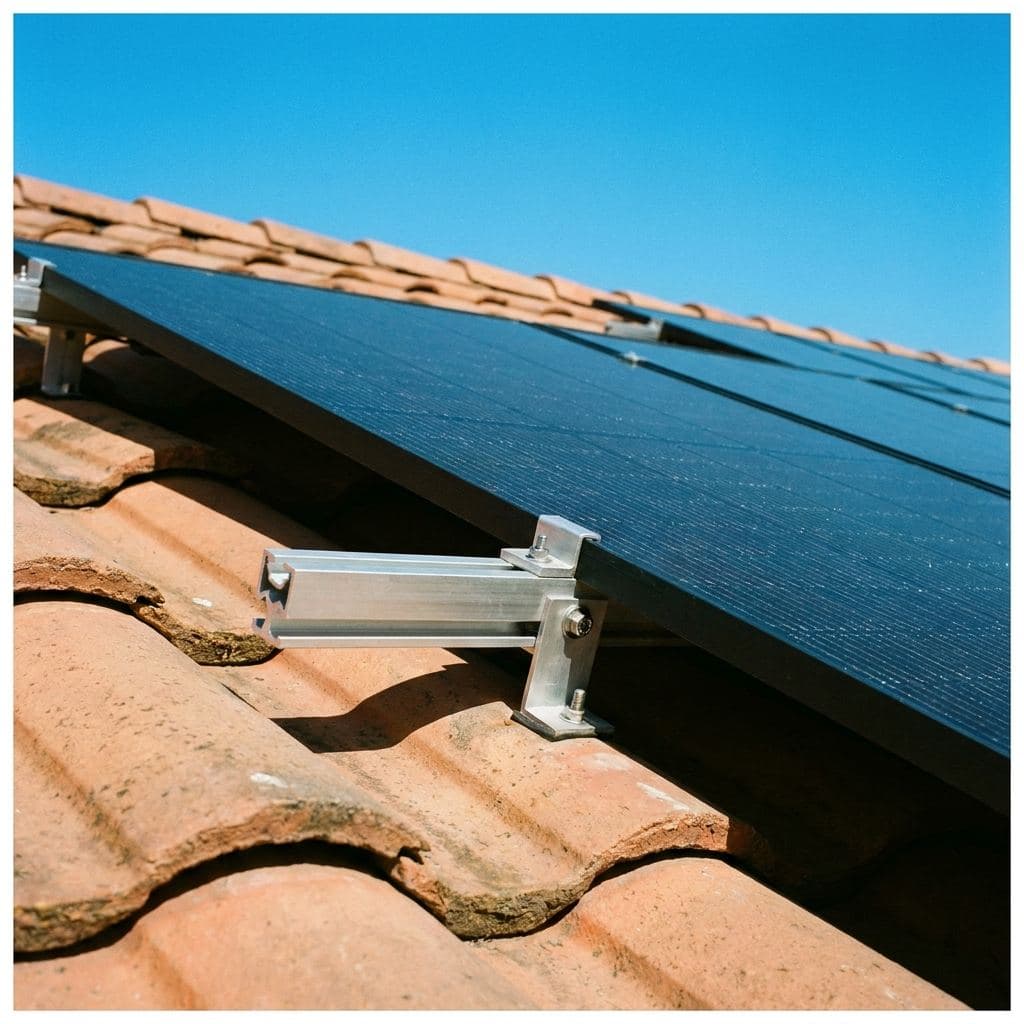
"25-year warranty" is the most repeated phrase in solar sales — and one of the least understood. That number usually refers to just one of four separate warranties on your system, each covering different failures, issued by different companies, with different claim processes. The panel maker doesn't cover your roof penetrations. Your installer doesn't cover a failed inverter board. And the warranty that fails most often in California isn't a document at all — it's the installer who wrote it going out of business.
This guide breaks down what each layer actually covers, what voids it, what happens to "orphaned" systems, and how to file a claim that gets paid. We've included verified 2026 warranty terms for the three batteries we install, because battery warranties are where the fine print matters most.
Last verified: August 2026 by Helios Energy Global.
The four warranty layers on every solar system
| Warranty | Typical term | Who backs it | What it covers |
|---|---|---|---|
| Panel product | 25 years (12-40 by brand) | Panel manufacturer | Physical defects: broken glass from defect, delamination, failed cells, junction-box failure |
| Panel performance | 25-30 years | Panel manufacturer | Guaranteed minimum output (~84-92% at year 25) |
| Inverter | 10-12 years (string) / 25 years (micro) | Inverter manufacturer | Electronics failure — the most likely component to die |
| Workmanship | 1-25 years (Helios: 10) | Your installer | Installation quality: roof leaks, wiring, conduit, mounting |
Every claim starts with the same question: which layer failed? Get that right and the rest is process.
Panel product warranty: the 25-year headline
The product warranty covers manufacturing defects — delamination, hot spots from bad soldering, cracked backsheets, frame corrosion. Almost every tier-1 panel sold in Southern California today carries 25 years; premium lines go to 40.
What it does not cover: shipping and reinstallation labor is often excluded or capped, and nothing in it covers how the panel was attached to your roof. A panel that fails from a genuine defect will be replaced — but if your installer is gone, someone has to diagnose it, file the claim, and swap it, which is why pairing a long product warranty with a real workmanship warranty matters.
Performance warranty: your guaranteed output floor
Panels lose a little output every year. NREL's research puts the median degradation at about 0.5% per year — slightly worse in hot climates and on rooftops, which describes most of Southern California. Premium panels degrade closer to 0.25%/year.
The performance warranty converts that into a guarantee: a maximum first-year dip (typically 1-2%), a maximum annual decline after that, and a floor at year 25 — roughly 84-87% of rated output for standard tier-1 panels and 90-92% for premium ones.
| Panel class | Typical degradation | Guaranteed at year 25 |
|---|---|---|
| Standard tier-1 | ~0.5%/yr | ~84-87% |
| Premium (N-type, HJT, IBC) | ~0.25-0.35%/yr | ~90-92% |
The honest catch: proving a performance claim is hard. You need production data showing sustained underperformance beyond the guaranteed curve, isolated to the panels rather than shading, soiling, or a failing inverter. In practice, performance claims are rare; product-defect claims are how bad panels actually get replaced. Continuous monitoring — which we set up on every install and check during service visits — is what makes either claim provable.
Inverter warranty: the component most likely to fail first
Inverters do the hardest work in the system and fail earliest. Coverage reflects the architecture:
- String inverters: typically 10-12 years standard, sometimes extendable to 20-25 for a fee. Expect one replacement over a 25-year system life.
- Microinverters: Enphase IQ8s carry a 25-year limited warranty in the U.S. — matched to panel life, and failures affect one panel instead of the whole array.
- Integrated battery inverters: covered under the battery warranty (10 years for Powerwall 3, 15 for FranklinWH aPower 2).
If you're comparing platforms for a battery or a repower, our Powerwall 3 vs. Enphase IQ 5P vs. FranklinWH comparison covers the hardware differences behind these terms.
Workmanship warranty: the one that varies wildly
The workmanship warranty covers everything the manufacturers don't: roof penetrations and flashing, wiring and connections, conduit runs, racking attachment, and the quality of the install itself. Roof leaks — the most feared solar failure — live entirely in this layer.
Terms across the industry run from 1 year to 25. A 25-year workmanship warranty from a company with thin margins is worth exactly as much as that company's odds of existing in year 24. Helios offers a 10-year workmanship guarantee on every installation, including battery retrofits onto systems we didn't originally install — a number we chose because we can actually stand behind it.
Questions worth asking any installer: How long have you been operating under your current license? Who answers the phone for a leak in year 7? Is the warranty in writing in the contract?
What voids a solar warranty
Manufacturer and workmanship warranties share a theme: unauthorized hands on the equipment. The common voids:
- Unauthorized modifications or repairs — opening a battery casing, swapping inverter boards, DIY rewiring. Every manufacturer excludes this.
- Roofers detaching and resetting panels without a solar contractor. This is the big one in California re-roofs: it can void workmanship coverage and give the panel manufacturer an out if anything was damaged in handling. Have a licensed solar contractor do the detach/reset.
- Pressure washing. High-pressure water can force moisture past seals and micro-crack cells — most panel warranties exclude the damage. Panels need water and a soft brush at most.
- Uncertified installation. FranklinWH, for example, requires installation by certified personnel for warranty validity — a reason to check certifications before buying.
- Skipping firmware updates or connectivity. Enphase can deny battery claims where outdated firmware caused the defect; Tesla and FranklinWH both reduce coverage toward a 4-year floor if the system stays offline or unregistered (FranklinWH: offline more than 90 consecutive days). Keep your system on Wi-Fi.
When your installer goes out of business: orphaned systems
California has a large and growing population of "orphaned" solar systems — the industry saw waves of installer bankruptcies through 2024-2025, and the expiration of the federal 25D credit at the end of 2025 thinned the field further. Here's what actually happens to your coverage:
- Manufacturer warranties survive. Panel, inverter, and battery warranties are contracts with the manufacturer, not the installer. Your equipment is still covered.
- The workmanship warranty dies. It was only ever as good as the company behind it. Roof leaks, wiring faults, and racking issues become your cost.
- The practical gap: manufacturers ship parts but generally don't dispatch labor. An orphaned homeowner with a failed inverter has a valid warranty and nobody to execute it.
That's the gap our repair and maintenance service fills: we diagnose orphaned systems, file the manufacturer claim on your behalf, and do the replacement labor. If you inherited a system with your house or your installer's number is disconnected, you are not out of options.
Selling your home: do warranties transfer?
Mostly yes, but not automatically:
- Panel product/performance warranties generally transfer with the property, sometimes requiring notice to the manufacturer.
- Tesla Powerwall: transferable — subsequent owners claim with proof of ownership.
- Enphase IQ Battery 5P: transferable only if the new owner submits a Change of Ownership form and pays the transfer fee within 30 days, with the equipment staying at the original address. Miss the window, lose the coverage.
- FranklinWH: coverage continues for the registered system at the installed location; keep registration current.
- Workmanship warranties: vary by contract — Helios's 10-year guarantee stays with the system.
If you're buying a home with solar, ask for the installation contract, the monitoring login, and confirmation the NEM interconnection transfers with the account — the NEM status is often worth more than the hardware.
Battery warranties compared: Tesla vs. Enphase vs. FranklinWH
Verified against each manufacturer's current warranty documents:
| Tesla Powerwall 3 | Enphase IQ Battery 5P | FranklinWH aPower 2 | |
|---|---|---|---|
| Term | 10 years | 15 years or 6,000 cycles (first reached) | 15 years |
| Capacity floor at term end | 70% | 60% | 70% |
| Throughput/cycle cap | Unlimited cycles for solar self-consumption + backup; 37.8 MWh for other uses | 6,000 cycles | 60 MWh aggregate throughput |
| Connectivity requirement | Offline/unregistered can cut coverage to 4-year minimum | Current firmware required | Offline >90 days or unregistered reduces to 4 years |
| Transfer | Yes, with proof of ownership | Form + fee within 30 days | Registered system at installed location |
Read the caps against real usage: a battery cycling ~10 kWh daily puts through ~3.65 MWh a year, so FranklinWH's 60 MWh cap supports well over the 15-year term at normal use, and Tesla's unlimited-cycle clause covers how virtually every Southern California homeowner actually uses a battery under NEM 3.0. Enphase's 60% floor is the lowest of the three, but it's also the longest cycle-count guarantee. Which chemistry and warranty fits depends on how hard you'll cycle it — that's part of any battery consultation we run.
How to actually file a warranty claim
- Document the failure. Pull monitoring data showing the underperformance or fault, with dates. Photograph physical damage.
- Identify the layer. Production drop on one panel → panel or microinverter. System-wide outage → inverter or gateway. Roof leak → workmanship.
- Go through an installer, not the manufacturer's consumer line, when possible. Manufacturers process contractor-filed claims faster, and diagnosis usually requires a licensed electrician anyway. If your installer is gone, a servicing contractor can file on your behalf.
- Keep your paperwork: installation contract, permit sign-off, PTO letter, serial numbers, and proof of home purchase if you're a subsequent owner.
- Expect parts, not labor. Most manufacturer warranties cover the component and sometimes capped labor; the servicing visit may be billable unless a workmanship warranty applies.
FAQ
Do solar panels really last 25 years?
Generally longer. NREL notes panels don't have a fixed end-of-life — at ~0.5%/year median degradation, a panel still produces roughly 87-90% of original output at year 25 and keeps going, just outside the guarantee. Inverters and batteries are the components you'll replace along the way.
Is a longer battery warranty automatically better?
No — read the floor and the cap together. A 15-year warranty to 60% (Enphase) and a 10-year warranty to 70% (Tesla) are different promises, not strictly better or worse. Match the throughput cap to how hard you'll cycle the battery for NEM 3.0 load-shifting.
Does adding a battery void my existing solar warranties?
Not if it's done right. An AC-coupled retrofit (Powerwall 3, Enphase IQ 5P, FranklinWH) doesn't modify your panels or inverter, so their manufacturer warranties are unaffected. Work by an uncertified installer, however, can void the battery's warranty — verify certification, especially for Powerwall installs.
My installer disappeared and my system is down. Is the warranty worthless?
The manufacturer warranties are intact — you've lost the workmanship coverage and the labor pipeline. A solar panel repair contractor can diagnose the failure, file the manufacturer claim, and handle replacement. Start with our repair and maintenance page.
Get a straight answer for your home
Helios Energy Global (CSLB C-10 license #982201) is a Tesla Certified Installer with 1,000+ Southern California installations since 2018 — and every one carries our 10-year workmanship guarantee on top of the manufacturer coverage. Whether you're comparing warranties before buying, adding a battery, or holding an orphaned system nobody will service, we'll tell you exactly where you stand. Schedule a consultation or get a savings design.
More guides
Glendale's Best Solar Companies in 2026 — and Why GWP Changes Every Calculation
Glendale Water & Power still runs true 1:1 net metering — the best export deal left in LA County. Here's how to pick the right solar installer to capture it.
ReadBest Solar Companies in Chino, CA (2026): An Honest, Numbers-First Guide for Inland Empire Homeowners
Chino homeowners get 5.9 peak sun hours a day and face SCE's time-of-use rates under NEM 3.0 — a combination that makes solar genuinely compelling. Here's how to find the right installer and avoid the common traps.
ReadBest Solar Companies in Riverside, CA (2026): An Honest Homeowner's Guide
A straight-talking, numbers-first ranking of the top solar installers serving Riverside, CA in 2026 — covering local utility rules, real price ranges, battery guidance, and exactly what to ask before you sign.
ReadGet a free consultation and custom design.
No pressure, no obligation — the owner reviews every design we send.