Powerwall pricing, 2026
Tesla Powerwall 3 cost, broken down

A single Powerwall 3 installed in California runs $14,500–$18,500 in 2026 — and every dollar of that has a name. Here's what is in the price, what moves the number, and how the payback differs on SDG&E, SCE, PG&E, and LADWP. No expired tax credits, no teaser math. We install across California — San Diego to the Bay Area — with the same transparent quote everywhere.
Taylor, founder of Helios, walks through these numbers in under two minutes — one vs. two Powerwalls, what's included, panel upgrades, and when an Expansion makes sense.
What the money buys.
| Cost component | 2026 range | Notes |
|---|---|---|
| Powerwall 3 unit (13.5 kWh) | $8,500 – $9,500 | Hardware, per Tesla pricing at order time |
| Backup Gateway / switchgear | $1,500 – $2,000 | Required for outage backup and whole-home control |
| Installation labor & materials | $4,000 – $6,000 | Mounting, wiring, conduit — varies with distance from panel and site access |
| Permit & inspection | $300 – $900 | Your city's real fee, no markup (instant-permit cities at the low end) |
| Main-panel upgrade (only when needed) | $3,000 – $5,000 | Common on pre-1980 homes with 100A panels; load calc decides, and it’s priced in up front |
| Second Powerwall (whole-home designs) | +$9,500 – $11,500 | Unit + incremental labor; gateway is shared |
Ranges reflect 2026 California installation costs before incentives. Typical all-in installed cost: one unit $14,500–$18,500; two units $24,000–$30,000. The federal residential tax credit expired December 31, 2025 and is not included — because it doesn't exist for 2026 installs. How to pay for it (cash, loan, or the prepaid lease that still passes through roughly 30%) is on our financing page.
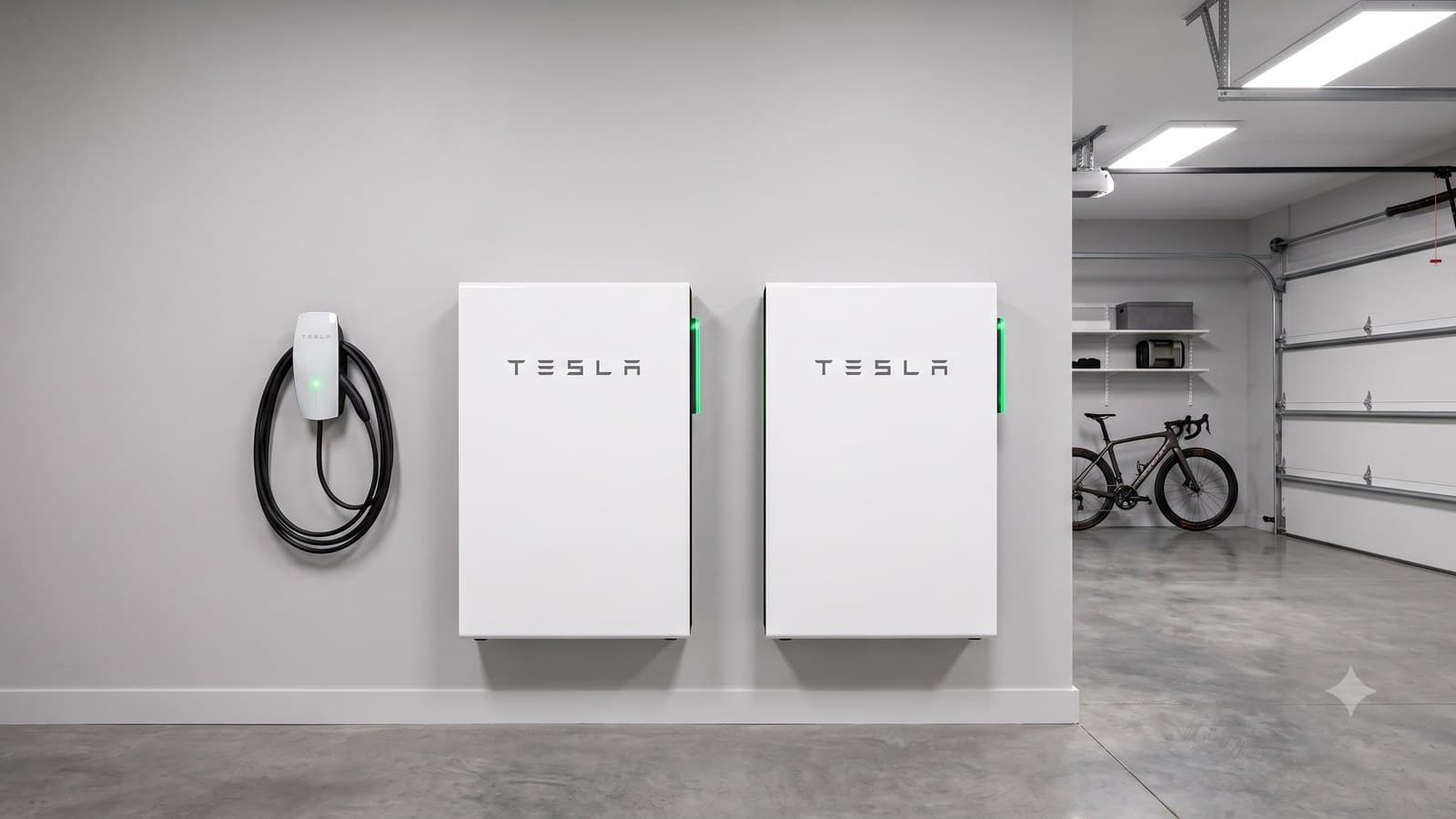
With solar vs. battery-only retrofit.
Installed alongside new solar, a Powerwall 3 is at its cheapest and best: the integrated solar inverter serves both jobs, the permit and crew are shared, and the combined project typically saves $1,500–$3,000 versus adding the same battery later. Battery-only retrofits are routine — especially onto existing NEM 2.0 systems wanting backup, or NEM 3.0 systems that were sold without the storage they needed — but the retrofit pays a small premium for its own mobilization and, on non-Tesla inverters, occasionally an AC-coupling decision we'll walk you through. If solar is anywhere in your future, sequence them together — the same logic as our roof-plus-solar bundling.
Payback by utility
The same battery earns differently depending on who bills you:
Current rebates: California battery incentives, 2026 · Sizing: whole-home vs essential loads · The service: our Powerwall install process · Deep dives: Powerwall 3 review and Powerwall 3 vs. Enphase vs. FranklinWH · The alternatives, priced: FranklinWH aPower 2 ($16,000–$21,000) and Enphase IQ Battery 10C ($13,000–$15,500) · Already have solar? Adding a Powerwall to an existing system
Powerwall cost questions, answered.
- How much is a Powerwall 3 installed in California in 2026?
- A single Powerwall 3 typically lands at $14,500–$18,500 installed — unit, Backup Gateway, labor, and permit — before any incentives. Homes that need a main-panel upgrade add $3,000–$5,000, and two-unit whole-home designs typically run $24,000–$30,000 all-in. Those are honest ranges, not teaser prices; your quote is one transparent number.
- Is a Powerwall cheaper installed with solar or as a retrofit?
- With solar, meaningfully: shared permitting, one mobilization, one electrical scope, and the Powerwall 3's integrated solar inverter doing double duty typically saves $1,500–$3,000 versus adding the same battery later. Retrofits are still routine work for us — but if solar is in your plans at all, do them together.
- Does the federal tax credit apply to a Powerwall in 2026?
- No. The 30% federal residential credit expired December 31, 2025 and does not apply to 2026 installations — any quote that includes it is wrong. What exists now: SGIP's income-qualified and fire-zone tiers, SDCP's Solar Battery Savings ($250–$500/kWh) in its member cities, CPA's Sun Storage Rebate (up to $2,250), and Anaheim's $1,500 municipal rebate. Our incentives page keeps the current list.
- How does payback differ by utility?
- Widely. SDG&E (~46¢/kWh average): the fastest battery payback in the country, typically 5–8 years paired with solar, faster with SDCP payments. SCE (~34¢ average, with summer evening peaks near 48–58¢): 6–9 years paired with solar, the classic NEM 3.0 case. PG&E runs the same Net Billing framework at some of the state's highest rates, so the math pencils at least as well as SCE. LADWP and the municipals: the export credits are still good, so the battery is a resilience purchase more than an investment — we model it honestly rather than forcing the math.
- What is the Powerwall 3 official price vs. the installed cost?
- Tesla's official price covers the hardware: $8,500–$9,500 for the Powerwall 3 unit at current list. It does not include the Backup Gateway, installation labor, or your city's permit — which is why the real installed cost lands at $14,500–$18,500 in California. When you compare a Tesla Certified Installer's quote against Tesla's website number, compare full scope to full scope: gateway, labor, permitting, and any panel work either installer would eventually have to price in.
- How much do two Powerwall 3 units cost installed?
- Most two-unit whole-home designs run $24,000–$30,000 all-in in 2026. The second unit adds $9,500–$11,500 rather than doubling the price, because the Backup Gateway and much of the electrical scope are shared. Whether you need two comes down to what you're backing up — central AC and EV charging push a home there quickly. Two units store 27 kWh and deliver 23 kW continuous, enough for true whole-home backup in most houses.
- Is a Powerwall 3 cheaper than Powerwall 2 was?
- Per usable kilowatt-hour with solar, generally yes — the integrated solar inverter eliminates a separate inverter purchase on new solar-plus-storage, which is where the real savings hide. Unit pricing moves with Tesla's list; we quote what's current at contract, not stale internet numbers.