Best Solar Companies in Fullerton, CA (2026): Honest Rankings for SCE Homeowners
Fullerton homeowners on Southern California Edison face NEM 3.0 export rules that make battery pairing the key to a healthy payback. Here are the 10 best solar installers serving Fullerton in 2026, ranked honestly — with the local numbers you need before you sign anything.
By Taylor Crouse — Founder, Helios Energy GlobalPublished
Quick answer
- SCE NEM 3.0 cuts export credits by roughly 75% — the Net Billing Tariff (effective April 15, 2023) pays around $0.05–$0.08/kWh for power you send to the grid, versus the ~34–35¢/kWh average retail rate you pay to buy it back. Exporting surplus solar is no longer the payback engine it once was.
- The 4–9 PM peak is your biggest cost lever — per SCE's current TOU-D-PRIME tariff, summer weekday on-peak rates reach approximately 59¢/kWh. New solar customers are placed on TOU-D-PRIME automatically. A battery that stores midday solar and dispatches it during that window is what makes the math work in 2026.
- Typical system size: 7–11 kW — Fullerton's hot inland summers drive heavy afternoon AC loads, and most households need a right-sized array to offset that usage rather than to over-export.
- Installed cost range: ~$2.50–$3.50 per watt before incentives — a 7 kW system runs roughly $17,500–$24,500; a 10 kW system roughly $25,000–$35,000. Adding a battery adds $14,000–$18,500 per unit installed.
- The 30% federal residential solar tax credit expired December 31, 2025. There is no federal ITC for a system purchased or installed in 2026. No phase-down, no exception — the sticker price is close to your actual out-of-pocket cost.
- Roof and panel age matter more here than in newer suburbs — Fullerton's housing stock ranges from 1920s–1930s Spanish and Craftsman homes near downtown to post-war tracts and hillside properties in Raymond Hills and Sunny Hills. A credible installer checks roof condition and panel capacity before finalizing any design.
Fullerton is an Orange County city served entirely by Southern California Edison (SCE), putting every new solar installation squarely under California's NEM 3.0 Net Billing Tariff. The city's inland-valley climate means long, hot summers and the kind of afternoon AC loads that make a well-designed solar-plus-battery system genuinely valuable — but only if the design is built around your actual SCE bill, not a generic template.
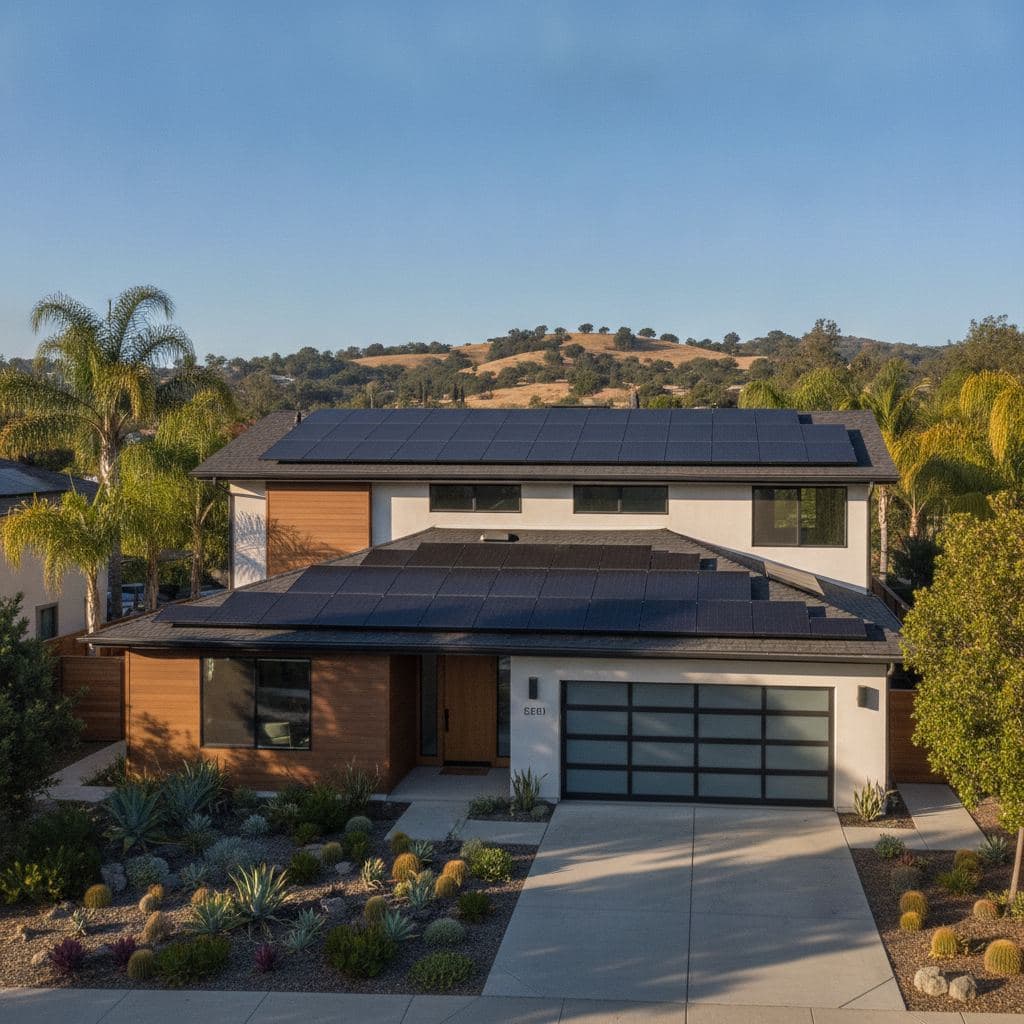
Top 10 best solar companies in Fullerton (2026)
At-a-glance ranking
- Helios Energy Global — Best for: SCE NEM 3.0 modeling + owner-reviewed designs for Fullerton's diverse housing stock
- Sunrun — Best for: homeowners who want a large national installer with lease/PPA financing options
- Tesla Energy — Best for: buyers committed to the Powerwall ecosystem and an all-digital experience
- Palmetto — Best for: homeowners who want ongoing monitoring and a software-forward approach
- SunPower (via authorized dealers) — Best for: premium panel efficiency on constrained roofs
- Swell Energy — Best for: battery-first projects and virtual power plant enrollment
- Baker Electric Solar — Best for: established Southern California regional installer with a long track record
- Renova Energy — Best for: Inland Empire and Orange County homeowners wanting a mid-size regional installer
- Freedom Forever — Best for: production guarantees and wide SoCal dealer network
- Momentum Solar — Best for: homeowners exploring multiple financing structures with a national installer
This ranking is Helios Energy Global's own editorial opinion and is not paid placement. Verify each company's active California Contractors State License Board (CSLB) license and current Fullerton service area before signing any contract.
1. Helios Energy Global — Our pick for Fullerton
Fullerton's combination of SCE's NEM 3.0 rules, a wide mix of housing vintages, and the city's SolarApp+ permit portal is exactly the environment where Helios's approach earns its top ranking. Every design is modeled against your actual SCE usage data — not a regional average — and Taylor Crouse reviews and signs off on every system before anything is ordered. For older homes near downtown or Cal State Fullerton, we assess roof structure and remaining life before sizing the array; for larger hillside properties in Raymond Hills and Sunny Hills, we model shading and orientation carefully. We give you one all-in written price with every equipment model named — no vague "system cost" lines. Helios is also SolarApp+-registered, which means eligible Fullerton permits can be processed instantly through the city's automated platform rather than sitting in a manual review queue.
Learn more about solar installation in Fullerton or estimate your Fullerton solar savings with our city-prefilled calculator.
Best for: Fullerton homeowners who want a custom SCE NEM 3.0 design, honest pricing, and an owner who personally reviews every project.
2. Sunrun
Sunrun is one of the largest residential solar installers in the country and operates actively throughout Southern California, including Orange County.
Best for: Homeowners who prefer lease or power-purchase agreement (PPA) financing to avoid a large upfront cost, or who want the backing of a publicly traded company with established service infrastructure. Why it fits: Sunrun has experience with SCE interconnection and NEM 3.0 Solar Billing Plan enrollment. Their Brightbox battery offering pairs with solar for peak-hour management. What to ask: Get the gross system price and cost per watt in writing, even if you plan to lease. Ask exactly which panel and inverter models are included and what the escalator rate is on any PPA.
3. Tesla Energy
Tesla sells and installs solar panels and Powerwall batteries directly, with an online-first quoting process.
Best for: Buyers who are already in the Tesla ecosystem (car, app, energy products) and want an integrated Powerwall 3 installation with minimal back-and-forth. Why it fits: The Powerwall 3 is a capable all-in-one solar-plus-battery unit well-suited to SCE's 4–9 PM peak-avoidance strategy. What to ask: Confirm the installation timeline in writing — Tesla's direct model can have longer scheduling windows than local installers. Ask for the all-in price and the specific panel model included.
4. Palmetto
Palmetto is a national solar company with a strong technology and monitoring platform.
Best for: Homeowners who want ongoing system performance monitoring, a digital-first experience, and a company that positions itself around long-term customer relationships. Why it fits: Palmetto's platform tracks production against your SCE bill in real time, which is useful under NEM 3.0 where self-consumption tracking matters more than it did under NEM 2.0. What to ask: Ask which local subcontractor will perform the physical installation in Fullerton and verify that contractor's CSLB license independently.
5. SunPower (via authorized dealers)
SunPower manufactures high-efficiency panels and sells through a dealer network in California.
Best for: Homeowners with limited roof space — smaller or complex roofs in older Fullerton neighborhoods where maximizing watts per square foot matters. Why it fits: SunPower's panel efficiency is among the highest available commercially, which can be meaningful on a 1,200 sq ft Craftsman with partial shading. What to ask: Confirm which authorized dealer will handle your install, get their CSLB number, and ask about the warranty path if the dealer relationship changes.
6. Swell Energy
Swell Energy is a Southern California-based company focused on battery storage and virtual power plant (VPP) programs.
Best for: Homeowners who want to prioritize battery backup and potentially earn additional bill credits by enrolling in SCE's demand-response or VPP programs. Why it fits: Under NEM 3.0, maximizing self-consumption and participating in grid programs can improve payback. Swell has experience enrolling customers in SCE-compatible programs. What to ask: Ask specifically which battery models they install, what the all-in installed cost is, and what the terms of any VPP enrollment are.
7. Baker Electric Solar
Baker Electric is a well-established Southern California electrical and solar contractor with decades of regional history.
Best for: Homeowners who value a long-track-record regional installer with in-house electrical expertise — useful when a panel upgrade or complex electrical work is involved. Why it fits: Baker has experience with SCE interconnection across Orange and San Diego counties and handles the electrical side of solar in-house rather than subcontracting it. What to ask: Confirm they are actively servicing Fullerton, get the gross price and cost per watt in writing, and ask about their current installation timeline.
8. Renova Energy
Renova Energy is a regional California installer serving the Inland Empire and parts of Orange County.
Best for: Homeowners who want a mid-size regional company with California-specific experience and a physical presence in the region. Why it fits: Renova has worked in SCE territory and understands the NEM 3.0 Solar Billing Plan enrollment process. What to ask: Verify their current CSLB license status, confirm Fullerton is in their active service area, and ask for a written quote with equipment named by model.
9. Freedom Forever
Freedom Forever is a national installer with a broad dealer and installation network across Southern California.
Best for: Homeowners attracted to their production guarantee model, which promises a specific annual output and covers the difference if the system underperforms. Why it fits: Freedom Forever has a wide SoCal footprint and SCE experience, and their production guarantee can be appealing to homeowners who want performance accountability built into the contract. What to ask: Read the production guarantee terms carefully — understand what triggers a payment, what exclusions apply, and who the installing subcontractor will be.
10. Momentum Solar
Momentum Solar is a national installer operating in California with multiple financing options.
Best for: Homeowners who want to compare loan, lease, and cash options side by side from a single company with a broad product menu. Why it fits: Momentum has California operations and SCE-territory experience, and their sales process typically walks through multiple financing structures. What to ask: As with any national installer, confirm the local subcontractor's CSLB license, get the gross price and cost per watt in writing, and ask who performs the inspection and SCE interconnection application.
Ranking is Helios Energy Global's editorial opinion only — not paid placement. Verify each company's active CSLB license and current Fullerton service area before signing.
Why Fullerton solar is different from a generic install
SCE's NEM 3.0 and what it means for your bill
Residential customers who enroll in the Solar Billing Plan will be transitioned to the TOU-D-Prime rate and will be charged the full retail rate for all energy that they consume. That's the starting point for every new Fullerton solar customer. Per SCE's rate schedules, TOU-D-PRIME peaks at 59¢/kWh on summer weekdays and drops to 26¢/kWh during off-peak hours. The gap between what you pay to buy power during the peak and what the grid pays you to export solar is enormous: under NEM 2.0, a kilowatt-hour you sent to the grid earned close to the retail rate you pay. Under NEM 3.0, exports are credited at the CPUC's avoided-cost values — on average roughly 75% less.
The practical result: solar-only systems in Fullerton are harder to justify than they were three years ago. NEM 3.0 changed the main savings mechanism. Avoiding a retail-priced grid purchase is generally worth more than exporting the same kilowatt-hour at a lower avoided-cost credit. A battery that stores your midday solar production and dispatches it during the 4–9 PM window turns that dynamic around.
The CPUC Public Advocates Office puts SCE's residential rate at 34.4 cents per kWh as of June 2026 — making Fullerton's electricity costs meaningfully above the California average and giving a well-designed system a real bill to work against.
Why batteries are central to Fullerton's economics
Under NEM 3.0, the question isn't whether a battery is nice to have — it's whether the math works without one. Export compensation shifted from near-retail annual netting to monthly billing based on avoided-cost and time-of-use values. As a result, a battery has moved from an optional add-on to a key lever for using more solar at home and reducing higher-cost grid purchases.
For Fullerton homeowners, the math is straightforward: your solar panels produce the most power from roughly 9 AM to 3 PM, when SCE's rates are at their lowest. Without a battery, that surplus exports at pennies per kWh. With a battery, it gets stored and deployed at 59¢/kWh peak time — a difference that meaningfully shortens payback. See our solar vs. battery guide under NEM 3.0 for a deeper breakdown of the numbers.
Fullerton's housing stock: older homes need a closer look
Fullerton's residential neighborhoods span more than a century of construction. Homes near downtown and Cal State Fullerton include 1920s–1930s Spanish Colonial and Craftsman bungalows; much of the central city is post-war tract housing from the 1950s–1970s; Raymond Hills and Sunny Hills feature larger properties built from the 1960s through the 1990s on steeper terrain with more varied roof orientations.
What this means practically:
- Older roofs: A 1930s home may have original or once-replaced roofing. If a roof has fewer than 10 years of life remaining, re-roofing before solar installation is strongly worth considering — solar removal and reinstallation costs $250–$350 per panel ($5,000–$7,000 for a 20-panel system, more for tile roofs). Helios coordinates re-roofing through vetted, licensed roofing partners before finalizing a design.
- Older electrical panels: Pre-1980s panels often need upgrading to handle a modern solar system safely. A main-panel upgrade, when needed, runs $3,000–$5,000 — and any honest quote should state upfront whether one is required.
- Hillside roofs in Raymond Hills and Sunny Hills: Steeper pitches and more complex roof planes can affect both panel layout and installation cost. Shading from mature trees is also more common in these neighborhoods.
Heat, AC load, and system sizing
Fullerton's inland-valley climate means summer temperatures regularly climb into the 90s and beyond. Heavy air-conditioning load during the afternoon is the norm, not the exception — and it falls squarely in the 4–9 PM peak window. A system sized only to your average annual usage will underperform in summer and leave you buying expensive peak power. A credible Fullerton installer models your seasonal usage pattern and sizes the array to offset your actual summer peak load, not just your annual kWh average.
Micro-neighborhood shading and orientation
Golden Hill, with its mature tree canopy and smaller lot sizes, can present meaningful shading challenges that require careful panel placement or microinverter/optimizer selection. Raymond Hills and Sunny Hills generally offer better sun exposure and larger roof areas, but steeper pitches add complexity. Downtown Fullerton properties — particularly older bungalows on narrow lots — sometimes have limited south-facing roof area, making high-efficiency panels or east-west split arrays worth evaluating. The right design is specific to your address, not your zip code.
Real prices: what solar costs in Fullerton
Solar in Fullerton is priced like the rest of Southern California: roughly $2.50–$3.50 per watt installed before incentives, depending on system size, roof complexity, equipment tier, and whether a panel upgrade is needed. There is no Fullerton-specific per-watt premium or discount — that's the honest range across the market.
The table below shows illustrative pre-incentive price ranges at that benchmark. These are estimates for planning purposes, not quotes.
| System Size | Component | Estimated Range (pre-incentive) |
|---|---|---|
| 6 kW | Solar only | $15,000 – $21,000 |
| 8 kW | Solar only | $20,000 – $28,000 |
| 10 kW | Solar only | $25,000 – $35,000 |
| 12 kW | Solar only | $30,000 – $42,000 |
| 15 kW | Solar only | $37,500 – $52,500 |
| — | Add: home battery (per unit) | $14,000 – $18,500 |
| — | Add: main-panel upgrade (if needed) | $3,000 – $5,000 |
What pushes a Fullerton quote higher:
- Tile roofs (common in Raymond Hills and Sunny Hills) — more labor-intensive than composition shingle
- Steep-pitch roofs — add safety equipment and installation time
- Older electrical panels requiring an upgrade
- Shading mitigation (microinverters or power optimizers instead of a standard string inverter)
- Multiple roof planes requiring more complex wiring runs
- Battery addition — each Enphase IQ Battery 10C runs $13,000–$15,500 installed; a Tesla Powerwall 3 runs $14,500–$18,500; a FranklinWH aPower 2 with aGate runs $16,000–$21,000; two Powerwall 3 units run $24,000–$30,000
Remember: the 30% federal residential solar tax credit expired December 31, 2025. There is no federal credit for a system installed in 2026. California does not have a statewide residential solar rebate program at this time. What you see quoted is close to what you'll pay.
Use our Fullerton savings calculator to model what a system sized to your actual SCE usage might save annually.
Solar-only or solar + battery in Fullerton?
When solar-only still makes sense
Solar without a battery can still deliver a positive return in Fullerton — but the payback period is longer under NEM 3.0. If your household uses significant power during daylight hours (remote workers, stay-at-home households, daytime business use), you'll self-consume more of your production and export less, which narrows the NEM 3.0 disadvantage. Solar-only also makes sense as a first step if budget constraints are real — a battery can always be added later, provided your inverter is battery-ready.
When solar + battery is the stronger choice
For most Fullerton homeowners, a battery is what makes the economics compelling in 2026. The core logic: your solar produces cheaply from 9 AM–3 PM, and SCE charges the most from 4–9 PM. A battery bridges that gap. Beyond bill savings, a battery provides backup power during outages — relevant in a region where grid events, while less frequent than in fire-risk areas, do occur. Fullerton is not in a designated fire zone, but SCE grid reliability events still happen across Orange County.
The battery backup guide on our site walks through sizing, chemistry, and which battery models pair best with SCE's TOU-D-PRIME rate.
Battery proposal mistakes to avoid
- Undersized battery for the load: A single 10 kWh battery won't carry a 3-ton AC unit through a five-hour peak window. Ask your installer to show the battery dispatch model against your actual summer usage.
- Battery quoted without a solar pairing analysis: A battery alone (without solar) on SCE's rate simply charges from the grid at off-peak rates and discharges at peak — the savings are real but modest. The combination is what drives the compelling payback.
- No discussion of rate plan: New solar customers are placed on TOU-D-PRIME automatically. Make sure your installer has modeled your savings on TOU-D-PRIME specifically, not on a generic flat-rate assumption.
How to choose the right solar company in Fullerton
1. Verify the CSLB license. California requires solar installers to hold a C-46 (Solar) or C-10 (Electrical) contractor's license. Look up any company you're considering at the CSLB's online license check before you invite them to your home.
2. Confirm SCE NEM 3.0 experience. Ask specifically: "How many Solar Billing Plan interconnection applications have you submitted to SCE in the past 12 months?" An installer without recent NEM 3.0 experience may underestimate the importance of battery pairing or model your savings incorrectly.
3. Check SolarApp+ registration for Fullerton. The City of Fullerton requires that only licensed contractors who have previously registered with SolarApp+ may request SolarApp+ permits. An unregistered installer will face a longer manual permit timeline — ask upfront.
4. Ask who does the roof assessment. For Fullerton's older housing stock, a pre-design roof inspection is not optional — it's how you avoid a costly surprise after panels are ordered. A credible installer will check roof age, condition, and structural capacity before finalizing a design.
5. Understand the interconnection timeline. After your permit is issued, SCE's interconnection process — approval, inspection scheduling, and Permission to Operate (PTO) — adds additional time. A realistic total timeline from contract signing to a live system in Fullerton is typically 8–16 weeks, depending on permit path and SCE queue.
How to compare quotes without getting tricked
Getting multiple quotes is always smart. Here's how to compare them fairly:
- Get the gross price and cost per watt in writing. Ask every company: "What is the total installed price before any incentives, and what is the cost per watt?" Those two numbers let you compare apples to apples across proposals.
- Name every piece of equipment. A quote that says "premium panels" without naming the manufacturer and model is incomplete. You need the panel brand and wattage, the inverter brand and model, and — if a battery is included — the battery model and usable capacity in kWh.
- Check the system size against your actual usage. Pull your last 12 months of SCE bills and compare the proposed annual production (in kWh) to your actual annual consumption. A system sized to produce 130% of your usage under NEM 2.0 logic is oversized under NEM 3.0 — you'll export the surplus at a few cents per kWh.
- Ask about the monitoring platform. How will you know if a panel or microinverter fails? What's the process for a warranty claim?
- Read the interconnection section. Who submits the SCE interconnection application? Who is responsible if there are corrections required? Make sure the contract is clear.
For a deeper walkthrough of NEM 3.0 and how it affects your quote analysis, see our NEM 3.0 explained guide.
Fullerton quote checklist
Before signing any solar contract in Fullerton, get clear answers to these questions:
- System specs: What is the panel brand, model, and wattage? What is the inverter brand and model? If a battery is included, what is the model and usable kWh capacity?
- Pricing: What is the total installed gross price? What is the cost per watt? Are there any additional charges (permit fees, utility interconnection fees, panel upgrade) not included in the quoted price?
- Roof assessment: Has a physical roof inspection been completed? Is a panel upgrade required? If so, is it included in the quoted price?
- NEM 3.0 modeling: Is the savings estimate based on TOU-D-PRIME rates? What annual self-consumption rate is assumed? What export credit rate is assumed?
- Battery: Is a battery included or recommended? What is the battery dispatch strategy for the 4–9 PM peak?
- Permit: Is the contractor registered with Fullerton's SolarApp+ program? Who pulls the permit, and who pays the permit fee?
- Interconnection: Who submits the SCE interconnection application? What is the estimated timeline to Permission to Operate?
- Warranty: What is the panel production warranty? What is the inverter warranty? What is the workmanship warranty, and who backs it if the installer goes out of business?
- Financing: If financing is offered, what is the APR, term length, and total amount paid over the life of the loan? Is there a dealer fee built into the system price?
- Contractor license: What is the company's CSLB license number, and is it currently active?
Final verdict
Fullerton is a market where the details matter more than the headline number. SCE's NEM 3.0 rules, the city's wide range of housing vintages, and the inland heat load all demand a design built around your specific home and SCE bill — not a template. That's why Helios Energy Global ranks #1 here: every Fullerton design is modeled against real SCE TOU-D-PRIME usage data, every roof is assessed before the system is sized, Taylor reviews and signs off on every design personally, and we're registered with Fullerton's SolarApp+ program for faster permit processing. We give you one honest all-in written price with every equipment model named — no pressure, no invented discounts.
The other companies on this list are real, established installers worth getting quotes from. Use the checklist above to compare them fairly. The right installer for your home is the one who can show you a design built around your actual Fullerton address, your real SCE bills, and the honest economics of NEM 3.0.
Frequently asked questions about solar in Fullerton
How much does solar cost in Fullerton in 2026?
Most Fullerton homes run roughly $2.50–$3.50 per watt installed before incentives — about $17,500–$38,500 for a typical 7–11 kW system. The 30% federal residential tax credit expired December 31, 2025, so there is no federal credit for a system installed in 2026. Adding a battery (which most Fullerton homes should consider under NEM 3.0) adds $14,000–$18,500 per unit installed. Get the gross price and cost per watt in writing from any installer you're evaluating.
Does NEM 3.0 apply to Fullerton solar installations?
Yes. Fullerton is served by Southern California Edison, one of the three investor-owned utilities covered by the CPUC's Net Billing Tariff (NEM 3.0). NEM 3.0 is formally the Net Billing Tariff, adopted by CPUC Decision 22-12-056 on December 15, 2022, and effective April 15, 2023. Any Fullerton homeowner who submitted a solar interconnection application to SCE after April 14, 2023 is on NEM 3.0. See our NEM 3.0 explained guide for the full breakdown.
What does SCE's TOU-D-PRIME rate mean for my solar savings?
Residential customers who enroll in the Solar Billing Plan will be transitioned to the TOU-D-Prime rate.
TOU-D-PRIME peaks at 59¢/kWh on summer weekdays and drops to 26¢/kWh during off-peak hours. The wide spread between peak and off-peak is what makes a battery so valuable: solar stored midday at off-peak rates and discharged at 4–9 PM saves you the full peak rate rather than the ~5–8¢/kWh export credit you'd earn by sending it to the grid.
Is a battery worth it for a Fullerton home under NEM 3.0?
For most Fullerton homeowners, yes. Export compensation shifted from near-retail annual netting to monthly billing based on avoided-cost and time-of-use values. As a result, a battery has moved from an optional add-on to a key lever for using more solar at home and reducing higher-cost grid purchases. Without a battery, you export midday surplus at a few cents per kWh and buy it back at 59¢/kWh during the peak. A battery closes that gap. Explore your options on our battery storage page.
Can my older Fullerton home support solar panels?
Usually, but it requires a proper assessment first. Homes near downtown Fullerton and Cal State Fullerton date to the 1920s and 1930s — roof structure, remaining roof life, and electrical panel capacity all need to be verified before a system is designed. If a panel upgrade or re-roof is needed, a credible installer tells you upfront and includes it in the price. Never sign a contract that doesn't address roof and electrical readiness explicitly.
How does Fullerton's solar permit process work in 2026?
In 2022, California passed SB 379, which requires most cities and counties to implement an online, automated permitting platform for residential solar. SolarApp+ is a standardized plan review software that runs compliance checks and processes building permit approvals for eligible rooftop solar systems.
Only licensed contractors who have previously registered with SolarApp+ may request SolarApp+ permits in Fullerton. Eligible systems can receive near-instant permit approval through the platform. After the city permit, SCE's interconnection process adds additional time — plan for 8–16 weeks total from contract to Permission to Operate.
How do I check a solar contractor's license in California?
Every solar installer in California must hold an active CSLB license — typically a C-46 (Solar Contractor) or C-10 (Electrical Contractor) license. You can verify any license at the CSLB's online license check tool at cslb.ca.gov. Look up the license number, confirm it's active and in good standing, and check for any disciplinary actions before signing a contract.
What size solar system does a Fullerton home typically need?
Most Fullerton homes land in the 7–11 kW range, but the right size depends on your actual SCE usage — particularly your summer months, when air-conditioning load is highest. Pull your last 12 months of SCE bills and ask any installer to show you how the proposed system production maps to your actual annual consumption. Under NEM 3.0, oversizing to maximize exports is counterproductive; the goal is to maximize self-consumption. Our 10 kW solar system cost guide for California is a useful reference point for mid-range sizing.
Next steps
- Book a free consultation and custom design — no pressure, no obligation
- Solar installation in Fullerton — see how Helios approaches Fullerton specifically
- Estimate your Fullerton solar savings — city-prefilled calculator, takes 2 minutes
- Understand NEM 3.0 and SCE's Solar Billing Plan — the policy every Fullerton buyer needs to read before signing
- Solar vs. battery under NEM 3.0 — when each makes sense for an SCE home
- Battery storage options — Powerwall 3, Enphase IQ, FranklinWH, and how to choose
- What does a 10 kW solar system cost in California? — a useful sizing reference for larger Fullerton homes
Sources
- SCE Solar Billing Plan — How Solar Billing Plans Work — June 1, 2026
- SCE Tiered Rate Plan — Current Rates as of June 1, 2026 — June 1, 2026
- City of Fullerton SolarApp+ Permit Program — January 2026
- ratereliefca.com — SCE Rate Schedules 2026 (SCE-checked Sep 23, 2026) — September 23, 2026
More guides
The 10 Best Solar Companies in La Quinta, CA (2026): IID Net Billing, Desert Heat, and Honest Numbers
La Quinta runs on IID power — not SCE, not NEM 3.0 — and that changes everything about how solar should be designed here. This guide ranks the 10 best solar installers in La Quinta for 2026 and explains exactly how IID Net Billing, rising rates, and desert cooling loads affect your system.
ReadBest Solar Companies in San Diego, CA (2026): Honest Rankings for SDG&E Homeowners
SDG&E charges the highest residential rates of any major U.S. utility — nearly 46¢/kWh — making San Diego one of the strongest solar markets in the country. Here's how to find an installer who actually understands NEM 3.0 and your specific neighborhood.
ReadBest Solar Companies in Pismo Beach, CA (2026): Honest Rankings for Coastal Homeowners
A straight-talking, numbers-first guide to the best solar installers serving Pismo Beach in 2026 — covering real costs, PG&E net metering, battery tradeoffs, and what to ask before you sign.
ReadGet a free consultation and custom design.
No pressure, no obligation — the owner reviews every design we send.