Solar Panel Bird Proofing and Critter Guards: Cost and Whether You Need Them in Southern California (2026)
Professional critter guard installation for a typical Southern California solar array runs $800–$2,000 — far less than the wiring repairs and cleaning bills that follow an untreated pigeon or squirrel infestation.
By Taylor Crouse — Founder, Helios Energy GlobalPublished
Quick answer
- Professional critter guard installation for a typical Southern California solar array costs $800–$2,000 all-in (materials + labor).
- Mesh runs $8–$18 per linear foot installed; a standard 20-panel array has roughly 120–150 linear feet of perimeter.
- Untreated pigeon or squirrel damage — chewed wiring, nest removal, panel cleaning — can easily run $1,400–$2,500+ in repair bills.
- Most solar manufacturers exclude animal damage from warranty coverage, so prevention is the only backstop.
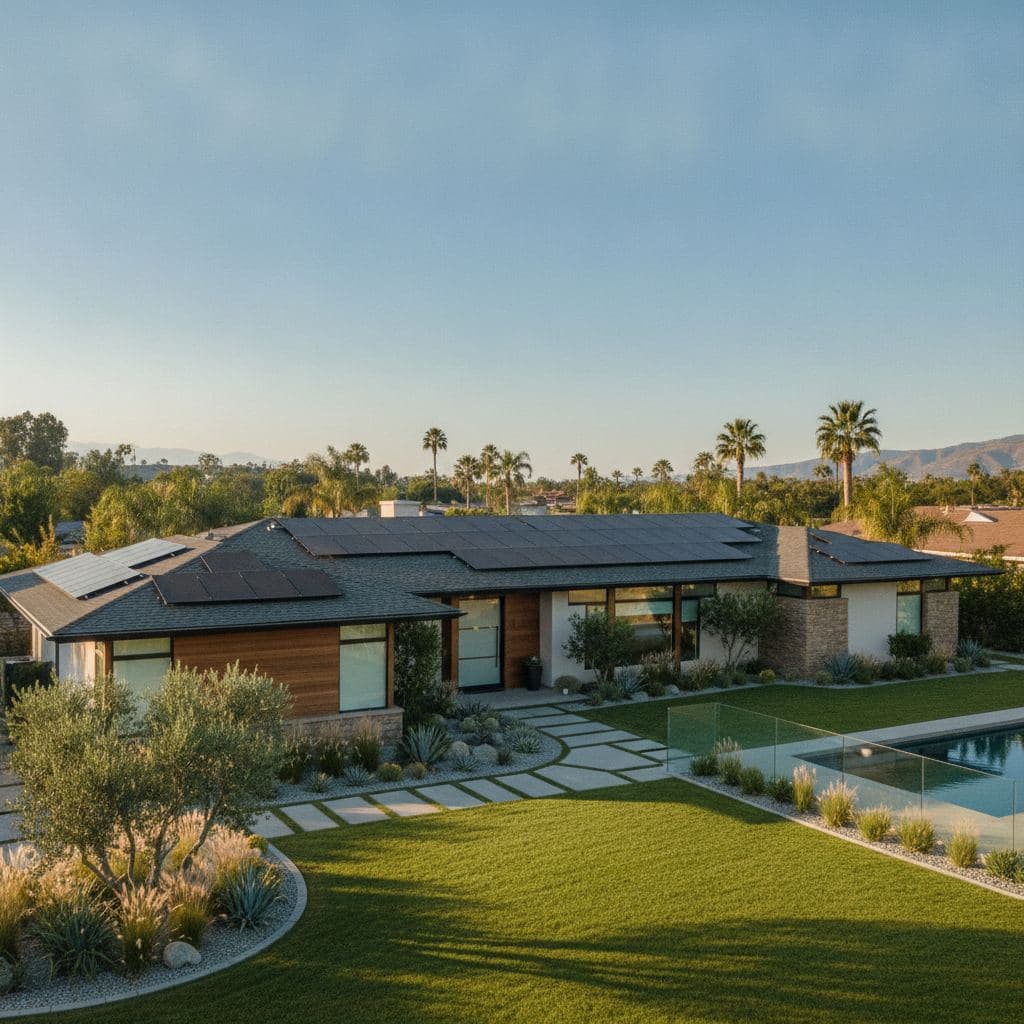
Critter guard installation for a typical Southern California home runs $800–$2,000 for professional-grade galvanized steel mesh clipped around the full array perimeter. If you wait until pigeons or squirrels have already moved in, you're looking at nest removal, wiring repair, and a full panel cleaning on top of that — costs that routinely exceed what the guard itself would have cost at installation.
Last verified: October 2026 by Helios Energy Global.
Why Southern California arrays are a pigeon and squirrel magnet
The gap between panels and the roof surface offers birds — pigeons especially — a sheltered, predator-protected spot that's warm from the panel's heat retention. In Southern California, that problem is compounded by year-round mild weather: there's no hard winter to drive birds off. The LA Basin, the Inland Empire, and the San Fernando Valley all have dense pigeon populations, and squirrels are common in foothill neighborhoods from Pasadena to Thousand Oaks.
California's Central Valley presents a particular vulnerability due to high pigeon populations in agricultural corridors and urban-residential transition zones — and the same dynamic applies across the greater LA metro wherever residential neighborhoods border parks, canyons, or open space.
What the damage actually looks like
Chewed wiring
The electrical cabling that connects solar panels runs along the underside of the array, often through the same gap that birds use for nesting. Birds chewing solar panel wires is a more common problem than most people expect, particularly where pigeons and starlings are present in numbers. Squirrels are equally destructive: squirrels are notorious for gnawing through solar panel wiring, which not only shuts down your system but can also cause shorts that increase the risk of electrical fires. A single squirrel can do hundreds of dollars in damage in one day, and repeated chewing weakens your entire array.
Pigeon nesting material and the birds themselves cause direct physical damage to the DC wiring that runs between your solar panels. Chewed wiring causes faults that look exactly like inverter or panel failures until a technician gets on the roof. That misdiagnosis can mean paying for an inverter service call before anyone realizes the real problem is under the panels.
Output drops
Pigeons and starlings can cut California solar output by 5–30%.
Pigeon droppings are highly corrosive and block sunlight, cutting panel efficiency by as much as 20–30%. At SCE's current average residential rate — 34.5 cents per kWh as of January 1, 2026, per SCE's own rate advisory — a 15% output drop on a 8 kW system generating roughly 11,000 kWh/year costs you about $570 in lost generation annually. That's real money disappearing silently.
Nests, debris, and fire risk
Once nesting occurs, debris accumulation, corrosive droppings, and chewed wiring can lead to system inefficiencies and, in rare cases, electrical hazards.
Damaged wiring mixed with nesting materials, leaves, and other debris poses a significant fire hazard. This is especially relevant during SoCal's dry summer and fall months, when nesting material under a panel array is essentially tinder.
Warning signs to watch for
Common warning signs include pigeons repeatedly entering the same panel gap, visible twigs or feathers, droppings, unusual sounds, and unexplained output changes. If your monitoring app shows consistent production dips on clear days — not just cloudy ones — that's a strong signal to get someone on the roof for an inspection before you schedule a cleaning. See our solar repair and maintenance page for what a full inspection covers.
Critter guard cost: what you'll actually pay in Southern California
The cost is driven by linear footage of the array perimeter, not panel count. A 20-panel array typically has 120–150 linear feet of perimeter; a 30-panel array can reach 180–200 linear feet.
The cost of critter guard installation typically depends on the linear footage of the array's perimeter rather than the number of panels.
| Scenario | Linear Feet (est.) | Installed Cost (est.) | Notes |
|---|---|---|---|
| Small array, 12–16 panels | 80–100 ft | $640–$1,800 | Clip-on mesh, single-story |
| Standard array, 20 panels | 120–150 ft | $960–$2,700 | Most common SoCal install |
| Large array, 28–32 panels | 170–200 ft | $1,360–$3,600 | Two-story or steep roof adds labor |
| Add-on: nest removal + cleaning | — | $400–$1,000+ | Required if infestation already present |
| Wiring repair (if chewed) | — | $300–$800+ | Separate scope; varies by damage extent |
All figures are estimates. Final price depends on roof pitch, story height, tile vs. shingle, and whether existing damage requires remediation before the guard goes on.
Per-linear-foot pricing
Mesh clip-on guards cost $8–$12 per linear foot installed and are the most common choice for Southern California homes — no roof penetration, removable for future panel service. L-bracket systems with mesh are more secure but cost $12–$18 per linear foot installed and require roof penetration, which matters on tile roofs. Solar installers who include pest protection with the system and install it before leaving the worksite usually charge the least — rates as low as $7 per linear foot. Specialty crews who must bid the job separately need to charge more, sometimes as much as $15 per linear foot.
Add it at installation — it's significantly cheaper
Adding critter guard during your solar installation is 30–50% cheaper than a separate service call later. If you're getting a new system from Helios, ask for critter guard to be included in your custom design — it takes a fraction of the time when the crew is already on the roof with the right tools. If you already have panels, a retrofit is still worth doing; just budget for the separate service call cost. See our solar panel cleaning page for how cleaning and critter guard installation are often combined into a single visit.
What if there's already an infestation?
If you wait until after an infestation occurs, you will likely face additional costs for critter extraction, nest removal, and pressure washing to remove acidic animal waste, which can add $500 to $1,500 to the total bill.
Debris without damage may only require removal, cleaning, and a secure bird guard. Damaged wiring, connectors, panels, or mounts call for repair before the area is sealed. That sequence matters — sealing a nest in place creates a different set of problems.
The warranty issue: why this matters more than most homeowners realize
Most solar warranties specifically exclude damage caused by animals. That means chewed wiring, corroded roof flashing, and panel damage from droppings or nesting are not covered.
If pest activity leads to moisture damage or electrical failure, the manufacturer can deny future claims because the system was not properly protected or maintained.
There's a second, separate warranty risk: how the guard is installed. From a bird-management standpoint, it is vital that there are no penetrating attachments made to the panel frame. Professionals must avoid drilling and attaching rivets or screws to the side of solar panels; installers should use only clips to attach mesh to the panel frame. Pest managers drilling into solar panels risk damage and the liability of replacement when manufacturers' warranties are voided.
In short: a properly clip-installed galvanized mesh guard protects your warranty. A DIY job with screws drilled into the panel frame can void it. Always confirm that whoever installs the guard is using clip-on attachment only.
SCE vs. LADWP vs. other SoCal utilities: does it change the math?
The critter guard cost itself doesn't change by utility — mesh is mesh. But the financial stakes do change based on what you're paying per kWh, because that determines how much a production drop costs you.
Per the CPUC Public Advocates Office Q1 2026 Electric Rates Report (March 2026 data), average residential rates are: SCE at $0.345/kWh, SDG&E at $0.457/kWh. LADWP customers pay an effective rate of approximately 28¢/kWh (26–31¢ effective range depending on tier and usage). The higher your rate, the faster a production drop from bird fouling or shading costs you real money — and the faster a critter guard pays for itself.
| Utility | Avg. Residential Rate | Annual Loss: 15% drop, 8 kW system |
|---|---|---|
| LADWP | ~28¢/kWh (26–31¢ effective) | ~$460/yr |
| SCE | ~34–35¢/kWh | ~$560/yr |
| SDG&E | ~46¢/kWh | ~$755/yr |
Assumes ~11,000 kWh/yr generation for an 8 kW system in Southern California. Loss estimate only.
SDG&E customers in coastal San Diego have the strongest economic case for critter guards of anyone in California — every percentage point of output lost to fouling or shading is worth more per kWh than anywhere else in the state.
What the installation process looks like
A professional critter guard job on an existing system typically follows this sequence:
- Roof inspection — technician checks for existing nests, debris, and wiring damage before anything is sealed.
- Nest and debris removal — all nesting material is cleared from under the panels and around mounting hardware.
- Panel cleaning — droppings and debris are cleaned from panel surfaces. This is the right time to combine with a solar panel cleaning visit.
- Wiring inspection — DC cables checked for chewing, cracked insulation, or loose connectors. Any damage is scoped for repair separately.
- Mesh installation — PVC-coated galvanized steel mesh is cut to fit and clipped (not screwed) to the panel frames around the full array perimeter.
- Final check — gaps at corners and around conduit runs are confirmed sealed.
The whole job typically takes 2–4 hours for a standard single-story home. Two-story homes and steep or tile roofs take longer and cost more — tile roofs in particular require careful movement to avoid cracking, which adds time.
DIY: is it worth attempting?
Amazon and specialty retailers offer wire mesh products starting around $40 for 50 feet of material. The materials are genuinely affordable. The problems are: working on a roof safely, installing the clips correctly without penetrating the panel frame, and ensuring there are no gaps at corners or conduit entry points where a determined squirrel can push through. Many homeowners try to solve this with DIY solutions, but drilling screws directly into solar panel frames to attach cheap wire instantly voids the manufacturer's equipment warranty.
For a single-story home with easy roof access, a confident DIYer can do this — but confirm clip-only attachment and use 19-gauge PVC-coated galvanized steel mesh (not plastic, not chicken wire). For two-story homes, tile roofs, or any system that already has birds under it, professional installation is the right call.
Frequently asked questions about solar panel bird proofing and critter guards
How much does critter guard installation cost for a typical SoCal home?
Critter guard installation typically costs $500–$1,500 for a standard residential solar system when added at the time of original installation. As a retrofit service call on an existing system, expect $800–$2,000 for most Southern California homes, depending on array size, roof type, and whether nest removal and cleaning are needed first.
What are the signs that birds or squirrels are under my solar panels?
Common warning signs include pigeons repeatedly entering the same panel gap, visible twigs or feathers, droppings, unusual sounds, and unexplained output changes. A drop in production on clear sunny days — visible in your monitoring app — is one of the most actionable signals. Don't wait for the scratching sounds to get louder.
Will bird damage void my solar panel warranty?
Most manufacturer warranties only cover defects in materials and performance. Damage caused by external factors such as nesting birds, rodents, debris buildup, or chewed wiring is excluded from warranty coverage. The guard itself won't void your warranty as long as it's installed with clips, not screws or rivets drilled into the panel frame.
Do I need critter guards if I'm on LADWP vs. SCE?
Yes — the bird and squirrel pressure is the same regardless of your utility. The financial urgency is slightly higher for SCE customers (at ~34–35¢/kWh) and highest for SDG&E customers (~46¢/kWh), because every kWh of lost production costs more. LADWP customers at ~28¢/kWh still face the same wiring damage and nest removal costs if the problem is ignored.
Can I add critter guards to an existing solar system, or only at installation?
Critter guards can be added at any time as a retrofit. Adding critter guard during your solar installation is 30–50% cheaper than a separate service call later — but retrofitting is still far cheaper than paying for wiring repair, nest removal, and cleaning after an infestation has taken hold.
What type of mesh is best for Southern California's climate?
19-gauge PVC-coated galvanized steel mesh is the standard recommendation. The harsh rooftop environment — intense UV exposure, temperature extremes, and weather cycles — demands robust construction. Plastic mesh and aluminum screening are cheaper but degrade faster under SoCal's sun. Galvanized steel with a thick PVC coat is rated for 20+ years in most conditions.
Does critter guard work for squirrels, or just birds?
A properly installed galvanized steel mesh with ½-inch openings blocks both pigeons and squirrels. Pest-repellent spike strips are bird-only and will not stop squirrels or small rodents. If you're in a foothill neighborhood — Altadena, La Cañada, Simi Valley, Thousand Oaks — where squirrels are common, make sure your installer is using a full perimeter mesh, not just spike deterrents.
Next steps
- Book a free consultation and custom design — ask about critter guard as an add-on to a new system.
- Explore our solar systems for Southern California — see what a full installation includes.
- Solar repair and maintenance — if you suspect existing bird or squirrel damage, start here.
- Solar panel cleaning — cleaning and critter guard installation are often combined into a single visit on existing systems.
- Understand your utility's net metering rules — SCE and LADWP customers are on different tariffs; it affects how much every lost kWh costs you.
- See our Southern California service locations — Helios serves the greater LA Basin, South Bay, Conejo Valley, and surrounding areas.
Sources
- CPUC Public Advocates Office Q1 2026 Electric Rates Report — April 30, 2026
- SCE Rate Advisory — January 1, 2026 — January 1, 2026
- Nuwatt Energy — Solar Critter Guard Cost Guide — March 12, 2026
- Spiffy Solar — Solar Panel Critter Guard Installer Pricing — January 1, 2024
- Sun Elevated — How Pest Damage Affects Solar Panel Warranty — September 1, 2025
More guides
Sunnova Bankruptcy: Who Services Sunnova Solar Systems in California Now?
Sunnova filed Chapter 11 in June 2025; its assets were sold to Solaris Assets LLC and SunStrong Management now services most former Sunnova lease, PPA, and battery accounts in California.
ReadWhat direction should solar panels face in California in 2026?
South-facing panels produce roughly 10-20% more annual energy than west-facing, but west-facing arrays can cut more off your bill under NEM 3.0 and SCE's 4-9 PM peak rates.
ReadDo solar panels work during a power outage in 2026?
Standard grid-tied solar shuts off within 2 seconds of a grid outage — but adding a battery keeps 5–15 kWh of backup power running in your home.
ReadGet a free consultation and custom design.
No pressure, no obligation — the owner reviews every design we send.