Roof Replacement Cost Compared: LA, Orange, and San Diego Counties in 2026
Roof replacement runs roughly $9,000–$22,000 in LA County, $9,500–$23,000 in Orange County, and $10,000–$24,000 in San Diego County — same materials, different labor markets and permit fees.
By Taylor Crouse — Founder, Helios Energy GlobalPublished
Quick answer
- LA County roof replacement: roughly $9,000–$22,000 for a typical 1,500–2,500 sq ft home (asphalt or cool-roof tile)
- Orange County: roughly $9,500–$23,000 — similar materials, slightly higher licensed-contractor labor rates in many cities
- San Diego County: roughly $10,000–$24,000 — highest coastal labor premiums and the region's steepest permit fee schedules in several jurisdictions
- Title 24 cool-roof rules apply in all three counties and can add $0.50–$1.50/sq ft in material cost if you're upgrading from a non-compliant surface
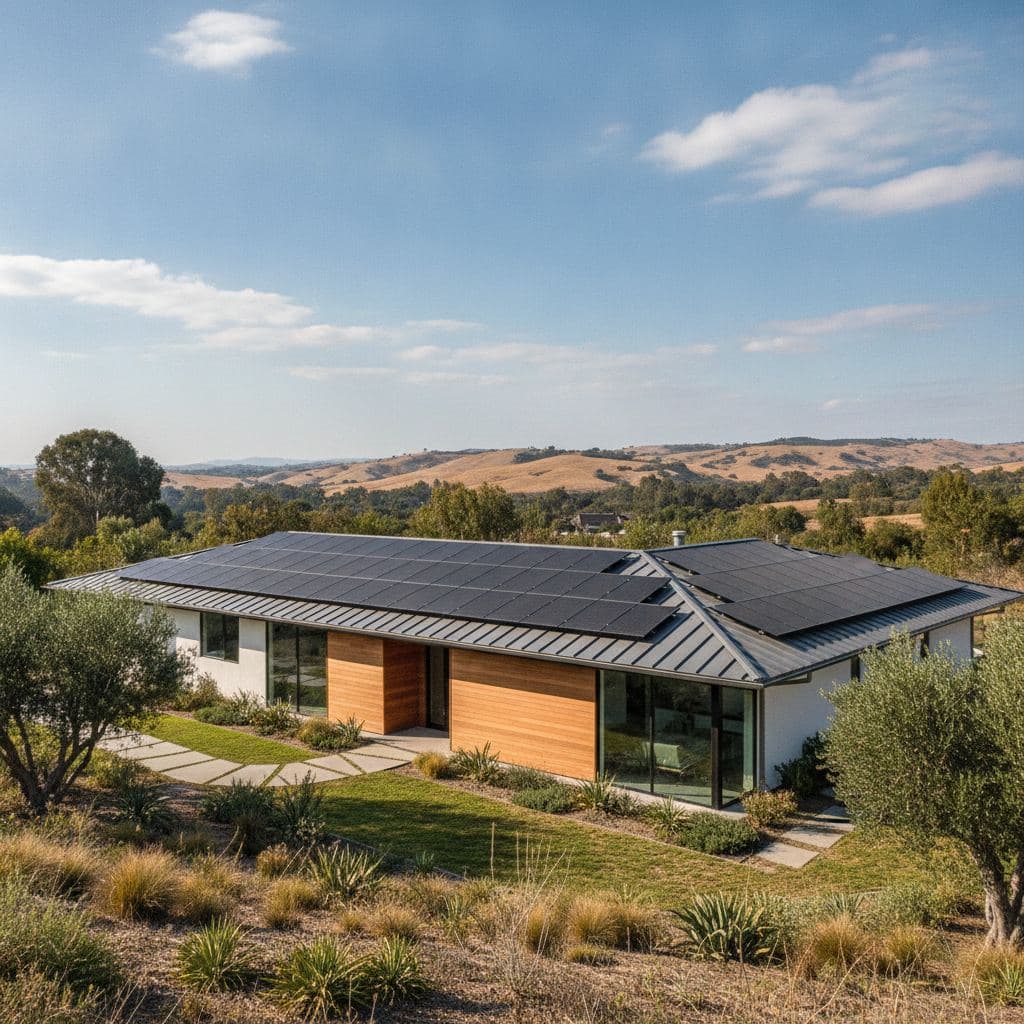
A same-size, same-material roof replacement costs roughly $1,000–$3,000 more in San Diego County than in LA County, driven primarily by permit fees, local labor rates, and disposal costs — not the shingles themselves. Orange County sits in the middle of that range, with city-by-city variation that can swing the final number by several thousand dollars.
Last verified: September 2026 by Helios Energy Global.
For the full breakdown of what drives roofing costs statewide, see our canonical roof replacement cost guide — this page focuses specifically on how and why the number shifts between the three counties.
Why the same roof costs different amounts across counties
Roofing contractors price jobs based on four variables: materials, labor, permits, and disposal. Materials are roughly the same everywhere — a pallet of concrete tile or a square of architectural shingles costs about the same at a regional supplier whether you're in Pasadena or Poway. The other three variables, however, vary meaningfully by county and even by city within a county.
Labor markets
Southern California's construction labor market is not uniform. San Diego's coastal cities — La Jolla, Del Mar, Encinitas — carry some of the highest licensed-contractor labor rates in the region, partly because of demand from high-value homes and partly because of a tighter licensed roofing contractor pool relative to job volume. Orange County cities like Newport Beach, Laguna Beach, and Irvine trend similarly high. LA County is enormous and internally diverse: labor in the San Fernando Valley or South Bay typically runs lower than in coastal West LA, but the county average still lands below Orange and San Diego.
As a rough benchmark, roofing labor runs approximately $2.00–$4.50 per square foot across Southern California, with the lower end more common in inland LA County and the upper end more common in coastal San Diego.
Permit fees
This is where county and city differences become most concrete. Permit fees for a residential re-roof are calculated differently by each jurisdiction — some use a flat fee schedule, others use a valuation-based formula.
- LA County unincorporated areas (handled by the LA County Dept. of Public Works): re-roof permits typically run $200–$600 for a standard single-family home, depending on scope and valuation.
- Incorporated LA cities (Los Angeles, Long Beach, Pasadena, etc.) set their own fees. The City of Los Angeles uses a valuation-based formula that often lands $350–$900 for a full re-roof.
- Orange County cities (Anaheim, Irvine, Santa Ana, etc.) vary widely; most fall in the $300–$800 range, with some coastal cities higher.
- San Diego city and county jurisdictions are known for more detailed plan-check requirements on larger projects; fees frequently run $400–$1,200+ for a full re-roof with structural review.
These permit differences alone can account for $200–$800 of the county-to-county gap.
Disposal and haul-away
Landfill tipping fees and haul-away costs are regulated at the county level. San Diego County's solid waste fees are among the highest in Southern California, adding an estimated $200–$600 more to tear-off disposal costs compared with LA County on a typical job.
The Title 24 cool-roof factor — and why it matters for solar
California's Title 24 Building Energy Efficiency Standards require that most residential re-roofs use cool-roof-rated materials — surfaces with a minimum Solar Reflectance Index (SRI) that reduces heat absorption. This rule applies in all three counties without exception.
If your existing roof used non-compliant dark asphalt shingles, upgrading to a Title 24-compliant product (lighter-colored shingles, cool-roof tile, or reflective coatings) adds roughly $0.50–$1.50 per square foot to material costs. On a 2,000 sq ft roof deck, that's $1,000–$3,000 in additional material cost baked into your quote — not contractor markup.
Why this connects to solar: If you're planning to add panels, a cool roof installed at the same time as your solar system is a smart sequence. Replacing the roof after panels are installed means paying to remove and reinstall the array — typically $5,000–$7,000 for a 20-panel array ($250–$350 per panel). We walk through this timing question in our solar and roof planning guide.
County-by-county cost comparison table
| County | Typical Re-Roof Range (1,500–2,500 sq ft home) | Permit Fee Range (estimate) | Labor Rate Range (per sq ft, estimate) | Disposal Cost Premium vs. LA |
|---|---|---|---|---|
| LA County | $9,000 – $22,000 | $200 – $900 | $2.00 – $3.75 | Baseline |
| Orange County | $9,500 – $23,000 | $300 – $800 | $2.25 – $4.00 | +$100 – $300 (est.) |
| San Diego County | $10,000 – $24,000 | $400 – $1,200+ | $2.50 – $4.50 | +$200 – $600 (est.) |
All figures are 2026 estimates for standard asphalt or concrete tile re-roofs. Actual quotes depend on pitch, accessibility, structural repairs, and local city fees. Get a written scope before comparing bids.
Material choices and how they interact with county costs
The material you choose is the single largest cost lever — more so than county location. Here's how common materials play out across all three counties:
- Architectural asphalt shingles (30-year): $9,000–$14,000 installed. The most budget-friendly Title 24-compliant option. Widely available in all three counties.
- Concrete tile: $14,000–$22,000 installed. Popular in Southern California for longevity (50+ years) and heat resistance. Heavier — some older homes need structural review, which adds to permit complexity and cost in San Diego.
- Clay tile: $18,000–$28,000+ installed. Premium longevity and aesthetics. Labor-intensive; coastal San Diego and Orange County premium neighborhoods drive demand and pricing.
- Metal roofing (standing seam): $16,000–$26,000 installed. Excellent solar compatibility — panels mount cleanly without penetrating the roof surface. Increasingly popular among homeowners planning solar in the same project window.
How utility territory affects the solar-plus-roof decision by county
If you're replacing your roof because you're going solar, your utility territory matters as much as your county.
LA County is split between SCE (most of the county outside the city of LA) and LADWP (City of Los Angeles). SCE customers are on NEM 3.0 (Net Billing Tariff), which pays export credits well below retail rate and makes battery storage nearly essential for a strong return. LADWP customers still get retail-rate net metering, making a solar-only system more financially straightforward. See our NEM 3.0 explainer for the full breakdown.
Orange County is almost entirely SCE territory — NEM 3.0 applies, and the 4–9 PM peak rate of approximately 34–35¢/kWh makes a battery paired with solar the strongest financial play. Municipal utilities serve small pockets (Anaheim APU, Brea) and run their own net metering programs.
San Diego County is predominantly SDG&E territory — also on NEM 3.0, with some of the highest residential electricity rates in the country. SDG&E's effective rates make San Diego one of the strongest financial cases for solar + battery in the entire US. A few eastern communities fall under smaller co-ops or irrigation district service.
Understanding your utility before you sign a roofing contract helps you choose the right material, sequence the work correctly, and avoid costly rework. Our team covers all three counties — see our service locations.
Roof replacement and solar: sequencing the work
The most common mistake we see: a homeowner replaces their roof, then calls us six months later about solar. If the roof is less than 5–7 years old and in good condition, we can work with it. But if the roof needed replacement anyway, doing both projects together avoids a future panel removal and reinstall — $250–$350 per panel at Helios, about $5,000–$7,000 for a 20-panel array — and often unlocks better contractor scheduling.
The right sequence:
- Get a roofing assessment first — we include this as part of our free solar consultation and custom design.
- If the roof needs work, do it before panels go up — coordinate so the roofing crew finishes and the solar crew starts within the same project window.
- Choose a solar-compatible roofing material — metal or concrete tile with pre-planned mount points is ideal; composition shingles work fine with standard flashed mounts.
- Pull permits together where possible — some cities allow a combined roofing + solar permit, reducing total fee load and inspection trips.
For more on how roof type affects your solar options, see our roof types guide and our solar panel cost overview.
Frequently asked questions about roof replacement costs by county
Is a roof replacement permit required in all three counties?
Yes — a full re-roof (tear-off and replacement) requires a building permit in every jurisdiction across LA, Orange, and San Diego counties. Permit-less "overlay" jobs (adding a second layer of shingles over existing) are sometimes allowed under older codes but are increasingly restricted and not recommended if you plan to add solar, since most solar installers require a clean, single-layer roof surface.
Can I get one quote that covers both roof replacement and solar installation?
Some companies handle both trades; others subcontract one. Helios Energy Global provides a free custom design consultation that includes a roof assessment and a solar + battery design so you can see the full project scope and cost in one place. Whether you use one contractor or two, make sure both scopes are coordinated before either permit is pulled.
Does Title 24 apply if I'm only doing a partial re-roof?
California's Title 24 cool-roof requirements generally apply when you're replacing more than 50% of the roof surface. If you're patching a small section, you may be exempt — but your local building department makes the final call. When in doubt, use a compliant product; the cost difference is small and it avoids a failed inspection.
Why are San Diego permits more expensive than LA permits?
San Diego city and county jurisdictions use valuation-based fee schedules with detailed plan-check requirements, particularly for heavier materials like concrete or clay tile that may trigger a structural review. LA County's unincorporated area uses a simpler flat-fee structure for standard re-roofs. City-by-city variation within each county means your specific address matters — always ask your contractor to confirm the permit fee before signing.
Does replacing my roof affect my homeowner's insurance rate?
Typically yes, in a positive direction. A new roof — especially one with a Class A fire rating and Title 24-compliant materials — often reduces your homeowner's insurance premium. Some insurers in high fire-risk areas (parts of LA and San Diego counties in particular) require a roof under a certain age to continue coverage. Check with your insurer before and after the project.
How long does a re-roof take, and does it delay solar installation?
A standard re-roof on a 2,000 sq ft home takes 1–3 days of active work, plus permit inspection time (which varies by county — LA County inspections are often scheduled within a week; San Diego can run 1–2 weeks). Solar installation typically begins 2–6 weeks after the roofing permit is closed, depending on utility interconnection timelines. Planning both projects together gives your solar installer a firm start date to work toward.
Is there any financial incentive for doing a cool roof specifically?
There is no standalone cool-roof tax credit or rebate widely available in 2026 for residential projects in Southern California. The value is indirect: lower attic temperatures reduce cooling loads, which reduces electricity consumption, which improves your solar system's net financial return. For battery-related incentives, California's SGIP program has residential budgets that are currently waitlisted — not a reliable near-term option.
Next steps
- Book a free consultation and custom design — includes a roof assessment and solar + battery sizing for your specific home and utility
- See full roof replacement cost ranges — our canonical cost page with material-by-material breakdowns
- Understand how roof type affects solar options — pitch, material, and orientation all affect panel placement and output
- Explore solar panel costs in Southern California — what a system costs before and after available incentives in 2026
- Learn how NEM 3.0 affects your solar return — critical reading for SCE and SDG&E customers
- See if battery storage makes sense with your roof and utility — especially relevant for NEM 3.0 territory in Orange and San Diego counties
- View our Southern California service locations — we serve LA, Orange, and San Diego counties from our Santa Monica base
Sources
- California Energy Commission – Title 24 Cool Roof Requirements
- LA County Department of Public Works – Building Permit Fees
- Orange County Building & Safety – Fee Schedule
- City of San Diego Development Services – Fee Schedule
- EIA – California Electricity Rates
- NREL – Rooftop Solar Technical Potential
- DSIRE – California Solar Incentives
- CPUC – Net Energy Metering (NEM 3.0 / Net Billing Tariff)
More guides
Best Solar Companies in Rancho Palos Verdes, CA (2026): Honest Rankings for Peninsula Homeowners
A straight-talking, numbers-first ranking of the best solar installers serving Rancho Palos Verdes in 2026, with honest guidance on SCE's Net Billing Tariff, HOA approvals, coastal roof considerations, and what a real quote should include.
ReadAre Solar Attic Fans Worth It in Southern California? (2026 Honest Verdict)
A solar attic fan costs $300–$1,400 installed and typically saves only 1–5% on cooling bills — here's when that math works in SoCal and when better options exist.
ReadHow much does a 12 kW solar system cost in California in 2026?
A 12 kW solar system in California runs roughly $30,000–$42,000 installed before incentives, making it one of the most common sizes for homes with an EV, pool, and central AC.
ReadGet a free consultation and custom design.
No pressure, no obligation — the owner reviews every design we send.