Guide
NEM 3.0 explained, without the jargon.
NEM 3.0 is California's net metering 3.0 rule, and it reshaped the economics of rooftop solar in 2023. Here's what it actually is, why it cut export credits by about 75%, and what it means if you're going solar today.
Guides / NEM 3.0 explained
By Taylor Crouse, Founder · Updated
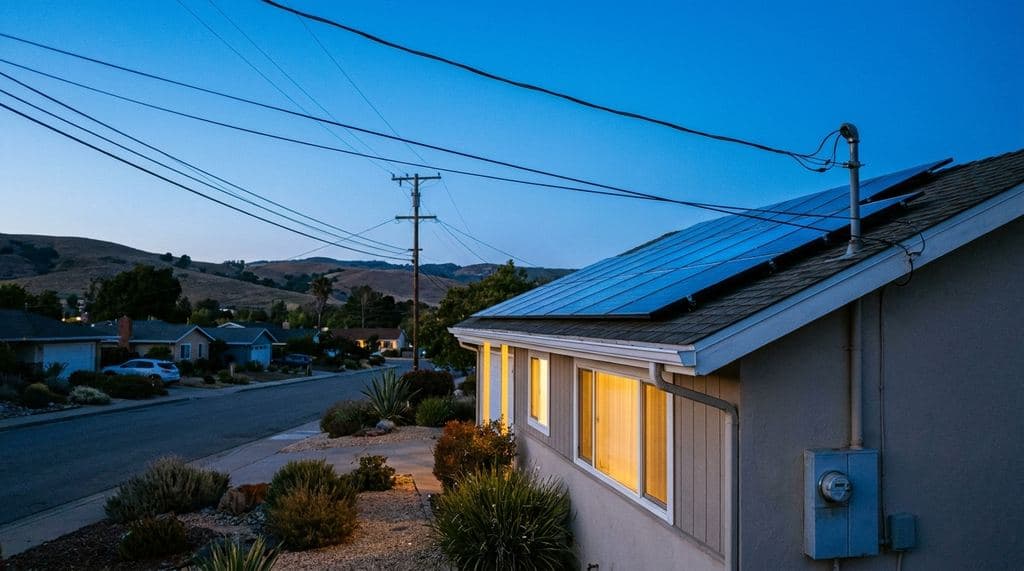
What NEM 3.0 actually is.
"NEM" stands for net energy metering — the system that credits you for the solar power you send back to the grid. California is on its third major version of those rules, which is why everyone calls it NEM 3.0 (its official name is the Net Billing Tariff). It governs customers of the investor-owned utilities: Southern California Edison, SDG&E, and PG&E.
Under the previous rules, NEM 2.0, a kilowatt-hour you exported was credited at close to the full retail rate — roughly the same as a kilowatt-hour you bought. That made solar-only systems easy to justify. NEM 3.0 changed the credit from retail value to avoided-cost value, which is much lower. The practical effect: the typical credit for exported power dropped by around 75%.
Update, June 2026: the legal challenges are over.
On June 10, 2026 the California Supreme Court declined, for the second and final time, to review the appellate decision upholding the Net Billing Tariff. The petition had been brought by the Environmental Working Group, the Center for Biological Diversity, and the Protect Our Communities Foundation. NEM 3.0 is now the permanent rule for SCE, PG&E, and SDG&E customers — there is no pending case that could change the export-credit math below. pv magazine, June 10, 2026
The three things to understand.
It took effect in April 2023
Any residential solar system on an investor-owned utility submitted for interconnection after April 14, 2023 is on NEM 3.0. Earlier systems were grandfathered onto the older NEM 2.0 rules.
Export credits fell ~75%
The credit you earn for sending surplus power to the grid dropped sharply. Exported energy is now valued at avoided-cost rates that are a small fraction of the retail rate you pay.
Timing is everything
Export values change hour by hour and are highest during the 4–9 PM peak — exactly when your panels make the least. Storing power to spend during that window is where the value now lives.
Avoided-cost rates and the 4–9 PM peak.
Under NEM 3.0, the value of an exported kilowatt-hour isn't a single number — it changes by the hour, the season, and even the day, and the utilities publish those values in long lookup tables. Most midday hours, when your panels produce the most, are credited at only a few cents per kWh.
The credits climb during the late-afternoon and evening peak, roughly 4–9 PM — which is precisely when the sun is setting and your production is fading. That mismatch is the whole story of NEM 3.0: the power you have the most of is worth the least, and the hours when exports are valuable are hours when you barely have any to export.
This is why the conversation shifted toward storage. If you can keep your midday surplus in a battery and release it during that evening peak — to power your own home, offsetting expensive grid purchases — you capture the value that exporting alone now throws away.
Why NEM 3.0 made batteries the default.
Before NEM 3.0, the grid acted like a near-free battery: export by day, pull power back by night at almost the same value. NEM 3.0 broke that trade. Now self-consumption — using your own solar rather than exporting it — is what drives the return. A real battery fills that role, which is why solar+battery payback (about 6–9 years) outperforms solar-only (about 10–14 years) for most homes on SCE, SDG&E, and PG&E.
Who's exempt: municipal utilities
NEM 3.0 only applies to the investor-owned utilities. If your power comes from a municipal utility — LADWP, Pasadena Water & Power, Riverside Public Utilities and others — you're on their own net-metering program, which the state's NEM 3.0 decision did not touch. Those programs are generally more generous, so solar-only can still make strong financial sense in muni territory.
Grandfathering: pre-2023 NEM 2.0 systems
If your interconnection application was submitted before April 14, 2023, you were grandfathered onto NEM 2.0 and keep those more favorable export credits for a 20-year legacy period from your permission-to-operate date. That status generally stays with the system — worth knowing if you own or are buying a home with existing pre-2023 solar.
What NEM 3.0 means for a new system today.
If you're on SCE, SDG&E, or PG&E and going solar now, you'll be on NEM 3.0 — there's no avoiding it, and no reason to panic about it. It simply means a smart design is built around self-consumption and storage rather than exporting surplus to the grid. Sized and paired correctly, solar still saves most homeowners a great deal of money.
The honest takeaway: NEM 3.0 didn't end residential solar in California. It ended the era of treating the grid as a free battery. We design every system for the NEM 3.0 rules from day one, model both solar-only and solar+battery, and show you the real difference so you can decide.
Common questions about NEM 3.0.
- What is NEM 3.0?
- NEM 3.0 — formally the Net Billing Tariff — is California's current rules for how rooftop solar owners are credited for the power they send to the grid. It applies to customers of the investor-owned utilities (Southern California Edison, SDG&E, and PG&E). Under the older NEM 2.0, exported power was credited at close to the full retail rate. Under NEM 3.0, exports are credited at much lower avoided-cost values, which cut the typical export credit by roughly 75%.
- When did NEM 3.0 take effect?
- The California Public Utilities Commission approved it in December 2022, and it took effect for new residential applications on April 14, 2023. Systems whose interconnection applications were submitted before that date were grandfathered onto NEM 2.0. If your system predates the cutoff, you keep the older, more generous rules for your legacy period.
- How does NEM 3.0 change export credits?
- Instead of crediting exports near the retail rate, NEM 3.0 uses avoided-cost rates that vary by hour, season, and day — published in long lookup tables. Most daytime export hours are credited at just a few cents per kWh, far below what you pay to buy power back. The credits spike during the late-afternoon and evening peak (roughly 4–9 PM), which is when solar production is already winding down. In practice this means exporting midday surplus is worth much less than using or storing that energy yourself.
- Why do batteries matter under NEM 3.0?
- Because the gap between what you earn for exporting power and what you pay to buy it back got much wider. A battery lets you store your cheap midday production and use it during the expensive 4–9 PM peak instead of exporting it for pennies. That self-consumption is where most of the savings come from now — which is why solar+battery payback (roughly 6–9 years) beats solar-only (roughly 10–14 years) for most SoCal homes on the investor-owned utilities. A battery also keeps your home powered during outages and PSPS events.
- Who is exempt from NEM 3.0?
- NEM 3.0 only governs the investor-owned utilities. Municipal utilities — including LADWP, Pasadena Water & Power, and Riverside Public Utilities — set their own net-metering rules and were not changed by NEM 3.0. Those rules are generally more favorable, so solar-only systems can still pencil out well in muni territory. Existing NEM 2.0 customers are also effectively exempt for their 20-year legacy period.
See what NEM 3.0 means for your bill.
We'll model your utility's actual export rates and show solar-only vs. solar+battery side by side — no pressure, the complete pricing visible.
Questions? Call (310) 564-8817.