Your Solar Company Went Out of Business: What California Homeowners Should Do Now (2026)
At least 3 major California solar installers have filed for bankruptcy since August 2024 — here is the exact step list to protect your warranties, your monitoring, and your loan rights.
By Taylor Crouse — Founder, Helios Energy GlobalPublished
Quick answer
- At least 3 major California installers — SunPower (August 2024), Titan Solar (June 2024), and Freedom Forever (Chapter 7, August 2026) — have closed or filed for bankruptcy since 2024; the pattern is ongoing.
- Your panels keep producing. A bankruptcy is a legal event, not a physical one — the hardware on your roof is unaffected.
- Manufacturer warranties on panels (typically 25 years), inverters, and batteries survive because they belong to the manufacturer, not the installer.
- The installer's workmanship and roof-penetration warranty is almost certainly gone. Your loan or lease payment continues to whoever now services it.
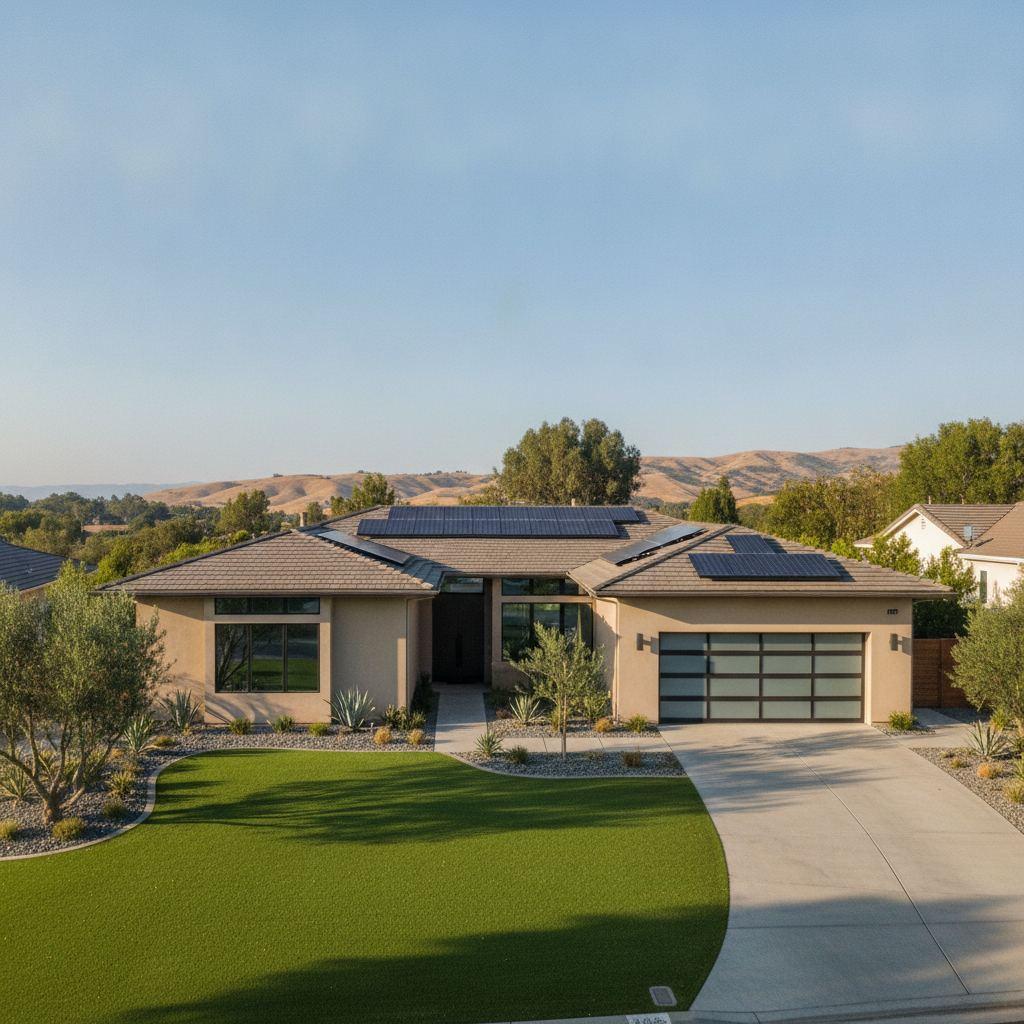
At least 3 major California residential solar companies have filed for bankruptcy or abruptly closed since mid-2024, and the wave is not over. Your panels are still producing power today — but the workmanship warranty that covered leaks, wiring mistakes, and labor defects is almost certainly unenforceable, and you need to take seven specific steps to protect everything that can still be saved.
Last verified: November 2026 by Helios Energy Global.
What actually survives when your installer closes
Manufacturer warranties survive. What is gone is the company's workmanship warranty and its service team. Any licensed California solar contractor can service the system, and manufacturer warranties on panels, inverters, and batteries still apply.
Here is how each piece of your system breaks down:
| Component | Warranty type | Survives closure? | Who honors it |
|---|---|---|---|
| Solar panels | Manufacturer product & power (est. 25–30 yr) | Yes | Panel maker (e.g., Maxeon, Q Cells, REC, Silfab) |
| String inverter | Manufacturer (est. 12–25 yr) | Yes | SolarEdge, SMA, etc. — see SolarEdge guide |
| Microinverters | Manufacturer (est. 25 yr) | Yes | Enphase — see Enphase warranty guide |
| Battery (Tesla, Enphase, Franklin) | Manufacturer (est. 10–15 yr) | Yes | Respective manufacturer |
| Installer workmanship & roof penetrations | Installer-issued | No | No one — budget for out-of-pocket repairs |
| Production guarantee | Installer-issued | No | File as unsecured claim in bankruptcy court |
Your panel manufacturer warranty — typically 25 years for product and power output — survives the installer's bankruptcy. Manufacturers like Enphase, SolarEdge, Q Cells, and REC honor their warranties through their own dealer networks. The catch: most manufacturers require a licensed installer to file the claim on your behalf. That means you need to find a new service company — step 4 below.
For a deeper look at how panel warranties work for orphaned systems, see our guide Solar Panel Warranties Explained, which has a dedicated section on systems whose installers have closed. For inverters specifically, Solar Inverter Replacement Cost California covers the orphaned-system scenario.
The pattern since 2024: what happened and why it matters
Three of the most-recommended California solar companies have filed for bankruptcy since 2024: SunPower (August 2024), Sunnova (June 2025), and Freedom Forever (April 2026, moved to Chapter 7 liquidation in August 2026).
Freedom Forever filed Chapter 11 on April 15, 2026, and converted to Chapter 7 liquidation on August 7, 2026, after the company found no buyer or restructuring sponsor, and its main California contractor license, #1029644, is suspended on the CSLB record.
Sunnova filed for Chapter 11 on June 9, 2025, in Houston, reporting roughly $8.9 billion in long-term debt.
Many California loans also changed hands after Solar Mosaic's 2025 bankruptcy.
These are the headline names — but smaller California installers have also closed without filing public bankruptcy cases, leaving homeowners with no clear path to warranty service. California homeowners have access to protections not available in other states. The CPUC's Solar Consumer Protection Guide (Version 4, 2025) outlines your rights.
Your 7-step action plan
Step 1 — Find out who services your system right now
This is the first call to make, before anything else.
- Loan customers: Check your most recent loan statement or the servicer letter you received after closing. Confirm who services your loan now, since many California loans changed hands after Solar Mosaic's 2025 bankruptcy. Common current servicers include Solar Servicing LLC (for former Mosaic loans) and GoodLeap.
- Lease or PPA customers: A lease or PPA is usually sold to a successor company, which generally takes over your original terms. Check the company name on your most recent bill or payment confirmation.
- Cash buyers: The solar panels, inverters, and racking on your roof are your property. The company's bankruptcy doesn't change that. Your only ongoing relationship is with your utility and your equipment manufacturers.
Step 2 — Transfer monitoring to your own account
Most installers set up monitoring (Enphase Enlighten, SolarEdge mySolarEdge, Tesla app) under a company account. If the company is gone, that account may go dark.
- Log in to your monitoring platform directly using the homeowner credentials in your original paperwork.
- If you only have the installer's login, contact the manufacturer's homeowner support line to claim the system under your email address. You will need the system serial number or gateway ID from your commissioning documents.
- Enphase and SolarEdge both have dedicated processes for transferring orphaned systems to homeowner accounts — your new service company can facilitate this.
Step 3 — Register the manufacturer warranty in your name
Solar panel manufacturer warranties are between you and the manufacturer and generally survive the installer's bankruptcy. Contact the manufacturer to ensure your system is registered.
Pull your original installation paperwork and locate:
- Panel brand and model (on the commissioning report or the panels themselves)
- Inverter or microinverter brand and serial numbers
- Battery model and serial number (if applicable)
Register each piece of equipment directly on the manufacturer's homeowner portal. If registration has lapsed or was never completed, call the manufacturer's warranty line — most will still register systems that are within the original warranty window.
Step 4 — Check the CSLB license status of your old installer
The CSLB investigates contractor misconduct. Go to cslb.ca.gov and look up your installer's license number (it is on your contract). A suspended or revoked license is the first indicator that formal complaints or bond claims may be available to you.
The CSLB requires a $25,000 contractor license bond for most active licensees.
The bond protects consumers by providing a source of recovery if a contractor violates the license law. If the license was active and bonded at the time of your installation, you may be able to file a claim against that bond — the maximum recovery is $25,000 per license.
Step 5 — File a CSLB complaint and a bankruptcy proof of claim
CSLB complaint: File at cslb.ca.gov or call (800) 321-2752. A complaint creates a public record and can trigger an investigation, even if the company is gone. California's Unfair Competition Law (B&P Code §17200) also provides a private right of action against deceptive solar sales practices — a tool unavailable in most other states.
Bankruptcy proof of claim: If a formal bankruptcy case is open, file a proof of claim through the case's claims agent (usually Kroll or Stretto — search the company name on PACER). The bar date is the cutoff after which claims are barred, and it comes fast: Sunnova's petition was June 8, 2025 and the general bar date was August 6, 2025 — roughly 60 days. Do not wait.
Step 6 — Understand your loan rights under the FTC Holder Rule
For loans arranged through the installer, the Federal Trade Commission's Holder Rule requires seller-arranged consumer credit contracts to state that any holder of the contract "is subject to all claims and defenses which the debtor could assert against the seller." In practice, that can allow a homeowner to raise the installer's failure to finish the work against the lender that now holds the loan.
The lender that holds your loan cannot use the installer's bankruptcy as a reason to refuse your claims. Look for the all-caps Holder Rule notice in your loan documents to confirm it applies. If the system was never finished, never turned on, or has chronic defects the installer refused to fix, the Holder Rule may be your most direct path to relief. Consult a California consumer protection attorney — this is not a DIY process.
Important: Your lender is a separate company, so the installer's bankruptcy does not erase the loan, and missed payments can still be reported to credit bureaus. Do not stop paying without legal advice.
Step 7 — Hire an independent repair company that works on any brand
Any California contractor with an active C-46 (solar) or C-10 (electrical) license can service a system regardless of who originally installed it.
Check the license on the CSLB lookup before you hire anyone, and ask whether they will file manufacturer warranty claims for you.
Helios Energy Global services systems installed by other companies across Southern California — SCE territory (Los Angeles, Orange County, Inland Empire), LADWP territory, and SDG&E territory. We carry an active CSLB C-10 license (#982201), pull permits, and file manufacturer warranty claims. See our solar repair and maintenance service for details.
Company-specific guides: go here for your installer
Each company's situation is different — successor servicers, claim deadlines, and monitoring platforms all vary. Rather than summarize each story here, we maintain dedicated guides:
- Freedom Forever — Freedom Forever bankruptcy: California homeowner guide | Also see Freedom Forever customer service page
- Sunnova — Sunnova bankruptcy: who services Sunnova solar in California
- SunPower — SunPower system repair: who services SunPower in California
- Titan Solar Power — Titan Solar Power closed: who services Titan systems in California
- Lumio — Lumio solar closed: who services Lumio systems in California
- ADT Solar — ADT Solar closed: who services ADT Solar systems in California
- Renova Energy (Coachella Valley) — Renova Energy closed: who services Renova solar in the Coachella Valley
For equipment-specific warranty and repair guidance, see:
- SolarEdge inverter warranty and replacement in California — covers how to file a claim without the original installer
- Enphase warranty: microinverters and IQ Battery in California — covers system transfer and orphaned monitoring accounts
SCE vs. LADWP vs. SDG&E: does your utility matter here?
Your utility does not affect your warranty rights or your loan obligations — those are between you, the manufacturer, and your lender. But it does affect two things:
Interconnection and permission to operate (PTO): If your system was installed but never received PTO from the utility, you cannot legally export power. SCE, SDG&E, and PG&E process PTO through their interconnection portals. LADWP has its own process. If your installer went under before completing interconnection paperwork, a licensed contractor can submit it on your behalf — this is a common situation for Titan Solar and Freedom Forever customers in the Inland Empire and Los Angeles Basin.
Net metering tariff: SCE, SDG&E, and PG&E customers are on NEM 3.0 (the Net Billing Tariff). LADWP customers remain on retail-rate net metering. Neither tariff changes because your installer closed, but if you add a battery to an existing system, the rules for how that affects your tariff differ by utility. See our NEM 3.0 guide and solar vs. battery under NEM 3 for Southern California specifics.
Frequently asked questions about solar company closures in California
Do my solar panels stop working when the installer goes bankrupt?
No. A bankruptcy is a legal and financial event, not a physical one. The panels, inverters, and racking on your roof are unaffected. Your system will continue to produce power as long as the equipment is functioning — the only things that stop are the installer's phone line, warranty service, and monitoring support.
Does my solar loan get cancelled if the company goes bankrupt?
Solar loans are typically issued by a third-party lender, not the solar company itself. If the solar company goes bankrupt, your loan obligation generally remains with the lender. You typically still owe the full loan balance regardless of the installer's status. The FTC Holder Rule may give you claims against the lender if the system was defective or never completed — consult an attorney.
Who do I call if my system stops working and the installer is gone?
Call a licensed independent solar service company. Any California contractor with an active C-46 (solar) or C-10 (electrical) license can service a system regardless of who originally installed it. Check the CSLB license lookup before hiring. If you suspect a hardware fault rather than a wiring or installation issue, start with the solar panels not working checklist before scheduling a service visit.
Is the CSLB $25,000 bond worth filing against?
It can be, but the pool is limited. The CSLB requires a $25,000 contractor's bond for every active license, and the bond must be in place before CSLB can issue an active license, reactivate an inactive license, or renew an active license. If multiple homeowners file claims against the same bond, the $25,000 is divided among all valid claimants. File your complaint as early as possible to be in the queue.
What if my system was never finished or never turned on?
This is the strongest fact pattern for a Holder Rule claim against your lender. If the system was never finished or turned on, the FTC Holder Rule may allow the homeowner to raise the installer's failures against the lender, up to the amount paid on the loan. Document everything in writing — photos, emails, your contract, and any payments made — before contacting the lender.
Can I add a battery to my orphaned system?
Yes. A licensed contractor can design and install a battery on any existing solar system regardless of who installed the panels. In SCE territory, adding storage to an existing NEM 3.0 system does not reset your interconnection date. In LADWP territory, the rules differ. See our batteries page for storage options and our locations page for Southern California service areas. For cost context, see solar panel cost in California.
How do I find a reputable independent service company?
Ask for the CSLB license number and verify it at cslb.ca.gov before signing anything. Ask specifically whether the company files manufacturer warranty claims on behalf of homeowners, and get the scope of work and total price in writing before any work begins. Helios Energy Global offers a free consultation and custom design for both repair and new installations across Southern California.
Next steps
- Book a free consultation and custom design — tell us your installer's name, your equipment brand, and what's happening with your system. We will give you a straight assessment.
- Solar repair and maintenance service — Helios services systems installed by other companies across SCE, LADWP, and SDG&E territory.
- Freedom Forever customer page — dedicated resources if Freedom Forever installed your system.
- Batteries: add storage to your existing system — protect against outages even if your original installer is gone.
- Solar panel cost in California — if you are weighing a full system replacement.
- NEM 3.0 explained for Southern California homeowners — understand how your utility tariff works going forward.
- See all Helios service locations — Santa Monica, Los Angeles, Pasadena, Inland Empire, Orange County, and the Coachella Valley.
Sources
- CPUC California Solar Consumer Protection Guide, Version 4 — October 2025
- CSLB C-46 Solar Contractor License Guide 2026, CSLP Schools — November 2026
- California Contractor License Bond $25,000 CSLB Requirements 2026, BondsExpress — October 2026
- Solar Company Bankruptcy Tracker: 26 Failed Installers 2026, Home Repair Dispatch — October 2026
More guides
Best Solar Companies in Granada Hills, CA (2026): Honest Rankings for LADWP Homeowners
Granada Hills runs on LADWP — a municipal utility with its own retail-rate net metering that NEM 3.0 never touched. This guide ranks the 9 best solar installers for the neighborhood and gives you the numbers you need before signing anything.
ReadThe 7 Best Solar Companies in El Cajon, CA (2026): East County Heat, SDG&E Rates, and the Battery Question Answered
El Cajon homeowners face the nation's highest major-utility rates from SDG&E and real East County heat. This guide ranks the 7 best solar installers serving the city in 2026, explains NEM 3.0, and shows you how to read a quote without getting burned.
ReadWhat triggers SCE PSPS shutoffs in 2026?
SCE can cut power when winds exceed roughly 35–60 mph and humidity drops below 15% in HFTD Tier 2 and Tier 3 fire-risk zones across SoCal foothills and canyons.
ReadGet a free consultation and custom design.
No pressure, no obligation — the owner reviews every design we send.