Sunnova Bankruptcy: Who Services Sunnova Solar Systems in California Now?
Sunnova filed Chapter 11 in June 2025; its assets were sold to Solaris Assets LLC and SunStrong Management now services most former Sunnova lease, PPA, and battery accounts in California.
By Taylor Crouse — Founder, Helios Energy GlobalPublished
Quick answer
- Sunnova filed Chapter 11 on June 8, 2025 in the Southern District of Texas (Case 25-90160).
- The court approved the sale of substantially all Sunnova assets to Solaris Assets LLC (controlled by GoodFinch Management) for approximately $118 million; the sale closed September 4, 2025.
- SunStrong Management, LLC is now the servicer for most former Sunnova lease, PPA, and battery-lease accounts in California — handling billing, monitoring, and operations & maintenance.
- Your contract, its payment obligations, and manufacturer equipment warranties continue; Sunnova's own workmanship warranty and production guarantee are a separate question addressed below.
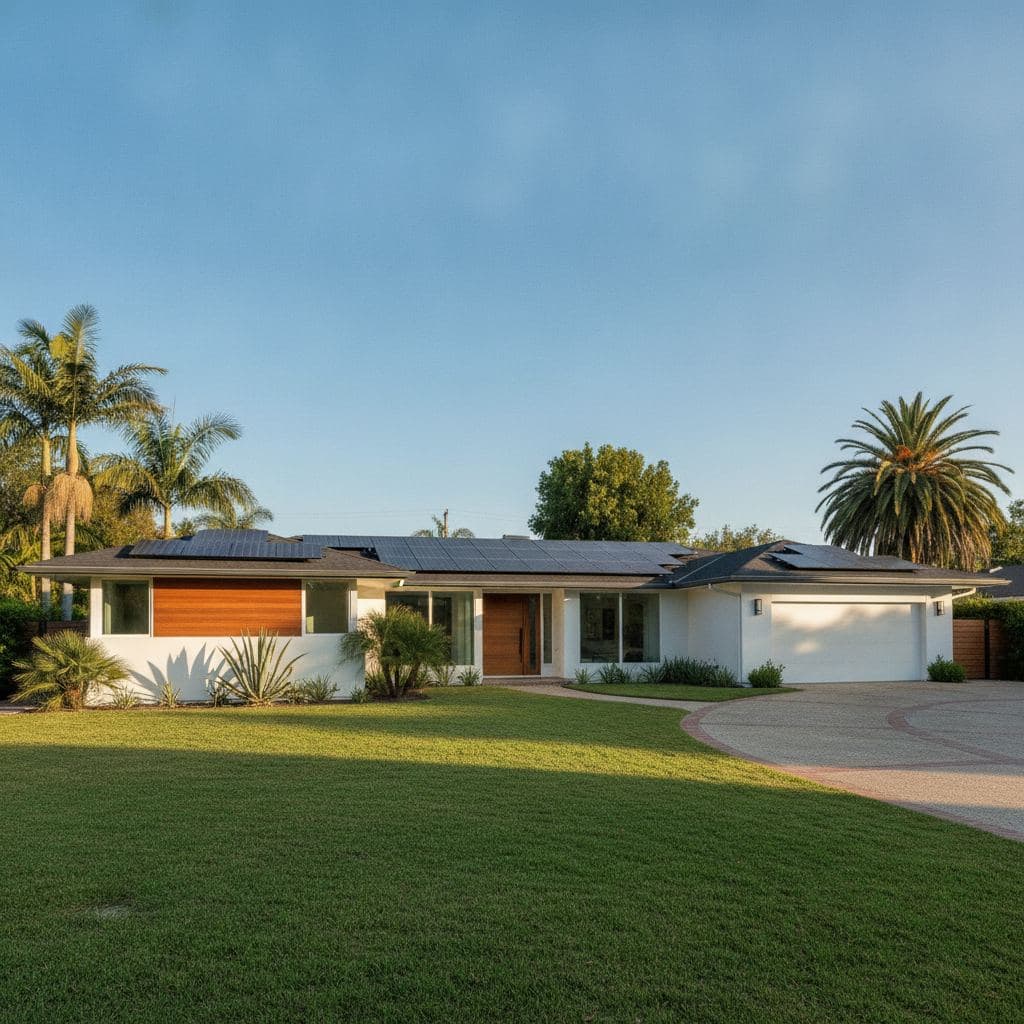
Sunnova Energy International Inc. filed voluntary petitions for Chapter 11 relief in the United States Bankruptcy Court for the Southern District of Texas on June 8, 2025, to facilitate a sale process for certain of its assets and business operations.
Through a 155-day restructuring, an ad hoc group of the company's bondholders formed Solaris Assets, LLC — backed by affiliates of GoodFinch Management — and acquired substantially all of Sunnova's assets for approximately $118 million, with operations transitioning to SunStrong Management.
Last verified: October 2026 by Helios Energy Global.
What the bankruptcy and sale changed — and what it did not
The filing and asset sale: a timeline
Sunnova listed estimated assets and liabilities in the range of $10 billion to $50 billion and had laid off about 55% of its workforce — roughly 718 employees — in the days before filing.
The bankruptcy court approved the sale of substantially all of Sunnova's assets and business operations to an ad hoc group of debtor-in-possession lenders and affiliates or entities controlled by GoodFinch Management, LLC.
The deal included Sunnova's residential solar servicing platform and its solar generation and storage portfolio in exchange for a credit bid of the debtor-in-possession financing, $25 million in cash, and certain cure costs.
In September 2025, Solaris Assets LLC completed the firm's acquisition.
On November 12, 2025, the bankruptcy court confirmed Sunnova's Chapter 11 Plan; this followed the previously approved sale of substantially all of the company's assets to Solaris Assets, LLC, through which Sunnova's core operations transitioned to SunStrong Management, LLC, a full-service asset manager for the renewables industry.
Under Solaris's ownership, SunStrong's experienced management team continues to lead day-to-day operations. Pursuant to the terms of the Plan, a Creditor Trustee was appointed to distribute the proceeds of the sale to creditors and conduct an orderly wind-down of the company's remaining business operations.
Key dates at a glance
| Event | Date |
|---|---|
| Sunnova Chapter 11 petition filed | June 8, 2025 |
| Court approves asset sale to Solaris / SunStrong | July 31, 2025 |
| Solaris acquisition closes; SunStrong takes over | September 4, 2025 |
| Chapter 11 Plan confirmed | November 12, 2025 |
| Plan effective date | November 14, 2025 |
| Sunnova estate: orderly wind-down begins | November 2025 onward |
| SunStrong actively servicing CA accounts | As of this writing (Oct 2026) |
Sources: Sunnova SEC 8-K (June 9, 2025); Business Wire releases (July 31 and November 12, 2025); Solaris acquisition press release (September 4, 2025).
Who services your system now: SunStrong Management
Under the court-approved agreement, SunStrong Management, LLC took over servicing of solar and storage systems.
SunStrong Management is a full-service asset manager dedicated to the renewable-energy sector; it specializes in the management of existing residential solar portfolios, including leases, loans, and power-purchase agreements, and provides comprehensive services such as operations & maintenance, billing & collections, and investor engagement.
Solaris is now in control of Sunnova's residential solar servicing and O&M platform and Sunnova's solar and storage portfolio, with core operations transitioning to SunStrong Management; SunStrong's management team leads the go-forward business.
Important caveat: The court record and Sunnova's own releases describe SunStrong as the servicer for "substantially all" customers — not every single account. A small number of accounts may route differently. If your account has transitioned to SunStrong, you should have already received communications outlining next steps for maintaining your solar service, billing, and account access. If you have not received that communication, contact SunStrong directly to confirm who holds your account before sending any payment.
Billing vs. physical service: two separate channels
Day-to-day operations including maintenance, billing, and collections are managed by SunStrong Management, LLC. The ownership of the panels in a lease stays with whoever purchased the assets through the court process. Actual maintenance is handled by SunStrong's field service team, which may use local solar contractors for certain regions.
In practical terms for Southern California homeowners:
- Billing questions, payment routing, account access: Contact SunStrong Management. Check your most recent statement for the current phone number and customer portal, or visit SunStrong's website directly.
- System not producing / physical repair needed: Also start with SunStrong, which dispatches field technicians. Document every request in writing (email or portal ticket) with a date stamp.
- Equipment fault on panels, inverters, or batteries: Contact the manufacturer directly in parallel (Enphase, SolarEdge, Tesla, Generac, etc.) — their warranties run independently of who holds your contract.
What continues after the bankruptcy
Your contract and payment obligations
The single most common and most costly mistake after a solar bankruptcy is to stop paying. A Chapter 11 filing does not cancel your lease, PPA, or loan. Those are legal obligations that survive the bankruptcy unless they are formally rejected through the court — and the agreements were specifically kept in force here. Stopping payments can trigger late fees, collections, credit damage, and default remedies, with no upside.
With a Sunnova lease or PPA after bankruptcy, you are paying for the use of the equipment or the power it produces. These contracts have been transferred to SunStrong Management. You should have received a notice telling you where to send your monthly lease payments. If you have not, contact SunStrong directly.
Manufacturer equipment warranties
Equipment-level warranties — panels, inverters, batteries — are held by the original manufacturer (Enphase, SolarEdge, Tesla, Generac, LG, etc.) and remain valid independent of the servicer. These are direct contracts between the manufacturer and the equipment, not between you and Sunnova. A bankruptcy does not void them.
Sunnova's own workmanship warranty and production guarantee
This is where the picture is less clear, and it is worth being direct about what the sources say and do not say.
Sunnova's workmanship warranty is probably gone. When a company liquidates, its warranties are unsecured liabilities and generally do not survive the bankruptcy. No court filing or Sunnova press release reviewed for this page states that SunStrong assumed Sunnova's workmanship warranty obligations in full. The service or workmanship warranty depends on what SunStrong has committed to under the transferred contract. Equipment warranties from panel and inverter manufacturers often still apply independently.
The production guarantee — the promise that your system would generate a certain number of kilowatt-hours per year — was a Sunnova-level commitment. The sources reviewed for this page do not confirm that SunStrong has assumed that obligation. If you believe you are owed a production-shortfall credit, document the claim in writing to SunStrong and keep a copy.
The dealer that installed your system is a separate question. Sunnova operated a dealer model: a local contractor installed the hardware, and Sunnova provided the financing and service layer. If the installing contractor is still in business and holds a valid CSLB license, you may have a separate workmanship claim against them. If that contractor has also closed, California's CSLB contractor license bond (currently $25,000 per SB 607, shared among claimants) is one avenue — claims must be filed within the statutory window.
Practical guide for Southern California homeowners
SCE vs. LADWP: your utility relationship is unchanged
Your utility interconnection agreement — whether you are on SCE's NEM 3.0 (Net Billing Tariff), LADWP's retail-rate net metering, or another Southern California municipal utility's program — is between you and your utility, not between you and Sunnova. The bankruptcy does not affect your interconnection. Your system continues to export power and receive credits (or avoided-cost credits under NEM 3.0 if you are an SCE customer) exactly as before. See our NEM 3.0 explainer for how the tariff works for SCE customers, and our solar vs. battery guide under NEM 3.0 if you are weighing storage.
When your monitoring goes dark
Monitoring app outages have been a common complaint since the transition. If your Sunnova monitoring app stops showing production data:
- Check the inverter directly. Most Enphase microinverters have a green LED sequence; most string inverters have a display. A green light with no app data usually means a communication issue, not a system failure.
- Contact SunStrong to report the monitoring gap and request re-enrollment in whatever monitoring platform they are currently using.
- Cross-check your utility bill. If your SCE or LADWP bill shows a large increase in grid consumption, that is a stronger signal your system has stopped producing.
- Call a licensed independent contractor to do a physical inspection if SunStrong cannot dispatch someone promptly. See our solar repair and maintenance page for what that inspection should cover.
Selling or refinancing your home with a Sunnova contract
Lease or PPA: A leased solar system cannot simply transfer with the deed like an owned system. Instead, the buyer must apply to assume the lease or PPA agreement, and the solar company must approve them.
Solaris retained SunStrong Management as the servicer for the former Sunnova portfolio; SunStrong Management now handles billing, operations, and customer service for legacy Sunnova customers. That means the transfer approval request goes to SunStrong. Reports indicate that distressed companies like the reorganized SunStrong can be slow to process these requests, causing closing delays that frustrate buyers and sellers alike. Start the transfer process as early as possible — ideally at listing, not at contract.
Solar loan: Your loan obligation is with the lender (GoodLeap, Mosaic, Dividend, or another financing entity), not with Sunnova. The lender holds a UCC-1 fixture filing on the panels. Pay off the loan at or before closing, or confirm with the lender whether the buyer can assume it. The panels transfer with the home once the loan is cleared.
Owned / cash-purchase system: Transfers with the deed like any other fixture. No servicer approval needed.
Refinancing: Lenders will ask about the UCC-1 fixture filing if you have a lease or PPA. SunStrong, as the servicer for the asset owner (Solaris), would need to provide a subordination or consent letter. Allow extra time and document the request in writing.
Who can work on the system — owned vs. leased
| Contract type | Physical work on the system |
|---|---|
| Cash purchase / paid-off loan | Any CSLB-licensed C-46 (solar) contractor can perform repairs, upgrades, or removal. No third-party approval needed. |
| Active solar loan | You own the equipment, so a licensed contractor can work on it. Confirm with your lender that the work will not affect the fixture filing or loan terms. |
| Lease or PPA | The equipment is owned by the asset holder (Solaris / SunStrong). Work that modifies, removes, or replaces the leased panels or inverters generally requires the system owner's approval through SunStrong. Get written authorization before any contractor touches the hardware. |
For leased and PPA systems, this matters most when a roofer needs to remove panels for a re-roof. When a home has a leased solar system or PPA, the panels on the roof are not owned by the homeowner — they belong to a third-party solar company. Roofing work that requires panel removal must be coordinated with SunStrong, who will need to authorize (and likely dispatch) the panel removal and reinstallation. Budget time for that approval process.
What this means if you are thinking about a new system
If you own your home outright, have a loan-financed Sunnova system, or are buying a home where the Sunnova system has been bought out, you are free to add panels, add a battery, or upgrade your system with any licensed installer. Your panel and inverter warranties survive. Your installer's workmanship warranty, roof leak coverage, and production guarantee do not. That gap is worth filling with a new installation that comes with a clear, written workmanship warranty from a licensed contractor.
If you are in that position and want a no-obligation assessment of what a new or expanded system would cost for your Southern California home, our design and savings tool gives you a site-specific estimate, and our locations page covers where we work across the region. Battery pricing for 2026 starts around $13,000–$15,500 installed for an Enphase IQ Battery 10C and $14,500–$18,500 for a single Tesla Powerwall 3 — see our batteries page for the full range. Solar system costs run approximately $2.50–$3.50 per watt installed before any applicable incentives; our solar panel cost guide walks through the full math.
One note on incentives: the 30% federal residential solar tax credit expired December 31, 2025. There is no federal credit for a 2026 purchase. California's SGIP residential battery rebate program is waitlisted in 2026, not currently accepting new applications. We will never quote you a rebate we cannot confirm in writing.
Frequently asked questions about Sunnova bankruptcy and California homeowners
Who is SunStrong Management and how do I reach them?
SunStrong Management is an operations and asset management company that sits between asset owners — capital partners committed to investing in sustainable energy — and the real world, where infrastructure systems need servicing and customers need support. Check your most recent billing statement for the current customer service number and portal login. The number cited in multiple 2025–2026 sources is (833) 514-1858, but always verify against your statement, as routing can change.
My Sunnova app stopped working. Is my system broken?
Not necessarily. Monitoring platform transitions have caused widespread app outages that are separate from system performance. Check your inverter's status lights and cross-check your utility bill for unusual grid consumption. If the system is physically producing power, the issue is likely a communication or account-migration problem. Report it to SunStrong in writing and request a resolution timeline.
Do I still owe my lease or PPA payment now that Sunnova is bankrupt?
Lease and PPA contracts continue — terms generally cannot change without your consent. Yes, payments are still legally owed. The obligation transferred to SunStrong as the servicer. Stopping payment does not cancel the contract and can result in credit damage or default proceedings.
Are my solar panel and inverter warranties still valid?
Your contract did not disappear, your panels still work, and your manufacturer warranties are almost certainly intact. Panel, inverter, and battery warranties are between you and the manufacturer — Enphase, SolarEdge, Tesla, Generac, and others — and are unaffected by Sunnova's bankruptcy. File claims directly with the manufacturer.
What happened to Sunnova's workmanship warranty and production guarantee?
No court filing or Sunnova press release confirmed that SunStrong assumed these obligations in full. The service or workmanship warranty depends on what SunStrong has committed to under the transferred contract. If you believe you are owed coverage under either promise, submit a written claim to SunStrong and keep a copy. If the claim is denied, a California attorney familiar with solar contracts can advise you on your options.
Can I sell my home with a Sunnova lease or PPA on it?
Yes, but the buyer must qualify to assume the contract, and SunStrong (as servicer for the asset owner) must approve the transfer. The Sunnova bankruptcy created account transition confusion for many customers. Verify the seller's account is current before listing. Allow extra time — start the transfer process earlier than normal. If the buyer refuses to assume the lease, you may need to buy it out before closing.
Can I hire my own contractor to fix my Sunnova system?
It depends on your contract type. If you own the system outright (cash purchase or fully paid-off loan), any CSLB-licensed solar contractor can work on it. If you have a lease or PPA, the equipment belongs to Solaris / SunStrong, and you should get written authorization from SunStrong before a contractor modifies or removes any leased hardware. For owned systems that need repair now, see our solar repair and maintenance page.
Next steps
- Book a free consultation and custom design — no obligation, one all-in written price with equipment named by model
- Solar panel repair — if your Sunnova system is down and you need a licensed Southern California contractor
- Solar panel cost guide — full 2026 pricing breakdown for a new system
- Batteries — 2026 installed pricing for Powerwall 3, Enphase IQ Battery 10C, and FranklinWH aPower 2
- NEM 3.0 explained — how SCE's net billing tariff affects your solar economics
- SunPower system repair: who services SunPower in California — SunPower filed Chapter 11 in August 2024; similar questions, similar servicer
- Freedom Forever bankruptcy: California homeowners — the other major 2025 California solar bankruptcy
- Our locations — where Helios Energy Global serves Southern California
Sources
- Sunnova SEC Form 8-K — Chapter 11 Filing Press Release (Business Wire) — June 9, 2025
- Business Wire — Sunnova Receives Court Approval for Sale Transaction (via Morningstar) — July 31, 2025
- Business Wire — Sunnova Receives Court Approval of Chapter 11 Plan — November 12, 2025
- Nasdaq / Business Wire — Solaris Completes Acquisition of Sunnova — September 4, 2025
- Solar Power World — Acquisitions Now Complete: SunStrong in Charge of Legacy Sunnova Systems — September 4, 2025
More guides
Anaheim Public Utilities solar in 2026: rates, net metering, and what it means for your payback
APU's ~19–20¢/kWh blended rate and own NEM 2.0-style net metering — not CPUC NEM 3.0 — give Anaheim homeowners faster solar paybacks than most of Orange County.
ReadBest Solar Companies in San Diego, CA (2026): Honest Rankings for SDG&E Homeowners
SDG&E charges the highest residential rates of any major U.S. utility — nearly 46¢/kWh — making San Diego one of the strongest solar markets in the country. Here's how to find an installer who actually understands NEM 3.0 and your specific neighborhood.
ReadBest Solar Companies in Culver City, CA (2026): An Honest, Numbers-First Guide
Culver City homeowners face a unique solar decision: the city sits at the edge of two utility territories, and the 30% federal tax credit expired at the end of 2025. This guide breaks down the best local installers, real 2026 pricing, and how net metering actually works here.
ReadGet a free consultation and custom design.
No pressure, no obligation — the owner reviews every design we send.