What triggers SCE PSPS shutoffs in 2026?
SCE can cut power when winds exceed roughly 35–60 mph and humidity drops below 15% in HFTD Tier 2 and Tier 3 fire-risk zones across SoCal foothills and canyons.
By Taylor Crouse — Founder, Helios Energy GlobalUpdated
Quick answer
- SCE initiates PSPS when sustained winds reach roughly 35–55 mph (gusts up to 60+ mph) in high-risk corridors
- Relative humidity must also be below ~15–20% and fuels critically dry — it is a multi-factor trigger, not a single threshold
- Only homes in HFTD Tier 2 and Tier 3 zones are subject to PSPS; Tier 1 and non-HFTD areas are almost never cut
- A home battery sized at 10–16 kWh can cover essential loads for 8–24+ hours during a typical PSPS event
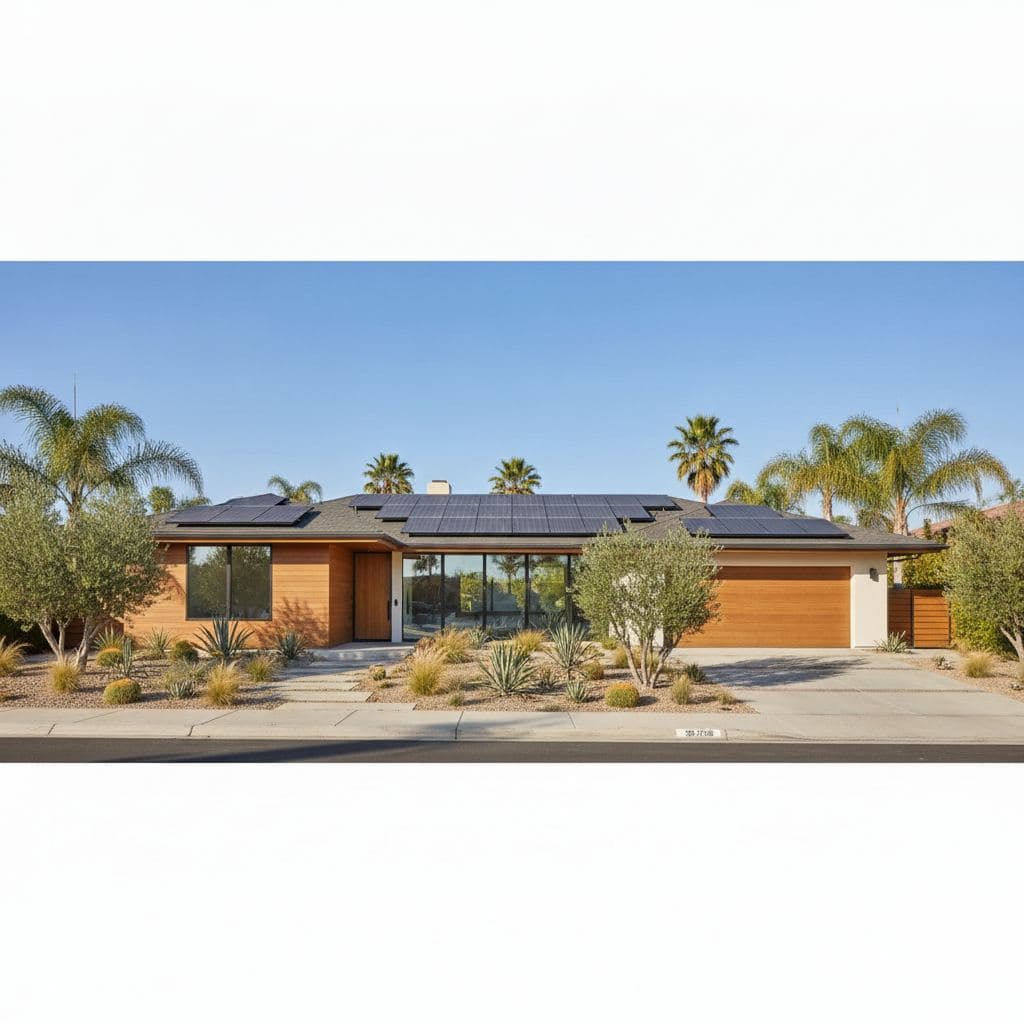
SCE's Public Safety Power Shutoff program activates when sustained winds in a given circuit corridor exceed roughly 35–55 mph — with gusts potentially topping 60 mph — and relative humidity falls below approximately 15–20%, and fuel moisture in grasses and brush is critically low. All three conditions must align; wind alone is not enough to flip the switch. The communities most exposed are those in the Santa Ana wind corridor: Malibu, the Santa Monica Mountains, Azusa, Glendora, Duarte, Arcadia foothills, the Cajon Pass communities, and canyon neighborhoods throughout the San Gabriel and Santa Clarita valleys.
Last verified: September 2026 by Helios Energy Global.
How SCE actually decides to cut the power
PSPS is not a single dial. SCE meteorologists and grid operations staff evaluate a real-time matrix of conditions before issuing any shutoff. Think of it as four gates that all have to open simultaneously.
Gate 1 — Wind speed and direction
Santa Ana winds are the primary driver. SCE monitors weather station data at roughly 1,200+ sensor locations across its territory (per SCE's own wildfire mitigation filings with the CPUC). The key thresholds that move a circuit toward shutoff consideration:
- Sustained winds: ~35–55 mph depending on the specific circuit's terrain and historical fire behavior
- Wind gusts: ~60 mph or higher in exposed ridge and canyon locations
- Wind direction: Offshore (easterly/northeasterly) flow is far more dangerous than onshore marine flow because it carries dry, warm air from the desert interior
Gate 2 — Relative humidity
Low humidity desiccates vegetation and dramatically increases the rate at which a power-line spark can ignite and spread. SCE's internal modeling weights:
- Relative humidity below ~15% as a high-concern threshold
- Below ~10% as a critical threshold that raises shutoff probability substantially
- The combination of low humidity and wind is exponentially more dangerous than either alone
Gate 3 — Fuel moisture and fire weather watch/warning
SCE coordinates with the National Weather Service and Cal Fire. An active Red Flag Warning or Fire Weather Watch is a strong precursor to PSPS action, though it does not automatically trigger one. Fuel moisture readings in grasses below about 6–8% and in shrubs below ~60% are considered critically dry by fire behavior analysts.
Gate 4 — Grid and equipment condition
SCE also factors in the condition of the specific transmission and distribution lines in the affected area. Circuits running through HFTD Tier 2 and Tier 3 territory with older infrastructure, longer spans, or known vegetation encroachment risks are prioritized for shutoff. SCE has been replacing older bare-wire conductors with covered conductor in many of these zones, which can reduce (but not eliminate) PSPS exposure over time.
HFTD Tier 2 vs. Tier 3: what the map actually means for your neighborhood
The High Fire-Threat District (HFTD) map, maintained by Cal Fire and adopted by the CPUC, is the foundational document that determines whether your address is even eligible for PSPS. Here is how the tiers break down:
| Tier | Risk Level | PSPS Eligible? | Typical SoCal Locations |
|---|---|---|---|
| Tier 1 / Non-HFTD | Standard | Almost never | Urban flatlands, coastal metro areas |
| Tier 2 | Elevated | Yes | Foothills of San Gabriel, Santa Monica Mtns, parts of Simi Valley, Altadena |
| Tier 3 | Extreme | Yes — highest priority | Upper canyon communities, Malibu, Topanga, Azusa/Glendora ridge, Cajon Pass |
If your SCE address is in Tier 2 or Tier 3, you should treat PSPS as a recurring seasonal reality, not a rare emergency. Tier 3 communities in particular — Topanga Canyon, upper Azusa, the Glendora Mountain Road corridor, parts of Lake Arrowhead access roads — have experienced multiple multi-day shutoffs in recent fire seasons.
You can look up your specific address on the CPUC's HFTD viewer or ask us to check it as part of a free consultation and custom design.
Which Southern California communities see PSPS most often?
Based on SCE's PSPS event histories filed with the CPUC, the circuits that have been de-energized most frequently are concentrated in:
Santa Ana wind corridor (highest exposure):
- Malibu and Topanga Canyon — long canyon roads, extreme Tier 3 terrain, frequent Red Flag events
- Azusa, Glendora, and Duarte foothills — San Gabriel Mountains interface, multiple circuits historically shut off
- Altadena and La Cañada Flintridge — elevated Tier 2/3 boundary, proximity to Eaton Fire-scarred terrain
- Simi Valley and Moorpark eastern canyons — Ventura County interface circuits
Inland and mountain communities:
- Lake Arrowhead and Crestline access areas — mountain terrain, limited circuit redundancy
- Cajon Pass corridor — major wind funnel, critical transmission infrastructure
- Santa Clarita canyon neighborhoods — Bouquet Canyon, San Francisquito Canyon roads
Lower-exposure (but not zero):
- Santa Monica, Culver City, and coastal communities are generally Tier 1 / non-HFTD — PSPS is rare but upstream transmission shutoffs can still cause outages indirectly
August 2026: SCE says shutoffs will be more frequent and last longer
On August 17, 2026, Southern California Edison told customers that PSPS events in 2026 "could occur more frequently, impact more customers and last longer" than in recent years. A week later, during Los Angeles's first run of three consecutive 100°F August days since 1885, SCE notified roughly 5,000 customers — about 3,900 in Los Angeles County and 1,300 in Santa Barbara County — of a potential shutoff. Treat that as the operating assumption for the rest of fire season: if your address sits in a Tier 2 or Tier 3 zone, a battery that is not charging or switching to backup is an urgent repair, not a maintenance item.
How long do SCE PSPS events typically last?
Duration varies widely based on how quickly conditions improve and how long SCE's patrol crews take to inspect lines before re-energizing. Historical events have ranged from:
- Short events: 4–12 hours (fast-moving wind event, rapid humidity recovery)
- Moderate events: 12–36 hours (multi-day Red Flag Warning, extended patrol requirements)
- Extended events: 2–5 days (sustained Santa Ana pattern, complex terrain, large circuit footprint)
The re-energization process itself — where crews physically inspect every span of de-energized line for damage before turning power back on — often adds 6–12 hours to the tail end of any event even after weather conditions improve.
What a home battery actually does during a PSPS event
This is where the numbers matter. A standard 10–16 kWh home battery (the installed cost range is roughly $14,000–$18,500 per unit in 2026) paired with a solar system can meaningfully extend your resilience:
- Refrigerator + lights + phone charging + router: ~8–20 hours on a single battery charge
- Add a second battery unit: 16–32 kWh of storage, covering 16–40+ hours of essential loads
- Solar recharge during the day: In SoCal's sunny climate, a properly sized solar array can replenish 5–10+ kWh on a clear day even during a shutoff, extending backup indefinitely during multi-day events
One important note: standard grid-tied solar panels shut off automatically during a PSPS event for the same safety reason SCE cuts the lines — to protect lineworkers. Only a solar system with a battery and proper islanding capability keeps your home powered. See our solar vs. battery NEM 3 guide for more on how this works under SCE's current tariff.
On incentives: the 30% federal residential solar tax credit expired December 31, 2025 and does not apply to 2026 installations. The California SGIP battery rebate program has residential funds that are currently waitlisted — worth applying to, but don't count on it for your project timeline. We track the queue and will flag any openings during your design consultation.
Frequently asked questions about SCE PSPS shutoffs
Does PSPS affect LADWP customers?
No. LADWP is a municipal utility and operates its own grid and safety programs entirely separately from SCE. LADWP does not use the PSPS program and is not subject to CPUC PSPS rules. LADWP customers in fire-prone areas like the Hollywood Hills or Sunland-Tujunga have different (and generally less frequent) planned outage protocols. LADWP also still offers retail-rate net metering, unlike SCE's NEM 3.0 net billing tariff — a meaningful financial difference for solar owners. Learn more at our NEM 3 explainer.
How much warning does SCE give before a PSPS shutoff?
SCE aims to provide 48-hour advance notice when conditions allow, followed by a 24-hour confirmation and a 2-hour final notice. In practice, rapidly developing wind events can compress that timeline significantly. Customers in HFTD zones should sign up for SCE's PSPS notification system and not rely solely on last-minute alerts.
Can I opt out of PSPS if I have solar panels?
No. PSPS de-energizes the grid lines themselves, and SCE does not offer individual opt-outs. Even if your home has solar panels, a grid-tied system without battery backup will shut down automatically when SCE cuts the circuit. A battery-backed solar system with islanding capability is the only way to maintain power during a PSPS event.
Why does SCE shut off power instead of just monitoring lines more closely?
SCE's position, accepted by the CPUC, is that during extreme wind and low-humidity conditions, the risk of a line fault igniting a catastrophic wildfire outweighs the cost and inconvenience of a planned shutoff. The 2017 and 2018 fire seasons — which included utility-ignited fires — drove the regulatory framework that formalized PSPS as a required tool. It is an imperfect solution to a genuine engineering and safety problem.
Will undergrounding SCE lines eliminate PSPS?
Undergrounding dramatically reduces (and in most cases eliminates) PSPS risk for the circuits converted, because buried cables are not exposed to wind, falling trees, or spark-producing contact. SCE has multi-year undergrounding programs underway in the highest-risk Tier 3 corridors, but the scale of the work — thousands of miles of line — means full buildout is many years away. Most canyon and foothill communities will continue to face PSPS risk through the foreseeable future.
Does having a battery qualify me for any SCE rate program?
SCE offers time-of-use rates (with a ~34–35¢/kWh peak window roughly 4–9 PM) that reward battery owners who charge during off-peak hours and discharge during peak. This is separate from PSPS preparedness but compounds the financial value of a battery system. Our battery page walks through how to stack grid savings with backup benefits.
How do I find out if my specific address is in an HFTD Tier 2 or Tier 3 zone?
The fastest way is the CPUC's online HFTD map. You can also call SCE directly and ask for your address's fire-threat tier designation. As part of any free design consultation with Helios Energy Global, we look up your address tier, pull your utility rate class, and build your backup sizing recommendation around your actual PSPS exposure — not a generic estimate.
Next steps
- Book a free consultation and custom design — we'll check your HFTD tier, size a battery for your real PSPS risk, and run the numbers on solar payback under SCE's NEM 3.0 tariff
- Explore home battery options and costs — current 2026 pricing ranges and what to look for in a backup system
- See how solar + battery work under NEM 3.0 — why pairing storage with solar changes the economics entirely for SCE customers
- Understand NEM 3.0 in plain English — how SCE's net billing tariff works and what it means for your bill
- Get a solar cost estimate for your home — 2026 installed price ranges for Southern California
- View our Southern California service locations — canyon and foothill communities we serve throughout SCE and LADWP territory
Sources
- SCE PSPS Program Overview
- CPUC High Fire-Threat District Map
- Cal Fire HFTD Tier Definitions
- CPUC Wildfire Safety Division
- EIA California Electricity Data
- NREL Residential Battery Storage
- DSIRE California Incentives
- CBS Los Angeles — SCE says 2026 PSPS shutoffs could be more frequent and last longer — August 17, 2026
More guides
Best Solar Companies in Beverly Hills, CA (2026): An Honest Homeowner's Guide
Beverly Hills homeowners face a unique solar equation: large luxury homes, high electricity bills, and a municipal utility that plays by different rules than the rest of SoCal. Here's how to navigate it.
ReadThe 10 Best Solar Companies in Mission Viejo, CA (2026): Tile Roofs, HOAs, and NEM 3.0 Done Right
Mission Viejo's master-planned tile roofs, HOA review process, and SCE's NEM 3.0 billing rules make installer selection more consequential than most Orange County cities. Here's an honest, numbers-first look at who's doing it right in 2026.
ReadSolar panel scams in California: what actually works in 2026 (and what's bait)
The 30% federal solar credit expired December 31, 2025 — any ad still promising it is a red flag, along with free-Powerwall ads and fake utility reps.
ReadGet a free consultation and custom design.
No pressure, no obligation — the owner reviews every design we send.