Who Services SunPower Systems in California Now? Repair Options for SunPower Customers
SunPower Corporation went bankrupt in August 2024, leaving most pre-October 2024 California homeowners without a warranty servicer — but licensed independent solar contractors can diagnose and repair your system for $150–$450.
By Taylor Crouse — Founder, Helios Energy GlobalUpdated
Quick answer
- SunPower Corporation filed Chapter 11 bankruptcy on August 5, 2024 and shut down customer support by September 20, 2024; the brand was relaunched by a different company (formerly Complete Solaria) in April 2025.
- If your system was installed on or before September 30, 2024, the new SunPower Inc. is not responsible for it — you are what the industry calls an "orphan customer."
- Maxeon will honor panel warranties for pre-bankruptcy systems only if you self-registered at maxeon.com by December 31, 2024; microinverter warranties are handled separately by Enphase; SunVault batteries have no clear manufacturer warranty path.
- A licensed independent solar contractor can diagnose your system for roughly $150–$450 — that is your fastest route to getting it running again.
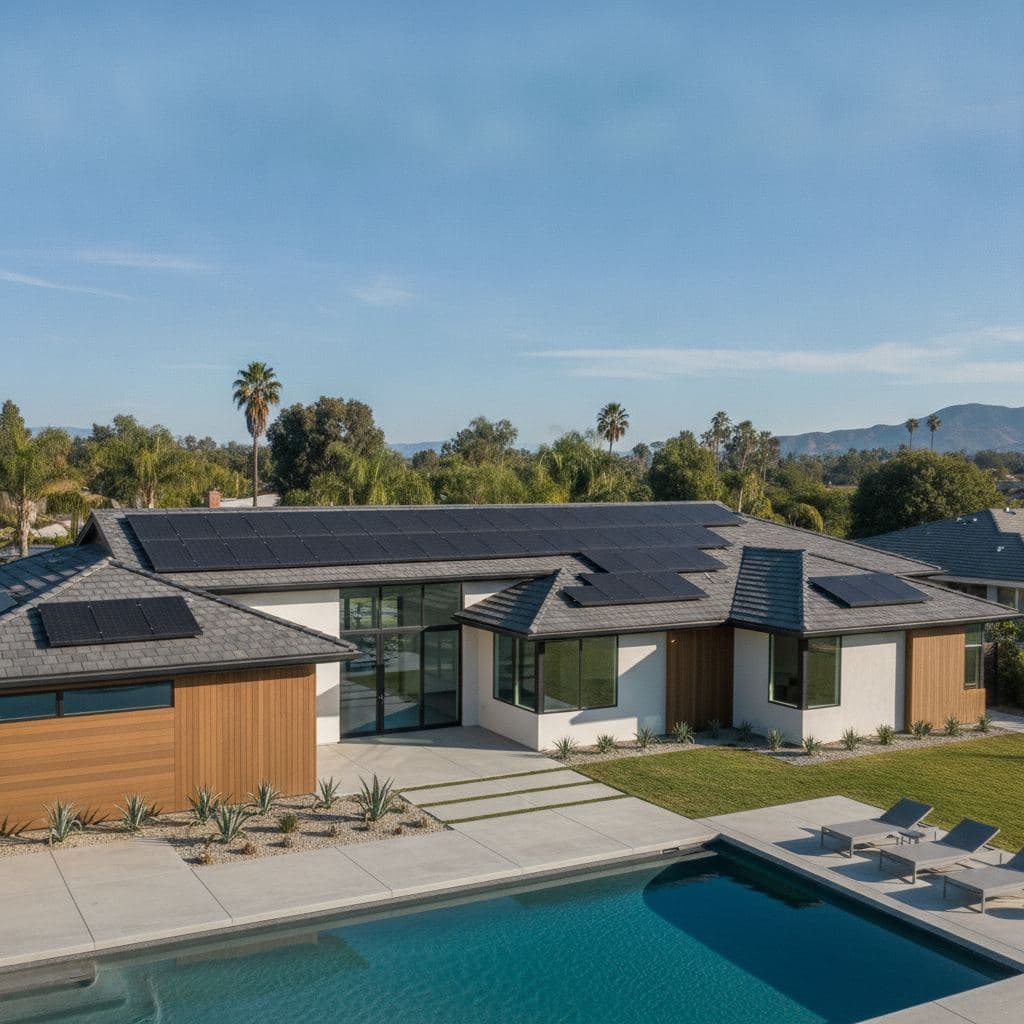
California has an estimated several hundred thousand orphaned SunPower systems. If your system was installed before October 2024, you have three separate warranty situations to untangle — panels, inverters, and battery — and the company that sold you the system no longer exists in any meaningful service capacity. A licensed independent solar contractor is your practical first call, and a site diagnostic typically runs $150–$450 depending on scope.
Last verified: October 8, 2026 by Helios Energy Global. Maxeon status checked against its SEC filings on that date.
What actually happened to SunPower
SunPower Corporation and certain of its subsidiaries filed voluntary petitions under Chapter 11 of the U.S. Bankruptcy Code in the U.S. Bankruptcy Court for the District of Delaware on August 5, 2024. Despite the Chapter 11 label, SunPower's situation looked like a liquidation rather than a restructuring.
As of September 20, 2024, SunPower ceased system support through the mySunPower app, web portal, and its phone number, 1-800-SUNPOWER. Shortly after, SunPower Inc. (formerly Complete Solaria, Inc.) purchased some of those assets in a transaction that closed on September 30, 2024, including certain assets related to the Blue Raven Solar division, the New Homes division, the Non-Installing Dealer division, and the "SunPower" brand and related trademarks.
In April 2025, Complete Solaria rebranded as SunPower and reclaimed the SPWR ticker on Nasdaq. In October 2025, the company formally changed its legal name to SunPower Inc. But here is the critical detail: the new entity explicitly did not assume responsibility for any system installed before September 30, 2024. If your SunPower system was installed on or before September 30, 2024, the new "SunPower" (Complete Solar) is not responsible for it.
The September 30, 2024 dividing line — and what it means for you
| Install date | Who is responsible? | Warranty path |
|---|---|---|
| After Sept 30, 2024 | SunPower Inc. (new company) | Valid — contact SunPower Inc. directly |
| On or before Sept 30, 2024 — cash/loan purchase | Bankruptcy estate / lender | Contact your lender; file warranty claims with equipment manufacturers directly |
| On or before Sept 30, 2024 — lease or PPA | SunStrong Management or financier | Call SunStrong at (833) 514-1858 |
| Any date — Maxeon panels | Maxeon Solar Technologies | Valid only if self-registered by Dec 31, 2024 |
| Any date — Equinox microinverters | Enphase Energy | Separate Enphase warranty; contact Enphase at (510) 945-6752 |
| Any date — SunVault battery | No clear manufacturer path | Requires independent service contractor |
All warranty outcomes are estimates based on publicly available manufacturer and bankruptcy-administrator guidance as of September 2026. Consult your specific contract documents.
If your system was installed and energized after September 30, 2024, your warranties are valid and SunPower Inc. can service your system. If your system was installed on or before September 30, 2024 and you own it outright, contact your lender for guidance on warranty coverage.
For customers with leases or PPAs, reach out to your financier or SunStrong Management at (833) 514-1858.
Panel warranties: Maxeon is the key — but only if you registered
Most SunPower Equinox panels were manufactured by Maxeon Solar Technologies, which spun off from SunPower as an independent company in 2020. Maxeon's own situation has changed in 2026, and it matters for how you file:
- Since May 29, 2026, Maxeon has been under judicial management in Singapore. The General Division of the Singapore High Court placed Maxeon Solar Technologies, Ltd. and its subsidiary MSPL under judicial management on that date and appointed two Deloitte Singapore restructuring partners as joint judicial managers, who say they are working "to stabilize the business and operations" (Maxeon Form 6-K, May 29, 2026). Judicial management is a court-supervised restructuring, not a liquidation.
- Its shares are being removed from Nasdaq. Nasdaq's delisting determination, dated September 17, 2026, takes effect at the open on October 12, 2026.
- As of October 8, 2026, none of Maxeon's filings say how, or whether, US warranty claims on legacy SunPower panels will be handled during the restructuring. Its warranty pages are still up and still describe the registration condition below. Our reading: file any claim you have now, in writing, keep the claim number and every email, and do not assume a reply that takes weeks means the claim is dead. If the judicial managers announce a change to warranty handling, this page will be updated.
With that said, Maxeon's stated condition for coverage has not changed:
Maxeon only provides limited warranty coverage for legacy SunPower panels installed before August 5, 2024, and self-registered with Maxeon prior to December 31, 2024.
If you registered in time, the panels on your roof are warranted by Maxeon. As of October 2026 the company is operating under judicial management and its warranty process is still open; file promptly and keep proof.
If you missed the December 31, 2024 deadline, the coverage situation is murkier. Per industry reporting, as of mid-2025 the strict enforcement of that deadline appears to be softening, though officially the registration window remains closed. It is worth contacting Maxeon directly to ask about late registration before assuming you have no coverage.
What Maxeon does NOT cover: Maxeon produced many solar panels for SunPower where microinverters were attached — commonly referred to as AC panels. The microinverters attached to these panels were produced by another manufacturer and are not included in the warranty being issued by Maxeon.
Inverter and microinverter warranties: Enphase holds this one
SunPower's Equinox system used microinverters branded "SunPower by Enphase." In 2018, Enphase Energy acquired SunPower's microinverter business for $25 million cash plus 7.5 million Enphase shares, transitioning SunPower systems to Enphase technology. That means Enphase — not SunPower — is the warranty holder for those units.
The practical complication: while Enphase assumed the warranty liability for these units, they do not manufacture new SolarBridge replacements. When a SolarBridge unit fails, it cannot be replaced with a like-for-like unit — it must be replaced with a modern Enphase IQ7-series unit, which introduces a "Frankenstein" scenario where a single array contains two different communication languages, often breaking the monitoring for the replaced unit unless a secondary gateway is installed.
For monitoring restoration: Enphase offers a monitoring restoration service for orphaned SunPower systems. Call Enphase warranty support at (510) 945-6752 and have your system serial numbers ready. An independent solar contractor can also help you navigate the gateway installation if your monitoring breaks after a microinverter swap.
The SunVault battery: the hardest problem
SunVault owners are in the toughest position of any SunPower customer segment.
The SunVault was a SunPower-branded product with no independent manufacturer stepping up to honor warranties. Unlike panels (Maxeon) or inverters (Enphase), there's no clear warranty path.
Enphase offers a monitoring restoration service for orphaned SunPower systems — but it currently does NOT work with SunVault batteries. This means the standard Enphase monitoring kit solution isn't available to SunVault owners. The only current monitoring option is SunStrong Connect, the paid successor to mySunPower, which has mixed reviews for reliability and accuracy.
Practical check before calling anyone: Check if your SunVault is actually functioning — does backup power work during outages? If yes, the battery itself is working even without monitoring. If backup power does NOT engage, the battery likely needs a hands-on diagnostic from a licensed contractor familiar with SunVault hardware.
Common failures Southern California SunPower owners are calling about
Monitoring loss (most common)
When the mySunPower portal went dark in September 2024, thousands of systems lost visibility overnight. The panels may still be producing — your utility bill is the fastest sanity check. Compare your SCE, LADWP, SDG&E, or other utility's recent production data against what you were seeing in the app. If your bill is roughly what it was before, the system is likely still working; you've just lost the dashboard.
Microinverter failure (Equinox systems)
Individual microinverters fail silently — one panel goes dark and the others keep running. The symptom is lower-than-expected production rather than a complete outage. A licensed contractor can pull Enphase production data at the panel level to identify which unit has failed, then submit a warranty replacement claim to Enphase on your behalf.
SunVault not charging or not backing up
The two most common SunVault complaints are (1) the battery stops charging from solar and (2) backup power fails to engage during an outage. Both require a physical site visit; there is no remote fix without the mySunPower backend. A contractor will check the SunVault's gateway communication, DC connections, and software state.
String inverter failure (older SunPower systems)
Older SunPower systems used string inverters rather than microinverters. String inverters have a 12–15 year lifespan; replacement costs run $1,500–$3,000. These are the most straightforward repair: any licensed solar contractor can replace a string inverter with a compatible modern unit (SMA Sunny Boy and Fronius are common choices for older SunPower string systems).
Who can service a SunPower system in California in 2026?
Any California-licensed solar contractor (C-10 or C-46 license) can legally work on your SunPower system. You do not need a SunPower-authorized dealer. In practice, look for a contractor who:
- Has diagnosed SunPower/Maxeon panels before — the panel connectors and mounting systems have some quirks
- Is familiar with Enphase Envoy/IQ Gateway — this is the communication backbone of Equinox systems
- Can submit Enphase warranty claims on your behalf — not all contractors are Enphase-registered
- Provides a written, all-in price for the diagnostic and any proposed repair before starting work
Per the SunPower Inc. acquisition FAQ, if you are a system owner experiencing an issue with your solar system, please contact a local solar installer to conduct a site visit. That guidance is correct — it is the practical path forward for pre-October 2024 systems.
What a diagnostic visit costs — and what it covers
In 2026, a standard visual solar panel inspection runs $150–$350 for most residential systems; electrical inspections (including wiring and performance testing) run $200–$450; thermal imaging adds $150–$200 on top of a standard inspection.
For a SunPower-specific diagnostic, expect the contractor to:
- Pull Enphase production logs to identify any underperforming or offline panels
- Test DC and AC connections at the inverter or microinverter level
- Check SunVault gateway communication if you have a battery
- Verify utility interconnection — confirm your system is still net-metering correctly with SCE, LADWP, SDG&E, or your local utility
- Document serial numbers — you'll need these for any Maxeon or Enphase warranty claim
Get the diagnostic scope and price in writing before the visit. A reputable contractor will give you one all-in price for the site visit, then a separate written quote for any repairs found.
Southern California utility considerations
Your utility matters more than most SunPower customers realize:
SCE customers: SCE is on NEM 3.0 (the CPUC Net Billing Tariff). Your export credits are based on the Avoided Cost Calculator rate, not retail. If your system has been offline or underproducing, you've been losing those credits — worth quantifying before and after the repair. SCE's average rate runs approximately 34–35¢/kWh, with peaks of 48–58¢/kWh during the 4–9 PM window. A working battery matters a great deal here. See our NEM 3.0 explainer for more detail.
LADWP customers: LADWP is a municipal utility and is not on NEM 3.0. LADWP still offers retail-rate net metering at an effective rate of approximately 26–31¢/kWh. If your SunPower system has been down, you've been buying power at retail that your panels would otherwise have offset — a straightforward dollar calculation to motivate getting the repair done quickly.
SDG&E customers: SDG&E's average rate runs approximately 46¢/kWh — the highest of the major Southern California utilities. Every day a SunPower system is offline costs SDG&E customers more than almost any other market in the country.
Pasadena PWP, Burbank, Glendale, Anaheim, Riverside: These are municipal utilities running their own net metering programs, separate from NEM 3.0. Contact your utility directly to confirm your system is still properly interconnected and exporting after any repair.
Should you repair, replace, or add a battery?
This is worth a quick analysis once you know what's wrong:
- Microinverter failure on a 3–8 year old Equinox system: Almost always worth repairing. The panels are Maxeon-quality and have 15–20 years of useful life remaining.
- String inverter failure on a 12–15 year old system: Run the numbers. A string inverter replacement ($1,500–$3,000 installed) on a system with aging panels may be worth it, but get a production estimate to confirm payback.
- SunVault that can't be revived: Replacing a non-functional SunVault with a current-generation battery (Tesla Powerwall 3, Enphase IQ Battery 10C, or FranklinWH aPower 2) is increasingly common. See our battery storage page for current installed pricing.
- Monitoring loss only, system producing normally: Often solved for a few hundred dollars via an Enphase gateway upgrade — not a reason to replace the system.
If your system is producing normally and you simply want to add storage, see our solar vs. battery guide under NEM 3.0 to understand whether the economics work for your utility.
Frequently asked questions about SunPower system repair
Is the "new" SunPower Inc. the same company that installed my system?
SunPower Inc. is an active, publicly traded company — but it is not the same legal entity as the SunPower Corporation that filed for bankruptcy. It operates under the same name and same ticker but is a different company.
The new entity explicitly did not assume responsibility for any system installed before September 30, 2024.
My mySunPower app stopped working. Does that mean my system is broken?
Not necessarily. SunPower ceased system support through the mySunPower app, web portal, and its phone number as of September 20, 2024. Many systems are still producing power with no monitoring visible to the homeowner. Check your utility's online account or your meter to see if you're still exporting energy before assuming the worst.
Will Maxeon honor my panel warranty if I missed the December 31, 2024 registration deadline?
Maxeon's stated policy is that it only provides limited warranty coverage for legacy SunPower panels installed before August 5, 2024, and self-registered with Maxeon prior to December 31, 2024. That said, it is worth contacting Maxeon directly — industry reporting suggests enforcement of the hard deadline may be softening in practice. Document your installation date and serial numbers before you call. Keep in mind that Maxeon has been under court-supervised judicial management in Singapore since May 29, 2026, so put everything in writing and keep copies.
Is Maxeon going out of business?
Not as of October 2026, but it is in a court-supervised restructuring. The Singapore High Court placed Maxeon under judicial management on May 29, 2026, and Nasdaq is removing its shares from the exchange effective October 12, 2026. Its filings do not say how legacy SunPower warranty claims will be treated. The practical advice is the same as for any installer or manufacturer in distress: file claims now, in writing, with serial numbers and photos; keep every acknowledgement; and have a licensed contractor diagnose the panel so the claim is complete when it is reviewed.
Who handles the microinverter warranty on my SunPower Equinox system?
Enphase Energy handles the microinverter warranty, not SunPower or Maxeon. Maxeon produced many solar panels for SunPower where microinverters were attached, but the microinverters attached to these panels were produced by another manufacturer and are not included in the warranty being issued by Maxeon. Call Enphase at (510) 945-6752 with your system serial numbers.
My SunVault battery isn't backing up the house during outages. What do I do?
This requires a hands-on site visit from a licensed contractor. The SunVault was a SunPower-branded product with no independent manufacturer stepping up to honor warranties — unlike panels or inverters, there is no clear warranty path. A contractor can diagnose whether the issue is a gateway communication failure, a DC wiring fault, or a battery cell problem, and quote a repair or replacement accordingly.
Can any licensed solar contractor in California work on my SunPower system?
Yes. Any California C-10 or C-46 licensed contractor can legally service your system. You do not need a SunPower-authorized dealer. Those who own their solar panels can have their systems repaired by other service providers or their initial installer. Look for a contractor with documented Enphase experience if your system uses Equinox microinverters.
How much does a SunPower system diagnostic cost in Southern California?
A standard visual inspection runs $150–$350 for most residential systems; an electrical inspection that includes wiring and performance testing runs $200–$450. For a SunPower-specific diagnostic that includes Enphase log review and SunVault gateway checks, budget toward the higher end of that range. Always get the price and scope in writing before the visit.
I have a SunPower lease, not a loan. Who do I call?
For customers with leases or PPAs, reach out to your financier or SunStrong Management at (833) 514-1858. SunStrong manages the legacy SunPower lease portfolio and is the correct first contact for lease-related service requests.
Next steps
- Book a free consultation and custom design — if your SunPower system is aging or underperforming and you want an honest assessment of repair vs. replace vs. add storage, start here.
- Solar panel repair in Southern California — covers what a professional diagnostic includes, what to expect on the day, and how to document findings for a warranty claim.
- Explore battery storage options — current installed pricing for Tesla Powerwall 3, Enphase IQ Battery 10C, and FranklinWH aPower 2 if your SunVault needs replacing.
- Understand NEM 3.0 and how it affects your export value — critical reading for SCE customers deciding whether a repair is worth the investment.
- See our solar panel cost page — if the diagnostic reveals the system is beyond economic repair, this page gives you realistic 2026 replacement pricing.
- Find your nearest Helios service area — we serve Santa Monica, Los Angeles, and throughout Southern California.
Sources
- SunPower Corporation SEC Form 8-K — Voluntary Petition for Bankruptcy, August 2024 — August 5, 2024
- SunPower Inc. Acquisition Announcement & FAQ (us.sunpower.com) — September 30, 2024
- Maxeon Solar Technologies — Warranty & Support Page — May 1, 2026
- Maxeon Solar Technologies — Warranty Claim FAQ — May 1, 2026
- Maxeon Solar Technologies — Form 6-K, judicial management order of the Singapore High Court, May 29, 2026 — May 29, 2026
- Nasdaq — Delisting determination for Maxeon Solar Technologies, Ltd., effective October 12, 2026 — September 17, 2026
- EnergySage — SunPower Is Bankrupt. What Now? (updated April 2026) — April 16, 2026
More guides
How much can you save with solar panels in California in 2026?
Most Southern California homeowners save $800–$1,800 per year on electricity after going solar, with 25-year lifetime savings ranging from $25,000–$65,000 depending on utility and system size.
ReadWhat is the average LADWP electric bill in 2026?
The typical LADWP residential customer pays roughly $140–$230/month in mid-2026, based on tiered rates that work out to an effective 26–31¢/kWh — still below what SCE customers pay, though the gap has narrowed.
ReadTesla Solar Panel Removal and Reinstallation in California: Who Does It and What It Costs in 2026
Helios charges $250–$350 per panel to remove and reinstall Tesla solar panels in California, with the roofing quoted separately. Tesla's own R&R process takes 4–12+ weeks, and a Powerwall system needs a certified installer if you want to keep the battery warranty intact.
ReadGet a free consultation and custom design.
No pressure, no obligation — the owner reviews every design we send.