Solar Shingles vs Solar Panels in California (2026): Which Fits Your Roof?
Solar shingles replace your roof and generate power in one step, but deliver roughly 6–16 watts per square foot versus 19–21 W/sq ft for rack-mounted panels — and installed costs run roughly $3.80–$7.00/W compared to $2.50–$3.50/W for conventional panels.
By Taylor Crouse — Founder, Helios Energy GlobalPublished
Quick answer
- Solar shingles are roofing products with photovoltaic cells built in — they replace your roof and generate power simultaneously, but deliver roughly 6–16 watts per square foot versus 19–21 W/sq ft for conventional rack-mounted panels.
- Installed cost for solar shingles runs roughly $3.80–$7.00/W depending on brand; conventional solar panels installed in Southern California run $2.50–$3.50/W.
- Solar shingles make the most sense when you need a new roof anyway, face HOA restrictions on visible hardware, or are building new construction — not as a retrofit over a sound roof.
- There is no federal residential solar tax credit in 2026. The 30% credit expired December 31, 2025.
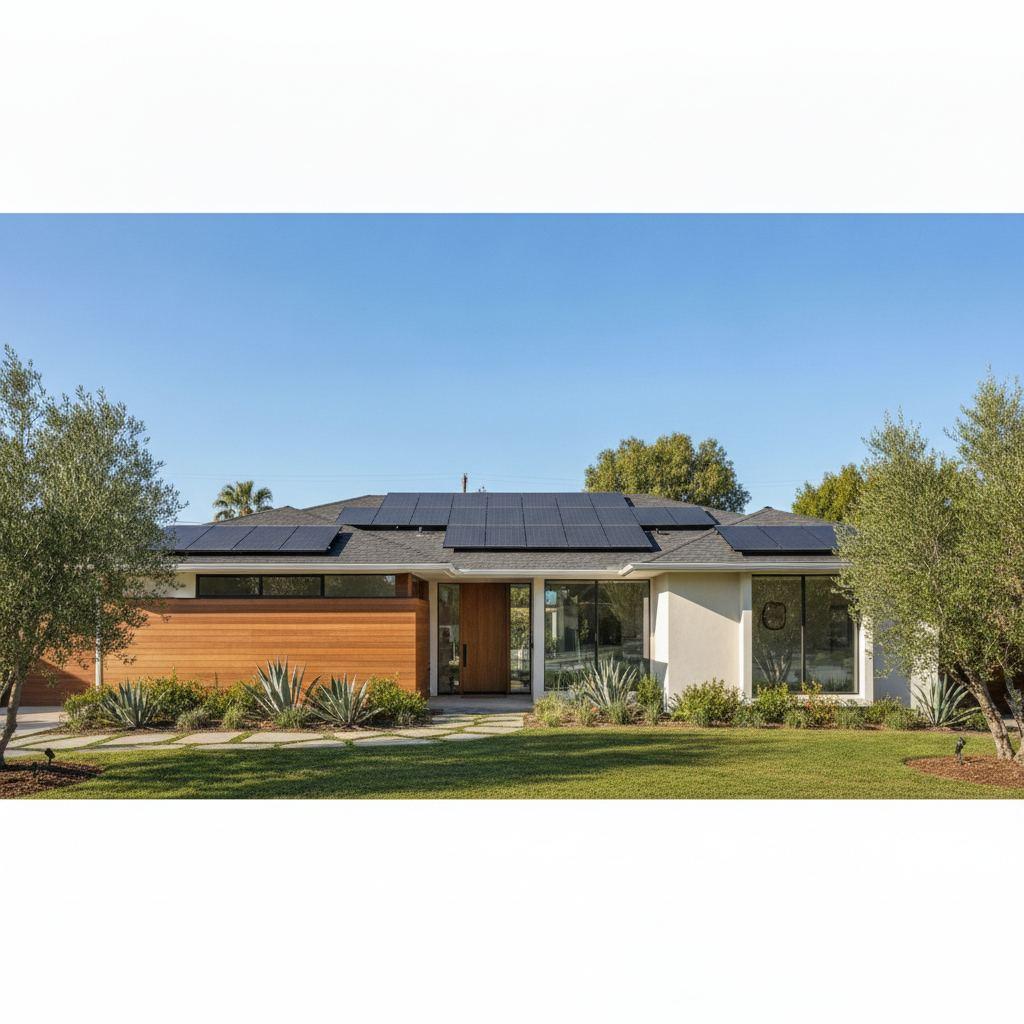
Solar shingles deliver roughly 6–16 watts per square foot of roof area, compared to 19–21 watts per square foot for a conventional rack-mounted panel — meaning you need significantly more active roof area to hit the same system capacity. For most Southern California homeowners with a sound roof, conventional panels installed at $2.50–$3.50 per watt remain the lower-cost, higher-output path; solar shingles earn their place when a full roof replacement is already on the agenda or when aesthetics are the overriding priority.
Last verified: November 2026 by Helios Energy Global.
What are solar shingles?
Solar shingles — also called building-integrated photovoltaics (BIPV) — are roofing products that incorporate photovoltaic cells directly into the shingle or tile body. Unlike conventional solar panels, which mount on a rack above an existing roof, solar shingles are the roof: they replace the waterproofing layer and generate electricity at the same time. Installation requires a licensed roofing crew (for the shingle field) plus a licensed electrician (for the wiring and inverter), and in most cases a complete tear-off of the existing roof.
Because the solar cells are embedded in a shingle-sized form factor, the active area per unit is far smaller than a full-size panel. A full-size residential panel produces roughly 19–21 watts per square foot, while CertainTeed's Solstice Shingle — one of the more efficient shingle products — delivers about 16.1 watts per square foot. GAF's product, with its smaller shingle body, produces less per square foot still. That gap matters most for homes with limited south-facing roof area.
Solar shingle products available in California today
GAF Energy Timberline Solar ES 2
GAF Energy's Timberline Solar ES 2 is the most widely installed solar shingle in the U.S. and is available through GAF-certified roofing contractors in California. It is the world's first nailable solar shingle, installing directly onto the roof alongside standard Timberline asphalt shingles to create a fully integrated solar-power roof system.
Each Timberline Solar ES 2 energy shingle is rated at 57 W, plus or minus 5 percent, under standard test conditions, according to GAF Energy data sheet SM512.
Coverage runs approximately 30 energy shingles per square, yielding about 1.7 kW per roofing square.
Because the shingle is nailable, it installs using a standard nail gun, the same way any GAF Timberline asphalt shingle does, with no mounting racks, no roof penetrations for brackets, and no separate solar crew required. The electrical wiring is handled by a licensed electrician separately.
CertainTeed Solstice Shingle
CertainTeed's Solstice Shingle is an all-black monocrystalline product that integrates with standard asphalt shingles. The Solstice Shingle offers 70 W of power output per shingle and 19.85% efficiency, all backed by a 25-year power and performance warranty.
The 70-watt solar shingle offers 16.1 watts per square foot, one of the highest outputs among shingle products.
CertainTeed solar shingles cannot be installed over an existing roof system and are designed for new construction or during a roof replacement.
CertainTeed also recently announced the Landmark PWR, a newer product. Landmark PWR uses half-cut cells in 4-foot shingles that produce 85 watts each, and becomes available November 1, 2026.
Luma Solar
Luma Solar positions itself as a luxury, fully integrated solar roof system. The current Luma Air shingle is rated at a maximum power output of 100 W per shingle, with a lifetime shingle warranty and a 25-year power warranty, using monocrystalline cells in a 24-gauge Galvalume-coated steel composition.
Luma takes a custom-fabricated approach, engineering each system for the specific roof; the tiles use high-efficiency cells (19–22%) in a profile that closely matches Spanish barrel tile and flat concrete tile aesthetics. This makes Luma a notable option for Southern California homes with tile roofing. Luma's installer network is extremely limited, primarily concentrated in California, Florida, and Texas. Pricing is by quote; see the cost section below.
Tesla Solar Roof
Tesla's Solar Roof is a separate category — see the dedicated sections and linked guides below.
How solar shingles compare to conventional panels: the key numbers
| Component | GAF Timberline Solar ES 2 | CertainTeed Solstice Shingle | Luma Solar Air | Conventional Panel (rack-mounted) |
|---|---|---|---|---|
| Output per unit | 57 W | 70 W | 100 W | 400–450 W (estimate) |
| Power per sq ft (approx.) | ~6–8 W/sq ft | ~16.1 W/sq ft | ~14.9 W/sq ft | ~19–21 W/sq ft |
| Cell efficiency | ~22–23% (nameplate) | 19.85% | 22.1% | 20–23% |
| Roof replacement required? | Yes | Yes | Yes (full roof) | No |
| Installed cost (per watt, estimate) | By quote | By quote | By quote | $2.50–$3.50/W |
| Who installs | GAF-certified roofer + electrician | CertainTeed-credentialed contractor + electrician | Luma-authorized installer | Licensed solar contractor |
| Warranty | 25-yr power / up to 50-yr system | 25-yr power & workmanship | 25-yr power / lifetime shingle | Varies by panel brand |
All shingle wattages are per-unit nameplate figures from manufacturer data sheets or SolarReviews (November 2026). Installed cost per watt for shingles is by quote; no published California-specific figure was available from a primary source dated within 12 months.
What do solar shingles cost in California?
This is where the comparison gets stark. Solar shingles typically cost between $3.80 and $7.00 per watt, depending on the brand installed. For context, conventional panels installed in Southern California run $2.50–$3.50 per watt (see our full breakdown at /solar-panel-cost).
For system-level estimates, third-party sources give a wide range. 2026 installed pricing for GAF Timberline Solar runs approximately $21 to $24 per square foot for a 6 to 9 kW system, including the inactive Timberline HDZ shingles, underlayment, drip edge, ridge cap, and inverter.
With Luma Solar, a full roof replacement of solar and non-solar tiles is required, and a full end-to-end installation can cost between $70,000 to over $100,000.
No published California-specific per-watt price for CertainTeed Solstice or Luma Solar was available from a primary source dated within the last 12 months. Both products are sold by quote through their certified installer networks. If you're comparing bids, ask each contractor for the gross system price and the cost per watt in writing, so you can make an apples-to-apples comparison.
Important: there is no federal residential solar tax credit in 2026. The 30% credit expired December 31, 2025. California's SGIP battery incentive program has residential budget waitlists in 2026. Neither offsets the premium of solar shingles over conventional panels the way the federal credit once did.
Output per square foot: why it matters for Southern California roofs
Solar shingles produce approximately 6–16 watts per square foot compared to 15–20 watts per square foot for high-efficiency traditional panels. This difference becomes particularly important for homes with complex roof geometries, shading issues, or limited south-facing roof area where maximizing power production per square foot is crucial for system economics.
In Southern California, where SCE's peak rate on TOU-D-PRIME hits 61¢ per kWh on summer weekday evenings from 4 to 9 PM , every watt of capacity you can fit on your south- and west-facing planes has real dollar value. A home with 400 square feet of usable south-facing roof that installs conventional panels at ~20 W/sq ft can reach an 8 kW system. The same roof with a 16 W/sq ft shingle product yields only ~6.4 kW — roughly 20% less production before any other losses.
LADWP customers face a different math: LADWP still offers retail-rate net metering (not NEM 3.0), so exported solar energy is credited at the full retail rate of approximately 26–31¢/kWh. That makes raw system capacity slightly less critical than for SCE, PG&E, or SDG&E customers on the Net Billing Tariff, where export credits are time-differentiated and generally lower than retail. See our NEM 3.0 explainer and solar vs. battery under NEM 3.0 for the full picture.
What roofs suit each technology?
When solar shingles make sense
- You need a full roof replacement anyway. If your roof has fewer than 5–7 years of life left, the incremental cost of shingles over a new asphalt roof plus conventional panels narrows considerably. See how old a roof can be for solar to gauge where yours stands.
- HOA restrictions prohibit visible hardware. Many Southern California HOAs in Westside neighborhoods, gated communities, and hillside tracts restrict rack-mounted panels. Solar shingles sit flush with the roofline and often satisfy CC&R requirements that panels cannot.
- New construction. Integrating shingles during a build avoids the retrofit labor entirely and lets the roofing crew handle both trades in one mobilization.
- Tile-style aesthetics matter. Luma Solar's barrel-tile profile suits the Mediterranean and Spanish Colonial homes common across Los Angeles, Pasadena, and the South Bay.
When conventional panels are the better fit
- Your roof has 10+ years of life remaining. Tearing off a sound roof to install shingles adds cost and waste with no structural benefit.
- You want maximum watts per dollar. At $2.50–$3.50/W installed versus $3.80–$7.00/W for shingles, conventional panels deliver more kilowatt-hours per dollar in every scenario.
- Your roof has limited south-facing area. Higher watts-per-square-foot from conventional panels is critical when roof space is constrained.
- You're on SCE, PG&E, or SDG&E under NEM 3.0. The Net Billing Tariff rewards larger, battery-paired systems that maximize self-consumption — which favors high-output panel arrays over lower-density shingle systems.
- You have a tile, slate, or steep-pitch roof. Conventional panels can be installed on tile roofs by experienced crews; see tile roof solar installation and roof types and solar for what that involves. Shingle products are generally designed for asphalt-pitch roofs (Luma being the exception for tile aesthetics).
A note on Tesla Solar Roof
Tesla's Solar Roof is a glass-tile BIPV system that combines active solar tiles with inactive steel tiles to cover the full roof. A Solar Roof tile designated SR86T3R, rated 86 W, was listed by the California Energy Commission on March 11, 2026 — confirming the product remains CEC-certified for California installations. Each active solar tile produces approximately 72 watts; a standard residential panel in 2026 produces 420 to 450 watts, meaning you need roughly six Solar Roof tiles to match the output of a single traditional panel.
Tesla does not publish exact efficiency specifications the way traditional panel manufacturers do, which makes independent comparison difficult. Third-party estimates place tile efficiency at roughly 8–17%, depending on methodology and the proportion of active versus inactive tiles on a given roof.
For a full, neutral treatment of how the Tesla Solar Roof compares to a new conventional roof plus panels — including the cost math and what has changed with Tesla's installer availability — see our guides at /guides/tesla-solar-roof-vs-new-roof-plus-panels and /guides/tesla-solar-roof-discontinued-alternatives.
Helios does not install Tesla Solar Roof or any solar shingle product. Helios installs conventional rack-mounted solar panels. If you need a new roof and solar together, we coordinate with vetted, licensed roofing partners — the roofing work is performed by those partners, not by Helios. Learn more at /solar-plus-roof.
The installation path: who does what
This is a practical difference that surprises many homeowners. Conventional solar panels are installed by a licensed solar contractor in one to three days, with no roofing crew needed. Solar shingles require a coordinated two-trade installation:
- Roofing contractor (GAF-certified, CertainTeed-credentialed, or Luma-authorized) tears off the old roof, installs the shingle field including active energy shingles, and handles all waterproofing.
- Licensed electrician runs the wiring, installs the inverter (typically a microinverter or string inverter with optimizers), and connects to the panel.
GAF Timberline Solar is a nailable solar shingle — it installs with the same standard roofing nail gun, with the same course pattern and overlap, and with the same flashing details as conventional GAF Timberline HDZ asphalt. Any contractor certified to install Timberline HDZ can install Timberline Solar; the electrical wiring is run separately by a licensed electrician.
This two-trade coordination adds scheduling complexity and typically extends the project timeline to one to three weeks versus one to three days for a conventional panel install. It also means permitting touches both the building department (roofing) and the utility interconnection queue (solar).
Frequently asked questions about solar shingles vs solar panels
Are solar shingles worth it in California in 2026?
For most California homeowners with a roof that has years of life remaining, conventional panels deliver more kilowatt-hours per dollar — especially with no federal tax credit available in 2026. Solar shingles earn their place when a full roof replacement is already needed, when HOA rules prohibit visible hardware, or when aesthetics are the overriding priority. Run the numbers on both paths before committing.
Do solar shingles qualify for any California incentives in 2026?
The 30% federal residential solar tax credit expired December 31, 2025, so there is no federal credit for any solar purchase — panels or shingles — made in 2026. California's SGIP battery incentive has residential budgets on a waitlist in 2026. Some utilities offer rebates for demand-response or battery programs; check with your utility directly. No rebate dollar amounts can be guaranteed without a current program enrollment.
Which solar shingle brands are available in Southern California?
GAF Energy Timberline Solar ES 2, CertainTeed Solstice Shingle, and Luma Solar are the primary products available in California in 2026. Luma Solar is a strong option for homeowners in the Southwest, Florida, and California where tile roofing is the standard. Tesla Solar Roof tiles remain CEC-listed for California. Availability depends on finding a certified installer in your area; networks vary by brand and region.
How many solar shingles do I need to power my home?
It depends on the brand's wattage per shingle and your system size target. GAF Timberline Solar ES 2 yields approximately 30 energy shingles per roofing square, or about 1.7 kW per square. A 8 kW system would require roughly 140 active GAF shingles, plus additional standard Timberline shingles covering the non-solar areas of the roof. CertainTeed Solstice at 70 W per shingle would require approximately 115 shingles for the same 8 kW. Your installer will calculate the exact layout based on your roof's geometry and orientation.
Can solar shingles go on a tile roof?
Most asphalt-style solar shingles (GAF, CertainTeed) are designed for asphalt-pitch roofs, not tile. Luma Solar's metal-shingle system is designed to visually match tile aesthetics and is engineered for a wider range of roof profiles. If you have a tile roof, read our guide on tile roof solar installation and roof types and solar compatibility before choosing a product.
Does NEM 3.0 apply to solar shingles?
NEM 3.0 (the CPUC Net Billing Tariff) applies to any new solar system interconnected to SCE, PG&E, or SDG&E — regardless of whether the solar comes from panels or shingles. LADWP customers remain on retail-rate net metering and are not subject to NEM 3.0. The lower export rates under NEM 3.0 make battery storage more valuable for SCE customers; this applies equally to shingle and panel systems. See /guides/nem-3-explained for details.
How long does it take to install solar shingles?
Solar shingle installations typically take one to three weeks from start to finish, compared to one to three days for a conventional panel install. The longer timeline reflects the roofing tear-off, the two-trade coordination, and the larger area of roof work involved. Permitting may also take longer because both a roofing permit and a solar interconnection application are required.
Next steps
- Book a free consultation and custom design — Helios will assess your roof, your utility, and your usage to tell you honestly whether panels or a shingle-plus-roof path makes more sense for your home.
- Explore our solar panel options — see the panel brands and system sizes we install across Southern California.
- Understand your all-in solar price — the $2.50–$3.50/W range explained with real system-size examples.
- New roof and solar together — how Helios coordinates with licensed roofing partners when your roof needs replacing before or alongside your solar install.
- Roof types and solar compatibility — asphalt, tile, flat, metal, and more: what each means for your install.
- How old can a roof be for solar? — know when a roof replacement is worth doing before you add panels.
- Tile roof solar installation guide — specific guidance for the Spanish tile and concrete tile roofs common across LA, Pasadena, and the South Bay.
- See all Southern California locations we serve
Sources
- GAF Energy Timberline Solar ES 2 product page — February 2026
- Luma Solar product page (lumasolar.com) — October 2025
- SolarReviews: Top 4 Solar Shingle Brands 2026 — November 2026
- solar.com SCE TOU Rates 2026 (Oct 1, 2026 tariff) — October 2026
- review.solar: Tesla Solar Roof CEC listing SR86T3R (August 2026) — August 2026
More guides
Tesla Solar Customer Service in California: How to Get Help and Who Can Repair Your System
Tesla solar panels carry a 25-year product and performance warranty and a 12.5-year inverter warranty — here's how to open a service request, what each warranty covers, and when a licensed independent contractor can legally work on your California system.
ReadBest Solar Companies in Escondido, CA (2026): SDG&E Rates, NEM 3.0, and the Battery Question
Escondido homeowners face some of the highest electricity rates in the country under SDG&E. This guide ranks the 9 best solar installers in Escondido for 2026, explains NEM 3.0 export math, covers SolarAPP+ permitting, and tells you exactly when a battery changes the numbers.
ReadHow much do solar panels cost in Orange County in 2026?
A typical Orange County home solar system runs $18,000–$30,000 installed before any incentives, depending on system size, roof type, and whether you're on SCE or Anaheim Public Utilities.
ReadGet a free consultation and custom design.
No pressure, no obligation — the owner reviews every design we send.