How much do solar panels cost in Orange County in 2026?
A typical Orange County home solar system runs $18,000–$30,000 installed before any incentives, depending on system size, roof type, and whether you're on SCE or Anaheim Public Utilities.
By Taylor Crouse — Founder, Helios Energy GlobalPublished
Quick answer
- Orange County solar systems typically cost $17,500–$42,000 installed (before incentives) for a 7–12 kW system at $2.50–$3.50/watt. > - No federal tax credit applies to systems purchased in 2026 — the 30% credit expired December 31, 2025. > - Most OC homeowners are on SCE under NEM 3.0, which pays export credits well below retail rate; Anaheim residents use Anaheim Public Utilities (APU) at ~19¢/kWh with its own net metering rules.
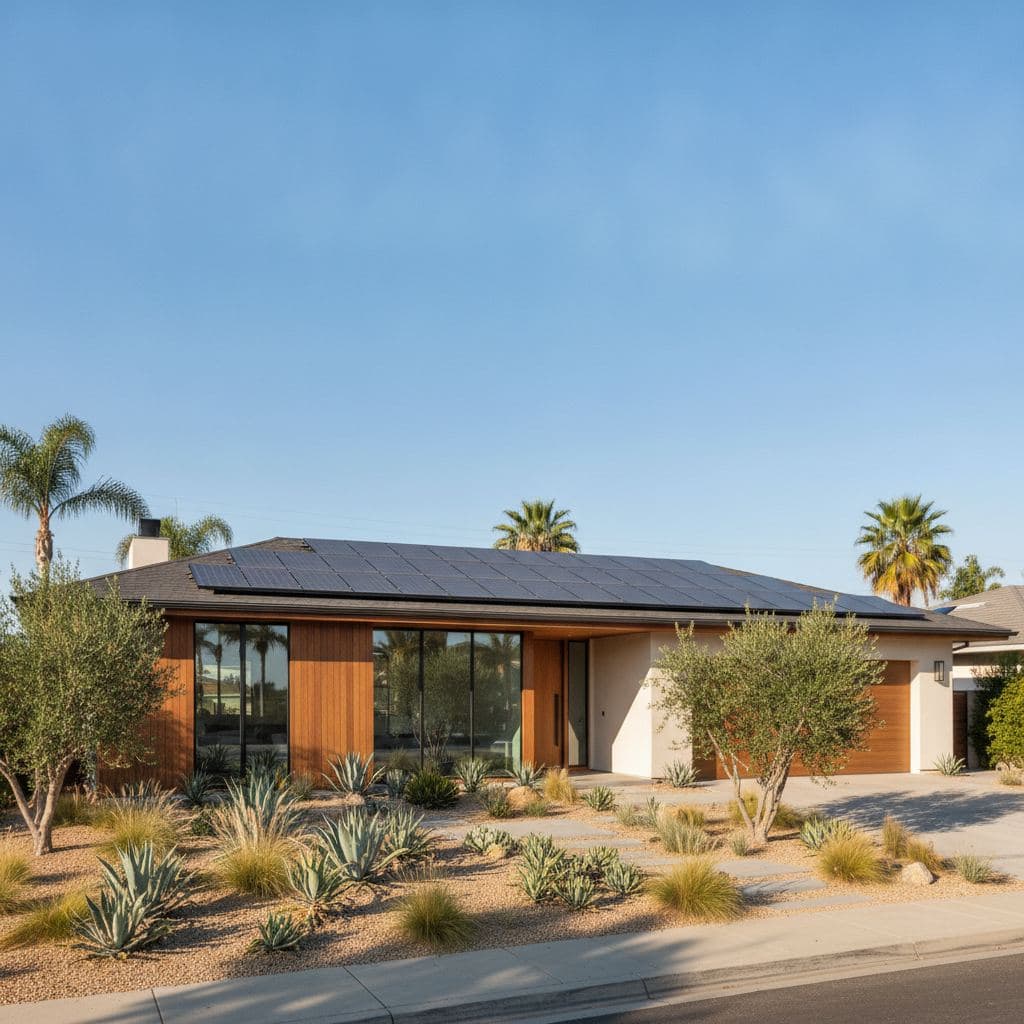
- Tile roofs (common throughout OC) add roughly $500–$1,500 to installation cost due to tile removal, underlayment inspection, and re-setting.
A typical Orange County home needs a 7–12 kW solar system, which lands in the $17,500–$42,000 installed range at roughly $2.50–$3.50 per watt before any incentives. The single biggest variable after system size is which utility serves your address — SCE's NEM 3.0 export rates and APU's flat net metering produce very different economics, and that difference shapes how aggressively you should size your system.
Last verified: September 2026 by Helios Energy Global.
What drives the installed price in Orange County
Base hardware and labor
The per-watt price ($2.50–$3.50) covers panels, inverter or microinverters, racking, wiring, permits, and a standard installation on a composition shingle roof. At that range:
- 7 kW system (smaller home, ~700–900 sq ft conditioned, or very efficient): ~$17,500–$24,500
- 9 kW system (median OC home, ~1,800–2,200 sq ft): ~$22,500–$31,500
- 12 kW system (larger home or EV charging load): ~$30,000–$42,000
Most OC homes fall in the 8–10 kW sweet spot. These are estimates — your actual quote depends on panel brand tier, inverter type, roof complexity, and local permit fees (which vary by city across OC).
Tile roof surcharge
Orange County neighborhoods — from Mission Viejo to Yorba Linda to Newport Beach — are dominated by Spanish and concrete tile roofs. Installing solar on tile requires:
- Removing tiles around each penetration point
- Inspecting and often replacing the underlayment beneath
- Re-setting tiles around the new flashing
That work adds roughly $500–$1,500 to a standard job, sometimes more on older clay tile where breakage risk is higher. If your underlayment is original (20+ years), a reputable installer will flag it before signing a contract — replacing it during the solar install is far cheaper than re-roofing later. See our roof types guide for a full breakdown of surcharges by material.
Permit and interconnection fees
OC cities each set their own permit fees. Irvine, Anaheim, Santa Ana, and Huntington Beach all have different schedules — budget $300–$800 in city permit fees, already folded into most installer quotes. SCE interconnection is a separate application; APU has its own process. Both typically add 4–10 weeks to your timeline, not cost.
The utility split: SCE vs. Anaheim Public Utilities
This is the most important localization fact for OC solar math.
| Factor | SCE (most of OC) | Anaheim Public Utilities (APU) |
|---|---|---|
| Net metering framework | NEM 3.0 / Net Billing Tariff | Municipal net metering (own rules) |
| Avg. residential rate (est.) | ~34–35¢/kWh | ~19¢/kWh |
| Export credit rate | ~5–10¢/kWh (avoided-cost based) | Closer to retail (~19¢/kWh) |
| Peak TOU window (SCE) | 4–9 PM daily | N/A (different rate structure) |
| Battery value | Very high — stores solar for peak | Moderate — less rate arbitrage needed |
| Typical simple payback (est.) | 9–13 years | 11–16 years (lower bill savings) |
| Federal tax credit (2026) | None — expired 12/31/2025 | None — expired 12/31/2025 |
| SGIP battery rebate | Waitlisted | Waitlisted |
All figures are estimates based on utility filings, EIA data, and 2026 market conditions. Your payback depends on your actual usage profile.
If you're on SCE
SCE's NEM 3.0 (Net Billing Tariff) pays you avoided-cost rates for power you export to the grid — roughly 5–10¢/kWh depending on the hour — rather than the retail rate you pay when you import (~34–35¢/kWh). That gap is significant. The practical result: solar alone saves you less than it did under old NEM 2.0; solar + battery saves you substantially more because you can store midday generation and use it during the 4–9 PM peak instead of exporting it cheaply.
This is not a reason to skip solar — SCE's rates are among the highest in the country, so every kilowatt-hour you self-consume is worth ~34–35¢. It is a reason to size your system accurately (not oversized) and to seriously evaluate battery storage. Read our NEM 3.0 explainer and our solar vs. battery under NEM 3.0 guide before finalizing your design.
If you're in Anaheim (APU)
Anaheim Public Utilities is a municipal utility — it is not on NEM 3.0. APU runs its own net metering program that credits exported power closer to the retail rate (~19¢/kWh). The tradeoff: APU's base rates are lower (~19¢/kWh vs. SCE's ~34–35¢), so your bill savings per kWh consumed are smaller. Payback periods tend to run a bit longer for APU customers, but the economics are still solid for most homeowners — especially those adding an EV or pool equipment to their load.
Incentives available in 2026
The 30% federal residential solar tax credit expired on December 31, 2025. There is no federal credit for systems purchased or installed in 2026. Anyone quoting you a "30% federal tax credit" on a 2026 purchase is giving you outdated information.
What does exist:
- California property tax exclusion: A solar system's added value is excluded from your property tax assessment. This is a permanent state benefit — real money over 10–20 years.
- Net metering / net billing credits: Ongoing bill credits as described above (SCE vs. APU rules apply).
- SGIP (Self-Generation Incentive Program) battery rebate: Residential SGIP funds are waitlisted as of mid-2026. You can apply and hold a spot, but do not count on this rebate when budgeting. Check CPUC's SGIP page for current status.
- Utility-specific programs: Both SCE and APU periodically offer time-limited programs. Ask your installer to check current offerings at the time of your quote.
For a deeper look at what's changed, visit our solar cost overview.
HOA approval in Orange County: Civil Code 714
Many OC communities — especially in Irvine, Ladera Ranch, Rancho Santa Margarita, and Aliso Viejo — have active HOAs. Here's what you need to know:
California Civil Code Section 714 prohibits HOAs from effectively preventing solar installation. Specifically:
- An HOA cannot deny your solar application outright.
- It can impose "reasonable restrictions" — but only if those restrictions do not increase your cost by more than $1,000 or reduce system output by more than 10%.
- Restrictions on visibility (e.g., panels not visible from the street) are common and generally legal, as long as they don't violate the cost/output thresholds above.
Practical process:
- Get your system design finalized (we handle this — see custom design).
- Submit to your HOA's architectural review committee with panel layout, equipment specs, and a cover letter citing Civil Code 714.
- HOA has 45 days to approve, deny, or request modifications. Silence after 45 days is deemed approval under state law.
- Most OC HOA approvals go through without issue when the application is complete and professional.
We prepare HOA submittal packages as part of every project. It is not a barrier — just a step.
Is battery storage worth adding?
For SCE customers: almost certainly yes, especially under NEM 3.0. A home battery (roughly $14,000–$18,500 installed per unit) lets you store solar generation and discharge it during the 4–9 PM peak — avoiding SCE's highest import rates and bypassing the low export credits. The math works better than it did under NEM 2.0 for battery, worse for solar-only.
For APU customers: battery adds resilience value (backup power) and some bill savings, but the rate arbitrage is smaller. It's worth modeling, not automatic.
SGIP rebates that previously offset battery costs are waitlisted — do not assume they'll be available when you're ready to install. Explore your options at /batteries.
Frequently asked questions about solar costs in Orange County
How much does a solar system cost per watt in Orange County in 2026?
Installed costs run approximately $2.50–$3.50 per watt in Orange County, in line with the broader Southern California market. That range covers panels, inverter, racking, wiring, permits, and standard labor. Tile roof surcharges, battery additions, and electrical panel upgrades are on top of that figure.
Is the 30% federal solar tax credit still available in 2026?
No. The 30% federal residential solar tax credit expired on December 31, 2025. A system purchased or installed in 2026 does not qualify. California's property tax exclusion for solar still applies, but there is no federal income tax credit to factor into your payback calculation.
Does NEM 3.0 apply to my Orange County home?
It depends on your utility. SCE serves the vast majority of Orange County and NEM 3.0 (Net Billing Tariff) applies to all new SCE solar customers. Anaheim residents served by APU are not on NEM 3.0 — APU has its own net metering program. If you're unsure which utility serves your address, check your electric bill or visit /guides/nem-3-explained.
Does my HOA have to approve my solar panels?
Your HOA must process your application and cannot effectively deny it under California Civil Code 714. It can impose reasonable restrictions (placement, aesthetics) as long as they don't add more than $1,000 to your cost or cut output by more than 10%. Most OC HOA applications are approved within 30–45 days with a properly prepared submittal package.
Does a tile roof cost more to install solar on?
Yes — expect a $500–$1,500 surcharge for concrete or clay tile roofs, which are common throughout Orange County. The work involves removing tiles at each mounting point, inspecting the underlayment, and re-setting tiles around new flashing. If your underlayment is aging, your installer should identify that before you sign — see /roof-types for details.
How long does it take to pay back solar in Orange County?
On SCE under NEM 3.0, estimated simple payback is roughly 9–13 years for a well-sized system — faster if you add battery storage and use it during peak hours. APU customers typically see 11–16 years due to lower base rates. These are estimates; your actual payback depends on your usage, system size, financing terms, and future rate changes.
Can I get the SGIP battery rebate in Orange County?
SGIP residential battery rebates are waitlisted as of mid-2026. You can apply and hold a position in the queue, but the rebate is not guaranteed or immediately available. Do not build your budget around receiving it. Check CPUC's SGIP page for current queue status.
Next steps
- Book a free consultation and custom design — we'll pull your utility data, model your roof, and give you a real number, not a range.
- See how a custom design affects your savings estimate
- Learn how NEM 3.0 changes the solar math for SCE customers
- Compare solar-only vs. solar + battery under NEM 3.0
- Explore home battery options and costs
- Review solar panel cost factors across Southern California
- Find our Orange County service locations
More guides
Why did my SCE rates go up? (And how much more are they projected to rise?)
SCE's average residential rate has climbed roughly 80% since 2018 — from about 18–19¢/kWh to ~34.5¢/kWh in 2026 — with CPUC-approved increases already locked in through 2028.
ReadSolar Panel Removal and Reinstallation in Riverside County: What It Costs in 2026
Helios charges $250–$350 per panel for a detach-and-reset in Riverside County — about $3,750–$8,750 for a typical 15–25 panel system, with tile roofs, which dominate the Inland Empire housing stock, at the top of the range.
ReadEV Charger Installation Cost in Los Angeles (2026)
A Level 2 EV charger installation in Los Angeles typically runs $800–$2,500 installed, or $3,000–$6,500+ if your panel needs an upgrade.
ReadGet a free consultation and custom design.
No pressure, no obligation — the owner reviews every design we send.