Tile roof solar installation: what SoCal homeowners should know
Tile roof solar adds $500–$1,500 in labor vs. shingle, but the right mounting hardware and a relay-vs-replace decision upfront protect both your roof and your investment.
By Taylor Crouse — Founder, Helios Energy GlobalPublished
Quick answer
- Tile roof solar installation costs $500–$1,500 more in labor than a comparable shingle-roof job, primarily due to tile removal, tile-hook mounting, and tile replacement.
- Expect 10–30 tiles to be removed and reset per typical residential installation; broken tiles are replaced at roughly $8–$25 per tile (material + labor).
- If your tile roof is within 3–5 years of end-of-life, relaying or replacing before solar is almost always cheaper than pulling panels later — re-roofing under panels adds a panel removal and reinstall at $250–$350 per panel (about $5,000–$10,500 for 20–30 panels, with tile roofs at the top of the per-panel range).
- System pricing in Southern California still runs $2.50–$3.50/watt before any incentives; the federal 30% tax credit expired December 31, 2025 and is not available for 2026 purchases.
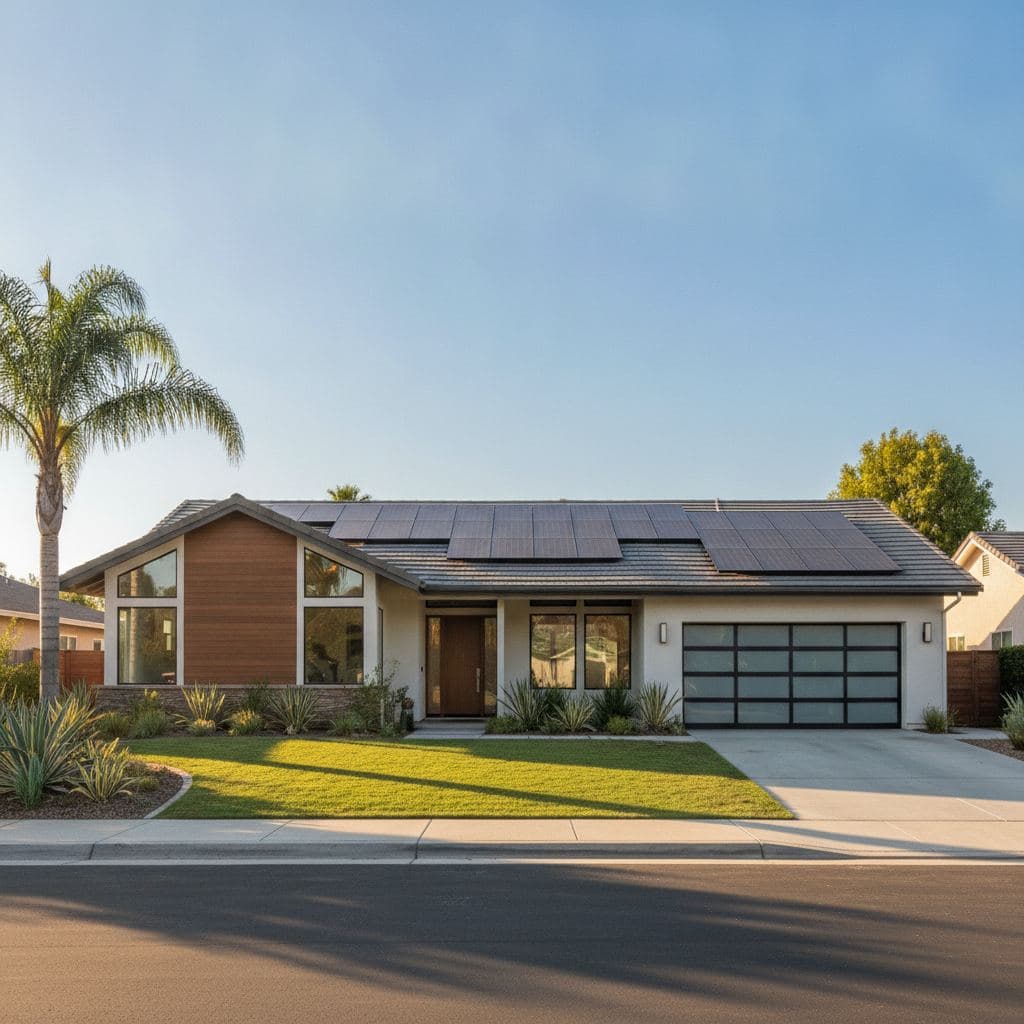
Tile roofs add roughly $500–$1,500 to a solar installation compared to asphalt shingle, and the exact number depends on tile type, roof pitch, and how many tiles need to be removed, reset, or replaced. For a typical 8–10 kW SoCal system, that delta is real but manageable — and getting the mounting method and relay decision right upfront is what separates a clean 25-year installation from one that leaks at year four.
Last verified: September 2026 by Helios Energy Global.
Why tile roofs cost more to solar-mount
Tile roofs — whether concrete, clay, or Spanish S-tile — are the dominant roofing material across Santa Monica, the San Fernando Valley, the South Bay, and most of the Inland Empire. They're durable, they look great, and they're genuinely compatible with solar. But they require a fundamentally different mounting process than shingle.
On a shingle roof, a roofer drives a lag bolt through the shingle directly into a rafter, flashes it, and moves on. On a tile roof, that shortcut destroys the tile and creates a leak path. Proper tile-roof solar requires:
- Carefully removing tiles in the mounting zone without cracking them
- Installing a tile hook — a purpose-built flashing and hook assembly that lags into the rafter deck and sits under the tile plane
- Re-setting the tiles around the hook so water sheds correctly
- Replacing any tiles that crack during removal
Each mount point takes 3–5× longer than a shingle mount. A typical 8 kW system might have 24–36 attachment points. That's where the labor premium comes from.
The "comp-out" shortcut — and why we don't do it
Some installers offer to "comp out" the solar footprint: they remove the tile under the panel array and replace it with asphalt shingles, then mount directly to the shingles. It's faster and cheaper upfront. It also voids most tile roof warranties, creates a visible patchwork appearance, and can complicate resale. We don't offer comp-out on tile roofs. Tile-hook mounting is the right method, full stop.
The relay-vs-replace decision: the most important conversation before you sign
Before a single panel goes on your roof, you need an honest answer to one question: how much life does your tile roof have left?
Concrete tile roofs in Southern California typically last 40–50 years. Clay tile can last longer. But the underlayment beneath the tile — the waterproofing membrane — typically lasts only 20–30 years. When underlayment fails, the tile above it can look perfect while water infiltrates below.
| Remaining roof life (estimated) | Recommended action before solar |
|---|---|
| 15+ years | Install solar as-is; standard tile-hook mount |
| 8–14 years | Get a licensed roofer's inspection; may be fine or may need spot repairs |
| 3–7 years | Strongly consider relaying (removing tile, replacing underlayment, re-setting tile) before solar |
| Under 3 years or active leaks | Replace or relay first — no exceptions |
| Full replacement needed | Replace roof, then install solar; coordinate timing to save on labor |
Why does timing matter so much? If you install solar on a roof that needs work in three years, removing and reinstalling the panels for that re-roof costs $250–$350 per panel at Helios — about $5,000–$10,500 for 20–30 panels, with tile roofs at the top of the range — covering panel removal, labeled on-site storage, new flashing and mounting hardware, reinstallation, recommissioning and production verification. Doing the roofing first — or simultaneously — eliminates that cost entirely.
We coordinate directly with licensed roofing contractors and can sequence your installation so the solar crew arrives the week after the roofers finish. See our roof types guide and concrete tile roof page for more detail on underlayment inspection and what to look for.
Broken tile replacement: what's normal and what to watch for
Even with careful crews, some tiles crack during removal or re-setting. This is a normal part of tile-roof solar — not a sign of a bad installer. What matters is:
- Matching tile: Concrete and clay tile colors fade over decades. A perfect color match is rarely possible on an older roof. Most homeowners accept minor variation under the panels where it's not visible.
- Replacement cost: Budget $8–$25 per tile for material and labor. A typical installation might need 5–15 replacement tiles; a complex layout on a steep pitch might need more.
- Sourcing: We keep a stock of common SoCal tile profiles. For less common profiles, we'll ask you to source extras before we begin — if you have leftover tiles from the original install, set them aside now.
- Warranty: Our installations carry a workmanship warranty covering any leak at a penetration point. Tile cracks that occur during installation are repaired at no additional cost.
Cost comparison: tile vs. shingle solar in SoCal (2026 estimates)
| Cost element | Asphalt shingle | Concrete/clay tile | Notes |
|---|---|---|---|
| System cost (8 kW, hardware) | ~$20,000–$28,000 | ~$20,000–$28,000 | Same panels, inverter, racking |
| Mounting labor premium | — | +$500–$1,500 | Tile-hook method |
| Broken tile allowance | — | +$100–$375 | 5–15 tiles at $8–$25 |
| Relay/underlayment (if needed) | — | +$4,000–$12,000 | Separate roofing contract |
| Panel removal and reinstall for a future re-roof | +$250–$350 per panel | +$250–$350 per panel, tile at the top (about $5,000–$10,500 for 20–30 panels) | Only if roofing deferred |
| Federal tax credit (2026) | $0 — expired | $0 — expired | Credit ended Dec 31, 2025 |
| SGIP battery incentive | Waitlisted | Waitlisted | Residential budget exhausted |
Panel removal and reinstall is Helios's $250–$350 per panel; the other figures are estimates for Southern California. Your actual quote will depend on system size, roof pitch, tile profile, and site conditions. Get a custom design and savings estimate.
SCE vs. LADWP: does your utility change the tile-roof calculus?
The roof work is the same regardless of utility. But your utility does affect the financial return on your solar investment — which in turn affects how aggressively you should size your system.
SCE customers are on NEM 3.0 (the CPUC Net Billing Tariff). Export credits are significantly lower than retail rate — roughly 5–8¢/kWh at midday. The 4–9 PM TOU peak at ~34–35¢/kWh means a battery paired with solar captures far more value than solar alone. If you're an SCE customer adding solar to a tile roof, the solar + battery combination almost always pencils out better than solar alone. Read our full NEM 3.0 explainer.
LADWP customers are not on NEM 3.0. LADWP still offers retail-rate net metering, meaning your exported solar is credited at roughly the same ~28¢/kWh effective rate you pay to buy power. That's a meaningfully better export deal, and it changes the battery math — batteries are still valuable for backup and peak shifting, but the payback on solar alone is stronger for LADWP customers than for SCE customers.
Other SoCal municipal utilities — Pasadena PWP, Burbank, Glendale, Anaheim APU, Riverside RPU — each run their own net metering programs, none of which are NEM 3.0. If you're in one of these service territories, we'll pull your specific rate schedule during the design process.
Frequently asked questions about tile roof solar installation
Can solar panels be installed on any type of tile roof?
Yes — concrete tile, clay tile, and Spanish S-tile are all compatible with solar using tile-hook mounting hardware. Flat tile profiles are generally easier to work with than high-profile S-tile, which requires slightly more labor to flash correctly. We assess your specific tile profile during the site survey.
Will solar installation void my tile roof warranty?
A properly executed tile-hook installation should not void a manufacturer's tile warranty, since the tile itself is not penetrated. However, some roofing warranties are tied to the original installer; review your warranty documents and ask your roofer. Our workmanship warranty covers all penetrations we make.
How long does a tile roof solar installation take compared to shingle?
A shingle-roof installation for a typical SoCal home takes 1–2 days on the roof. A tile-roof installation of the same system typically takes 2–3 days due to the additional tile removal, hook setting, and tile re-setting steps. Permitting and utility interconnection timelines are the same regardless of roof type — typically 4–10 weeks in most SoCal jurisdictions.
My roof is 18 years old. Should I re-roof before going solar?
At 18 years, concrete tile underlayment is likely in the second half of its life. We recommend a licensed roofing inspection before committing to solar. If the inspector finds the underlayment has 10+ years left, you're probably fine to proceed. If it's showing significant wear, relaying the underlayment now — before panels go on — is almost always the right financial decision. See our roofing coordination page for how we sequence this.
Is there any financial incentive for solar in California in 2026?
The federal 30% residential solar tax credit expired on December 31, 2025 and is not available for systems installed in 2026. The SGIP battery incentive program has a waitlisted residential budget as of mid-2026. Some local utilities and municipalities offer modest incentives — we check current programs during your consultation. The primary financial driver in 2026 is electricity bill savings at SCE's ~34–35¢/kWh or LADWP's ~28¢/kWh effective rate.
What happens to my solar panels if I need to re-roof later?
Panels must be removed before any underlayment or tile work can be done beneath them. Helios charges $250–$350 per panel for panel removal, storage, and reinstallation — about $5,000–$10,500 for 20–30 panels, with tile roofs at the top of the range. This is why we push hard to align the roofing and solar timelines upfront — it's the single biggest avoidable cost in tile-roof solar.
Can I see what a tile-roof solar system would look like on my specific home?
Yes. Our custom design and savings estimate tool uses satellite imagery and can model panel placement on your actual roof geometry. For tile roofs, we also conduct an in-person site survey to assess tile condition, pitch, and mounting zones before finalizing the design.
Next steps
- Book a free consultation and custom design — we'll assess your tile roof, review your utility rate schedule, and give you a written estimate with no obligation.
- See what solar costs in Southern California — current price ranges, what drives variation, and how to read a quote.
- Explore battery storage options — especially relevant for SCE customers on NEM 3.0.
- Learn how NEM 3.0 affects your solar returns — if you're on SCE, PG&E, or SDG&E, this changes the math.
- View our roof types guide — tile, shingle, flat, and metal: how each affects installation and cost.
- Concrete tile roof solar specifics — deeper dive on the most common tile profile in SoCal.
- Roofing coordination before solar — how we work with licensed roofers to sequence your project correctly.
More guides
Does NEM 3.0 require a battery in 2026?
NEM 3.0 doesn't legally require a battery, but export credits are ~75% lower than before, making storage near-essential for a reasonable payback period.
ReadHome Battery Backup Without Solar in California: When Does It Make Sense in 2026?
A standalone home battery in California costs $14,000–$18,500 installed and makes financial sense for SCE and SDG&E customers with a 30–45¢/kWh peak-to-off-peak spread—or for anyone in a High Fire Threat District facing PSPS outages.
ReadAre ground-mounted solar panels worth it in California? Cost, footprint and permits (2026)
Ground-mounted solar in California runs roughly $0.35–$0.75 per watt more than rooftop ($3,500–$7,500 extra on 10 kW), needs about 600–1,000 sq ft of yard for 10 kW, and always goes through standard plan check because SolarAPP+ covers roof mounts only.
ReadGet a free consultation and custom design.
No pressure, no obligation — the owner reviews every design we send.