Tesla Solar Roof vs. New Roof Plus Solar Panels: An Honest 2026 Comparison
The Tesla Solar Roof is discontinued as of August 2026 — the real comparison now is a conventional reroof ($11K–$25K) plus solar panels ($2.50–$3.50/W) versus what Solar Roof used to cost at ~$16/W.
By Taylor Crouse — Founder, Helios Energy GlobalPublished
Quick answer
- The Tesla Solar Roof was discontinued in August 2026 — it is no longer available for new installations.
- Real-world Solar Roof pricing landed near ~$16/watt installed; conventional solar panels run ~$2.50–$3.50/watt — roughly 5–6× cheaper per watt of generation.
- A full Southern California reroof runs approximately $11,000–$25,000 depending on size and material; adding conventional solar panels on top brings a combined project to roughly $25,000–$55,000 for a typical home — still far less than a Solar Roof system was quoting.
- There is no federal tax credit for residential solar or roofing in 2026 (the 30% credit expired December 31, 2025), and California's SGIP battery rebate is waitlisted.
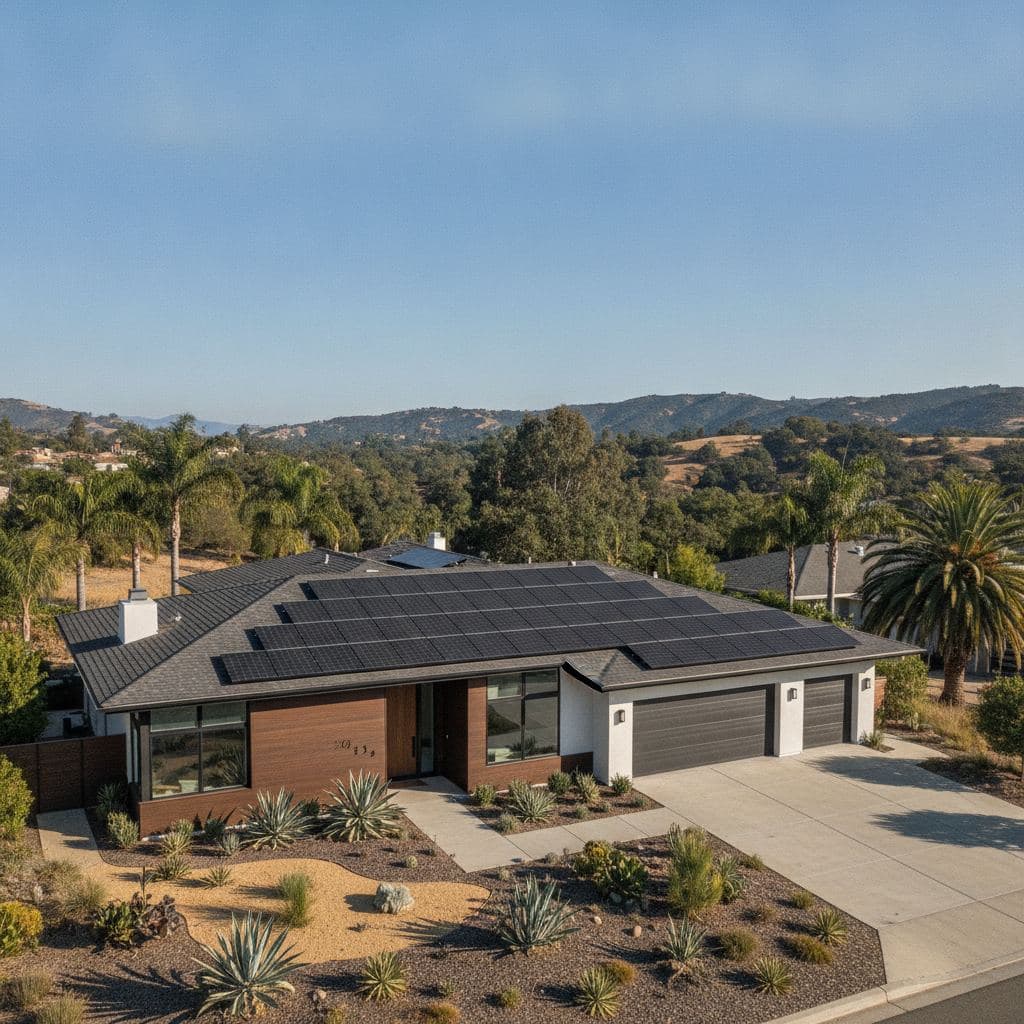
For most Southern California homeowners, a conventional reroof plus standard solar panels costs roughly half to one-third what a Tesla Solar Roof system was quoting — and often delivers more usable watt output on the same footprint. The Solar Roof's discontinuation in August 2026 has settled the debate: the market voted with its wallet, and conventional solar won.
Last verified: September 2026 by Helios Energy Global.
What just happened: Tesla Solar Roof is gone
Tesla discontinued the Solar Roof in August 2026, telling its network of third-party installers that it will no longer supply solar roof tiles — only conventional solar panels going forward.
Tesla completely removed the Solar Roof from its website; the former Solar Roof page now redirects to Tesla's traditional solar panels page.
One source close to the program told Electrek that internally, Tesla had concluded the product was not financially viable.
Tesla stopped taking Solar Roof orders on August 20, 2026, after roughly 3,000 total U.S. installations over seven years.
Tesla launched a conventional rooftop solar panel in January 2026, manufactured at its Buffalo, New York facility — an all-black panel designed to integrate with the Powerwall battery. The message is clear: Tesla's energy future is in conventional panels and Powerwall, not integrated roof tiles.
If you already have a Solar Roof: existing systems keep their 25-year warranty, which transfers with the home.
The discontinuation of new sales does not void existing warranties, though long-term parts availability is a legitimate question worth raising with Tesla directly.
The cost reality: why Solar Roof lost
The numbers were always the problem. Real-world Solar Roof pricing landed near $62 per square foot of roof — roughly $16 per watt — against $2.50 to $3.50 per watt for standard panels in California. At those figures, a Solar Roof on a typical 2,000 sq ft Southern California home with a moderate pitch (roughly 2,200–2,600 sq ft of actual roof surface) could easily run $100,000–$130,000+ all-in. A conventional reroof plus solar on the same home lands in a very different range.
What a reroof + solar actually costs in Southern California
Most Southern California homeowners are paying between $11,000 and $18,000 for a full roof replacement in 2026, with the price depending on the roof's size, slope, and materials chosen. Premium materials push higher: concrete tile runs $10–$18 per sq ft installed and clay tile $12–$22 per sq ft installed, with a 2,000 sq ft roof totaling $20,000–$44,000 for tile.
At Helios, roofing work is coordinated as one project through our licensed roofing partners — we handle the solar and electrical (our C-10 license), they handle the structural roofing (their C-39 license), and you get a single point of contact. We sequence the two scopes so the roof is complete before panels go on, avoiding any double-handling.
Add conventional solar panels at roughly $2.50–$3.50 per watt before any incentives, and a 7–10 kW system (enough for a typical SCE or LADWP home) adds approximately $17,500–$35,000 to the project. The combined reroof-plus-solar project for a typical Southern California home lands in the $28,000–$55,000 range, depending on roof material, system size, and whether a panel upgrade is needed.
Key numbers at a glance
| Item | Estimate (Southern California, 2026) | Notes |
|---|---|---|
| Tesla Solar Roof (historical) | Discontinued Aug 2026; no longer available | |
| Conventional solar panels | ~$2.50–$3.50/watt installed | Before incentives; see /solar-panel-cost |
| Full reroof — asphalt shingle | ~$11,000–$18,000 | Through licensed roofing partners |
| Full reroof — concrete/clay tile | ~$20,000–$44,000 | Common in SoCal Mediterranean-style homes |
| Combined reroof + solar (typical home) | ~$28,000–$55,000 (estimate) | Varies by roof size, material, system size |
| Tesla Powerwall 3 (one unit, installed) | ~$14,500–$18,500 | Helios-installed; see /batteries |
| Two Powerwall 3 units (installed) | ~$24,000–$30,000 | Estimate; main panel upgrade extra if needed |
| Main panel upgrade (if needed) | ~$3,000–$5,000 | Required on some older homes |
| Federal residential solar tax credit | $0 | Expired December 31, 2025 |
| California SGIP battery rebate | Waitlisted | Not currently available for new applicants |
| SCE average residential rate | ~34–35¢/kWh | Per SCE tariff schedule; 4–9 PM peak higher |
| LADWP effective rate | ~26–31¢/kWh | Retail-rate net metering still available |
All figures are estimates. Get a custom design for your specific home at /design-savings.
When Solar Roof made aesthetic sense — and what replaces it
The Solar Roof's genuine use case was a narrow one: a homeowner who needed a full roof replacement anyway, had a highly visible street-facing slope, lived in an HOA with strict aesthetics rules, and had a budget to match. For that buyer, the seamless look — no visible racking, no panel edges, tiles that look like slate or shingles — was worth a significant premium.
That use case still exists. It's just that the product no longer does.
What fills the gap in 2026:
- All-black conventional panels on low-profile mounts. Modern all-black monocrystalline panels (including Tesla's own new panel) on black anodized low-profile rails sit only 1–2 inches above the roof surface. From the street, on a moderate pitch, they read as a dark roof section — not the industrial look of older silver-framed panels.
- GAF Energy Timberline Solar shingles. Solar shingles still exist — GAF Energy's Timberline Solar ES2 is the main remaining option, and it makes sense for a narrow set of homes. It integrates with asphalt shingle roofs and is installed by roofing contractors. It won't match the output density of conventional panels, and per-watt cost is higher than conventional, but it's a real product with active installer support.
- Conventional panels on a new tile or metal roof. Through our licensed roofing partners, we coordinate new tile or standing-seam metal roof installations that are engineered from the start to accept solar racking — meaning clean penetrations, proper flashing, and no voided roofing warranty.
The utility picture: SCE vs. LADWP matters here
Whether you're in SCE or LADWP territory changes how your solar investment pencils — and it's one of the most important localization details that generic Solar Roof marketing always glossed over.
SCE territory (most of LA County outside the city, Orange County, Inland Empire, Ventura)
SCE's average residential rate is approximately 35.3 cents per kWh as of January 2026.
Peak hours for SCE customers on time-of-use rate plans are either 4–9 PM or 5–8 PM, depending on their specific plan. Per SCE's tariff schedule and the SCE Summary of Available Residential Rate Options, new solar customers are placed on TOU-D-PRIME under the Net Billing Tariff (NEM 3.0). All customers' net usage is billed according to their Otherwise Applicable Tariff, which must be a Time-of-Use rate schedule; residential solar customers are required to be on the Prime option of TOU-D, with net generation credited at the Avoided Cost Calculator rate.
Under NEM 3.0, export credits are low (roughly 5–8¢/kWh during off-peak hours). This makes self-consumption and battery storage the core of the financial case — not grid export. A well-sized system that covers your 4–9 PM load directly (via battery discharge) is worth far more than one that exports that energy for a few cents. See our NEM 3.0 explainer and solar vs. battery strategy guide for the full math.
LADWP territory (City of Los Angeles)
LADWP is a municipal utility and is not on NEM 3.0. LADWP still offers retail-rate net metering — meaning excess solar sent to the grid earns close to the full retail rate (~26–31¢/kWh effective), not the 5–8¢ that SCE customers receive. For LADWP customers, a solar-only system (without battery) can still have an attractive payback, though adding a Powerwall still makes sense for backup and time-shifting.
If you're in Pasadena (PWP), Burbank, Glendale, Anaheim (APU), or Riverside (RPU), you're also on municipal net metering — not NEM 3.0. Check with your specific utility for current export credit rates before modeling your payback.
About Helios and Tesla: what we actually install
We are a Tesla Powerwall Certified Installer. That means we are trained, authorized, and equipped to install Powerwall 3 battery systems — the most capable home battery Tesla makes — and to pair them with any solar array we design and install.
We are not a Tesla Solar Roof installer, and as of August 2026, that distinction is moot — the product no longer exists. We install conventional solar panels (including Tesla's new all-black panel where it fits the project) paired with Powerwall 3 batteries, coordinated as a complete system.
All roofing work on combined reroof-plus-solar projects is performed through our licensed roofing partners — contractors holding the appropriate C-39 roofing license. Helios coordinates the full project, handles permits on both scopes, and manages sequencing. Solar detach/reset work (for existing systems requiring a reroof) is Helios's own licensed C-10 work.
What this means for you: one phone call, one project manager, one timeline. You don't chase two separate contractors or worry about which scope voided the other's warranty.
Frequently asked questions about Tesla Solar Roof vs. conventional solar
Is the Tesla Solar Roof still available in 2026?
As of August 2026, the Tesla Solar Roof is no longer listed among Tesla's home energy products and is not available for new installations. Tesla has not made a formal public announcement, but trade publications including Electrek confirmed the discontinuation on August 20, 2026. If you received a quote from a Tesla Solar Roof installer earlier in 2026, that project cannot proceed — tiles are no longer orderable.
What happened to my Tesla Solar Roof warranty if the product is discontinued?
Existing Solar Roof warranties are still valid and still transfer to a new owner — discontinuing a product does not void coverage. The practical concern is long-term parts availability for repairs. Contact Tesla Energy directly for any service needs on an existing installation.
Why was the Tesla Solar Roof so much more expensive than regular solar panels?
The Solar Roof required replacing the entire roof structure with proprietary tiles — every square foot of roof, not just the south-facing solar sections. That meant full roofing labor, proprietary materials, and a complex installation process for what was effectively a solar panel disguised as a shingle. Real-world pricing landed near $62 per square foot of roof, roughly $16 per watt, against $2.50–$3.50 per watt for standard panels in California. The aesthetic premium was real, but the economics rarely worked.
Do I need to replace my roof before installing solar panels?
Not necessarily — but you should. If your roof has fewer than 10 years of life remaining, replacing it before solar installation is almost always the right call. Removing and reinstalling panels for a mid-life reroof costs $250–$350 per panel at Helios — about $5,000–$7,000 for a 20-panel system — for the solar detach/reset, which Helios performs under its own C-10 license. Doing the roof first avoids that cost entirely. We assess roof condition as part of every custom design.
Is there still a federal tax credit for solar in 2026?
No. The federal Section 25D residential solar tax credit expired December 31, 2025. There is no federal incentive for residential solar or battery installations purchased in 2026. Model your payback on current rules — not 2024 assumptions. California's SGIP battery rebate program is also waitlisted for residential customers.
Does NEM 3.0 apply if I'm an LADWP customer in Los Angeles?
No. NEM 3.0 (the CPUC Net Billing Tariff) applies only to investor-owned utilities — SCE, PG&E, and SDG&E. LADWP is a municipal utility and operates its own net metering program, which still credits excess solar at close to retail rates (~26–31¢/kWh effective). If you're in LADWP territory, your solar economics look meaningfully different from an SCE customer's. See /locations for utility-specific guidance.
Can Helios coordinate a reroof and solar installation as one project?
Yes. Helios handles the solar and electrical work under its C-10 license, and roofing is performed through our vetted, licensed roofing partners. We manage the full project — permits, sequencing, inspections — so you have one point of contact. Book a free consultation and we'll assess your roof condition, design a solar system, and give you a coordinated scope covering both.
Next steps
- Book a free consultation and custom design — we'll assess your roof, model your utility bill (SCE or LADWP), and design a solar-plus-battery system sized for your home.
- See what solar costs in Southern California — installed price ranges for 2026, broken down by system size.
- Explore Powerwall 3 battery storage — how it pairs with solar under NEM 3.0 and LADWP net metering.
- Understand NEM 3.0 and what it means for SCE customers — the export credit reality and why self-consumption is the new game.
- Solar vs. battery strategy under NEM 3.0 — when to add storage and how to size it.
- See all Southern California service locations — SCE, LADWP, and municipal utility territories we serve.
Sources
- SCE Tariff Books — Residential Rate Schedules (sce.com) — September 1, 2026
- SCE Summary of Available Residential Rate Options (SCE PDF) — April 15, 2026
- Electrek — Tesla Discontinues Solar Roof, August 20 2026 — August 20, 2026
- Roof Replacement Inc — Complete Guide to Roof Replacement Costs Southern California 2026 — July 21, 2026
More guides
How long do PSPS power shutoffs last in 2026?
PSPS shutoffs typically last 1–5 days, though some SCE customers went without power for up to 7 days during the January 2025 windstorm events.
ReadBest Solar Companies in Manhattan Beach, CA (2026): Aesthetics-First Installs for South Bay's Most Valuable Homes
Manhattan Beach runs on SCE under NEM 3.0, and its premium architecture demands more than a commodity install. Here's an honest, numbers-first ranking of the best solar companies serving the South Bay's most competitive market in 2026.
ReadElectricity rates in San Bernardino in 2026
San Bernardino homeowners on SCE pay roughly 34–35¢/kWh on average in 2026, with peak TOU rates climbing above 50¢/kWh on hot summer afternoons.
ReadGet a free consultation and custom design.
No pressure, no obligation — the owner reviews every design we send.