California's new electric fixed charge: what solar owners still pay in 2026
Every SCE, SDG&E and PG&E home now pays a fixed monthly charge — about $24.15 standard, $6 on CARE, $12.08 on FERA — that solar export credits cannot offset, which is why a solar bill is no longer $0.
By Taylor Crouse — Founder, Helios Energy GlobalPublished
Quick answer
- Southern California Edison, SDG&E and PG&E now bill every residential customer a fixed monthly charge of about $24.15 (standard rate), $6.00 on CARE and $12.08 on FERA, whether the home has solar or not.
- It is non-bypassable: SCE's own page says the charge "cannot be offset by the electricity you generate." A solar home's bill floor is now this charge plus taxes, not $0.
- To compensate, per-kWh delivery prices dropped roughly 10%, so heavy users came out about even and light users pay a little more.
- Rollout: SDG&E October 2025, SCE November 2025, PG&E March 1, 2026. LADWP and the other municipal utilities are not affected.
- Batteries reduce the volumetric part of the bill (the kWh you buy at 4–9 PM); nothing reduces the fixed part.
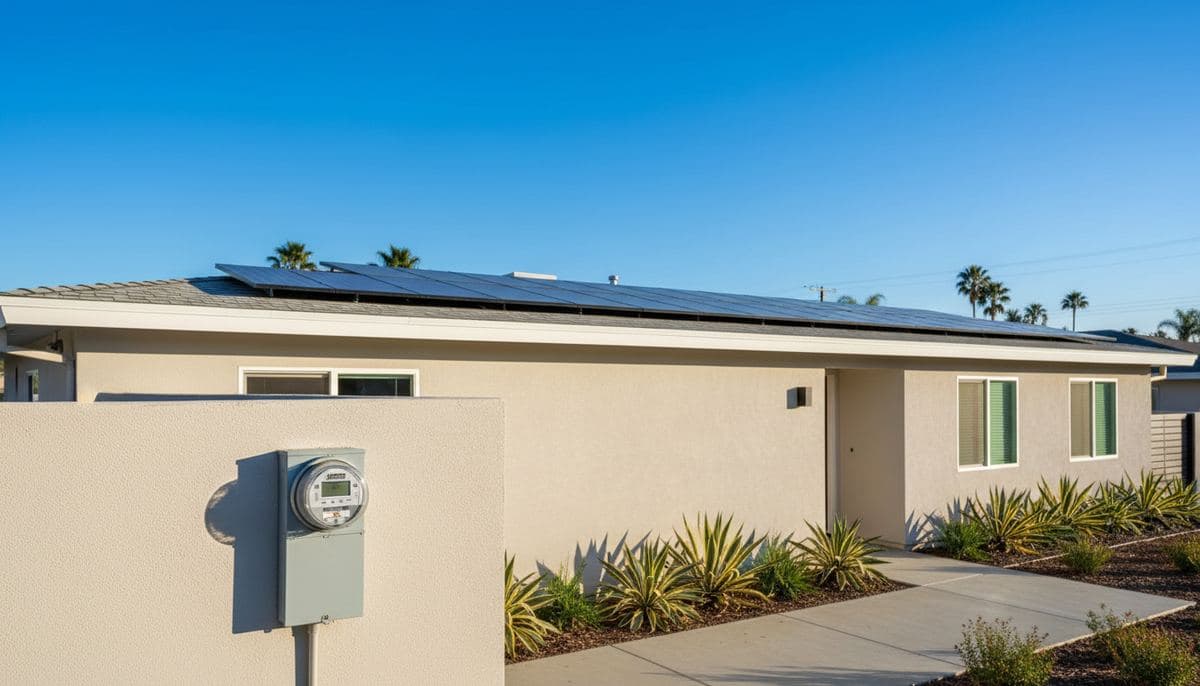
If your solar bill used to hit zero and now shows a stubborn $25–$30 every month, this is why. Under California's income-graduated fixed charge — SCE and PG&E call it the Base Services Charge — every home in investor-owned utility territory pays about $24.15 a month (standard rate) that solar export credits cannot touch. In exchange, the price of each kilowatt-hour you buy fell about 10%, which changes the solar math in ways worth understanding before you size a system.
Last verified: September 2026 by Helios Energy Global.
What the fixed charge is
In 2022 the state legislature (AB 205) directed the CPUC to create a fixed monthly charge that scales with income, and the CPUC set the amounts in 2024. The three investor-owned utilities then restructured bills one at a time: SDG&E in October 2025, SCE in November 2025, and PG&E on March 1, 2026.
| Customer tier | Fixed charge per month | Who qualifies |
|---|---|---|
| Standard | ~$24.15 | Everyone not on a discount program |
| FERA (Family Electric Rate Assistance) | ~$12.08 | Households of 3+ at 200–250% of federal poverty level |
| CARE (California Alternate Rates for Energy) | ~$6.00 | Income-qualified households, typically at or below 200% of FPL |
| Deed-restricted affordable housing | ~$12 | Per SCE's tier list |
The charge covers grid infrastructure — poles, wires, meters, wildfire mitigation — that the utility argues every connected home uses regardless of consumption. SCE's page puts it plainly for solar customers: "Solar customers are still connected to the grid and require the infrastructure, meters, and other equipment needed to maintain it," and the charge "cannot be offset by the electricity you generate."
Why it changes the solar math
Two things happened at once, and they pull in opposite directions.
The fixed part went up. Before November 2025, an SCE solar home with a well-sized system could see a bill of a few dollars in most months and a small true-up once a year. Now the floor is roughly $24 plus taxes and any non-bypassable per-kWh charges, or roughly $290 a year that no amount of solar removes.
The per-kWh part went down. SCE states the offsetting reduction at "approximately 10%" per kWh. That is worth less to a solar home than to a non-solar home, because a solar home buys fewer kilowatt-hours from the grid in the first place. The practical effect:
- A high-usage home (1,000+ kWh a month, AC, EV) roughly breaks even: the fixed charge is offset by the cheaper kWh it still buys at night and during the 4–9 PM peak.
- A low-usage home (under ~400 kWh a month) pays more overall, because it has little volumetric spend left to discount.
- A solar home that used to net to zero is in the second group by design: its bill goes from ~$0 to ~$24–$30 a month, and its savings versus a non-solar neighbor shrink by about that amount.
The CPUC's Public Advocates Office puts the underlying rates, as of June 2026, at 34.4¢/kWh for SCE, 45.5¢ for SDG&E and 33.7¢ for PG&E (system-average residential), with ten-year increases of 101%, 97% and 69%. The fixed charge does not stop that climb; it moves a slice of it into a line you cannot engineer away.
What it means for system sizing
Because the fixed charge is untouchable, the goal is no longer a $0 bill. The goal is to minimize the volumetric bill — the kilowatt-hours you buy, weighted by when you buy them — and a few sizing habits change:
- Stop chasing 100% offset. Under NEM 3.0, every kilowatt-hour you export earns a small avoided-cost credit; the last few panels that push you past your consumption were already marginal, and they do nothing against the fixed charge. Size to self-consumption.
- The 4–9 PM peak is where the money is. With SCE's summer on-peak far above its average rate, a battery that shifts midday solar into the evening removes the most expensive kilowatt-hours from your bill — the volumetric part the fixed charge did not touch. Our NEM 3.0 explainer and solar vs battery under NEM 3.0 walk through that math.
- CARE and FERA status matters more than before. A household that qualifies pays $6 or $12 instead of $24.15 — the biggest single lever many families overlook. Enrollment is through your utility, not through us, but we check eligibility during design because it changes the payback.
- LADWP customers are exempt. The charge applies to CPUC-regulated utilities only. LADWP, Pasadena, Burbank, Glendale, Anaheim and Riverside set their own rates and still run retail-rate net metering; a solar home there can still approach a near-zero energy bill. That is one more reason the same system pencils differently on the two sides of a city line, which our SCE vs LADWP comparison covers.
What batteries fix, and what they don't
A battery cannot reduce the fixed charge. It can reduce the kilowatt-hours you buy during the 4–9 PM peak, keep you off the grid during outages, and — under NEM 3.0 — turn export-worthless midday solar into evening savings. For an SCE home with a 7 kW array and one Powerwall 3, the volumetric bill often drops to the tens of dollars a year; the fixed charge then becomes the majority of what is left. That is the honest picture: a solar-plus-storage home in SCE territory in 2026 should expect a bill around $25–$35 a month, most of it the fixed charge, not $0.
Frequently asked questions about the California fixed charge
How much is the new fixed charge on my SCE bill?
About $24.15 a month for standard-rate customers, $6.00 on CARE and $12.08 on FERA, billed since November 2025. SCE reduced per-kWh delivery prices by roughly 10% at the same time.
Does the fixed charge apply if I have solar panels?
Yes. SCE states that residential customers "including solar customers" pay the Base Services Charge and that it "cannot be offset by the electricity you generate." The same is true at SDG&E and PG&E.
Why is my solar bill not zero anymore?
Because the fixed charge is billed regardless of how much you produce. Before the charge, a well-sized system could net a bill to a few dollars; now the floor is the fixed charge plus taxes. Your volumetric charges may still be near zero.
Is LADWP charging the fixed charge too?
No. The income-graduated fixed charge applies to the CPUC-regulated utilities — SCE, PG&E and SDG&E. LADWP and the other municipal utilities set their own rate structures and are not part of this change.
Does the fixed charge make solar not worth it?
It trims the savings of a solar-only system by roughly $290 a year and does not change the savings of a battery at all. With SCE at about 34¢/kWh average and far higher at peak, solar plus storage still cuts a typical bill by the large majority; it simply no longer reaches zero. Run your own numbers in the savings calculator.
Can I avoid it by going off-grid?
Only by physically disconnecting from the utility, which almost no home does — it means no grid backup, and most jurisdictions and lenders will not support it for a primary residence. Enrolling in CARE or FERA, if you qualify, is the realistic way to lower it.
Next steps
- Book a free consultation and custom design — we size to self-consumption, model the fixed charge as its own line in your projection, and show you the real monthly bill after solar and storage.
- Read how much you can save with solar in California for utility-by-utility numbers that already include the fixed charge.
- See the current rates behind all of this in our average electric bill in California guide.
Sources
- SCE — Base Services Charge (income-graduated fixed charge, effective November 2025) — November 2025
- SDG&E — Electric billing (fixed charge for residential customers, effective October 2025) — October 2025
- PG&E — Base Services Charge (effective March 1, 2026) — March 2026
- Public Advocates Office (CPUC) — Q2 2026 Electric Rates Report — July 2026
More guides
What should you set your Tesla Powerwall reserve to in 2026?
Most Southern California homeowners get the best results setting their Powerwall reserve between 10–30%, depending on whether their priority is TOU bill savings, wildfire backup, or NEM 3.0 self-consumption.
ReadHow many kWh per day is normal in Southern California? (2026)
Most Southern California homes use 15–35 kWh per day, but inland households with heavy AC can push past 50 kWh on summer days — here's what that means for solar sizing.
ReadSolar Panel Removal and Reinstallation on a Tile Roof in California (2026)
Helios charges $250–$350 per panel for solar R&R, and tile roofs land at the top of that range — about $6,000–$7,000 for a typical 20-panel system, with the roofing quoted separately.
ReadGet a free consultation and custom design.
No pressure, no obligation — the owner reviews every design we send.