How many kWh per day is normal in Southern California? (2026)
Most Southern California homes use 15–35 kWh per day, but inland households with heavy AC can push past 50 kWh on summer days — here's what that means for solar sizing.
By Taylor Crouse — Founder, Helios Energy GlobalUpdated
Quick answer
- Most Southern California homes use 15–35 kWh per day on an annual average basis; the California statewide average is about 16.5 kWh/day (503 kWh/month, EIA 2024).
- Coastal homes typically run 12–22 kWh/day; inland valleys 20–38; the low desert 25–60 with an extreme summer peak.
- Inland homes with heavy AC can hit 40–55+ kWh/day during July heat waves.
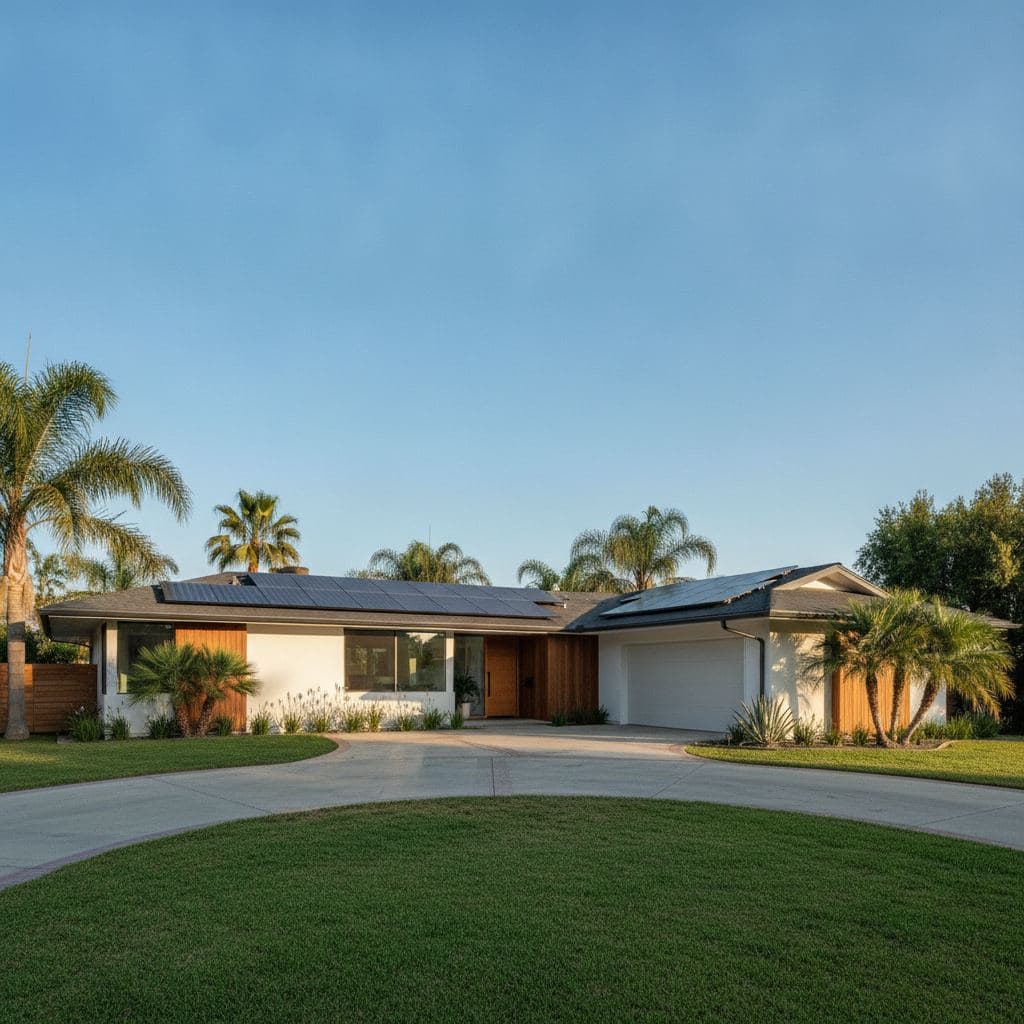
Most Southern California homes use somewhere between 15 and 35 kWh per day on an annual average basis — but that number is far from fixed. Inland households in places like the Inland Empire, San Fernando Valley, or the high desert can easily hit 40–55 kWh per day during a July heat wave when central air conditioning runs for hours at a stretch.
Last verified: September 2026 by Helios Energy Global.
If you're trying to size a solar system, that daily average is the single most important input. Get it wrong and you'll either overbuild (wasted money) or underbuild (a bill that doesn't shrink the way you expected). The table below gives you a practical starting point by geography and home type before we dig into the details.
The coastal-vs-inland breakdown that most online calculators miss
Generic "California average" figures are almost useless for solar sizing because Southern California spans radically different climates within a single metro area. Santa Monica and Malibu rarely need AC. Redlands and Moreno Valley run it five months a year. That gap in cooling load — more than any other factor — explains why two homes of identical square footage can have monthly bills that differ by $150 or more.
| Home Type & Location | Typical Annual Average (kWh/day) | Summer Peak Days (kWh/day) | Winter Low Days (kWh/day) |
|---|---|---|---|
| Coastal (Santa Monica, Manhattan Beach, Long Beach) — under 1,800 sq ft | 12–18 | 16–22 | 9–14 |
| Coastal — 1,800–3,000 sq ft | 16–26 | 22–32 | 12–20 |
| Inland Valley (Pasadena, Burbank, San Gabriel Valley) — under 1,800 sq ft | 18–28 | 30–42 | 10–16 |
| Inland Valley — 1,800–3,000 sq ft | 24–38 | 38–55 | 14–22 |
| Inland Empire / High Desert (Riverside, San Bernardino, Victorville) — under 1,800 sq ft | 22–32 | 38–52 | 12–18 |
| Inland Empire / High Desert — 1,800–3,000 sq ft | 30–48 | 48–65 | 16–24 |
| Large home (3,000+ sq ft, any inland location) with pool + EV | 50–80 | 70–100+ | 28–45 |
All figures are estimates based on EIA residential consumption data and California Energy Commission appliance saturation surveys. Individual homes vary significantly.
Benchmarks by home size and by climate zone
If you don't have twelve months of bills handy — say you're buying a home, or you just moved — these two tables give you a defensible starting estimate. For context, California homes averaged 503 kWh per month (about 16.5 kWh/day) in 2024 per EIA Table 5A; Southern California spans both sides of that number depending on geography.
By home size (annual average, estimates derived from EIA RECS 2020 and CEC RASS data for Southern California housing stock):
| Home size | Typical annual average (kWh/day) | Notes |
|---|---|---|
| Under 1,000 sq ft (apartment/condo) | 8–14 | Often no central AC; shared walls reduce load |
| 1,000–1,999 sq ft | 12–22 | The statewide average lives in this band |
| 2,000–2,999 sq ft | 18–32 | Central AC and a second story push the top end |
| 3,000+ sq ft | 28–50+ | Pools, EVs, and inland heat can double this |
By county / climate zone — the same house uses very different amounts of electricity depending on where it sits:
| Region (CEC climate zones) | Typical annual average (kWh/day) | Seasonal character | Local deep dive |
|---|---|---|---|
| Coastal strip: Santa Monica to San Diego (zones 6–8) | 12–22 | Flat year-round; little AC | Average electric bill in San Diego |
| Inland valleys: Temecula, Murrieta, Inland Empire (zones 9–10) | 20–38 | Strong summer peak, mild winter | Average electric bill in Temecula |
| Low desert: Palm Springs, Coachella Valley (zone 15) | 25–60 | Extreme summer peak — usage can triple in July | Average electric bill in Palm Springs |
The climate-zone effect usually outweighs the home-size effect: a 1,600 sq ft house in Palm Springs will typically out-consume a 2,800 sq ft house in Manhattan Beach over a year, almost entirely because of air conditioning.
What actually drives your daily number
Air conditioning — the dominant variable inland
A standard 3-ton central AC unit draws roughly 3–4 kW while running. On a 105°F day in Riverside, that unit might run six to eight hours — adding 18–32 kWh to your day before you count anything else. On the coast, that same day might be 72°F, and the AC never turns on. This single difference explains most of the coastal-vs-inland gap in the table above.
Electric vehicles
An EV charging overnight at Level 2 (the standard home charger) typically adds 8–15 kWh per night, depending on the vehicle and how far you drove. If you have two EVs, double it. For solar sizing purposes, EV charging is actually a gift: it's predictable, it happens at night (or can be shifted), and it gives your panels a large, controllable load to offset.
Water heating
Gas water heaters contribute zero to your electric bill. But heat-pump water heaters — which California's building code is increasingly pushing — use 1–3 kWh per day on average. If you're replacing a gas unit or building new, factor this in.
Pool pumps and equipment
A traditional single-speed pool pump running eight hours uses roughly 4–8 kWh per day. Variable-speed pumps cut that to 1–3 kWh/day. If you have a pool heater, spa, or automated water features, add more. Homes with pools in warm inland climates often see 10–15 kWh/day attributable to pool equipment alone in summer.
Home size and insulation
Older homes with poor insulation make every load worse — the AC works harder, the water heater cycles more, and the overall baseline climbs. A well-insulated 2,500 sq ft home in Arcadia might use 30 kWh/day in summer; a poorly insulated home of the same size two streets over might use 45 kWh/day.
What that usage costs at 2026 rates
Multiply your number by the rate you actually pay and the reason people go solar is obvious. The CPUC's Public Advocates Office reports system-average residential rates, as of June 2026, of 34.4¢/kWh at SCE, 45.5¢ at SDG&E and 33.7¢ at PG&E; LADWP's effective rate is roughly 28¢. A home at the California average of about 503 kWh a month pays roughly $170 on SCE and $230 on SDG&E before the fixed charge — and the same report shows SCE and SDG&E rates have roughly doubled over ten years. Our average electric bill in California guide has the full utility-by-utility breakdown.
How to find YOUR actual number (not an estimate)
The cleanest method: pull your last 12 months of utility bills and add up total kWh consumed, then divide by 365. Both SCE and LADWP show this in your online account history, usually labeled "annual usage" or "12-month summary."
On SCE: Log into My Account → Usage → 12-Month View. SCE's TOU-D-PRIME and TOU-D-4-9PM rate schedules show hourly data if you want to understand your peak-hour exposure (4–9 PM is when SCE's rates hit roughly 34–35¢/kWh or higher in summer).
On LADWP: LADWP's MyAccount portal shows monthly kWh. LADWP's average residential rate is roughly 28¢/kWh — meaningfully lower than SCE — which affects your solar payback math even if your usage is identical. Learn how LADWP's net metering differs from SCE's NEM 3.0.
On other municipal utilities (Pasadena PWP, Burbank Water & Power, Glendale Water & Power, Anaheim Public Utilities, Riverside RPU): each has its own rate schedule and net metering program. None of them are on NEM 3.0 — that tariff applies only to SCE, PG&E, and SDG&E. Check your utility's website for current rates and net metering terms.
What your daily kWh number means for solar system sizing
A rough rule of thumb: divide your daily kWh target by your location's peak sun hours to get the system size in kW you need.
Southern California is genuinely excellent solar territory. Coastal areas see roughly 5.0–5.5 peak sun hours per day annually; inland areas with more sun and less marine layer often get 5.5–6.5 peak sun hours (per NREL PVWatts data). So:
- 20 kWh/day ÷ 5.5 peak sun hours = ~3.6 kW system (roughly 9–10 panels)
- 35 kWh/day ÷ 5.5 = ~6.4 kW system (roughly 15–17 panels)
- 55 kWh/day ÷ 6.0 = ~9.2 kW system (roughly 22–25 panels)
In practice, installers apply a system efficiency derate (typically 80–85% to account for inverter losses, wiring, temperature, and shading), so the real system size ends up somewhat larger than the raw math suggests. A custom design accounts for your specific roof orientation, shading, and local utility rate structure — which is why online calculators are a starting point, not a final answer.
At $2.50–$3.50 per watt installed (the current 2026 range before any incentives), a 7 kW system would run approximately $17,500–$24,500 before incentives. Note that the 30% federal residential solar tax credit expired December 31, 2025 and is not available for 2026 purchases. Check DSIRE and your utility's website for any current state or local programs. See a full cost breakdown.
Should you add a battery?
If you're on SCE (NEM 3.0), the answer is almost always yes — the export credit rate for excess solar sent to the grid is low, so storing that energy for your own 4–9 PM peak use is where the value lives. Read the full solar-vs-battery analysis for NEM 3.0.
If you're on LADWP, the math is different. LADWP still credits excess solar at close to retail rate, so batteries are valuable for backup and resilience but less financially urgent for bill savings alone.
Battery pricing in 2026 runs roughly $14,000–$18,500 installed per unit. California's SGIP battery rebate program has residential funds that are waitlisted as of mid-2026 — not closed, but not immediately accessible. Learn more about batteries and current incentives.
Frequently asked questions
What is the average kWh per day for a house in California?
Statewide, California homes average around 18–22 kWh per day based on EIA consumption data — lower than the national average partly because the climate is mild and partly because many homes still use gas for heating and cooking. Southern California coastal homes can be even lower, while inland SoCal homes with heavy AC use often run well above the state average.
How many kWh per day does a 2,000 sq ft house use in Los Angeles?
It depends heavily on whether you're in coastal LA (Santa Monica, Culver City, Westside) or inland LA (San Fernando Valley, East LA). A 2,000 sq ft coastal home typically averages 18–28 kWh/day annually; the same size home in the Valley can average 28–42 kWh/day, with summer peaks higher still.
Does running AC all day use a lot of kWh?
Yes — it's usually the single biggest load in an inland Southern California home. A 3-ton central AC system running continuously for eight hours uses roughly 24–32 kWh in that period alone. Homes that run AC heavily in summer will see monthly bills that are 40–70% higher than their winter baseline.
How many solar panels do I need for 30 kWh per day in Southern California?
At 30 kWh/day and roughly 5.5 peak sun hours, you'd need a system producing about 5.5–6 kW after efficiency losses — typically 14–18 standard panels (400W each), depending on roof orientation and shading. A custom design consultation will give you a precise number for your specific home.
Is my electricity usage higher than normal if I have an EV?
Almost certainly, yes — and that's fine. An EV typically adds 8–15 kWh per night of charging, which can increase your monthly bill by $50–$150 depending on your utility and rate plan. But that same predictable load is one of the easiest things for a solar system to offset, especially if you can shift charging to midday when solar production peaks.
How does LADWP usage compare to SCE for solar payback?
LADWP customers typically pay around 28¢/kWh on average, versus SCE's roughly 34–35¢/kWh average. That lower rate means each kWh your solar system produces is worth less in bill savings, so payback periods for LADWP customers tend to run longer — typically 9–13 years versus 7–10 years for comparable SCE systems. See the full utility comparison.
What uses the most electricity in a Southern California home?
In ranked order for most inland SoCal homes: (1) central air conditioning, (2) EV charging if applicable, (3) pool pump and equipment, (4) water heating, (5) clothes dryer, (6) refrigerator, (7) lighting and miscellaneous plug loads. Coastal homes without AC often see water heating and the refrigerator move up the list.
Next steps
- Book a free consultation and custom design — we'll pull your actual utility data and size a system around your real usage, not a generic average.
- Estimate your savings with our design tool — enter your address and average bill for a quick projection.
- Learn about battery storage options — especially relevant if you're on SCE's NEM 3.0 rate.
- Understand NEM 3.0 and how it affects your solar value — critical reading for SCE, PG&E, and SDG&E customers.
- See current solar installation costs in Southern California — with 2026 per-watt ranges by system size.
- Find your local Helios service area — we serve coastal and inland Southern California from our Santa Monica base.
Sources
- EIA Residential Energy Consumption Survey
- EIA – 2024 Average Monthly Bill, Residential (Table 5A)
- SCE Residential Rate Schedules
- LADWP Residential Rates
- CPUC Net Billing Tariff (NEM 3.0)
- California Energy Commission – Residential Appliance Saturation Survey
- NREL – PVWatts Calculator
- Public Advocates Office (CPUC) — Q2 2026 Electric Rates Report — July 2026
More guides
Is a Solar Plus New Roof Package Worth It in 2026?
Bundling solar with a roof replacement avoids a future detach-and-reset — $250–$350 per panel at Helios, about $5,000–$8,750 for a 20–25 panel system — but only if your roof actually needs replacing. Here's how to decide.
ReadHow much can you save with solar panels in California in 2026?
Most Southern California homeowners save $800–$1,800 per year on electricity after going solar, with 25-year lifetime savings ranging from $25,000–$65,000 depending on utility and system size.
ReadWhat is the average LADWP electric bill in 2026?
The typical LADWP residential customer pays roughly $140–$230/month in mid-2026, based on tiered rates that work out to an effective 26–31¢/kWh — still below what SCE customers pay, though the gap has narrowed.
ReadGet a free consultation and custom design.
No pressure, no obligation — the owner reviews every design we send.