4 kW Solar System Cost in California (2026): Price, Production and Who It Fits
A 4 kW solar system in California costs roughly $10,000–$14,000 installed before any incentives — here's what it produces, who it fits, and how it compares with larger sizes.
By Taylor Crouse — Founder, Helios Energy GlobalPublished
Quick answer
- A 4 kW solar system in California costs $10,000–$14,000 installed (at $2.50–$3.50/W) — one all-in written price with the equipment named by model.
- It produces roughly 6,500–6,900 kWh/year in Los Angeles, 6,400–6,700 kWh/year in Orange County and San Diego, and 6,800–6,900 kWh/year in the Inland Empire (NREL PVWatts v8, south-facing, 20° tilt, 14% losses, October 2026).
- It takes 9–10 panels at 400–450 W each and fits a small home, condo, or townhouse averaging roughly 500–600 kWh/month.
- There is no federal tax credit for a 2026 purchase — the Section 25D Residential Clean Energy Credit expired December 31, 2025.
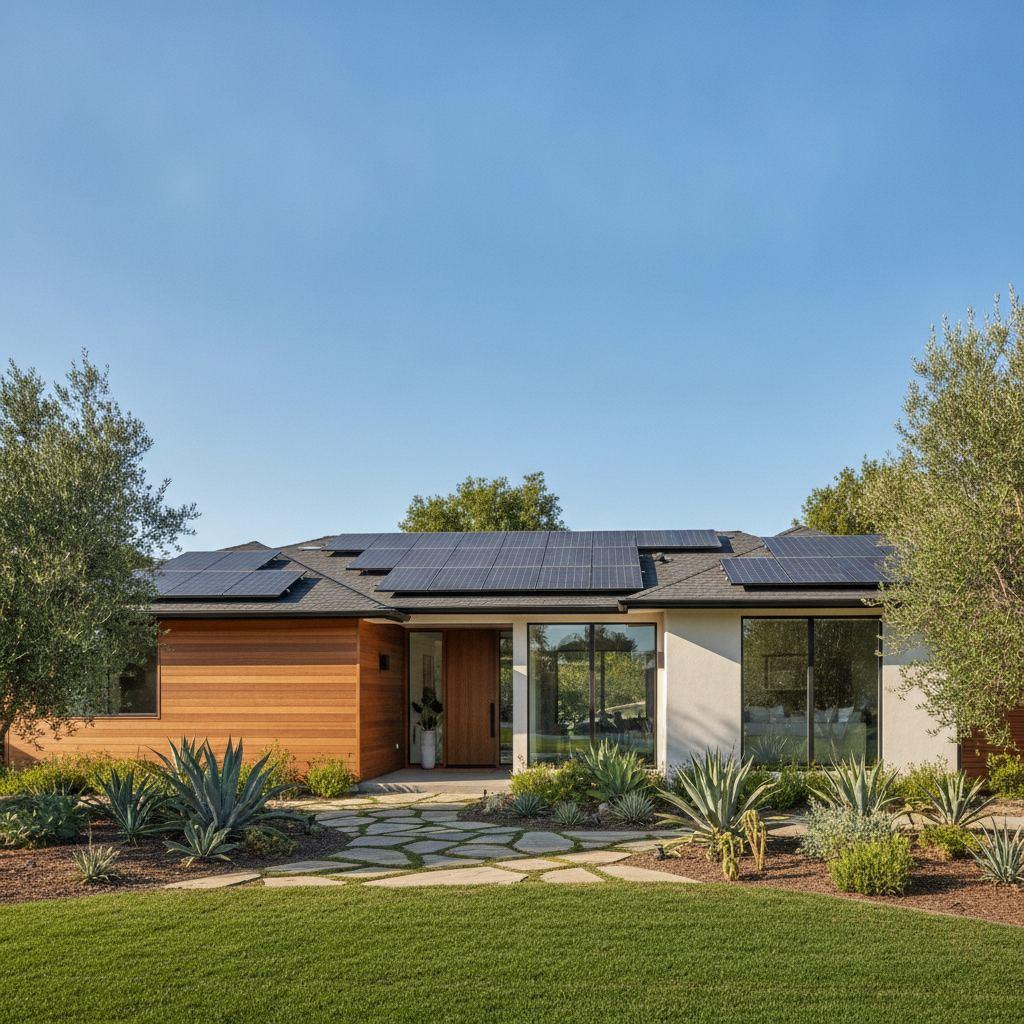
A 4 kW solar system in California costs $10,000–$14,000 installed before any remaining state or local incentives, using Helios's 2026 pricing of $2.50–$3.50 per watt. At that size, NREL PVWatts v8 estimates annual production of roughly 6,500–6,900 kWh in Los Angeles (south-facing roof, 20° tilt, 14% system losses, run October 2026) — enough to cover a home using about 540–575 kWh per month.
Last verified: November 2026 by Helios Energy Global.
What a 4 kW system actually costs in 2026
The installed price range for a 4 kW system is $10,000–$14,000, which follows directly from the $2.50–$3.50/W range that applies to residential solar across Southern California. (For a full breakdown of what drives California's per-watt pricing, see our solar panel cost guide.)
A few things are baked into that range that many homeowners don't realize:
- Permit and interconnection fees are largely fixed — they cost roughly the same whether your system is 4 kW or 10 kW. On a small system they represent a higher share of the total, which is why the per-watt cost on a 4 kW system is often toward the top of the range, not the bottom.
- Labor — the crew, the trenching, the roof penetrations, the electrical work — is also mostly fixed per job. Spreading those fixed costs over fewer panels pushes the effective per-watt price up.
- Equipment is a smaller driver. A typical 4 kW system uses 9–10 panels at 400–450 W each, a string inverter or microinverters, and standard racking. The panel and inverter cost per watt is similar at any residential size; it's the fixed soft costs that make small systems relatively more expensive.
When you get a quote, ask for the gross price and the cost per watt in writing. Helios gives one all-in written price with the equipment named by model — you'll see the panel model, inverter model, and total system size clearly stated.
Production by Southern California location
The table below shows estimated annual AC output for a 4 kW system across four Southern California markets, based on NREL PVWatts v8 (NSRDB TMY weather data, standard module, fixed roof mount, 20° tilt, 180° south azimuth, 14% system losses, run October 2026). These are planning estimates; run PVWatts for your exact address before sizing.
| Component | Los Angeles (LADWP / SCE) | Orange County (SCE) | Inland Empire (SCE) | San Diego (SDG&E) |
|---|---|---|---|---|
| kWh per kW per year (est.) | ~1,650–1,700 | ~1,600–1,680 | ~1,700–1,730 | ~1,600–1,680 |
| 4 kW annual production (est.) | ~6,500–6,800 kWh | ~6,400–6,700 kWh | ~6,800–6,900 kWh | ~6,400–6,700 kWh |
| Avg. monthly production (est.) | ~540–565 kWh | ~530–560 kWh | ~565–575 kWh | ~530–560 kWh |
| Utility | LADWP or SCE | SCE | SCE | SDG&E |
| Effective avg. rate (2026) | ~28¢ (LADWP) / ~34–35¢ (SCE) | ~34–35¢ | ~34–35¢ | ~46¢ |
| Est. annual bill offset value | ~$1,800–$2,400 | ~$2,200–$2,350 | ~$2,300–$2,400 | ~$2,900–$3,100 |
Production estimates based on NREL PVWatts v8 per-kW outputs for Los Angeles, Santa Ana (Orange County), Riverside (Inland Empire), and San Diego, run October 2026. Bill offset values are illustrative estimates only; actual savings depend on your rate plan, usage pattern, and net metering terms.
NREL PVWatts version 8 (NSRDB TMY weather data), standard module, fixed roof mount, 20° tilt, 180° (south) azimuth, 14% system losses shows Los Angeles producing about 1,677 kWh per kW per year.
The Inland Empire (Riverside) produces about 1,718 kWh per kW per year on a south-facing roof — higher than coastal Los Angeles because the marine layer rarely reaches it.
For Orange County (Santa Ana), the figure is approximately 1,702 kWh per kW per year, and San Diego comes in at approximately 1,525–1,675 kWh per kW per year depending on the model and specific location.
Why San Diego gets the most value per kWh despite similar production
San Diego's production is roughly comparable to Los Angeles, but SDG&E's bundled residential average rate increased to approximately 46.4¢/kWh following rate changes in 2026 — the highest of California's three big investor-owned utilities, per the CPUC's Public Advocates Office. That means each kilowatt-hour your panels produce is worth more against your bill in San Diego than almost anywhere else in Southern California.
LADWP vs. SCE: a meaningful difference for Los Angeles homeowners
Los Angeles is split between two utilities with very different rate structures. LADWP's R-1A standard residential rate for July–September 2026 runs from 26.408¢/kWh in Tier 1 to 32.267¢ in Tier 2 and 40.968¢ in Tier 3.
From October 1, 2026, R-1A costs 27.29¢/kWh in Tier 1 and 33.15¢ above it, before the 10% city tax — about 11% more than the same quarter of 2025.
SCE customers in Los Angeles and Orange County face a different structure. SCE's average residential rate is 34.5¢/kWh as of October 1, 2026, but on the default TOU-D-4-9PM plan the summer weekday on-peak price is 59¢/kWh against 33¢ off-peak.
The critical difference for solar: LADWP still offers retail-rate net metering, so each kilowatt-hour your panels export earns the full retail rate. SCE, PG&E, and SDG&E are all on NEM 3.0 (the CPUC Net Billing Tariff), which pays export rates far below retail — typically 5–8¢/kWh during midday. That changes the math on a 4 kW system significantly, as we'll cover below.
How many panels is 4 kW?
At today's common panel wattages, a 4 kW system takes:
- 10 panels at 400 W each — the most common configuration
- 9 panels at 445 W each — if you're using a higher-wattage panel
Ten 400 W panels cover roughly 175–200 square feet of usable roof space in a standard portrait layout with racking. That's a relatively modest footprint — about the size of a single-car garage door. It fits on a south-facing section of roof that many small homes, condos, and townhouses can accommodate even with HVAC equipment, vents, and setback requirements eating into available area.
Who a 4 kW system fits
A 4 kW system is not the right size for every home. It works best for:
- Small homes with modest electricity use — typically under 600–650 kWh/month. If you're checking whether your usage is in range, see how many kWh per month is normal for a California home.
- Condos and townhouses with limited roof access — common in Southern California, where HOA rules, shared roofs, or partial roof ownership restrict how many panels you can install. See our full guide on solar panels for townhouses and condos in California.
- A second-stage add-on — if you installed solar years ago and want to expand, a 4 kW addition can bring an older undersized system up to your current usage without a full replacement.
- Homes where the goal is partial offset — some homeowners don't want to eliminate their bill entirely; they want to cut it by 40–60% and keep their upfront cost manageable.
If your bills are consistently above 700–800 kWh/month, a 4 kW system will leave a meaningful gap. For sizing guidance, see how many solar panels do I need in California and how to calculate your solar system size — those pages walk through the full method so we won't repeat it here.
The federal tax credit situation in 2026
This is the most important financial fact for a 2026 buyer: there is no federal tax credit for a residential solar purchase made in 2026.
The One Big Beautiful Bill Act phases out the Section 25D Residential Clean Energy Credit — it is no longer available for expenditures made after December 31, 2025.
Homeowners can no longer claim the Section 25D credit for new qualifying expenditures made after December 31, 2025, though unused credit from an eligible prior-year project can still be carried forward.
There is one indirect path: if you finance your system through a prepaid lease, the third-party owner of the system (not you) may be able to claim the Section 48E Clean Electricity Investment Credit and pass roughly 30% of the value through in the form of a lower prepaid price. When a solar company or project owner retains ownership, that owner — not the homeowner — may qualify for the Section 48E Clean Electricity Investment Credit.
The Senate removed language that would have blocked residential leases and PPAs from 48E, and residential installation companies can claim a 30% tax credit for qualifying residential solar leases and PPAs through the end of 2027. See our financing page for how prepaid lease structures work and whether one makes sense for your situation.
How net billing changes the 4 kW decision (SCE, SDG&E, PG&E customers)
On LADWP, a 4 kW system is straightforward: every kilowatt-hour you export earns the full retail rate, so right-sizing to your usage is the goal. Bigger is generally better up to your annual consumption.
On SCE, SDG&E, and PG&E — all on NEM 3.0 — the calculus is different. Midday export rates are very low (typically 5–8¢/kWh), so a solar-only system sized to your full annual usage will export a large fraction of its production at rates far below what you pay to import power in the evening. The practical implication for a 4 kW system:
- If your bill is genuinely small (under ~550 kWh/month), a 4 kW system can still make sense because you're consuming most of what you produce.
- If your bill is larger, adding a battery to capture the midday solar that would otherwise export at low rates often improves the economics more than simply adding more panels.
For a full explanation of how NEM 3.0 export rates affect sizing decisions, read solar vs. battery under NEM 3.0 and our NEM 3.0 explainer.
How 4 kW compares with 5 kW and 6 kW
5 kW: One or two more panels, roughly $12,500–$17,500 installed, and about 8,000–8,600 kWh/year in Los Angeles. If your bill is 650–750 kWh/month, the 5 kW system is usually a better fit than stretching a 4 kW. Full details at 5 kW solar system cost in California.
6 kW: The most common entry-level size for a typical Southern California home, at $15,000–$21,000 installed and roughly 9,900–10,200 kWh/year in Los Angeles. If your monthly usage is above 800 kWh, start here rather than at 4 kW. Full details at 6 kW solar system cost in California.
The per-watt price does not change between sizes — it stays at $2.50–$3.50/W. But the fixed costs (permit, interconnection, labor) are spread over more kilowatts as you go up, so the effective per-watt cost at the low end of the range is more accessible on a 6 kW system than a 4 kW one.
Key numbers at a glance
| Component | Detail |
|---|---|
| Installed price range (4 kW) | $10,000–$14,000 (estimate, before incentives) |
| Price per watt | $2.50–$3.50/W |
| Panel count | 9–10 panels (400–450 W each) |
| Annual production — LA / OC (est.) | ~6,500–6,800 kWh |
| Annual production — Inland Empire (est.) | ~6,800–6,900 kWh |
| Annual production — San Diego (est.) | ~6,400–6,700 kWh |
| Best fit (monthly usage) | ~500–600 kWh/month |
| Federal tax credit (2026 purchase) | None — Section 25D expired Dec 31, 2025 |
| SGIP battery rebate (CA) | Waitlisted in 2026 |
| LADWP net metering | Retail-rate net metering (not NEM 3.0) |
| SCE / SDG&E net metering | NEM 3.0 (Net Billing Tariff) — low export rates |
All price figures are estimates for planning purposes. Helios provides one all-in written price with the equipment named by model after a custom design.
Frequently asked questions about 4 kW solar system cost
How much does a 4 kW solar system cost in California in 2026?
A 4 kW solar system costs roughly $10,000–$14,000 installed in California in 2026, based on the $2.50–$3.50 per watt range that applies across Southern California. The exact figure depends on your roof type, panel and inverter model, and whether a main-panel upgrade is needed (typically $3,000–$5,000 if required). You won't know your precise number until you get a custom design — book a free consultation to get one.
Is there a federal tax credit for solar in 2026?
No. The Section 25D Residential Clean Energy Credit — the 30% credit for solar and battery storage — ended for property placed in service after December 31, 2025. If you're considering a prepaid lease, ask your installer about whether the Section 48E credit applies to their lease structure.
How many kWh per year does a 4 kW solar system produce in Southern California?
Based on NREL PVWatts v8 data for Southern California, a 4 kW system on a south-facing roof produces roughly 6,500–6,800 kWh/year in the Los Angeles and Orange County area, 6,800–6,900 kWh/year in the Inland Empire, and 6,400–6,700 kWh/year in San Diego. These are planning estimates; your actual production depends on roof tilt, azimuth, shading, and local weather.
Is a 4 kW solar system enough for my home?
It depends on your usage. A 4 kW system producing roughly 540–575 kWh/month is a good fit for homes averaging 500–600 kWh/month. If your bills are consistently higher, a 5 kW or 6 kW system will serve you better. Check how many solar panels you need in California to size from your actual bill.
Why is the per-watt price higher on a 4 kW system than a 10 kW system?
Permit fees, interconnection fees, and labor costs are largely fixed per job — they don't scale linearly with system size. Spreading those fixed costs over 4 kW instead of 10 kW raises the effective cost per watt. This is why the all-in per-watt price on a small system often lands toward the top of the $2.50–$3.50 range.
Does LADWP net metering work differently than SCE for a 4 kW system?
Yes, significantly. LADWP still offers retail-rate net metering, so every kilowatt-hour you export earns the same rate you'd pay to import — currently ranging from about 24¢ to 41¢/kWh depending on tier and season, per LADWP's 2026 rate schedules. SCE, SDG&E, and PG&E are on NEM 3.0, which pays export rates of roughly 5–8¢/kWh during midday. That difference affects how you should size and whether adding a battery makes sense. Read more at NEM 3.0 explained.
Should I add a battery to a 4 kW system in Southern California?
On LADWP, a battery is optional — retail net metering means your exported solar is already valued at retail rates. On SCE or SDG&E under NEM 3.0, a battery lets you store midday solar and use it during the 4–9 PM peak window instead of exporting it at low rates. SDG&E's on-peak rate from 4–9 PM is 50.8¢/kWh (Tier 1) effective November 1, 2026 — a battery charging from your 4 kW array and discharging at that rate can materially improve your payback. See solar vs. battery under NEM 3.0 and the battery options page for current installed prices.
Next steps
- Book a free consultation and custom design — Helios will size your system from your actual bills and give you one all-in written price with the equipment named by model.
- See all Southern California locations we serve
- Explore battery storage options and pricing
- Understand NEM 3.0 and how it affects your solar return
- Learn how to size your system from your bill
- Read about solar for condos and townhouses in California
Sources
- LADWP Residential Rates Schedule R-1A and R-1B, 2026 — January 1, 2026
- SDG&E Schedule TOU-DR1 Total Rates Table, effective 8/1/2026 — August 1, 2026
- SDG&E Residential Pricing Plans, effective November 1, 2026 — November 1, 2026
- RSM US — OBBBA Tax Clean Energy Credit Changes (Section 25D terminated Dec 31, 2025) — July 15, 2025
More guides
Best Solar Companies in Murrieta, CA (2026): An Honest Homeowner's Guide
A no-hype, numbers-first look at the top solar installers serving Murrieta, CA in 2026 — covering SCE net billing, real price ranges, battery logic, and how to pick the right company for your roof.
ReadSolar Panel Removal for a Roof Repair vs. a Full Replacement: What Changes in 2026
Helios charges $250–$350 per panel either way: a partial detach for a leak or flashing fix covers only the affected panels and wraps in one day; a full reroof detach-and-reset runs about $5,000–$7,000 for 20 panels and adds 2–4 weeks to your project.
ReadElectricity rates in San Bernardino in 2026
San Bernardino homeowners on SCE pay roughly 34–35¢/kWh on average in 2026, with peak TOU rates climbing above 50¢/kWh on hot summer afternoons.
ReadGet a free consultation and custom design.
No pressure, no obligation — the owner reviews every design we send.