How Much Does a 6kW Solar System Cost in California in 2026?
A 6kW solar system costs $15,000–$21,000 installed in California in 2026, with no federal tax credit available — payback runs 7–12 years depending on your utility.
By Taylor Crouse — Founder, Helios Energy GlobalPublished
Quick answer
- A 6kW solar system costs $15,000–$21,000 installed in California in 2026 (roughly $2.50–$3.50/watt).
- There is no federal tax credit for 2026 purchases — the 30% credit expired December 31, 2025.
- A 6kW system in Southern California produces approximately 9,000–10,500 kWh/year, enough to cover a typical 750–900 kWh/month home.
- Payback ranges from 7–9 years on SDG&E to 10–12 years on LADWP depending on your utility and whether you add a battery.
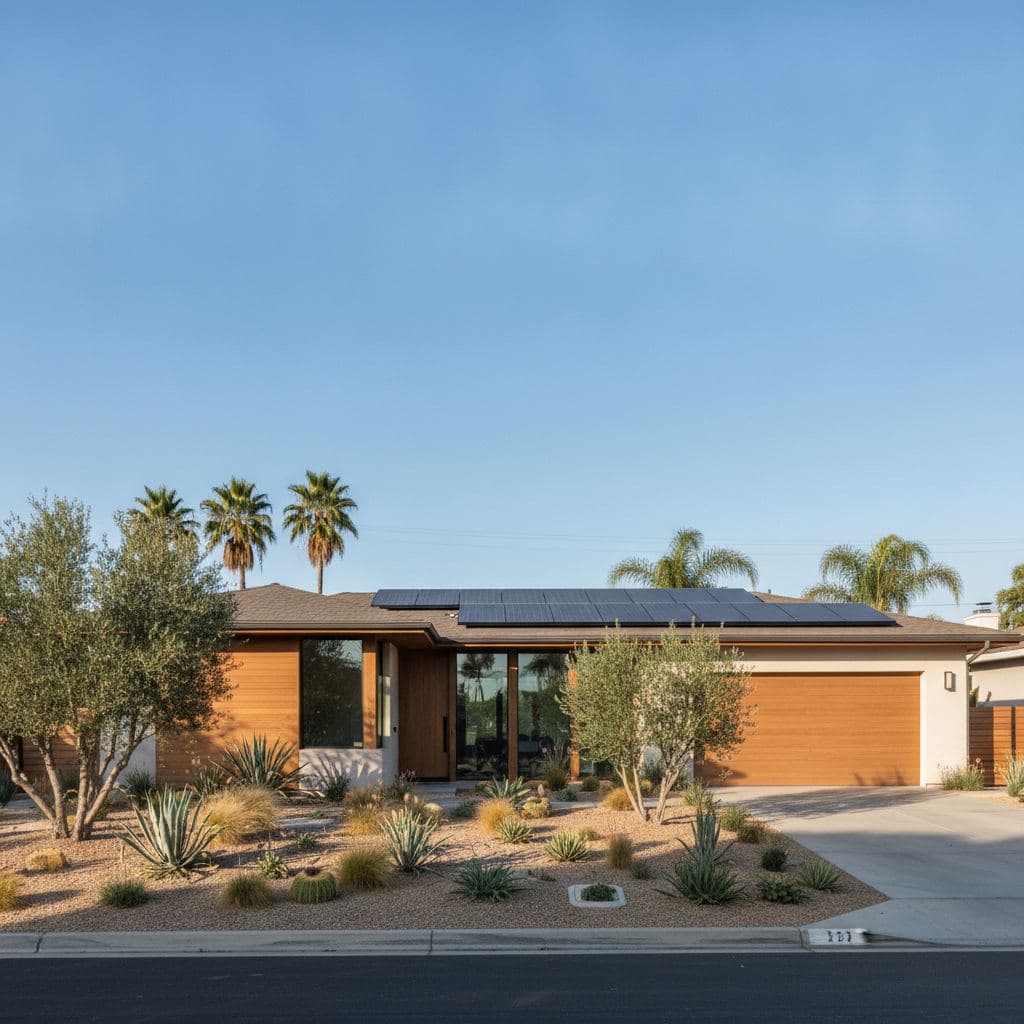
A 6kW solar system installed in California in 2026 runs $15,000–$21,000 all-in — that's the gross price before any remaining state or local incentives, and it reflects the full installed cost with no federal tax credit applied. At Southern California's sun levels, that system will produce roughly 9,000–10,500 kWh per year, offsetting most or all of a typical home's electricity use.
Last verified: September 2026 by Helios Energy Global.
What you get from a 6kW system in Southern California
Six kilowatts is the most common residential system size we design in the Santa Monica–to–San Diego corridor. It fits on roughly 14–18 panels (depending on panel wattage) and typically occupies 280–360 square feet of south- or west-facing roof.
Annual production estimate:
California averages 5.6 peak sun hours per day — about 1,635 kWh of solar production per kW installed each year. At that rate, a 6kW system produces roughly 9,800 kWh/year before accounting for system losses (shading, inverter efficiency, wiring). A realistic real-world figure after losses is 8,800–9,500 kWh/year for a well-sited Southern California roof.
Who it fits:
- Homes using 700–900 kWh/month (roughly $200–$350/month on SCE, $185–$260/month on LADWP at current rates)
- 1,500–2,500 sq ft homes with central AC but no pool or EV — or smaller homes that do have an EV
- Homeowners who want to right-size production to their actual usage rather than overbuild under NEM 3.0 (see below)
2026 installed cost and key numbers at a glance
| Item | Range (estimate) | Notes |
|---|---|---|
| 6kW system, installed | $15,000–$21,000 | $2.50–$3.50/watt; all-in, no credit |
| Federal tax credit | $0 | Expired Dec 31, 2025 |
| SGIP battery rebate | Waitlisted | Residential budget waitlisted in 2026 |
| CA property tax exclusion | Available | Active solar excluded from assessed value |
| Add 1 battery (e.g., Powerwall 3) | +$14,500–$18,500 | Per unit, installed |
| Add Enphase IQ Battery 10C | +$13,000–$15,500 | Per unit, installed |
| Panel removal & reinstall (if reroofing) | $5,000–$7,000 | For ~20 panels; tile/steep roofs at top |
| Main panel upgrade (if needed) | $3,000–$5,000 | Not always required |
Get the gross price and cost per watt in writing from any installer you're comparing. Those two numbers let you compare apples to apples across any quote you receive.
For a deeper look at per-watt pricing across all system sizes, see our California solar panel cost guide.
What it costs by utility — and why it matters
The installed cost of the panels is the same regardless of which utility serves your home. What changes dramatically is how fast that investment pays back, because rates and net metering rules differ sharply across Southern California.
SCE customers (most of the region)
Average residential rates sit around 34.5¢/kWh as of early 2026, after a jump from roughly 31.2¢ to 35.3¢ in October 2025.
The TOU-D-4-9PM plan features a longer on-peak window, with a summer weekday rate of 58¢/kWh.
NEM 3.0 — California's Net Billing Tariff — took effect April 15, 2023 and changed how utilities pay for exported energy. Credits fell about 75%, from near-retail rates to an hourly "avoided cost."
Under NEM 3.0, export credits are based on "avoided cost," typically only $0.05 to $0.08 per kWh.
What this means for a 6kW system on SCE: The system pays for itself primarily through self-consumption — solar you use directly during the day — not through export credits. Under NEM 3.0, the value is in self-consumption — using your own solar directly and storing the excess to discharge during expensive evening peak hours rather than exporting it cheaply.
A solar-only 6kW system on SCE typically has a payback of 9–12 years in 2026. Pairing it with a battery that stores midday surplus and discharges during the 4–9 PM peak can shorten that to 7–10 years by avoiding the most expensive grid electricity. See our solar vs. battery guide for NEM 3.0 and our NEM 3.0 explainer for the full math.
LADWP customers (City of Los Angeles)
LADWP keeps full retail-rate net metering — a meaningful difference from SCE's Net Billing Tariff. Every kWh your 6kW system exports to the grid earns a full retail credit, not the 5–8¢ avoided-cost rate SCE pays.
As of 2026, average residential rates have steadily climbed to around 24 to 28¢/kWh depending on tier, zone, and temperature adjustments. Helios tracks LADWP's effective all-in rate at roughly 26–31¢/kWh once all pass-through factors are included. Solar production offsets your most expensive kilowatt-hours first, so a system that erases Tier 3 and Tier 2 usage is saving you 32–41¢/kWh in summer, not the 24–26¢ headline Tier 1 number.
LADWP's rates climbed meaningfully into 2026 — about 2.1–2.5¢/kWh over the prior year, an 8–11% jump on the lowest tier — so the days of quoting "22 cents" for LADWP are over.
A 6kW system on LADWP typically pays back in 10–12 years on solar alone — slightly longer than SCE because the rate is lower, but the retail-rate export credit makes the math simpler and a battery is optional rather than near-essential.
SDG&E customers (San Diego County, south Orange County)
SDG&E's bundled residential average electric rates increased by approximately 0.7¢/kWh or 1.5% from 45.7¢/kWh to 46.4¢/kWh as of April 2026 — the highest of any major utility in the continental US. Under the Net Billing Tariff (NEM 3), power you export to the grid earns a low avoided-cost credit — typically in the mid-single digits of cents per kWh for most hours. Power you use yourself instead of buying from SDG&E is worth full retail.
At ~46¢/kWh, every kWh a 6kW system produces and self-consumes is worth nearly double what it is on LADWP. Payback on SDG&E runs roughly 7–9 years for solar alone, and 6–8 years when paired with a battery that captures the 4–9 PM peak. One honest caveat: the 30% federal residential tax credit expired December 31, 2025 and does not apply to 2026 installations — the payback math is unsubsidized, and in SDG&E territory it still works better than anywhere else.
Municipal utilities: Pasadena, Burbank, Glendale, Anaheim, Riverside
These cities run their own net metering programs and are not on NEM 3.0. Rules and rates vary by city — contact your utility directly or book a consultation and we'll pull the current tariff for your address.
Payback summary by utility
| Utility | Avg. effective rate | Net metering | Solar-only payback (est.) | Solar + battery payback (est.) |
|---|---|---|---|---|
| SCE | ~34–35¢/kWh avg; ~48–58¢/kWh peak | NEM 3.0 (avoided cost) | 9–12 years | 7–10 years |
| LADWP | ~26–31¢/kWh effective | Retail-rate NEM | 10–12 years | 12–14 years* |
| SDG&E | ~46¢/kWh avg | NEM 3.0 (avoided cost) | 7–9 years | 6–8 years |
*On LADWP, a battery is primarily a resilience purchase, not an arbitrage play — payback is longer but the backup-power value is real. See our batteries page for the breakdown.
All payback figures are estimates based on 2026 installed costs of $15,000–$21,000 for a 6kW system, no federal tax credit, and current utility rates. Individual results vary based on roof orientation, shading, household usage patterns, and rate plan.
The prepaid lease path: ~30% lower upfront
If the $15,000–$21,000 sticker price is a barrier, a prepaid solar lease (also called a prepaid PPA) is the main alternative path in 2026. You pay a single upfront amount — typically around 30% less than the purchase price — to a third-party owner who installs and maintains the system. You use the power; they own the equipment.
Trade-offs to understand:
- No ownership: You don't own the panels, so you can't claim any remaining incentives directly, and the system doesn't add to your home's assessed value in the same way.
- Simpler paperwork: No tax credit to file (there is no federal credit to claim in 2026 anyway), no SGIP application to navigate.
- Transfer at sale: Leases need to transfer to the buyer when you sell — most buyers accept this, but it adds a step.
- Lower long-term return: The savings over 25 years are real but smaller than ownership, because some of the value goes to the lessor.
For homeowners who want the bill savings without the capital outlay, a prepaid lease at roughly 30% below the purchase price can make a 6kW system accessible. Get the numbers side by side at your free design consultation.
Does a 6kW system need a battery in 2026?
On SCE and SDG&E: strongly recommended. That's the NEM 3.0 squeeze: you buy at roughly 31–42¢ and sell at roughly 5–8¢. Every exported kWh you buy back in the evening is a losing trade — which is exactly what a battery is for. A 6kW system without a battery on SCE or SDG&E will export a significant portion of its midday production for pennies, then buy that same energy back at peak rates.
On LADWP: optional, but increasingly worth it. On LADWP, with retail-rate net metering intact, a battery is primarily a resilience purchase, not an arbitrage play: backup power during outages (increasingly relevant in fire-adjacent neighborhoods), energy independence, and future-proofing if LADWP's net metering policy ever changes.
Battery options that pair well with a 6kW system:
- Tesla Powerwall 3: $14,500–$18,500 installed; 13.5 kWh usable — covers most of a home's 4–9 PM load
- Enphase IQ Battery 10C: $13,000–$15,500 installed; 10 kWh usable — good fit for moderate evening loads
- FranklinWH aPower 2 with aGate: $16,000–$21,000 installed; 13.6 kWh usable, whole-home backup capable
California's SGIP (Self-Generation Incentive Program) residential battery rebate is waitlisted in 2026 — don't count on it in your near-term budget. See the full batteries page for current availability.
Does your roof need work first?
A 6kW system adds roughly 280–360 square feet of panels to your roof. If your roof has fewer than 8–10 years of life left, replacing it before solar goes on is almost always the right call — removing and reinstalling panels later costs $5,000–$7,000 for a 20-panel system (tile or steep roofs at the top of that range).
Helios coordinates roofing through vetted, licensed roofing partners — we're not the roofing contractor, but we manage the sequencing so panels go on a roof that's ready for them. See our roof types guide for what different materials mean for installation cost and timeline.
Frequently asked questions about 6kW solar system cost in California
How much does a 6kW solar system cost in California in 2026?
Installed cost runs $15,000–$21,000 all-in, at $2.50–$3.50 per watt. There is no federal tax credit for 2026 purchases — the 30% residential credit expired December 31, 2025. California's property tax exclusion for active solar remains available and excludes the added value from your assessed property value.
How many panels is a 6kW solar system?
Most 6kW systems use 14–18 panels, depending on panel wattage. At 400W per panel, you need 15 panels; at 350W, you need 17–18. The exact count depends on which panels your installer specifies — always ask for the model name and wattage in writing.
How much electricity does a 6kW solar system produce in Southern California?
California averages 5.6 peak sun hours per day — 19% above the US average of 4.7. In practical terms, every 1 kW of solar produces about 1,635 kWh of electricity a year. A 6kW system therefore produces roughly 9,000–9,800 kWh/year before losses, or about 8,500–9,500 kWh after real-world system losses. Inland Southern California (Riverside, San Bernardino, parts of the Valley) tends toward the higher end; coastal locations slightly lower.
Is a 6kW solar system enough for my home?
A 6kW system is typically right for a home using 700–900 kWh/month. If you use more — because of a pool, central AC in a hot inland climate, or an EV — an 8kW or larger system may serve you better. If you use less, you may be better off with a 5kW system rather than overbuilding under NEM 3.0, where excess exports earn very little on SCE or SDG&E. Our custom design tool sizes a system to your actual bills.
Do I need a battery with a 6kW solar system in California?
On SCE and SDG&E, a battery is strongly recommended in 2026. You might buy power from the utility at 40¢/kWh, but they only pay you 5–8¢/kWh for the excess power you send them during the day. A battery stores that midday surplus and discharges it during the expensive 4–9 PM peak, turning a weak export into a full retail offset. On LADWP, where retail-rate net metering still applies, a battery is more of a resilience investment.
What is the payback period for a 6kW solar system in California?
Payback ranges from roughly 7–9 years for SDG&E customers (the highest rates in the state) to 10–12 years for LADWP customers (lower rates but retail-rate net metering). SCE customers land in the middle at 9–12 years for solar alone, shortening to 7–10 years with a battery that captures the 4–9 PM peak. These are estimates — your actual payback depends on your usage, roof orientation, shading, and rate plan.
Does a 6kW solar system qualify for any rebates or incentives in California in 2026?
The federal 30% residential solar tax credit expired December 31, 2025 and does not apply to 2026 installations. California's property tax exclusion for solar remains active. SGIP (the state battery rebate) is waitlisted for residential customers in 2026. LADWP's Solar Incentive Program closed in 2018. The federal residential solar tax credit (Section 25D) expired for systems placed in service after December 31, 2025. Some income-qualified programs may still have funding — confirm current status before including any rebate in your budget.
Next steps
- Powerwall 3 cost — the installed price for one unit, what moves it, and what is included
- Book a free consultation and custom design — we'll size the system to your actual bills and tell you which incentives are live for your address
- See savings estimates for your home — run the numbers on your utility and usage
- Compare battery options — Powerwall 3, Enphase IQ 10C, FranklinWH aPower 2 side by side
- Understand NEM 3.0 and how it affects your payback — the full explainer for SCE and SDG&E customers
- Check if your roof is ready — what tile, comp shingle, and flat roofs mean for solar installation cost
- See all Southern California service areas — we serve from Santa Monica to San Diego
Sources
- SDG&E Bundled Electric Rate Change Alert, April 2026 — April 2026
- Cali Energy: LADWP Electric Rates Explained 2026 — August 4, 2026
- SunFigure: Peak Sun Hours in California 2026 — September 2026
- EnergySage: SCE Time-of-Use Rates 2026 — August 2026
- Cali Energy: NEM 3.0 (Net Billing Tariff) Explained 2026 — August 4, 2026
More guides
Solar Panels Not Working? What to Check Before You Call for Repair
Most solar outages are a tripped breaker, a lost Wi-Fi connection, or a monitoring glitch — not a failed panel. Here's how to tell in five minutes.
ReadRoof Replacement Cost Compared: LA, Orange, and San Diego Counties in 2026
Roof replacement runs roughly $9,000–$22,000 in LA County, $9,500–$23,000 in Orange County, and $10,000–$24,000 in San Diego County — same materials, different labor markets and permit fees.
ReadWhat's the Average Electric Bill in Temecula? (2026)
Temecula homes use around 900 kWh a month — well above the California average — and typical SCE bills run $270–$390, with big newer homes with pools passing $500 in summer. Here's the breakdown by home size and why the 4–9 PM peak window matters so much here.
ReadGet a free consultation and custom design.
No pressure, no obligation — the owner reviews every design we send.