How many solar panels do I need in California? (2026)
Most Southern California homes need 14–32 panels (6–12 kW), depending on usage and whether you're on SCE or LADWP rates.
By Taylor Crouse — Founder, Helios Energy GlobalUpdated
Quick answer
- Most Southern California homes need 14–32 panels to cover their electricity use.
- That translates to a 6–12 kW system — the typical range for SoCal households.
- The simple formula: Annual kWh ÷ 1,600 = system size in kW (using ~5.5 peak sun hours/day for most of SoCal, rounded for real-world losses).
- Panel count = system kW ÷ 0.40 kW per panel (for a standard 400 W panel).
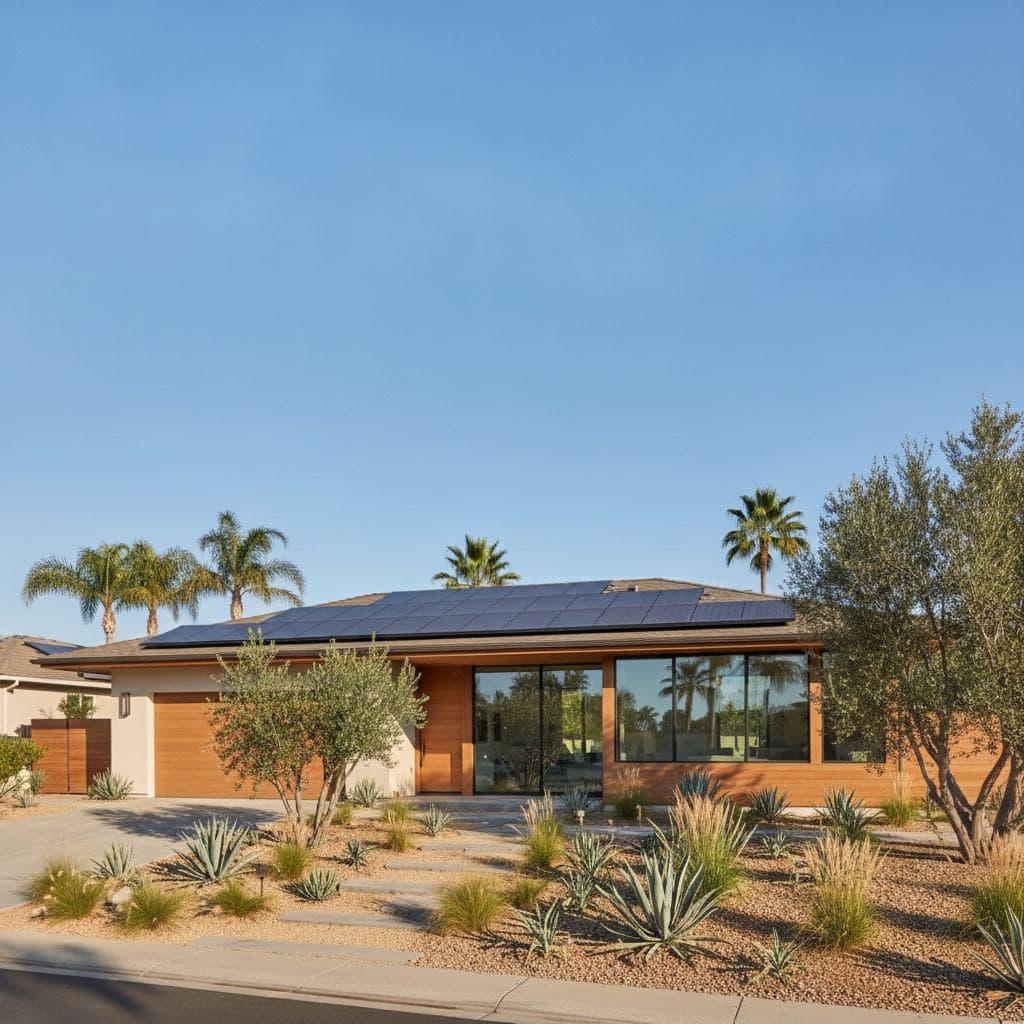
A Southern California home using 10,000–14,000 kWh per year — which is typical — needs roughly 18–25 panels at today's standard 400 W panel size. The exact count shifts based on your roof's orientation, shading, and whether you're an SCE customer (average ~34–35¢/kWh) or on LADWP (average ~28¢/kWh), because lower rates mean a smaller system pays off faster.
Last verified: September 2026 by Helios Energy Global.
The formula: how panel count is actually calculated
Solar designers use a three-step calculation. You can run it yourself with your last 12 months of utility bills.
Step 1 — Find your annual kWh Pull your last 12 utility bills and add up total kilowatt-hours consumed. The average Southern California home lands between 7,000 and 18,000 kWh/year depending on square footage, whether you have a pool or EV, and how aggressively you run air conditioning.
Step 2 — Divide by your location's production factor In most of coastal and inland Southern California, a 1 kW system produces roughly 1,500–1,700 kWh per year (NREL PVWatts data for Los Angeles, Riverside, and surrounding areas). Use 1,600 kWh/kW as a practical midpoint.
System size (kW) = Annual kWh ÷ 1,600
Step 3 — Convert kW to panel count Standard residential panels in 2026 are rated at 380–430 W each. Using a round 400 W (0.40 kW):
Number of panels = System kW ÷ 0.40
Example: A home using 12,800 kWh/year → 12,800 ÷ 1,600 = 8 kW system → 8 ÷ 0.40 = 20 panels.
Panel-count reference table by annual usage
| Annual Usage (kWh) | Estimated System Size | Approx. Panels (400 W) | Typical Household Profile |
|---|---|---|---|
| 5,000–7,000 | 3–4.5 kW | 8–12 | Small condo or apartment, no EV |
| 7,000–9,000 | 4.5–6 kW | 12–15 | Small home, mild AC use |
| 9,000–12,000 | 6–7.5 kW | 15–19 | Medium home, moderate AC |
| 12,000–15,000 | 7.5–9.5 kW | 19–24 | Larger home, heavy AC or pool |
| 15,000–18,000 | 9.5–11 kW | 24–28 | Large home + EV charging |
| 18,000–22,000+ | 11–14 kW | 28–35 | Large home + EV + pool + battery |
All figures are estimates based on ~1,600 kWh/kW annual production for Southern California. Your actual production varies with roof pitch, azimuth, and shading. See our custom design tool for a site-specific number.
How your utility changes the math
This is where SoCal gets interesting — and where generic California calculators mislead people.
SCE customers (most of the South Bay, San Gabriel Valley, Orange County, Inland Empire)
SCE residential customers pay roughly 34–35¢/kWh on average, with peak rates climbing higher during the 4–9 PM TOU window. Under NEM 3.0 (the CPUC Net Billing Tariff), export credits for excess solar are priced at avoided-cost rates — much lower than retail — so oversizing your system to bank daytime credits is far less effective than it used to be.
The practical impact on panel count: SCE customers on NEM 3.0 should size their system to cover roughly 80–100% of annual consumption, not more. Adding a battery to shift self-consumption matters more than adding extra panels. See our NEM 3.0 guide and solar vs. battery under NEM 3.0 for a full breakdown.
LADWP customers (City of Los Angeles)
LADWP is a municipal utility and is not on NEM 3.0. LADWP still offers retail-rate net metering, meaning excess solar exported to the grid earns you a credit at close to the retail rate you'd otherwise pay. The average LADWP rate is around 28¢/kWh — meaningfully lower than SCE.
Because the rate is lower and export credits are more generous, LADWP customers can often justify a slightly larger system (sizing to 100–110% of annual use) without the diminishing-return problem SCE customers face. The payback math is different: lower rates mean longer payback periods, but the net-metering structure is friendlier to solar-only systems.
Other SoCal municipal utilities
- Pasadena Water & Power (PWP), Burbank Water & Power, Glendale Water & Power, Anaheim Public Utilities, Riverside Public Utilities — each runs its own net metering program, none on NEM 3.0. Rates and export credit structures vary; check directly with your utility or ask us during a free consultation.
Factors that shift your panel count up or down
Roof orientation and tilt A south-facing roof at 20–25° tilt in Los Angeles captures close to maximum solar production. An east- or west-facing roof may produce 10–20% less per panel, meaning you'd need more panels for the same output. A north-facing roof is rarely worth installing on.
Shading Even partial shading from trees, chimneys, or neighboring structures can cut production significantly. Modern microinverters or DC optimizers reduce the impact, but a heavily shaded roof may limit how many usable panels you can fit — sometimes making a smaller system the only practical option. See roof types and solar suitability for more detail.
Panel efficiency Standard panels in 2026 run 20–23% efficiency. Premium panels (often called "high-efficiency" or "N-type" TOPCon/HJT technology) can hit 22–24%, meaning you get more watts per square foot. If roof space is tight, higher-efficiency panels let you hit your target kW with fewer panels.
Adding an EV or pool An electric vehicle adds roughly 2,500–4,500 kWh/year to your home's consumption (depending on miles driven and charging habits). A pool pump and heater can add 2,000–5,000 kWh/year. If you're adding either, factor that into your annual kWh before sizing.
Battery storage Adding a home battery doesn't change how many panels you need for production — but it changes how you use what you produce. Under SCE's NEM 3.0, a battery lets you store midday solar and use it during the expensive 4–9 PM peak window, which can meaningfully improve your economics. Installed battery costs run roughly $14,000–$18,500 per unit in 2026. Note: California's SGIP battery rebate program is waitlisted in 2026 for residential customers.
What a 6–12 kW system costs in 2026
For reference, here's the installed cost range before any remaining incentives:
| System Size | Installed Cost Range (Est.) |
|---|---|
| 6 kW (15 panels) | $15,000 – $21,000 |
| 8 kW (20 panels) | $20,000 – $28,000 |
| 10 kW (25 panels) | $25,000 – $35,000 |
| 12 kW (30 panels) | $30,000 – $42,000 |
Based on $2.50–$3.50/W installed, which reflects 2026 Southern California market pricing. Exact quotes depend on equipment, roof complexity, and electrical panel upgrades. See solar panel cost details.
Important 2026 note on incentives: The 30% federal residential solar tax credit expired December 31, 2025 and does not apply to systems installed in 2026. There is currently no replacement federal residential credit. California does not have a statewide solar rebate. Some local utilities offer modest incentives — ask us what applies to your address during your consultation.
Frequently asked questions about solar panel count in California
How many solar panels does the average California home need?
The statewide "average" isn't very useful because usage and sun hours vary widely. For Southern California specifically, the most common system size is 18–25 panels (7–10 kW), covering a home using 11,000–16,000 kWh/year. Your number could be higher or lower depending on your actual bills.
Can I put too many panels on my roof?
Yes — and under SCE's NEM 3.0, oversizing creates a real financial problem. Excess daytime export earns low avoided-cost credits, not retail credits, so panels beyond what you can self-consume have poor return on investment. LADWP customers have more flexibility because retail-rate net metering makes modest oversizing more defensible. We'll size your system to match your usage, not to maximize panel count.
Does a bigger system always mean faster payback?
Not necessarily. Payback period depends on how much of the solar production you actually use on-site versus export. Under NEM 3.0 (SCE, PG&E, SDG&E), self-consumption is king. A well-sized system paired with a battery often beats a large system with no storage. Check our solar vs. battery guide for the numbers.
How many panels fit on a typical SoCal roof?
A standard 2,000 sq ft single-story home typically has 400–700 sq ft of usable south- or west-facing roof space after accounting for setbacks, vents, and HVAC equipment. At roughly 18–20 sq ft per 400 W panel, that's room for 20–35 panels — usually enough for most households. Townhomes and smaller roofs may be limited to 10–16 panels. See roof types and solar suitability.
Do I need more panels if I have an EV?
Yes. Add approximately 2,500–4,500 kWh/year to your baseline consumption for one EV, then run the formula again. For most households, an EV bumps the recommended system size by 2–4 panels (roughly 0.8–1.5 kW). If you're planning to add an EV within a few years, it's worth sizing for it now.
Is 10 kW too big for a California home?
Not if your usage supports it. A 10 kW system makes sense for a home using 15,000+ kWh/year — which is common with central AC, a pool, and/or EV charging. For a smaller home using 8,000 kWh/year, 10 kW would be oversized and the economics would suffer, especially on SCE's NEM 3.0. Always size to your actual usage.
How do I get an accurate panel count for my specific home?
The formula in this guide gives you a solid estimate, but the precise number requires your 12-month utility bills, a satellite or on-site roof measurement, and a shading analysis. That's exactly what we do in our free custom design consultation — no obligation, and you'll leave with real numbers for your address.
Next steps
- Book a free consultation and custom design — we'll run the formula on your actual bills and roof, and give you a panel count, system size, and savings estimate specific to your home.
- See what your system could save — explore production estimates and payback timelines for SoCal homes.
- Learn about home batteries — especially relevant if you're on SCE's NEM 3.0 and want to maximize self-consumption.
- Understand NEM 3.0 and how it affects your system size — the single biggest factor for SCE, PG&E, and SDG&E customers in 2026.
- Compare solar vs. battery strategy under NEM 3.0 — when panels alone are enough, and when storage changes the math.
- Solar panel cost in Southern California — full cost breakdown by system size for 2026.
- Explore our Southern California service areas — we serve Santa Monica, Los Angeles, the South Bay, San Gabriel Valley, and surrounding communities.
More guides
How big are solar panels in 2026? Dimensions, weight, and roof space explained
A 2026 residential solar panel measures roughly 68–75 inches long by 41–47 inches wide and 1.2–1.6 inches thick, weighs 46–51 lb, and produces 410–475 W from about 21–22 square feet of glass.
ReadWhat triggers SCE PSPS shutoffs in 2026?
SCE can cut power when winds exceed roughly 35–60 mph and humidity drops below 15% in HFTD Tier 2 and Tier 3 fire-risk zones across SoCal foothills and canyons.
ReadWhy Is My Electric Bill So High With Solar Panels? (California, 2026)
In California, solar owners can still face high bills from low NEM 3.0 export credits (≈5–8¢/kWh vs. 34–58¢/kWh retail for SCE), evening peak imports, system faults, new loads, and fixed charges solar cannot offset.
ReadGet a free consultation and custom design.
No pressure, no obligation — the owner reviews every design we send.