20 kW Solar System Cost in California (2026): Price, Production and Who Needs One
A 20 kW solar system installed in California runs $50,000–$70,000 before financing — here's what you get for that, who actually needs this size, and how SCE vs. LADWP changes the math.
By Taylor Crouse — Founder, Helios Energy GlobalPublished
Quick answer
- A 20 kW solar system installed in California costs $50,000–$70,000 before financing (at Helios's $2.50–$3.50/watt range).
- In Southern California, it produces roughly 30,000–36,000 kWh per year — enough for a large all-electric home with a pool and two EVs.
- There is no federal tax credit for a purchased residential solar system in 2026; the 30% credit expired December 31, 2025.
- SCE customers must size the system to their annual electrical load; LADWP customers still earn retail-rate net metering credits.
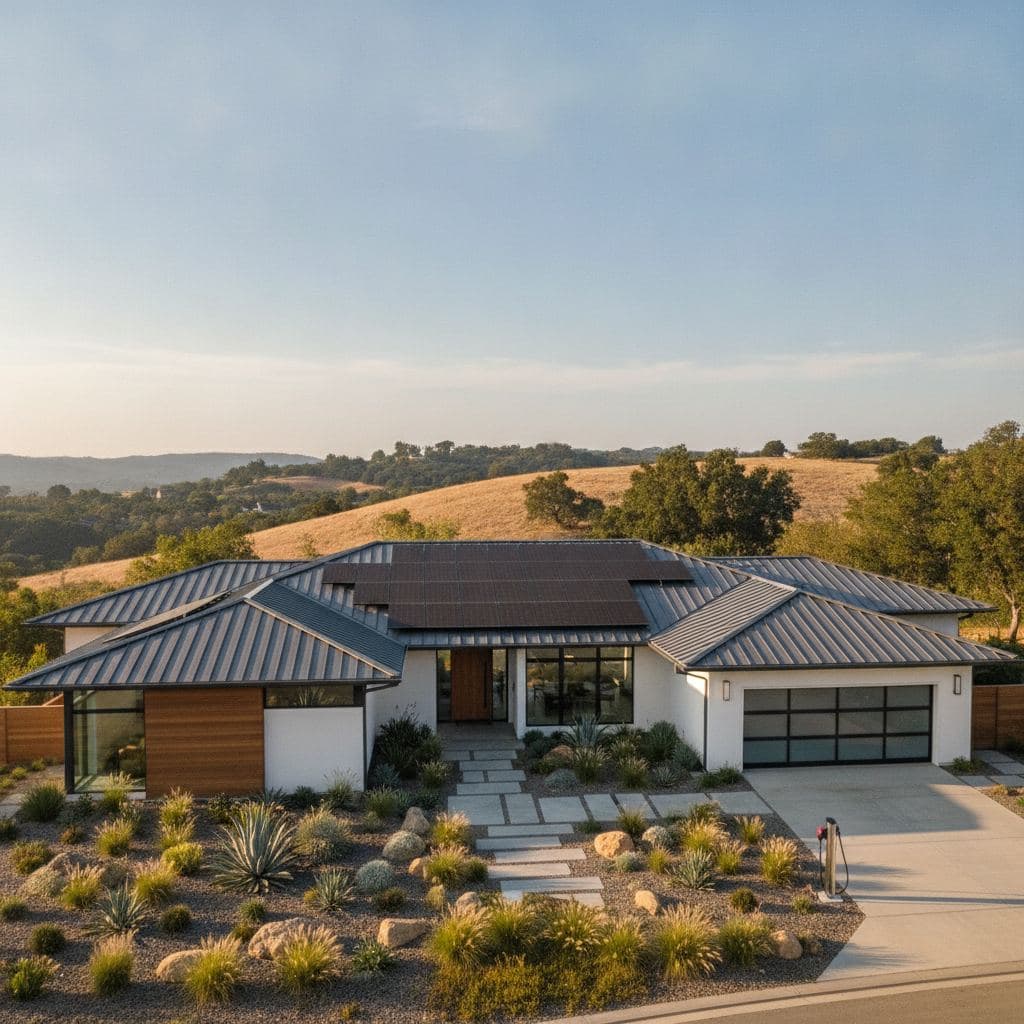
A 20 kW solar system in California carries an installed price of $50,000–$70,000 before financing — that's Helios's current $2.50–$3.50 per watt applied to 20,000 watts. In Southern California, that array will produce approximately 30,000–36,000 kWh per year, enough to cover the electricity bills of a large, heavily electrified home with little or nothing left over for the grid.
Last verified: October 2026 by Helios Energy Global.
At this scale, a 20 kW system is not for the average three-bedroom house. It's the right conversation for homes running 3,000+ square feet, a pool and spa, two electric vehicles, and full electric appliances — or for a home that has already gone all-electric and is watching a $600–$900 monthly SCE or SDG&E bill. If that's not your situation, a 10 kW system or 12 kW system is almost certainly the better fit, and our solar panel cost page covers the full installed price range for California in detail.
What a 20 kW system actually looks like on your roof
Panel count and footprint
Modern residential panels run 400–430 watts each. At 400 W per panel, a 20 kW system takes 50 panels. At 420 W, you get there in about 48 panels. Either way, you need roughly 1,200–1,500 square feet of usable, unshaded roof area — accounting for panel dimensions, code-required setbacks, and inter-row spacing on pitched roofs. That's a substantial footprint, which is why 20 kW systems often require a south-facing main roof plus significant east or west-facing sections, or a ground-mounted array if the roof can't accommodate the full array.
Tile roofs and steep pitches add labor time and cost. If your roof needs work before panels go on, Helios coordinates that through vetted, licensed roofing partners — we are not the roofing contractor, but we manage the sequencing so your project doesn't stall.
Expected annual production in Southern California
NREL PVWatts data puts Los Angeles at approximately 1,540–1,700 kWh per kilowatt of installed capacity per year , with values derived from NREL PVWatts v8 using fixed tilt at latitude and 14% system losses — for Los Angeles specifically, the specific yield runs around 1,820 kWh/kWp in a typical PVWatts run. Applying those figures to 20 kW:
- Conservative (1,540 kWh/kW): ~30,800 kWh/year
- Mid-range (1,660 kWh/kW): ~33,200 kWh/year
- Optimistic (1,820 kWh/kW): ~36,400 kWh/year
The range reflects roof orientation, tilt, shading, and inverter configuration. A south-facing, unshaded roof at a moderate pitch lands near the top of that band; a split east-west array or a roof with some afternoon shade lands lower. The only reliable production number for a specific home is a PVWatts run for that address. Helios runs one for every custom design — you can start that process here.
Key numbers at a glance
| Component | Detail | Estimated cost / figure |
|---|---|---|
| System size | 20 kW DC | — |
| Installed price (gross) | $2.50–$3.50/W | $50,000–$70,000 (estimate) |
| Panel count | 400–430 W panels | ~48–50 panels |
| Roof area needed | South ± east/west | ~1,200–1,500 sq ft (estimate) |
| Annual production (SoCal) | NREL PVWatts, LA | ~30,000–36,000 kWh/year (estimate) |
| Federal tax credit (2026) | Expired 12/31/2025 | $0 |
| SGIP battery incentive | Residential budget | Waitlisted in 2026 |
| Main panel upgrade (if needed) | 200A → 400A | $3,000–$5,000 (estimate) |
| SCE average rate | TOU-D-PRIME blended | ~34–35¢/kWh |
| SCE peak rate (4–9 PM) | TOU-D-PRIME peak | ~48–58¢/kWh |
| LADWP effective rate | Retail net metering | ~28¢/kWh (26–31¢ effective) |
| SDG&E average rate | — | ~46¢/kWh |
All cost figures are estimates. Helios provides one all-in written price with equipment named by model.
Who actually needs a 20 kW system
A 20 kW system producing ~30,000–36,000 kWh/year is sized for homes consuming 28,000–36,000+ kWh annually — roughly two to three times the California average household. That usage profile typically involves several of the following:
- Large home (3,500–6,000+ sq ft) with central HVAC running most of the year
- Swimming pool and spa with electric pumps and heater (can add 3,000–6,000 kWh/year alone)
- Two electric vehicles charging at home most nights (each EV adds roughly 3,000–5,000 kWh/year)
- Full all-electric kitchen and appliances — induction range, heat-pump water heater, heat-pump dryer
- Home office or workshop with significant equipment loads
- ADU or multi-unit property where one meter serves multiple dwelling loads
If your last 12 months of utility bills don't add up to at least 25,000–28,000 kWh, a 20 kW system will likely overproduce for your current needs. Under SCE's Net Billing Tariff (NEM 3.0), every kWh exported beyond what your battery can capture is worth only $0.04–$0.08 — so designing your system to match your annual consumption, not exceed it, is the smarter approach. Talk to us before committing to this size; we'll model your actual usage against the system output before we propose anything.
Utility rules: SCE, LADWP, and the other Southern California munis
SCE (Net Billing Tariff / NEM 3.0)
NEM 3.0 is the common name for California's Net Billing Tariff, which replaced NEM 2.0 for new solar customers of PG&E, SCE, and SDG&E, applying to interconnection applications submitted on or after April 15, 2023.
Under SCE's Net Billing Tariff schedule, a generating facility must be sized to offset part or all of the benefitting customers' own electrical requirements.
The Net Billing Tariff is designed for customers who install eligible renewable generating facilities to generate electricity and offset their own electrical needs; customers can size their systems up to 150% of their electrical requirements, provided they attest that the additional capacity is needed for anticipated future load growth. In practice, this means a 20 kW system on SCE requires documented annual usage that supports it — typically 15,000+ kWh/year at minimum, and ideally 25,000+ kWh/year to justify the full 20 kW.
SCE panels produce the most power from roughly 9 AM to 3 PM, well before the peak window opens. The blended average rate runs ~34–35¢/kWh, but excess solar exported to the grid during off-peak hours is credited at avoided-cost rates — which can be as low as 5–8¢/kWh under NEM 3.0. That spread is why a battery is essentially mandatory for SCE customers at this system size. See our NEM 3.0 explainer and the solar vs. battery NEM 3.0 guide for the full picture.
LADWP
LADWP is a municipal utility and is not on NEM 3.0. LADWP runs its own net metering program at the retail rate — currently an effective rate of approximately 28¢/kWh (26–31¢ effective across rate tiers). That means excess solar exported during the day earns full retail credit, which changes the economics of a large system significantly compared to SCE. A 20 kW system on LADWP can bank meaningful credits during spring and fall to offset summer air conditioning bills. Sizing rules and interconnection procedures differ from the IOUs — Helios confirms the current LADWP requirements with every project in their service territory.
Other Southern California municipal utilities
Pasadena Water & Power, Burbank Water & Power, Glendale Water & Power, Anaheim Public Utilities, and Riverside Public Utilities all operate their own net metering programs independent of NEM 3.0. Rates and credit structures vary. If you're in one of these territories, the economics of a 20 kW system depend on that utility's specific tariff — another reason a custom design matters more than any generic statewide estimate.
Main panel upgrade: when it's needed
A 20 kW solar system pairs with a string inverter or multiple microinverters, plus — almost certainly at this scale — at least one battery. That combination can push total electrical service demands beyond what a standard 200-amp panel can safely handle. A standard home battery with 10–13 kWh of usable capacity can cover a significant portion of a typical home's peak-hour load; homes with higher loads (EV charging, pool pumps, central AC) may benefit from two batteries.
If your home has a 200-amp panel and you're adding a 20 kW system plus two batteries and two EV chargers, a panel upgrade is likely. Helios prices main panel upgrades at $3,000–$5,000 when needed — never lower. Our main panel upgrade guide walks through when it's required, what's involved, and how it's permitted. We include it in your written quote if it's part of the scope.
Batteries that pair with a 20 kW system
At this system size, a single battery is often undersized. Here are the options Helios installs, with current installed price ranges:
- Tesla Powerwall 3 — one unit: $14,500–$18,500; two units: $24,000–$30,000; each Expansion unit: $8,000–$11,500. The Powerwall 3 has an integrated inverter, which simplifies wiring on large systems.
- Enphase IQ Battery 10C — $13,000–$15,500 per unit. Pairs naturally with Enphase microinverter arrays and allows modular expansion.
- FranklinWH aPower 2 with aGate — $16,000–$21,000. A strong option for homes wanting a larger single-unit capacity.
For a 20 kW system on SCE, two Powerwall 3 units (or equivalent capacity from another brand) is a common starting point — enough storage to capture afternoon solar production and carry the home through the 4–9 PM peak window. SGIP residential incentive budgets that would offset battery costs are waitlisted in 2026; we'll flag any changes as they occur.
See our full battery storage page for side-by-side specs and how each model fits different usage profiles.
Financing and the tax credit question
The 30% federal residential solar Investment Tax Credit expired on December 31, 2025. There is no federal tax credit available for a residential solar system purchased in 2026. Do not rely on any quote or proposal that assumes a 2026 federal credit — it does not exist.
A prepaid solar lease passes approximately 30% of the system value through to the homeowner because the leasing company, which owns the equipment, claims the credit. That structure has different trade-offs — you don't own the system, and the credit pass-through is priced into the lease terms. Our financing page owns that full explanation, including how to compare a cash purchase, a solar loan, and a prepaid lease at this system size.
Frequently asked questions about 20 kW solar systems
How much does a 20 kW solar system cost in California in 2026?
Installed, a 20 kW system runs $50,000–$70,000 before financing, applying Helios's current $2.50–$3.50 per watt. There is no federal tax credit for a purchased residential system in 2026 — that credit expired December 31, 2025. Get the gross price and the cost per watt in writing from any installer you're comparing.
How many kWh does a 20 kW solar system produce per year in Southern California?
NREL PVWatts data puts the Los Angeles area at roughly 1,540–1,700 kWh per kilowatt per year for a typical south-facing residential system. Applied to 20 kW, that's approximately 30,800–34,000 kWh/year under conservative to mid-range assumptions, and up to ~36,000 kWh/year for an optimally oriented, unshaded roof.
How many panels does a 20 kW solar system require?
At 400 watts per panel, you need 50 panels; at 420 watts, about 48. Either way, plan for roughly 1,200–1,500 square feet of usable roof space after setbacks and spacing. A ground-mounted array is worth considering if your roof can't accommodate the full count.
Does NEM 3.0 affect the value of a 20 kW system on SCE?
Yes, significantly.
Under NEM 3.0, export credits dropped from the retail rate ($0.30/kWh) to avoided cost rates ($0.04–$0.08/kWh).
A 20 kW system that overshoots your annual usage will export a lot of power at those low rates, which erodes payback. Right-sizing to your actual consumption and pairing with battery storage is the correct approach for SCE customers. LADWP customers still earn full retail-rate credits and have more flexibility to size up.
Will a 20 kW system require a main panel upgrade?
Often yes, especially when you're also adding batteries and EV chargers. A 200-amp panel may not safely support a 20 kW inverter, two batteries, and two Level 2 chargers simultaneously. Helios prices panel upgrades at $3,000–$5,000 when needed — see our main panel upgrade guide for details.
Is there an SGIP rebate for batteries paired with a 20 kW system in 2026?
SGIP residential incentive budgets are waitlisted in 2026. We track the program and will notify you if budget opens up. Do not factor an SGIP rebate into your payback calculation until a reservation is confirmed.
How does a 20 kW system compare to a 12 kW system?
A 12 kW system costs $30,000–$42,000 and produces roughly 18,500–20,000 kWh/year in Southern California — appropriate for a 2,000–3,000 sq ft all-electric home with one EV. A 20 kW system is roughly 67% larger in output and cost, and only makes financial sense if your annual consumption genuinely supports it. We'll tell you honestly which size fits your usage — start with a custom design.
Next steps
- Book a free consultation and custom design — we'll run a PVWatts production estimate for your specific address and utility, size the system to your actual usage, and give you one all-in written price with equipment named by model.
- Explore our battery storage options — at 20 kW, pairing with storage isn't optional on SCE; see which battery fits your load profile.
- Understand NEM 3.0 if you're on SCE, PG&E, or SDG&E — the export rate structure changes everything about how you size and use a large system.
- Compare solar vs. battery strategies under NEM 3.0 — critical reading before committing to a 20 kW design.
- See all California solar pricing — the full installed cost range for every system size, explained in plain numbers.
- Review financing options — including how a prepaid lease passes through approximately 30% of system value in 2026 when no federal credit is available to a cash buyer.
Sources
- CPUC Net Energy Metering and Net Billing Tariff page — October 2026
- SCE Net Billing Tariff Schedule NBT (Revised Cal. PUC Sheet No. 87677-E) — June 2025
- Solar Panel Output by State 2026 — solarpricelist.com (NREL PVWatts data) — October 2026
- GreenLancer NEM 3.0 California 2026 Guide — September 2026
- calcpanel.com kWh/kWp by US City — NREL PVWatts v8 data — August 2026
More guides
How Much Does a 7 kW Solar System Cost in California? (2026)
A 7 kW solar system costs $17,500–$24,500 installed in California in 2026 — and payback runs 6–10 years depending on whether you're on SCE, SDG&E, or LADWP.
ReadHow many watts does a pool pump use in 2026?
A single-speed pool pump draws 1,100–2,500 watts; a variable-speed pump runs as low as 150–400 watts at low speed, cutting annual pool-pump electricity costs from roughly $800–$1,400 down to $200–$450 for SCE customers.
ReadHow much does solar panel cleaning cost in 2026?
Professional solar panel cleaning in Southern California typically runs $100–$300 per visit, depending on system size and roof access.
ReadGet a free consultation and custom design.
No pressure, no obligation — the owner reviews every design we send.