How Much Does a 7 kW Solar System Cost in California? (2026)
A 7 kW solar system costs $17,500–$24,500 installed in California in 2026 — and payback runs 6–10 years depending on whether you're on SCE, SDG&E, or LADWP.
By Taylor Crouse — Founder, Helios Energy GlobalPublished
Quick answer
- A 7 kW solar system costs $17,500–$24,500 installed in California in 2026 (roughly $2.50–$3.50/watt).
- There is no federal tax credit for a 2026 purchase — the 30% residential credit expired December 31, 2025.
- A 7 kW system produces roughly 10,200–10,500 kWh/year in Southern California — enough to cover most or all of a typical home's usage.
- Payback runs 6–8 years on SDG&E, 7–9 years on SCE, and 9–12 years on LADWP, depending on shading, usage, and whether you add a battery.
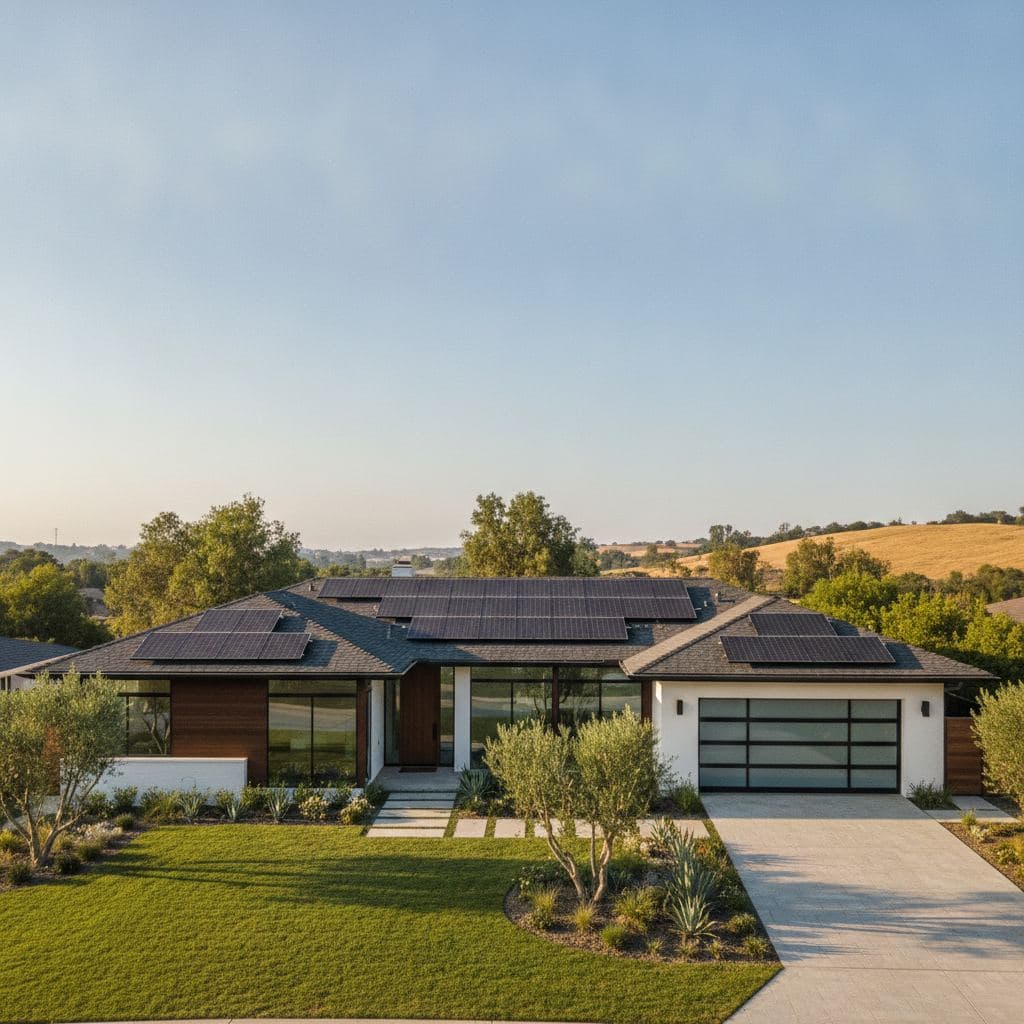
A 7 kW solar system runs $17,500–$24,500 installed in California in 2026 — that's the $2.50–$3.50/watt range applied to 7,000 watts before any incentives. At Southern California's electricity rates, a properly sized 7 kW array can eliminate $1,500–$3,500 in annual electricity costs, depending on which utility serves your home.
Last verified: September 2026 by Helios Energy Global.
What you actually get for $17,500–$24,500
A 7 kW system sits between our 6 kW ($15,000–$21,000) and 8 kW ($20,000–$28,000) benchmarks — it's a real size, not a round number, and it's a common landing point for 1,500–2,200 sq ft homes in Southern California with moderate electricity use. At today's panel wattages (typically 400–440 W per panel), you're looking at roughly 16–18 panels on your roof.
The all-in price covers:
- Panels — current mainstream modules are 400–440 W; 16–17 panels at 430 W each gets you to 6.9–7.3 kW
- Inverter — string or microinverter (Enphase IQ8 series is common in SoCal)
- Racking and wiring
- Permit fees and utility interconnection
- Installation labor
What it does not automatically include:
- A battery (add $14,000–$18,500 per unit for a Tesla Powerwall 3 or comparable — see our batteries page)
- A main-panel upgrade, if your home needs one ($3,000–$5,000 when required — never less)
- Roofing work, if your roof needs repair or replacement before install (coordinated through vetted, licensed roofing partners — Helios is never the roofing contractor)
Get the gross price and cost per watt in writing before you sign anything. That's the only honest apples-to-apples comparison across quotes.
Key numbers at a glance
| Item | Range / Figure | Notes |
|---|---|---|
| 7 kW system — installed cost | $17,500–$24,500 | Before any incentives; estimate |
| Cost per watt | $2.50–$3.50/W | Same range statewide |
| Annual production (SoCal) | ~10,200–10,500 kWh | Based on ~1.46–1.50 production ratio |
| Federal tax credit (2026) | $0 | Expired Dec 31, 2025 |
| SGIP battery rebate | Waitlisted | General market; income-qualified tiers only |
| SCE average rate | ~34–35¢/kWh | Peak 4–9 PM: ~48–58¢/kWh |
| LADWP effective rate | ~26–31¢/kWh | Retail net metering intact |
| SDG&E average rate | ~46¢/kWh | Highest major IOU in the US |
| Estimated annual savings — SCE | $1,800–$2,800 | Estimate; varies by usage & TOU plan |
| Estimated annual savings — SDG&E | $2,400–$3,500 | Estimate; NEM 3.0 applies |
| Estimated annual savings — LADWP | $1,300–$2,000 | Estimate; retail net metering |
| Simple payback — SCE | 7–9 years | Estimate |
| Simple payback — SDG&E | 6–8 years | Estimate; battery strongly recommended |
| Simple payback — LADWP | 9–12 years | Estimate |
| Main-panel upgrade (if needed) | $3,000–$5,000 | Not always required |
All cost and savings figures are estimates. Your actual numbers depend on shading, roof orientation, usage profile, and current tariff rates.
Why 7 kW? Is this the right size for your home?
A 7 kW solar panel system produces about 10,308 kWh of electricity annually, though the exact amount depends on where you live and how much sun you get. In Southern California's sun-rich climate, a production ratio of around 1.5 is typical, meaning a 10 kW system produces roughly 15,000 kWh per year — so a 7 kW system in SoCal lands in the 10,200–10,500 kWh range annually.
That output fits a home using roughly 850–900 kWh/month — a mid-size single-family home without a pool or EV, or a smaller home that has already done some efficiency work. If you're running central AC hard all summer, charging an EV, or heating water with a heat pump, you likely need 8–10 kW or more. Use our free design tool to model your actual usage before committing to a size.
Bold signals that 7 kW fits:
- Annual usage 9,000–11,000 kWh (check your utility's 12-month history)
- Roof space for 16–18 panels in a mostly unshaded south- or west-facing area
- No EV or pool (or you're adding one and planning to upsize later)
Bold signals to go bigger:
- Monthly bills above $300 on SCE or $400 on SDG&E — those high rates reward larger systems
- You're electrifying your home (EV, heat pump, induction range) now or soon
How utility territory changes everything
This is where a generic California answer page fails you. The math on a 7 kW system is meaningfully different depending on who sends your electricity bill.
SCE customers (most of L.A. County, Orange County, Inland Empire)
SCE's average all-in residential rate is about 35¢/kWh in 2026, sourced from SCE's CPUC-approved TOU-D tariff schedules effective January 2026.
The TOU-D-4-9PM plan features an on-peak window from 4–9 PM with a summer weekday rate of 58¢/kWh.
SCE solar customers are on the Net Billing Tariff (NEM 3.0), which means power you export to the grid earns a low avoided-cost credit — typically a few cents per kWh — rather than full retail. That asymmetry makes self-consumption king: the more solar you use directly, the more valuable each panel becomes. Solar Billing Plan customers are required to be on the TOU-D-PRIME rate.
On SCE, a 7 kW system without a battery will still save meaningfully on daytime usage but will export a lot of midday power at low credit rates. Pairing with a battery — a Tesla Powerwall 3 at $14,500–$18,500 installed, or an Enphase IQ Battery 10C at $13,000–$15,500 — lets you store that midday surplus and spend it during the costly 4–9 PM peak window instead. Read our NEM 3.0 explainer and the solar-vs-battery tradeoff guide for the full picture.
Estimated payback (SCE, 7 kW, no battery): 8–10 years Estimated payback (SCE, 7 kW + battery): 9–13 years combined, but the battery meaningfully cuts your remaining bill
SDG&E customers (San Diego County, parts of South Orange County)
SDG&E's bundled residential average electric rate rose to approximately 46.4¢/kWh as of April 2026, per SDG&E's own rate change alert.
San Diego Gas & Electric has the highest residential electricity rates in the nation — higher than famously expensive states like Hawaii.
At 46¢/kWh average, every kWh of solar you consume yourself is worth nearly double what it's worth on LADWP. A 7 kW system producing ~10,300 kWh/year, with reasonable self-consumption, can displace $2,400–$3,500 in annual costs at SDG&E rates — the fastest payback of any major Southern California utility.
SDG&E is also under NEM 3.0 (Net Billing Tariff), so the same battery logic applies as with SCE: store midday solar, avoid the 4–9 PM peak. That's why nearly every system designed in SDG&E territory pairs panels with a battery — store the midday surplus, spend it during the 4–9 PM peak, and export as little as possible. At 2026 installed pricing of roughly $2.50–$3.50/watt, a typical 6–7 kW system with a battery offsets bills that would otherwise run $4,000–$7,000 a year.
Estimated payback (SDG&E, 7 kW, no battery): 7–9 years Estimated payback (SDG&E, 7 kW + battery): 9–13 years combined
LADWP customers (City of Los Angeles)
The average LADWP residential customer pays roughly $140–$230 per month in mid-2026, based on typical household consumption of around 500–750 kWh per month and LADWP's current tiered rates, which work out to an effective 26–31¢/kWh all-in.
LADWP is a municipal utility — it is not on NEM 3.0. LADWP keeps full retail-rate net metering — a meaningful difference from SCE's Net Billing Tariff. That means every kWh you export earns full retail credit, not a low avoided-cost rate. Solar-only systems work well on LADWP without a battery — you bank credits in summer and spend them in winter.
On LADWP, with retail-rate net metering intact, a battery is primarily a resilience purchase, not an arbitrage play: backup power during outages, energy independence, and future-proofing if LADWP's net metering policy ever changes. At roughly $14,000–$18,500 installed per unit, the financial return is slower than on SCE.
The lower effective rate does mean payback takes longer on LADWP than on SDG&E — but the system still makes financial sense, especially as LADWP's Tier 1 rate rose from 22.3¢ to 24.8¢ between winter 2025 and winter 2026 — roughly +11% in one year.
Estimated payback (LADWP, 7 kW): 9–12 years
Incentives in 2026: the honest picture
Federal tax credit: gone
The 30% federal residential solar tax credit (Section 25D) expired December 31, 2025. The federal Residential Clean Energy Credit terminated December 31, 2025 under federal law. Systems placed in service in 2026 receive no federal residential credit, regardless of when the contract was signed. There is no partial credit, no phase-down, and no extension as of this writing. Do not let any installer's math include a 30% federal credit on a 2026 purchase — that number is $0.
SGIP battery rebate: waitlisted
California's Self-Generation Incentive Program (SGIP) offers per-kWh rebates for battery storage. As of April 2026, the RSSE budget is fully reserved with new applications on a waitlist. The General Market and Equity Resiliency ratepayer-funded budgets are also closed.
SGIP is administered by the investor-owned utilities — SCE, PG&E, and SDG&E — which means LADWP customers, Pasadena PWP customers, Burbank, Glendale, Anaheim, and Riverside RPU customers are not eligible for SGIP at all.
If you're on SCE or SDG&E and are income-qualified, it's still worth applying for the Equity or Equity Resiliency tiers — these budgets reopen periodically, and your position in the queue is based on when you applied. Ask your installer to check current queue status.
Property tax exclusion
California's active solar energy system property tax exclusion means your home's assessed value does not increase when you add solar. This is a real ongoing benefit — it doesn't show up in a payback calculation, but it matters at resale.
Adding a battery to your 7 kW system
On SCE and SDG&E (NEM 3.0 utilities), a battery is close to essential for a 7 kW system to reach its financial potential. On LADWP, it's a resilience and future-proofing decision. Here are the current installed price ranges from Helios:
| Battery | Installed price (1 unit) |
|---|---|
| Tesla Powerwall 3 | $14,500–$18,500 |
| Two Powerwall 3 units | $24,000–$30,000 |
| Powerwall 3 Expansion | $8,000–$11,500 each |
| Enphase IQ Battery 10C | $13,000–$15,500 |
| FranklinWH aPower 2 + aGate | $16,000–$21,000 |
A single Powerwall 3 (13.5 kWh usable) pairs well with a 7 kW array for most households — it can absorb most of the midday surplus and cover the 4–9 PM peak window. Two units make sense if you have an EV or want whole-home backup. Explore all options on our batteries page.
What a Helios quote looks like
Helios gives one all-in written price with the equipment named by model — panels, inverter, racking, battery if included. When comparing quotes from any installer, ask for the gross price and the cost per watt in writing. Those two numbers let you compare apples to apples across bids.
We serve homeowners across Southern California — see all our locations. Every project starts with a free, no-obligation consultation and custom system design. No discounts, no urgency tactics: just an honest number for your specific roof, usage, and utility.
Frequently asked questions about 7 kW solar system cost in California
How much does a 7 kW solar system cost in California in 2026?
A 7 kW solar system costs roughly $17,500–$24,500 installed in California in 2026, at the industry-standard $2.50–$3.50 per watt range. That price covers panels, inverter, racking, permits, and labor — but not a battery or a main-panel upgrade if one is needed. Get the gross price and cost per watt in writing from any installer you're comparing.
Is there a federal tax credit for solar in 2026?
No. The 30% federal residential solar tax credit (Section 25D) expired on December 31, 2025. Systems placed in service in 2026 receive no federal residential credit, regardless of when the contract was signed. Any installer quoting you a 30% federal credit on a 2026 install is using outdated math.
How much electricity does a 7 kW solar system produce in Southern California?
A 7 kW system typically generates around 10,220 to 12,775 kWh per year, depending on sunlight conditions. In Southern California's high-sun environment, most systems land in the 10,200–10,500 kWh range annually — enough to cover most or all of a typical single-family home's usage (excluding an EV or pool).
Do I need a battery with a 7 kW system in California?
It depends on your utility. On SCE and SDG&E, NEM 3.0 (the Net Billing Tariff) pays very low rates for power you export to the grid, so a battery lets you store midday solar and use it during the costly 4–9 PM peak — meaningfully improving your economics. On LADWP, full retail-rate net metering is still in place, so a battery is primarily a resilience and future-proofing decision rather than a financial must-have.
What is the payback period for a 7 kW solar system in Southern California?
Payback depends heavily on your utility. Rough estimates for a solar-only 7 kW system: 7–9 years on SDG&E (highest rates), 8–10 years on SCE, and 9–12 years on LADWP. Adding a battery extends the combined payback but reduces your remaining grid bill substantially on NEM 3.0 utilities. These are estimates — your actual figure depends on shading, roof orientation, and usage patterns.
Is SGIP available in 2026 to help pay for a battery?
SGIP residential general market budgets are waitlisted as of 2026. The Equity and Equity Resiliency tiers remain the only active residential pathways; income-qualified homeowners in high fire-risk or medically baseline areas are the primary candidates. LADWP, Pasadena PWP, Burbank, Glendale, Anaheim, and Riverside RPU customers are not eligible for SGIP at all — it is an IOU-administered program.
How many panels is a 7 kW solar system?
At today's mainstream panel wattages of 400–440 W per panel, a 7 kW system requires roughly 16–18 panels. A 430 W panel is the most commonly quoted size right now — 16 of those gives you 6.88 kW, 17 gives you 7.31 kW. Your installer will size the array to your roof space and usage, not just to a round number.
Next steps
- Powerwall 3 cost — the installed price for one unit, what moves it, and what is included
- Book a free consultation and custom design — we'll pull your utility usage history, model your roof, and give you one all-in price with the equipment named.
- See how 7 kW compares to other system sizes — our full cost guide covers 6–15 kW with the same per-watt math.
- Model your savings with our design tool — enter your address and average bill for a utility-specific estimate.
- Explore battery options — Powerwall 3, Enphase IQ Battery 10C, FranklinWH aPower 2, and more with current installed prices.
- Understand NEM 3.0 if you're on SCE or SDG&E — the billing rules that make battery pairing so important.
- Read the solar-vs-battery tradeoff guide — when to add storage now vs. later.
- Check our service locations — we install throughout Southern California, from Santa Monica to San Diego County.
Sources
- SDG&E Bundled Electric Rate Change Alert, April 2026 — April 2026
- ElectricityCostComparison.com — SCE Rates 2026 (CPUC-approved tariff, verified July 2026) — July 25, 2026
- Cali-Energy — LADWP Electric Rates Explained 2026 (verified August 4, 2026) — August 4, 2026
- ElecGuys — SGIP Battery Rebate + NEM 3.0 California 2026 Guide — May 17, 2026
- EnergySage — 7kW Solar System Cost 2026 — July 21, 2026
More guides
How to Get Out of a Solar Contract or Lease in California (2026)
California homeowners have 5 business days (7 if 65+) to cancel a solar contract signed at home — here are every realistic exit, from the statutory window to lease transfer.
ReadHow much does solar panel maintenance cost in 2026?
Solar panel maintenance costs are near-zero most years — roughly $150–$350 for an occasional professional cleaning and $1,500–$3,000 for an inverter replacement around year 12–15.
ReadHow many watts does it take to run a house in 2026?
A typical Southern California home draws 1,000–1,500W at baseline and 3,000–7,000W when the AC is running — here's what that means for solar sizing and battery backup.
ReadGet a free consultation and custom design.
No pressure, no obligation — the owner reviews every design we send.