Do I need a main panel upgrade for solar? California guide (2026)
About 30–40% of Southern California homes need a main panel upgrade for solar, costing $3,000–$5,000 — but smart load management and inverter sizing can often eliminate the need entirely.
By Taylor Crouse — Founder, Helios Energy GlobalUpdated
Quick answer
- Roughly 30–40% of Southern California homes need a main panel upgrade (MPU) before solar can be installed.
- A 100-amp panel is the most common trigger — upgrading to 200 amps costs $3,000–$5,000 installed, including permits.
- The NEC "120% rule" determines whether your existing panel has enough headroom; many 200A panels pass without any upgrade.
- Smart load-management devices and careful inverter sizing can eliminate the need for an upgrade in a meaningful share of borderline cases.
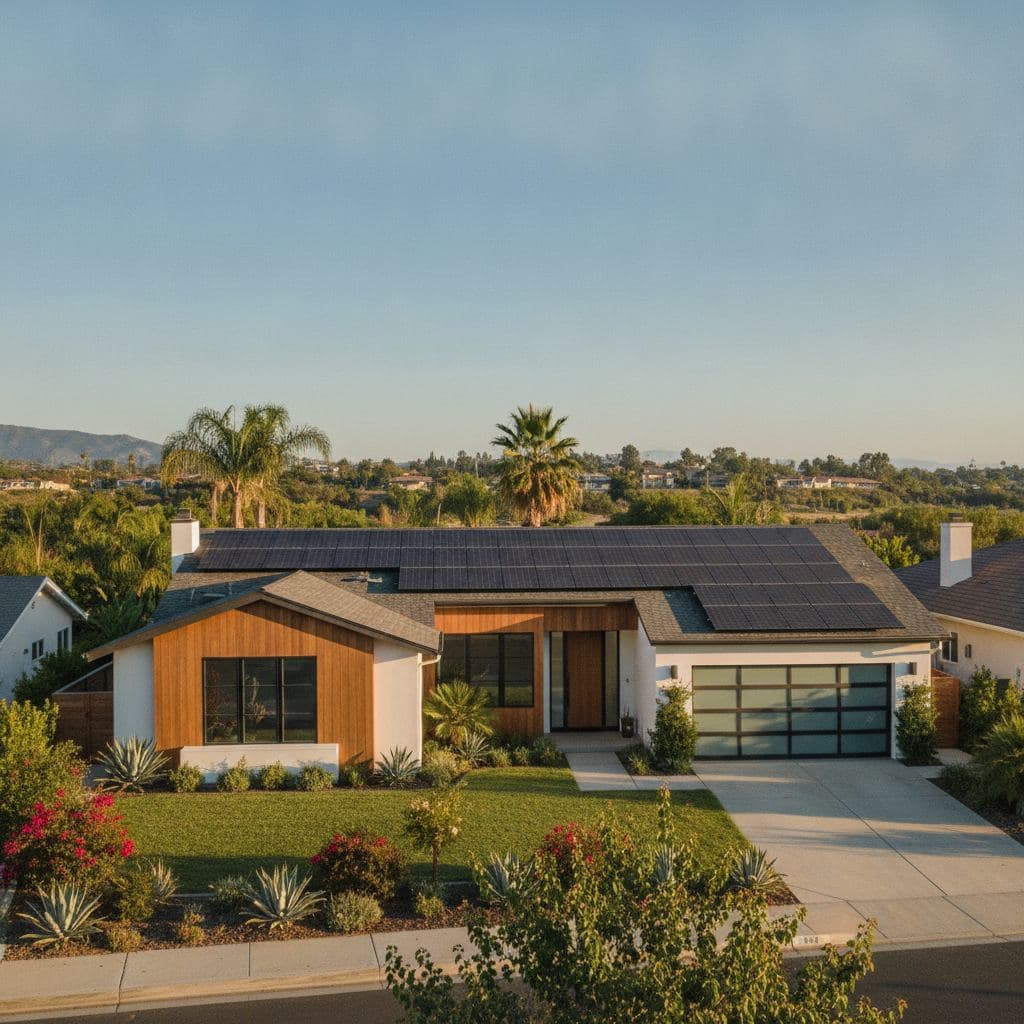
Roughly 30–40% of homes we assess in Southern California require a main panel upgrade before we can safely interconnect solar — and the upgrade typically runs $3,000–$5,000 all-in, including labor, permits, and the new 200-amp panel. The other 60–70% of homes already have a 200-amp panel with enough breaker space, and we can move straight to installation without touching the electrical service.
Last verified: August 2026 by Helios Energy Global.
Whether you need an upgrade comes down to one federal code rule, your panel's current amperage, and what else you're adding alongside solar (batteries, an EV charger). We'll walk through all three, then show you the legitimate ways to avoid the cost entirely.
The 120% rule: the number that decides everything
The National Electrical Code (NEC Section 705.12) sets the threshold. It says the combined amperage of your main breaker plus the solar back-feed breaker cannot exceed 120% of the panel's busbar rating.
Here's the math in plain English:
- 200-amp panel: 200 × 120% = 240A of total allowable load. Your 200A main breaker uses 200A, leaving 40A for a solar back-feed breaker. That supports roughly 9.6 kW of inverter output — enough for most residential systems.
- 100-amp panel: 100 × 120% = 120A total. Your 100A main breaker uses all 100A, leaving only 20A for solar — roughly 4.8 kW maximum. That's often too small for a meaningful system, and it's why 100-amp panels almost always require an upgrade.
The busbar rating is stamped inside your panel door. If you can't find it, our site assessment confirms it within the first 15 minutes.
| Panel Amperage | Busbar Rating | Max Solar Back-Feed (120% Rule) | Approx Max System Size | Upgrade Typically Needed? |
|---|---|---|---|---|
| 100A | 100A | 20A | ~4.8 kW | Yes (for most systems) |
| 125A | 125A | 25A | ~6.0 kW | Often yes |
| 150A | 150A | 30A | ~7.2 kW | Sometimes |
| 200A | 200A | 40A | ~9.6 kW | Usually no |
| 200A + load mgmt. | 200A | Up to 40A | ~9.6 kW | No |
| 200A upgraded to 225A bus | 225A | 70A | ~16.8 kW | No (for large systems) |
All figures are estimates based on standard NEC 705.12 calculations. Actual system sizing requires a licensed electrician's load calculation.
When you genuinely need an upgrade
You have a 100-amp service
This is the clearest case. Homes built before roughly 1980 — and a surprising number of post-1980 homes in older neighborhoods of Santa Monica, Culver City, and the San Fernando Valley — still run on 100-amp service. A 100-amp panel simply cannot accommodate a modern 6–13 kW solar system safely. The upgrade to 200-amp service is non-negotiable, and at $3,000–$5,000 it's a one-time fix that also future-proofs the home for EV charging and battery storage.
Your 200-amp panel is full
A 200-amp panel that's already packed with double-tapped breakers or has no open slots may still fail the 120% rule or simply have no physical space for a solar back-feed breaker. A load calculation — not a visual guess — tells us whether tandem breakers or a subpanel can solve it, or whether a new panel is cleaner.
You're adding a battery and an EV charger at the same time
Batteries and EV chargers each claim breaker space and amperage. If you're stacking all three (solar + battery + Level 2 EV charger) onto a marginal panel, the math often tips toward an upgrade. We run the combined load calculation during design — before you sign anything.
When you can legitimately avoid an upgrade
This is where the conversation gets interesting. An upgrade isn't always necessary, and a good installer should show you the alternatives before defaulting to the upsell.
Downsize the inverter output
If your 200-amp panel supports up to 40A of back-feed (9.6 kW), and your roof only needs a 7 kW system anyway, there's no conflict. We size the inverter output to stay within your panel's headroom. You get full production, no upgrade required.
Load management devices
Newer load-management switches (sometimes called "smart load controllers") let the system automatically shed non-critical loads — like an electric water heater or dryer circuit — when solar is back-feeding at full power. This keeps the net draw within the panel's limits without a physical upgrade. It's a legitimate solution for borderline 150–200A panels.
Smart panels (e.g., SPAN)
A SPAN smart panel or similar intelligent load center replaces your existing panel with a circuit-level monitoring and control system. It can satisfy the 120% rule through dynamic load management while also giving you granular energy visibility. The installed cost is typically higher than a standard panel swap, but it eliminates the need for a separate upgrade and adds real functionality. Ask us whether it pencils out for your specific load profile.
Main breaker tap (line-side connection)
In some jurisdictions and configurations, the solar interconnection can be made on the line side of the main breaker rather than adding a back-feed breaker inside the panel. This bypasses the 120% rule entirely. Not every utility or AHJ (Authority Having Jurisdiction) in Southern California allows it, but SCE and several municipal utilities do under specific conditions. We check this during permitting design.
How your utility affects the panel upgrade decision
The upgrade itself is a local electrical code issue — the same NEC rules apply whether you're on SCE, LADWP, or another utility. But your utility does affect how urgently you want to maximize system size, which in turn affects whether you push the panel limits.
SCE customers are on NEM 3.0 (the Net Billing Tariff). Export rates are significantly lower than retail (~5–8¢/kWh exported vs. ~34–35¢/kWh consumed at peak). This makes battery storage more valuable and changes the optimal system size — sometimes toward a smaller solar array paired with a larger battery, which can actually reduce panel upgrade pressure. See our NEM 3.0 explainer for the full picture.
LADWP customers still receive retail-rate net metering (approximately 28¢/kWh credit), which makes larger solar systems more financially attractive. If you're in LADWP territory and want a 10–12 kW system to maximize that retail credit, your 200-amp panel's 40A back-feed limit may become a real constraint — and the upgrade math changes accordingly.
Other Southern California municipal utilities (Pasadena PWP, Burbank, Glendale, Anaheim APU, Riverside RPU) each run their own net metering programs and have their own interconnection requirements. We handle permitting with all of them and flag utility-specific quirks during the design phase.
Batteries, EV chargers, and the stacking problem
Adding a home battery like a Tesla Powerwall 3 or Enphase IQ Battery typically requires a 30–60A dedicated circuit. A Level 2 EV charger needs another 40–60A circuit. Stack those on top of solar back-feed and a full existing panel, and you can quickly exceed what a 200-amp service can handle — not because of the 120% rule, but because of total load.
The solution is a proper load calculation that accounts for demand diversity (your dryer and EV charger are rarely both running at full draw simultaneously). In many cases, a load calculation shows you have more headroom than a simple breaker count suggests. In others, it confirms the upgrade is necessary.
If you're planning to add a battery to an existing solar system, the same analysis applies — the battery's interconnection requirements may or may not require a panel upgrade depending on how the original system was wired.
Our promise: no mid-project surprises
A main panel upgrade is one of the most common "surprise" costs in solar installations — but it shouldn't be a surprise. We identify panel limitations during the site assessment and include any required upgrade in the initial quote, with a fixed price. If a panel upgrade is needed, you see it on page one of the proposal, not as a change order after your panels are on the roof.
If an upgrade can be avoided through inverter sizing, load management, or a line-side tap, we'll show you that option and let you choose. Our job is to give you the accurate picture, not to add scope.
Frequently asked questions about main panel upgrades for solar
How much does a main panel upgrade cost in California in 2026?
A standard upgrade from 100-amp to 200-amp service in Southern California runs $3,000–$5,000 installed, including the new panel, labor, permits, and utility coordination. Cost varies by city (permit fees differ), whether the utility needs to move the meter, and whether the upgrade requires trenching or conduit work. We provide a fixed-price quote after the site assessment.
Will my HOA or city require anything extra for a panel upgrade?
The panel upgrade permit is pulled with your local building department — the same permit package as the solar installation itself. HOAs generally don't have jurisdiction over electrical work inside the home or at the meter, but some have rules about visible conduit runs on the exterior. We flag any HOA-specific issues during design.
Can I get solar on a 100-amp panel without upgrading?
Technically yes, for a very small system (under ~4.8 kW inverter output). In practice, a system that small often doesn't justify the installation cost and won't meaningfully offset a typical Southern California electricity bill — especially at SCE's ~34–35¢/kWh rates. Most installers, including us, recommend the upgrade and then size the system properly.
Does a panel upgrade affect my solar permit timeline?
It can add 1–3 weeks in some jurisdictions, because the panel upgrade may require a separate electrical permit inspection before the solar interconnection inspection. We schedule both together wherever the AHJ allows it to minimize delay.
Is there a tax credit for the panel upgrade in 2026?
The 30% federal residential solar tax credit expired December 31, 2025 and does not apply to 2026 purchases. There is no federal credit available for solar or panel upgrades purchased in 2026. Some utility rebate programs exist — ask us during your consultation what's currently active for your utility, as program availability changes frequently.
Does LADWP have different panel upgrade rules than SCE?
The underlying electrical code (NEC 705.12) is the same. LADWP has its own interconnection application process and inspection requirements, which we handle. The practical difference is that LADWP's retail-rate net metering often makes larger systems more attractive, which can make panel capacity a more frequent consideration for LADWP customers wanting maximum system size.
What is a SPAN panel and does it replace a main panel upgrade?
A SPAN smart panel is an intelligent load center that replaces your existing electrical panel. It manages circuit-level loads dynamically, which can satisfy interconnection requirements without a traditional panel upgrade in some configurations. It costs more than a standard panel swap upfront but adds energy monitoring and control functionality. We'll tell you honestly whether it makes financial sense for your situation versus a standard 200-amp panel.
Next steps
- Book a free consultation and custom design — we run the load calculation and tell you exactly whether you need an upgrade before you commit to anything.
- See what a full solar system costs in Southern California — including how an MPU fits into the total project budget.
- Learn how batteries change the solar math under NEM 3.0 — especially relevant if you're on SCE.
- Explore home battery options — and how battery interconnection interacts with your panel.
- EV charger installation — if you're adding an EV charger alongside solar, read how we handle the combined load calculation.
- Adding a Powerwall to an existing solar system — panel upgrade considerations when retrofitting storage.
- View our Southern California service locations — permit requirements and utility rules vary by city; see where we operate.
Sources
More guides
Tesla Solar Roof vs. New Roof Plus Solar Panels: An Honest 2026 Comparison
The Tesla Solar Roof is discontinued as of August 2026 — the real comparison now is a conventional reroof ($11K–$25K) plus solar panels ($2.50–$3.50/W) versus what Solar Roof used to cost at ~$16/W.
ReadSolarReviews Review: An Installer's Honest Take on the Review-Site-Plus-Lead-Gen Hybrid (2026)
SolarReviews is two businesses in one: the biggest consumer review site in residential solar, and — by its own description — the industry's largest seller of sales leads. Both halves are real and mostly well-run. An installer explains how the rankings are built, what happens after you request quotes, how the platform stacks up against EnergySage, Google, Yelp, and the BBB — and how to read solar company reviews anywhere without getting played.
ReadBest Solar Companies in Fontana, CA (2026): An Honest, Numbers-First Guide for Homeowners
Fontana homeowners face intense summer heat, high SCE rates, and NEM 3.0 — making solar + battery a smart combination. Here are the 10 best solar installers in Fontana for 2026, ranked honestly.
ReadGet a free consultation and custom design.
No pressure, no obligation — the owner reviews every design we send.