How much does a 12 kW solar system cost in California in 2026?
A 12 kW solar system in California runs roughly $30,000–$42,000 installed before incentives, making it one of the most common sizes for homes with an EV, pool, and central AC.
By Taylor Crouse — Founder, Helios Energy GlobalPublished
Quick answer
- A 12 kW solar system in California costs roughly $30,000–$42,000 installed before any incentives (approximately $2.50–$3.50/watt).
- The federal 30% tax credit expired December 31, 2025 — there is no federal credit for a 2026 purchase.
- A 12 kW system produces approximately 16,000–19,200 kWh per year in Southern California, enough to offset a home with an EV, pool, and central AC.
- Roof space required is roughly 600–750 sq ft of unshaded, south- or west-facing surface.
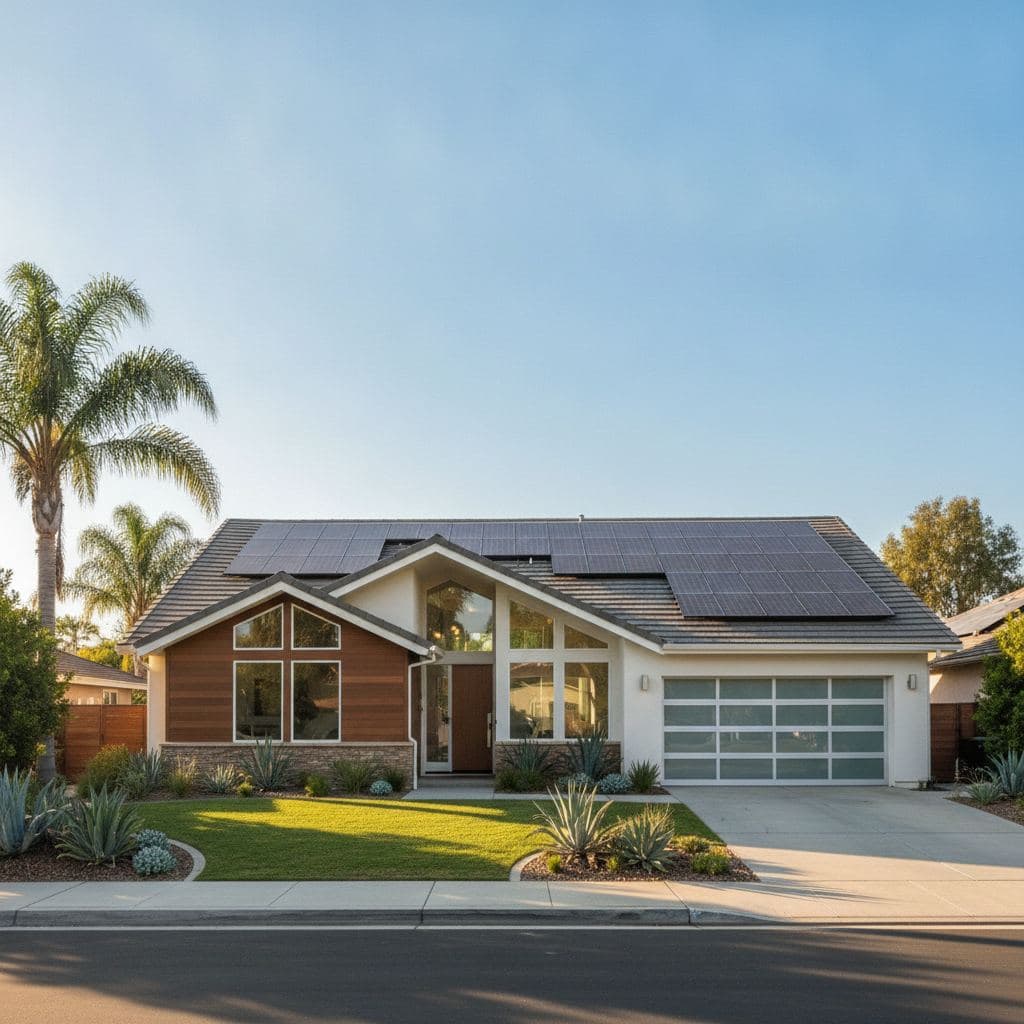
A 12 kW solar system in California runs approximately $30,000–$42,000 installed in 2026, or roughly $2.50–$3.50 per watt depending on panel brand, inverter type, and installation complexity. At that size, you're generating enough electricity to meaningfully offset a high-consumption Southern California home — typically one running a plug-in EV, a pool pump, and central air conditioning simultaneously.
Last verified: September 2026 by Helios Energy Global.
Who actually needs a 12 kW system?
Most Southern California homes get by with 6–9 kW. A 12 kW system is the right conversation when your annual usage pushes past 14,000–18,000 kWh per year — a threshold that's increasingly common as households electrify.
The three biggest load drivers that push homeowners into 12 kW territory:
- EV charging at home: A single EV driven ~12,000 miles per year adds roughly 3,000–4,500 kWh to your annual bill. Two EVs can add 6,000–9,000 kWh.
- Pool with a pump and heater: A standard pool pump running 8 hours daily adds 1,500–2,500 kWh per year. Add a heater and you're pushing 4,000+ kWh.
- Central AC in inland SoCal: Homes in the San Fernando Valley, Inland Empire, or anywhere that regularly sees 95°F+ summers can burn 4,000–7,000 kWh on cooling alone.
Stack all three and you're well past the average California household's ~7,000 kWh annual baseline. A 12 kW system is sized to keep pace.
The key numbers at a glance
| Variable | Estimate |
|---|---|
| System size | 12 kW (DC nameplate) |
| Typical installed cost (2026) | $29,000–$39,000 (estimate) |
| Cost per watt | ~$2.50–$3.50/W (estimate) |
| Panels required (400W panels) | ~30 panels |
| Roof space needed | ~600–750 sq ft (unshaded) |
| Annual production, SoCal | ~16,000–19,200 kWh (estimate, NREL PVWatts) |
| Federal tax credit (2026) | $0 — expired 12/31/2025 |
| SCE average residential rate | ~34–35¢/kWh (TOU peak 4–9 PM) |
| LADWP effective rate | ~28¢/kWh (26–31¢ range) |
| Simple payback estimate (SCE, no battery) | ~9–13 years (estimate) |
| Simple payback estimate (LADWP, no battery) | ~11–15 years (estimate) |
| SGIP battery incentive (2026) | Waitlisted — not currently funded |
All cost and production figures are estimates. Your actual numbers depend on roof orientation, shading, utility, and equipment choices. Get a custom design for site-specific figures.
What does a 12 kW system actually produce in Southern California?
Southern California is one of the best solar regions in the country. Using NREL's PVWatts methodology, a 12 kW system with panels tilted at roughly 20–25° and facing south or southwest will generate approximately:
- Santa Monica / West LA: ~16,500–17,500 kWh/year
- San Fernando Valley / Pasadena: ~17,500–19,000 kWh/year
- Inland Empire / Riverside: ~18,500–19,500 kWh/year
Those are gross production numbers. How much of that offsets your bill depends heavily on which utility serves your home — and that difference is significant.
SCE vs. LADWP: why your utility changes the math completely
This is the localization detail that most generic solar calculators ignore, and it can shift your payback by several years.
If you're on SCE (most of SoCal outside LA city limits)
SCE customers are on NEM 3.0 (the CPUC Net Billing Tariff), which launched in 2023. Under NEM 3.0:
- Solar exported to the grid is credited at avoided-cost rates, which average roughly 5–10¢/kWh — far below the ~34–35¢/kWh you pay to import.
- The system rewards self-consumption: using solar power the moment it's produced, rather than exporting it.
- For a 12 kW system on SCE, this means pairing with a battery is almost always worth modeling. A battery lets you shift afternoon solar production into the 4–9 PM peak window, where you'd otherwise be buying power at the highest rates.
Under NEM 3.0, a 12 kW system without storage might offset 60–75% of a high-usage SCE bill. The same system with a battery can push that to 80–90%+ for many households. See our full NEM 3.0 explainer and solar vs. battery NEM 3.0 guide for the detailed math.
If you're on LADWP (City of Los Angeles)
LADWP is a municipal utility and is not subject to NEM 3.0. LADWP still offers retail-rate net metering — meaning exported solar is credited at close to the full rate you pay to import (~26–31¢/kWh effective range).
For a 12 kW system on LADWP, this is a meaningful advantage: every kWh you export is worth roughly 3–5× what it would be credited at under SCE's NEM 3.0. Payback periods on LADWP are generally longer in absolute years (because the rate is lower than SCE), but the value of exported power is much higher relative to what you paid for the system.
Other municipal utilities in the region — Pasadena Water and Power, Burbank, Glendale, Anaheim, Riverside RPU — each run their own net metering programs, not NEM 3.0. Rates and export credit structures vary. Contact us and we'll pull the current tariff for your specific utility.
Roof-space reality check
Thirty 400-watt panels take up roughly 600–750 square feet of usable roof area. "Usable" means:
- Unshaded from 9 AM to 3 PM year-round (trees, chimneys, HVAC units all count)
- South, southwest, or west facing (east is workable; north-facing planes are rarely worth including)
- Structurally sound — most SoCal homes built after 1980 pass easily; older homes may need a structural check
- Not occupied by setbacks — California fire code requires 3-foot setback pathways on most roofs, reducing usable area
A typical 2,000–2,500 sq ft single-story ranch in the Valley or South Bay will have 800–1,200 sq ft of total roof area, but only 500–800 sq ft may be usable after setbacks and shading. Many homes can fit 12 kW. Some can't — and a 10 kW system on a well-oriented roof will outperform a 12 kW system with partial shading.
Our roof types guide covers flat roofs, Spanish tile, and standing-seam metal — all common in SoCal — and how each affects installation cost and production.
What's included in the $29,000–$39,000 price?
A full installation at that price range typically covers:
- Solar panels (most installers are quoting Tier 1 mono-PERC or TOPCon panels in 2026)
- String inverter or microinverters (microinverters add cost but improve production on partially shaded roofs)
- Racking and mounting hardware
- Electrical work — main panel upgrade if needed (add $1,500–$3,500 if your panel is undersized)
- Permit fees and utility interconnection application
- Labor and project management
What's not included at that price: battery storage. A single Tesla Powerwall 3 runs approximately $14,500–$18,500 installed in 2026. Two Powerwall 3 units for a high-usage home would add $24,000–$30,000 to the project cost. See our batteries page for a full breakdown.
Incentives available in 2026
Federal tax credit: The 30% federal residential solar tax credit expired December 31, 2025. There is no federal credit for systems installed in 2026. Do not let any installer tell you otherwise.
California state incentives: California does not currently offer a statewide residential solar rebate. The SGIP (Self-Generation Incentive Program) covers battery storage — but residential SGIP funds are waitlisted as of 2026, not actively available.
Utility-level programs: Some municipal utilities offer modest incentives. LADWP has historically offered solar incentives; check ladwp.com for current program status. SCE does not offer a direct solar rebate.
Property tax exemption: California exempts the added home value from a solar installation from property tax reassessment — a real, ongoing benefit that reduces the effective cost of ownership over time.
The honest picture in 2026: incentives are thinner than they were in 2024–2025. The economics still work for many SoCal households — especially those with high usage, EVs, or pools — but the math needs to be run on your actual bill, not on a generic payback calculator.
Frequently asked questions about 12 kW solar system cost
How many solar panels is 12 kW?
Using today's common 400-watt panels, a 12 kW system requires approximately 30 panels. If your installer uses 380W or 420W panels, that number shifts slightly to 29–32 panels. Panel count affects how much roof space you need — roughly 600–750 sq ft of usable, unshaded area.
Is 12 kW too big for most homes?
For the average California home using 7,000–9,000 kWh per year, yes — a 6–9 kW system is usually more appropriate. A 12 kW system makes sense when annual usage exceeds 14,000–18,000 kWh, which typically means at least one EV, a pool, and central AC. Oversizing beyond your actual usage is less beneficial under NEM 3.0 because excess export earns very low credits on SCE.
How long does a 12 kW solar system take to pay back in California?
Rough estimates for 2026, without a battery: 9–13 years on SCE, 11–15 years on LADWP. The SCE range is wide because NEM 3.0 payback depends heavily on how much of your solar you self-consume vs. export. Adding a battery can shorten payback on SCE by shifting more production to self-consumption during peak hours. These are estimates — your custom design will show site-specific figures.
Does a 12 kW system need a battery in 2026?
Not required, but strongly worth modeling if you're on SCE. Under NEM 3.0, exported solar earns roughly 5–10¢/kWh while you pay 34–35¢/kWh to import during the 4–9 PM peak. A battery captures afternoon solar and discharges it during peak hours, dramatically improving the economics. On LADWP, the case for a battery is weaker on economics alone (retail-rate net metering already values exports well), though backup power is still a common reason homeowners add storage. Explore the options on our batteries page.
Can I finance a 12 kW system instead of paying cash?
Yes. Solar loans are the most common financing structure in 2026, with terms typically ranging from 10 to 25 years. A $34,000 system financed at 6–8% over 20 years produces a monthly payment in the range of $240–$300 — which many homeowners compare directly against their current utility bill. Lease and PPA options exist but transfer less long-term value. Talk to us about which structure fits your situation.
Will a 12 kW system increase my home's value?
Generally yes. Studies from Lawrence Berkeley National Laboratory have found that solar adds meaningful resale value, and California's property tax exemption means that added value isn't reassessed. The exact premium depends on your market, system age, and whether the system is owned outright vs. leased. An owned system is far easier to transfer at sale than a leased one.
How do I know if my roof can fit a 12 kW system?
The quick rule of thumb: you need roughly 600–750 sq ft of unshaded, south/southwest/west-facing roof area after fire-code setbacks. A satellite analysis and shading study — which we do as part of every free consultation — will give you a definitive answer. Some homes can fit 12 kW easily; others top out at 8–10 kW due to roof geometry or shading. See our roof types guide for what to expect by roof style.
Next steps
- Powerwall 3 cost — the installed price for one unit, what moves it, and what is included
- Book a free consultation and custom design — we'll pull your actual utility bills, run a shading analysis, and give you a site-specific cost and production estimate, not a generic calculator output.
- Explore our solar panel cost guide — covers system sizes from 6 kW to 15 kW with current pricing ranges.
- Learn how NEM 3.0 affects your payback on SCE — essential reading before you sign anything if you're not on LADWP.
- Solar vs. battery under NEM 3.0 — should you add storage to a 12 kW system? The numbers, laid out plainly.
- Battery storage options and pricing — Powerwall 3, Enphase IQ, Franklin WH, and what each costs installed in 2026.
- See where we install across Southern California — Santa Monica, West LA, the Valley, South Bay, and beyond.
More guides
Who Removes Solar Panels for a Roof Replacement in Southern California?
A licensed C-10 or C-46 solar contractor — not the roofing crew — must handle the electrical disconnect and detach; Helios charges $250–$350 per panel for a coordinated detach-and-reset in Southern California — about $5,000–$8,750 for a typical 20–25 panel system, with the roofing quoted separately.
ReadTesla Powerwall 3 Review (2026): What Changed, What's Great, What Isn't
An installer's Powerwall 3 review after two years of putting them on SoCal walls: the integrated inverter is the headline, the MPPT count matters more than people think, and yes — there are honest cons.
ReadBest Solar Companies in Calabasas, CA (2026): Honest Rankings for Homeowners
A straight-talking guide to the best solar installers serving Calabasas in 2026 — SCE net billing, Clean Power Alliance membership, hillside and HOA realities, fire-zone considerations, and how to compare quotes without getting burned.
ReadGet a free consultation and custom design.
No pressure, no obligation — the owner reviews every design we send.