Peak Hours for Electricity in California (2026): On-Peak and Off-Peak Times by Utility
For most Southern California homes, on-peak hours run 4–9 p.m. every day — but LADWP's high-peak window is a narrower 1–5 p.m. weekdays. Here's the full breakdown by utility.
By Taylor Crouse — Founder, Helios Energy GlobalPublished
Quick answer
- For SCE, SDG&E, and PG&E customers, on-peak hours are 4–9 p.m. every day, year-round on the default residential time-of-use plan.
- LADWP's TOU rate (R-1B) is different: high-peak runs 1–5 p.m. Monday–Friday only — weekends are base-rate all day.
- Off-peak (or super off-peak) is cheapest overnight and mid-morning — generally midnight to early afternoon.
- A home battery storing solar energy can cover the evening peak window and cut what you pay during the most expensive hours of the day.
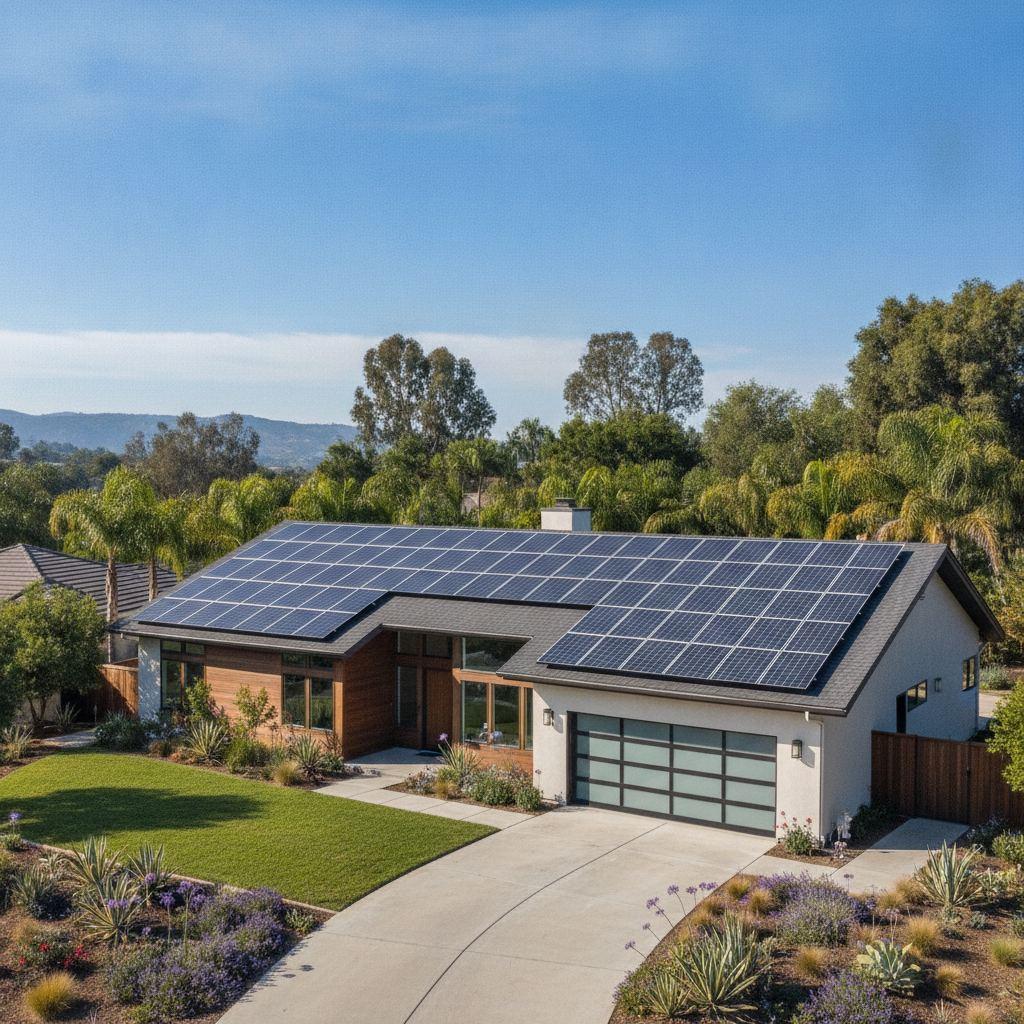
For the three major investor-owned utilities serving Southern California — SCE, SDG&E, and PG&E — on-peak hours fall in the same 5-hour window: 4 p.m. to 9 p.m., every day of the week, on the default residential time-of-use plan. LADWP, a municipal utility, runs its own TOU schedule (R-1B) with a narrower high-peak window of 1–5 p.m., weekdays only, and treats all of Saturday and Sunday as base-rate hours.
Last verified: November 2026 by Helios Energy Global.
What "on-peak" and "off-peak" actually mean
California utilities divide each day into pricing tiers based on when demand for electricity is highest on the grid. The terminology varies slightly by utility, but the logic is the same:
- On-peak (or high-peak): The hours when demand — and therefore the price you pay per kilowatt-hour — is at its highest.
- Off-peak: All other hours, when grid demand is lower and rates are cheaper.
- Super off-peak: A third, even cheaper tier some utilities add, typically overnight or mid-morning when solar generation is abundant and demand is low.
- Mid-peak: A middle tier used by some plans, sitting between on-peak and off-peak in both timing and price.
The practical upshot: if you run your dishwasher, charge an EV, or run the dryer after 9 p.m. instead of at 6 p.m., you pay less. A battery system takes this further — it can store cheap solar or off-peak grid power and discharge it automatically during the expensive window, so your home draws from the battery instead of the grid when rates are highest.
2026 on-peak and off-peak hours by utility
The table below shows the default residential TOU plan for each utility — the plan most new solar customers land on. All times are local Pacific time. "Every day" means weekdays and weekends unless noted.
| Utility | Default TOU Plan | On-Peak Window | Off-Peak / Base Window | Weekends |
|---|---|---|---|---|
| SCE | TOU-D-PRIME | 4–9 p.m. every day (summer); 4–9 p.m. weekdays (winter mid-peak) | 9 p.m.–8 a.m. + 8 a.m.–4 p.m. (off/super off-peak) | 4–9 p.m. mid-peak in summer; super off-peak otherwise |
| SDG&E | TOU-DR1 | 4–9 p.m. weekdays | 6 a.m.–10 a.m., 2–4 p.m., 9 p.m.–midnight (off-peak); midnight–6 a.m. + 10 a.m.–2 p.m. (super off-peak) | No on-peak; midnight–2 p.m. super off-peak all day |
| PG&E | E-TOU-C | 4–9 p.m. every day | All other hours (off-peak) | 4–9 p.m. on-peak applies |
| LADWP | R-1B | 1–5 p.m. Mon–Fri (high-peak) | 10 a.m.–1 p.m. + 5–8 p.m. Mon–Fri (low-peak); 8 p.m.–10 a.m. Mon–Fri + all day Sat/Sun (base) | All day Saturday & Sunday = base rate |
Hours are estimates based on each utility's published default residential TOU plan as of late 2026. Individual plan options, CPP add-ons, and EV plans may differ. Always confirm with your utility.
SCE: 4–9 p.m., every day on TOU-D-PRIME
SCE's default residential TOU plan for customers with solar, batteries, or EVs is TOU-D-PRIME. The highest rates on TOU-D-PRIME are between 4 p.m. and 9 p.m. daily.
The lowest price periods are from 8 a.m. to 4 p.m. and 9 p.m. to 8 a.m., with the lowest-cost super off-peak period in the winter season from 8 a.m. to 4 p.m.
In summer (June–September), the on-peak window applies to both weekdays and weekends. In winter (October–May), weekdays carry a mid-peak designation from 4–9 p.m. rather than a full on-peak rate, but the expensive window is the same clock hours. TOU-D-PRIME has the same time periods as the TOU-D-4-9PM rate plan option.
For the full rate breakdown and plan comparison, see our guide: SCE time-of-use rates explained.
SDG&E: 4–9 p.m. weekdays; weekends are off-peak all day
SDG&E's standard residential plan, TOU-DR1, centers its expensive window in the same evening slot. Peak pricing is between 4 p.m. and 9 p.m., when demand is highest and when electricity is priced the highest.
For residential customers on weekdays, the on-peak period runs 4:00 p.m. to 9:00 p.m. in both summer and winter. Off-peak covers 6:00 a.m. to 10:00 a.m., 2:00 p.m. to 4:00 p.m., and 9:00 p.m. to midnight. Super off-peak is midnight to 6:00 a.m. and 10:00 a.m. to 2:00 p.m. On weekends and holidays, there is no on-peak period — it is super off-peak from midnight to 2:00 p.m. and off-peak from 2:00 p.m. to midnight.
This makes Saturday and Sunday morning the cheapest time to run high-draw appliances for SDG&E customers. The SDG&E TOU-DR1 rate table effective August 1, 2026 (per the SDG&E regulatory tariff page) shows three distinct pricing tiers — on-peak, off-peak, and super off-peak — with meaningful spreads between them.
For the full rate breakdown, see our guide: SDG&E time-of-use rates explained.
PG&E: 4–9 p.m. every day, including weekends
PG&E's default residential TOU plan, E-TOU-C, is the simplest structure of the three IOUs. Per PG&E's Electric Schedule E-TOU-C tariff (effective June 1, 2026), the peak period is 4:00 p.m. to 9:00 p.m. all days in both summer and winter, and off-peak covers all other times.
On this rate plan, 4–9 p.m. are higher-priced peak times, and all other times are lower-priced off-peak. There is no super off-peak tier on E-TOU-C — just two periods. That simplicity makes it easy to understand but means there's less differentiation to exploit with a battery or load-shifting strategy compared to SDG&E's three-tier setup.
PG&E primarily serves Northern and Central California, but some Southern California households near the utility boundary may be on PG&E service.
LADWP: A different clock — high-peak is 1–5 p.m. weekdays
LADWP is a municipal utility and does not follow NEM 3.0 or the CPUC's investor-owned utility framework. Its TOU rate, R-1B, works on a different schedule from the IOUs. Time-of-use rates are based on the time of day and season that you use electricity, with three time periods: High Peak, Low Peak, and Base.
The High Peak Period (20 hours per week) runs Monday through Friday, 1:00 p.m. to 4:59 p.m. The Low Peak Period (30 hours per week) covers Monday through Friday, 10:00 a.m. to 12:59 p.m. and 5:00 p.m. to 7:59 p.m. The Base Period (118 hours per week) covers Monday through Friday 8:00 p.m. to 9:59 a.m., and all day Saturday and Sunday.
This means LADWP's most expensive window ends at 5 p.m. — four hours earlier than the 9 p.m. cutoff at SCE, SDG&E, and PG&E. Solar panels alone can cover much of LADWP's high-peak window in summer. LADWP also still offers retail-rate net metering, so solar exports during the base period receive the same per-kWh credit as grid imports.
For the full LADWP rate and net metering picture, see our guide: LADWP rates explained.
What you can do about peak hours
Shift loads out of the window
The simplest strategy costs nothing: move high-draw appliances outside the on-peak window. For SCE, SDG&E, and PG&E customers, that means running the dishwasher, laundry, and EV charging after 9 p.m. or before noon. For LADWP R-1B customers, shifting loads to before 1 p.m. or after 5 p.m. on weekdays — or any time on weekends — captures the cheapest base-rate hours.
High-impact loads to shift:
- EV charging — set a charge timer for midnight to 6 a.m.
- Pool pump — run during super off-peak or base hours (mid-morning or overnight)
- Dishwasher and laundry — delay-start features on most modern appliances handle this automatically
- Water heater — smart or heat-pump water heaters can be programmed to pre-heat before the peak window
Cover the evening window with a battery
Load-shifting handles predictable appliances, but it doesn't reduce what your home draws from the grid for lighting, cooking, TV, and HVAC during the evening. That's where a home battery changes the equation.
A battery charged by solar during the day (or by the grid overnight at super off-peak rates) can power your home through the 4–9 p.m. window with zero grid draw — converting the most expensive electricity of the day into the cheapest. On SCE TOU-D-PRIME, the spread between the off-peak rate and the summer on-peak rate is substantial, meaning every kilowatt-hour you discharge from a battery during that window avoids a high-cost grid import.
At Helios, a single home battery runs approximately $14,000–$18,500 installed. One Tesla Powerwall 3 installed runs $14,500–$18,500; two units run $24,000–$30,000. An Enphase IQ Battery 10C installed is approximately $13,000–$15,500. The right size depends on your home's evening load and whether you want full backup capability or just peak-shaving. See how to size a battery for your home and explore all battery options we install.
Note on incentives: The 30% federal residential solar tax credit expired December 31, 2025 and does not apply to systems installed in 2026. California's SGIP residential battery rebate program has its ratepayer-funded residential budgets waitlisted — it is not currently accepting new residential applications. There is no state-level rebate to deduct from the figures above at this time.
How solar interacts with peak hours
Solar panels produce the most power from roughly 9 a.m. to 3 p.m. — before the 4–9 p.m. on-peak window at SCE, SDG&E, and PG&E. Under NEM 3.0 (which applies to SCE, SDG&E, and PG&E solar customers), daytime solar exports earn export credits at avoided-cost rates, not retail rates. That makes storing solar energy in a battery — rather than exporting it — the higher-value move for IOU customers. The battery absorbs the afternoon solar surplus, then discharges it during the 4–9 p.m. peak window when grid rates are highest.
For LADWP customers, the situation is different: LADWP still offers retail-rate net metering, so solar exports during the base period (including weekend daytime hours) earn a full retail credit. A battery still adds resilience and backup value, but the financial case is less urgent than it is under NEM 3.0.
Learn more about how solar and storage interact under the current rules: NEM 3.0 explained and solar vs. battery under NEM 3.0.
Frequently asked questions about California peak electricity hours
What time does on-peak electricity start in California?
For SCE, SDG&E, and PG&E customers on the default residential TOU plan, on-peak starts at 4 p.m. every day. LADWP R-1B customers have a high-peak window that starts at 1 p.m. on weekdays. Both windows are driven by the same underlying cause: afternoon and evening is when the grid is under the most strain from air conditioning, cooking, and EV charging.
Are peak hours the same on weekends as weekdays in California?
It depends on your utility. PG&E's E-TOU-C applies the 4–9 p.m. peak every day, including weekends. SCE's TOU-D-PRIME applies the on-peak or mid-peak window seven days a week in summer. SDG&E's TOU-DR1 has no on-peak period on weekends — Saturday and Sunday are super off-peak until 2 p.m. and off-peak in the afternoon. LADWP's R-1B has no high-peak on weekends at all — all of Saturday and Sunday are base-rate hours.
What is "super off-peak" and when does it occur?
Super off-peak is a third pricing tier — cheaper than regular off-peak — that some utilities offer when grid demand and wholesale electricity prices are at their lowest. SDG&E's TOU-DR1 super off-peak runs midnight to 6 a.m. on weekdays and midnight to 2 p.m. on weekends and holidays. SCE's TOU-D-PRIME has a super off-peak tier in winter from 8 a.m. to 4 p.m. PG&E's standard E-TOU-C does not have a super off-peak tier — just peak and off-peak.
Does a home battery actually save money during peak hours in California?
Yes, if sized correctly and paired with a TOU rate. The battery charges during off-peak or super off-peak hours (or from solar during the day) and discharges during the 4–9 p.m. window, replacing high-cost grid power with stored energy. The savings depend on the spread between your on-peak and off-peak rates, your evening load, and how many hours per day the battery can cover. See our battery guide for a deeper look at the numbers.
Do peak hours change by season in California?
The clock hours of the peak window are the same year-round for most residential plans (4–9 p.m. for the IOUs). What changes seasonally is the price within those windows — summer on-peak rates are typically higher than winter rates because cooling demand pushes the grid hardest in July and August. SCE's TOU-D-PRIME also shifts some winter hours from "on-peak" to "mid-peak" designation, though the 4–9 p.m. window remains the most expensive period in both seasons.
I have solar but no battery. Can I still benefit from knowing peak hours?
Yes. Even without a battery, knowing the peak window helps you shift flexible loads (laundry, dishwasher, EV charging) to off-peak hours and reduce your net bill. Under NEM 3.0 at SCE, SDG&E, and PG&E, your solar panels are likely exporting during the day at lower avoided-cost rates, so minimizing grid draws during the 4–9 p.m. peak is especially valuable. LADWP solar customers benefit from retail-rate net metering, which already credits daytime exports at a higher rate. Either way, a custom solar and savings design will show you exactly how your usage profile interacts with your utility's TOU structure.
Is the 4–9 p.m. peak window likely to change in 2026 or 2027?
The 4–9 p.m. window has been stable across California's major IOUs for several years and is embedded in CPUC-approved tariffs. There is no announced change to the residential peak window for 2026 or 2027 at SCE, SDG&E, or PG&E. LADWP sets its own rates independently and has maintained the 1–5 p.m. high-peak window on its TOU schedule. Rate levels (the cents-per-kWh you pay) do adjust periodically; the clock hours of the peak period are more stable.
Next steps
- Book a free consultation and custom design — we'll map your utility's TOU schedule against your actual usage and show you exactly when a battery pays back.
- Explore home battery options and pricing — Powerwall 3, Enphase IQ, FranklinWH, and more.
- See how solar panels are priced in California — all-in system costs by size.
- Learn how NEM 3.0 affects solar exports — critical reading for SCE, SDG&E, and PG&E customers.
- Solar vs. battery under NEM 3.0 — which investment makes more sense for your situation.
- View our Southern California service locations — we serve Santa Monica, Los Angeles, and surrounding communities.
Sources
- SCE Residential Rate Plan Comparison (sce.com) — January 2026
- SDG&E Total Electric Rates & Residential TOU Periods (sdge.com) — November 1, 2026
- SDG&E Residential Pricing Plans (sdge.com, prices effective Nov 1 2026) — November 1, 2026
- PG&E Electric Schedule E-TOU-C Tariff (pge.com, effective June 1 2026) — June 1, 2026
- LADWP Residential Electric Rates – R-1B TOU Schedule (ladwp.com) — January 2026
More guides
Do Solar Panels Work on Cloudy Days and in Winter? Southern California Month-by-Month Production (2026)
Yes — Southern California solar panels produce 10–70% of rated output on cloudy days, and a south-facing 10 kW system in Los Angeles makes roughly 1,000–1,100 kWh in December versus 1,700–1,800 kWh in July.
ReadBest Solar Companies in Poway, CA (2026): Big Lots, SDG&E's Highest Rates, and Why Battery Backup Is Non-Negotiable
Poway's ranch-home lots, SDG&E's ~46¢/kWh rates, and genuine fire-country exposure in the eastern hills make it one of San Diego County's most compelling — and most specific — solar markets. Here's how to find the right installer and avoid the common mistakes.
ReadBest Solar Companies in Palos Verdes Estates, CA (2026): Honest Rankings for a Coastal Clifftop Community
A straight-talking, numbers-first guide to the best solar installers in Palos Verdes Estates — covering SCE's Net Billing Tariff, HOA design review, coastal efficiency gains, and what a real 2026 quote should look like.
ReadGet a free consultation and custom design.
No pressure, no obligation — the owner reviews every design we send.