What size battery do I need to back up my house in 2026?
Most Southern California homes need 10–30 kWh of battery storage to cover critical loads overnight, or 30–60 kWh for whole-home backup through a multi-day PSPS outage.
By Taylor Crouse — Founder, Helios Energy GlobalUpdated
Quick answer
- Most Southern California homes need 10–20 kWh of battery capacity for critical loads overnight, or 30–60 kWh (two to four units) for whole-home, multi-day PSPS backup.
- Critical loads (fridge, lights, Wi-Fi, charging) run roughly 4–6 kWh/day; central AC alone adds 18–24 kWh/day.
- Installed batteries cost about $14,000–$18,500 per unit; two Powerwall 3 units land around $24,000–$30,000 before incentives.
- A typical 8–10 kW solar array produces 35–50 kWh on a clear SoCal day — enough to recharge two to three units during an extended outage.
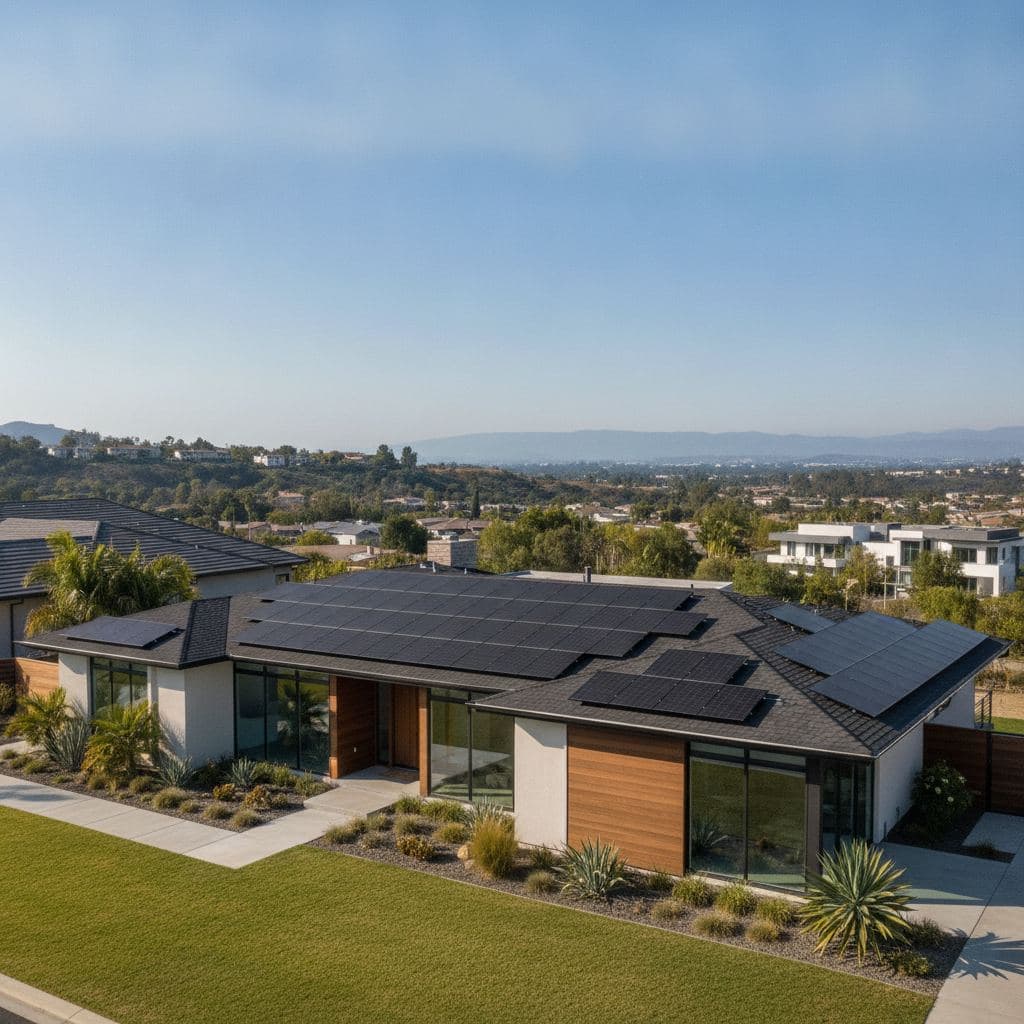
Most Southern California homes need 10–20 kWh of battery capacity to power critical loads (lights, refrigerator, Wi-Fi, phone charging, and a few outlets) through a single overnight outage. If you want whole-home backup or need to ride out a multi-day Public Safety Power Shutoff (PSPS) in a fire-risk zone, that number climbs to 30–60 kWh — meaning two to four battery units installed in parallel.
Last verified: September 2026 by Helios Energy Global.
The gap between those two figures is enormous, and it's the most important decision you'll make before buying a battery. This page walks you through the math appliance by appliance, explains how your utility (SCE vs. LADWP vs. other municipal utilities) affects the economics, and gives you a realistic sense of what a properly sized system costs in 2026.
Critical loads vs. whole-home backup: the core trade-off
"Backup" means different things to different homeowners. Before sizing anything, pick a lane.
Critical-load backup means your installer wires a sub-panel that includes only your must-have circuits: refrigerator, a few lights, phone chargers, Wi-Fi router, and maybe a medical device. Everything else — HVAC, electric range, EV charger, pool pump — stays off during an outage. This approach keeps battery size (and cost) manageable.
Whole-home backup means the battery carries your entire electrical panel, including large loads. It's genuinely useful for households with medical equipment that can't be interrupted, or for fire-zone properties that face multi-day PSPS events every year. It requires significantly more storage and, in most cases, a larger solar array to recharge the batteries each day.
For most Santa Monica and coastal Southern California homeowners — who face relatively rare outages and no PSPS risk — critical-load backup is the right call. For homeowners in the SCE high-fire-threat district (Malibu canyons, Altadena, the foothills), whole-home or extended backup deserves serious consideration.
Appliance-by-appliance kWh table
Here's how to estimate your actual consumption. Multiply the wattage by the hours you'd run each appliance, then divide by 1,000 to get kWh. The table below uses typical Southern California household appliances.
| Appliance | Typical Wattage | Hours/Day (outage scenario) | Est. kWh/Day |
|---|---|---|---|
| Refrigerator (modern, 18–22 cu ft) | 100–150 W avg | 24 | 2.4–3.6 kWh |
| LED lighting (8–10 fixtures) | 80–120 W | 6 | 0.5–0.7 kWh |
| Wi-Fi router + modem | 15–25 W | 24 | 0.4–0.6 kWh |
| Phone/laptop charging | 50–100 W | 4 | 0.2–0.4 kWh |
| Box fan or ceiling fan | 50–75 W | 8 | 0.4–0.6 kWh |
| Medical device (e.g., CPAP) | 30–60 W | 8 | 0.2–0.5 kWh |
| Critical-load subtotal (estimate) | — | — | ~4–6 kWh/day |
| Central AC (3-ton, 14 SEER) | 3,000–4,000 W | 6 | 18–24 kWh |
| Electric range/oven | 3,000–5,000 W | 1 | 3–5 kWh |
| Electric water heater | 4,000–5,500 W | 2 | 8–11 kWh |
| EV charger (Level 2, 7.2 kW) | 7,200 W | 4 | 28–29 kWh |
| Whole-home addition (estimate) | — | — | +40–60 kWh/day |
All figures are estimates based on EIA residential consumption data and manufacturer specs. Your actual usage will vary.
A single home battery unit — most popular models land between 10 kWh and 16 kWh of usable capacity — is enough to cover the critical-load column for one to two nights. Two units get you through a longer outage or allow you to add modest AC use. Four or more units are typically needed for true whole-home multi-day coverage.
Sizing for PSPS: the fire-zone math
If you're in an SCE High Fire Threat District (HFTD) Tier 2 or Tier 3 zone — think Malibu, the Santa Monica Mountains, Altadena, or foothill communities in the Inland Empire — you should plan for outages of two to five days, not hours. SCE's PSPS events in recent years have lasted 24–96 hours in the hardest-hit areas.
Here's the practical sizing logic for a PSPS-prone home:
- Day 1 (no solar recharge assumed, outage starts at night): You need enough stored energy to get through the first ~18 hours on battery alone.
- Days 2–4: Your solar panels recharge the batteries each day. A typical 8–10 kW solar system in Southern California produces roughly 35–50 kWh on a clear day — enough to refill two to three battery units and run critical loads simultaneously.
- Buffer rule of thumb: Size your battery bank so that even on a partly cloudy day (50% production), you can still cover critical loads overnight. That typically means 20–30 kWh minimum for critical loads, or 40–60 kWh if you want to run AC during a summer PSPS.
If you're on SCE, the economics of battery storage are especially strong right now. Under NEM 3.0 (the CPUC Net Billing Tariff that applies to SCE, PG&E, and SDG&E customers), solar-only systems export surplus power at wholesale rates — often just 5–8¢/kWh — rather than the retail rate of ~34–35¢/kWh. Pairing solar with a battery lets you store that surplus and use it yourself during the 4–9 PM peak window, when SCE's TOU rates are highest. The battery pays double duty: backup insurance and bill savings. See our NEM 3.0 explainer for the full picture.
If you're on LADWP, the calculus is different. LADWP still offers retail-rate net metering, so a solar-only system already earns full credit for exports. Batteries on LADWP are primarily a backup and resilience tool rather than a bill-optimization tool — which means you should size them based on your backup needs, not export strategy. LADWP's average rate of ~28¢/kWh also means payback periods are longer than for SCE customers.
What does the right-sized battery system cost in 2026?
Installed battery costs in Southern California currently run approximately $14,000–$18,500 per unit, depending on brand, capacity, installation complexity, and whether you need a sub-panel or panel upgrade. Two Powerwall 3 units (27 kWh usable) typically land in the $24,000–$30,000 range before any incentives.
Important 2026 note on incentives: The 30% federal residential solar tax credit expired on December 31, 2025. There is no federal tax credit available for a solar or battery purchase made in 2026. California's SGIP (Self-Generation Incentive Program) residential battery rebate is currently waitlisted — funding is exhausted and new applicants are placed on a waitlist with no guaranteed timeline. Do not let any installer promise you SGIP money as a firm offset to your project cost.
Some local utilities and the state's TECH Clean California program have separate incentives — check with your specific utility and ask your installer to pull current program status at the time of your quote. We always check live incentive availability before presenting a proposal.
For solar + battery combined system costs and savings estimates, visit our solar panel cost page or design your savings online.
How battery chemistry and usable capacity affect sizing
Not all kWh are equal. Most home batteries are rated in total (nameplate) capacity, but the usable capacity is what matters — manufacturers typically limit depth of discharge to protect longevity.
- Lithium iron phosphate (LFP): Most modern home batteries use LFP chemistry. Usable capacity is typically 90–100% of nameplate. Safer, longer cycle life (3,000–6,000 cycles), performs well in SoCal heat.
- NMC (nickel manganese cobalt): Higher energy density, but some manufacturers limit usable capacity to 80–90% of nameplate. Less common in new residential installs.
When you're comparing quotes, always compare usable kWh, not nameplate kWh. A battery advertised as "16 kWh" might deliver 14.3 kWh usable. Ask your installer to specify usable capacity in writing.
Also confirm the battery's continuous power output (kW), not just its energy capacity (kWh). A battery with 13.5 kWh of capacity but only 5 kW of continuous output may not be able to start a central AC compressor (which can draw 6–8 kW at startup). If running AC during a PSPS is a priority, you need a battery — or battery stack — rated for sufficient surge and continuous power.
How solar recharge changes the equation
A properly sized solar array is the multiplier that makes battery backup practical for multi-day outages. Without solar, even a 30 kWh battery bank is depleted in one to two days of modest use. With a 8–12 kW solar system producing 35–55 kWh/day in Southern California's sun, you can recharge your batteries each afternoon and extend backup indefinitely — as long as the sun is shining.
This is why we design solar and battery systems together rather than treating them as separate purchases. The solar + battery pairing guide explains how to optimize the combination under NEM 3.0 for SCE customers specifically.
For LADWP customers, the same solar-recharge logic applies for resilience purposes, even though the bill-optimization math differs. Visit our locations page to see which utility territories we serve and how our approach varies by utility.
Frequently asked questions about home battery sizing
How many Tesla Powerwalls do I need to back up my house?
One Powerwall 3 provides approximately 13.5 kWh of usable capacity and 11.5 kW of continuous power output. For critical-load backup through a single overnight outage, one unit is usually sufficient. For multi-day PSPS coverage or whole-home backup including AC, plan on two to four units. We install multiple brands — the right choice depends on your panel configuration, load profile, and budget, not brand loyalty.
Can one battery run my air conditioner during a power outage?
It depends on the battery's power rating, not just its energy capacity. Central AC systems typically draw 3,000–5,000 W continuously and may surge to 6,000–8,000 W at startup. A single battery rated at 5 kW continuous output may struggle to start a standard AC compressor. Some newer battery models and multi-unit stacks handle this fine — confirm the specs before assuming AC backup is included.
Does battery size change if I'm on SCE vs. LADWP?
The physical sizing (kWh needed for backup) is the same regardless of utility. What changes is the financial case for batteries. SCE customers on NEM 3.0 get strong bill-optimization benefits from batteries in addition to backup value. LADWP customers still have retail-rate net metering, so the battery's value is primarily resilience. This affects how quickly your investment pays back, not how much storage you physically need.
Is SGIP still available for home batteries in 2026?
SGIP residential battery rebates are currently waitlisted in 2026 — the program budget is exhausted and new applicants are placed in a queue with no guaranteed funding timeline. We always check current program status before finalizing a proposal, but we do not build waitlisted incentives into our base pricing.
What's the difference between a critical-load panel and whole-home backup?
A critical-load sub-panel is a separate breaker panel wired to include only your essential circuits. During an outage, the battery powers only those circuits, which dramatically reduces how much storage you need. Whole-home backup means the battery is connected to your main panel and powers everything — but this requires more battery capacity, often a larger inverter, and sometimes a panel upgrade. We assess your existing panel during a site visit.
How long will a 20 kWh battery last during a power outage?
Running only critical loads (refrigerator, lights, Wi-Fi, phone charging, a fan) that consume roughly 4–6 kWh per day, a 20 kWh battery lasts approximately three to five days without any solar recharge. With a solar system recharging the battery each day, you can extend backup indefinitely in good weather. Add AC to the load list and that same 20 kWh is gone in less than a day.
Do I need a new roof before installing solar and batteries?
Not necessarily, but your roof's age and condition matter. We assess roof suitability as part of every design. If your roof has fewer than 10 years of life remaining, we typically recommend addressing it before or during the solar installation to avoid costly re-racking later. Visit our roof types guide for what we look for during a site assessment.
Next steps
- Book a free consultation and custom design — we size your battery to your actual load profile and utility, not a generic template.
- Estimate your solar savings — see how solar + battery pencils out for your address and utility.
- Learn about home battery options — compare capacity, power ratings, and brands we install.
- Understand NEM 3.0 and how it affects battery value for SCE customers
- See solar + battery pairing strategy under NEM 3.0
- Explore solar system sizing and costs
More guides
Best Solar Companies in San Dimas, CA (2026): An Honest Local Guide
A straight-talking, numbers-first guide to the top solar installers serving San Dimas, CA in 2026 — covering SCE net billing, local roof types, battery storage, and how to compare quotes without getting burned.
ReadWhat Roofers Won't Tell You About Your Solar Panels
A roofing bid that omits solar detach-and-reset leaves a surprise cost — at Helios's $250–$350 per panel, about $5,000–$7,000 for a 20-panel system. Here are six things roofers quietly leave out, and the checklist to protect yourself.
ReadDo I need HOA approval for solar in California? (2026 guide)
California Civil Code 714 limits HOA conditions to a $1,000 cost cap and 10% output reduction—your HOA cannot ban solar outright.
ReadGet a free consultation and custom design.
No pressure, no obligation — the owner reviews every design we send.