Best Solar Companies in Palos Verdes Estates, CA (2026): Honest Rankings for a Coastal Clifftop Community
A straight-talking, numbers-first guide to the best solar installers in Palos Verdes Estates — covering SCE's Net Billing Tariff, HOA design review, coastal efficiency gains, and what a real 2026 quote should look like.
By Taylor Crouse — Founder, Helios Energy GlobalUpdated
Quick answer
- Utility is Southern California Edison (SCE), and NEM 3.0 applies. New solar systems interconnected in 2026 export at time-of-use rates that average well below retail — typically $0.04–$0.08/kWh for midday exports — making battery storage far more financially meaningful here than under the old NEM 2.0 rules.
- Typical system size runs 8–14 kW. The large, older homes on the Hill carry above-average electricity loads, and many homeowners size up intentionally to pair with a battery and cover EV charging.
- Pre-incentive installed costs generally range from $2.50 to $3.50 per watt — expect the higher end if you need low-profile mounting hardware, HOA-compliant aesthetics, or a complex tile/slate roof.
- The 30% federal solar tax credit expired December 31, 2025. There is no federal residential credit for systems installed in 2026. Run your numbers without it.
- Coastal marine air keeps panel temperatures lower than inland SoCal, which means real-world output tends to track closer to nameplate ratings — a genuine efficiency advantage unique to the Peninsula.
- HOA design review is the rule, not the exception. Choose an installer who knows the Palos Verdes Estates review process and submits complete packages the first time — delays cost you months of bill savings.
Palos Verdes Estates occupies the northwestern shoulder of the Palos Verdes Peninsula in Los Angeles County, a community of bluff-top estates, canyon-rim lots, and mature landscaping that makes every rooftop decision visible from the street. Electricity service comes from Southern California Edison (SCE), placing every new solar installation under California's Net Billing Tariff (NEM 3.0).
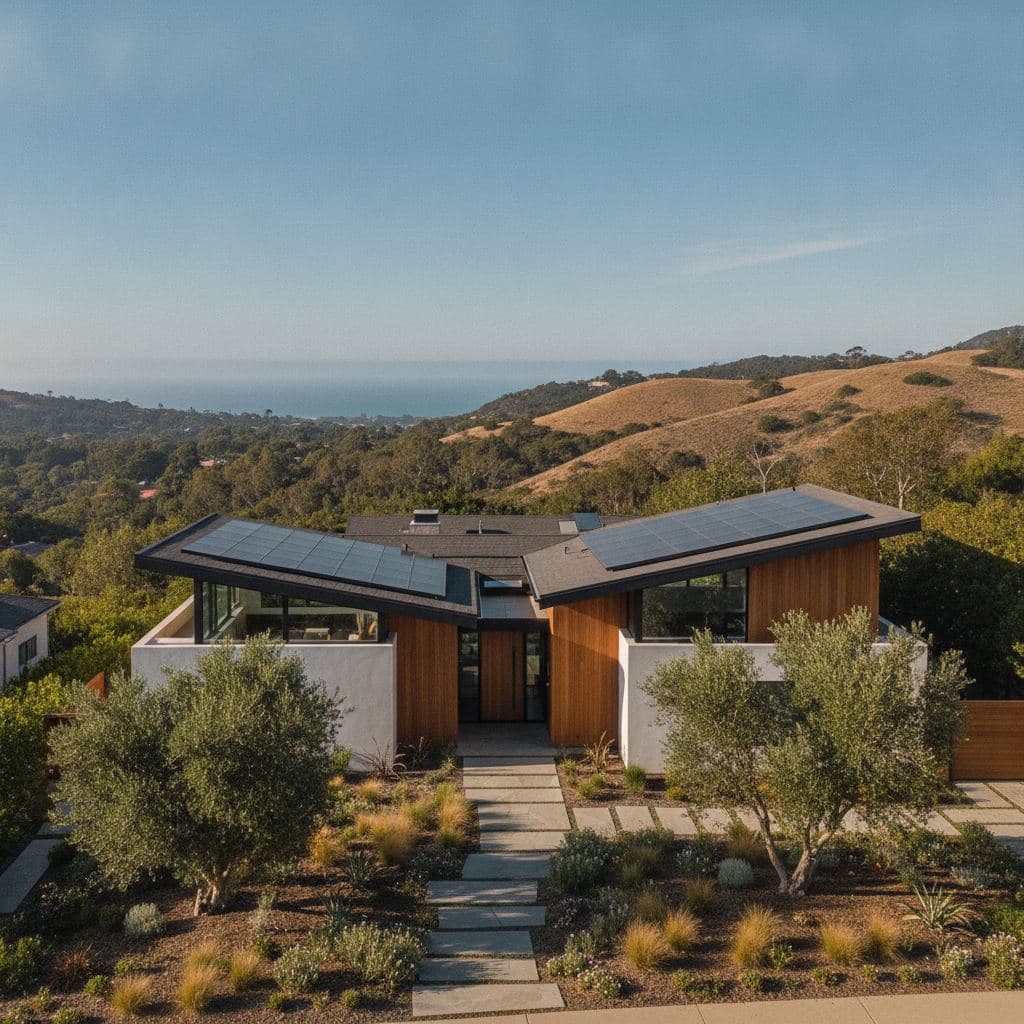
Last verified: September 2026 by Helios Energy Global.
Top 8 best solar companies in Palos Verdes Estates (2026)
A 2026 note on who is still standing. Residential solar has been through a brutal consolidation, and several companies that appear on older "best of" lists no longer exist. SunPower filed Chapter 11 in August 2024 and the brand now belongs to a different legal entity; Sunnova filed in June 2025; Freedom Forever filed in April 2026. Companies that have shut down or are in restructuring have been removed from the ranking below — a workmanship warranty is only worth the company standing behind it. Full detail in our statewide ranking of California solar companies.
At-a-glance ranking
- Helios Energy Global — Best for: HOA-ready coastal installs with owner-reviewed custom design
- Sunrun — Best for: homeowners who want a large national brand with lease/PPA financing options
- Tesla Energy — Best for: all-in-one Powerwall integration and app-driven monitoring
- Palmetto Solar — Best for: transparent online pricing tools and remote monitoring platform
- SunPower Inc. — Best for: high-efficiency panels on space-constrained or shaded roofs
- Momentum Solar — Best for: full-service installs with in-house permitting teams
- Baker Electric Solar — Best for: established Southern California regional track record
- Forme Solar — Best for: California-focused installs with a customer-owned model
This ranking is Helios Energy Global's own editorial opinion and is not paid placement. Verify each company's active California Contractors State License Board (CSLB) license and confirm they currently serve the Palos Verdes Peninsula before signing any contract.
1. Helios Energy Global
Palos Verdes Estates is one of the most demanding installation environments in Southern California — not because of fire risk or extreme heat, but because of what sits above the roofline: an HOA, neighbors with strong aesthetic opinions, and a coastal streetscape where a poorly planned array stands out immediately. Helios Energy Global was built for exactly this kind of project.
Every system design is reviewed by the owner before it goes to the customer, which means you get a layout that accounts for the Peninsula's marine-influenced sun angles, the visual requirements of the Palos Verdes Art Jury or applicable HOA board, and the SCE Net Billing Tariff's export economics — not a cookie-cutter proposal generated by an algorithm.
We handle HOA submittal packages, coordinate with the City of Palos Verdes Estates building department, and design battery integration from the start rather than bolting it on as an afterthought. If you want to understand what solar installation in Palos Verdes Estates actually looks like on a bluff-top or canyon-rim home, start with a conversation here.
2. Sunrun
Best for: Homeowners who prefer lease or PPA financing and want a nationally backed installer. Why it fits: Sunrun operates extensively throughout SCE territory and offers multiple financing structures, including $0-down lease options that can appeal to homeowners not looking to own the system outright. What to ask: Whether the quoted system size accounts for SCE's NEM 3.0 export rates, and how the lease terms interact with an HOA resale disclosure.
3. Tesla Energy
Best for: Tight Powerwall integration and a clean, app-driven ownership experience. Why it fits: Tesla's vertically integrated solar-plus-Powerwall package is straightforward to price and monitor, and the Powerwall 3's whole-home backup capability suits the larger loads common on the Hill. What to ask: How Tesla handles HOA design submissions and whether their installers have recent Palos Verdes Peninsula permit experience.
4. Palmetto Solar
Best for: Homeowners who want upfront pricing transparency and ongoing monitoring tools. Why it fits: Palmetto's platform lets you track system performance and compare it against your SCE bills, which is particularly useful under NEM 3.0 when understanding self-consumption versus export matters financially. What to ask: Who performs the physical installation locally and whether they carry experience with tile or slate roofs common in PVE.
5. SunPower Inc.
Best for: Roofs where every square foot counts — smaller usable areas, partial shading from mature trees, or steep pitches. Why it fits: Maxeon panels carry some of the highest efficiency ratings available, which can matter when an HOA limits the number of visible panels or a roof geometry constrains array size. What to ask: Current lead times and whether the local dealer has active CSLB licensure and Peninsula-specific permit history.
6. Momentum Solar
Best for: Homeowners who want a single company handling design, permitting, and installation in-house. Why it fits: Momentum operates across Southern California and brings permitting staff in-house, which can reduce the back-and-forth that often delays projects in cities with detailed design-review requirements. What to ask: Their specific experience with Palos Verdes Estates building department submissions and HOA coordination.
7. Baker Electric Solar
Best for: Southern California homeowners who value a long-standing regional installer with deep SCE familiarity. Why it fits: Baker Electric has operated in SoCal for decades and has navigated SCE interconnection processes across a wide range of project types and jurisdictions. What to ask: Whether they currently serve the South Bay / Palos Verdes Peninsula and their typical timeline from permit submission to PTO (Permission to Operate).
8. Forme Solar
Best for: California homeowners focused on a customer-owned model with straightforward financing. Why it fits: Forme operates in California with a focus on owned (not leased) systems, which tends to produce better long-term financial outcomes under NEM 3.0 compared to lease structures. What to ask: Their familiarity with coastal installation requirements and experience with the specific roofing materials prevalent in PVE.
Ranking reflects Helios Energy Global's editorial opinion only — not paid placement. Confirm each company's CSLB license status and active Palos Verdes Estates service area before signing.
Why Palos Verdes Estates solar is different from a generic install
SCE and NEM 3.0: the export math has changed
Every home in Palos Verdes Estates is served by Southern California Edison, and every new solar system interconnected in 2026 falls under the CPUC's Net Billing Tariff — commonly called NEM 3.0. The core shift from older net metering: excess solar you push to the grid earns avoided-cost rates, not retail rates. Midday export credits often land between $0.04 and $0.08 per kilowatt-hour, while you buy power back in the evening at SCE's time-of-use rates that can exceed $0.40–$0.50/kWh during peak windows.
That spread is the financial argument for a battery. A well-designed system under NEM 3.0 maximizes what you consume directly, stores the afternoon surplus, and draws from the battery rather than the grid during peak-rate hours. If your installer is still proposing an oversized array with no storage and calling it "optimized for NEM," ask them to walk through the actual export credit math. For a deeper look, see our NEM 3.0 explained guide.
Batteries on the Peninsula: not just backup
The conventional pitch for home batteries — "keep the lights on during an outage" — undersells what storage does for a PVE household under NEM 3.0. Because PVE is not in a high fire-threat zone, PSPS (Public Safety Power Shutoff) events are less frequent than in foothill communities, so pure backup value is a secondary benefit here. The primary financial case is peak-rate avoidance: charge the battery with solar between roughly 10 a.m. and 3 p.m., then discharge during SCE's on-peak window in the late afternoon and evening.
A 10–13 kWh battery (one Powerwall-class unit) paired with an 8–10 kW array can meaningfully reduce or eliminate on-peak grid draws for a typical PVE household. Larger homes with EV charging or pool equipment may benefit from two battery units. See our solar vs. battery under NEM 3.0 guide for a side-by-side breakdown.
HOA design review: the step most installers underestimate
Palos Verdes Estates is governed by one of the most design-conscious HOA frameworks in Los Angeles County. The Palos Verdes Homes Association and its Art Jury review architectural changes — and solar arrays are not automatically exempt simply because California law limits HOA authority to restrict solar. The law (Civil Code §714) protects your right to install solar, but HOAs can still impose reasonable aesthetic conditions: panel color, mounting visibility from the street, conduit routing, and inverter placement are all fair game.
An installer who submits an incomplete or careless package will face revision requests that delay your Permission to Operate by weeks or months. Choose a company that has submitted to PVE's review process before, prepares complete architectural drawings, and knows which details trigger revision requests.
Coastal marine influence: a real efficiency advantage
The marine layer that makes June and July mornings gray in PVE actually works in your favor for panel performance. Photovoltaic panels lose efficiency as cell temperature rises — most panels derate roughly 0.3–0.4% per degree Celsius above 25°C. Inland communities like the San Fernando Valley or Riverside regularly see panel temperatures 20–30°C above ambient on summer afternoons.
On the Palos Verdes Peninsula, ocean breezes keep rooftop temperatures measurably lower, and the 5.5 average peak sun hours the area receives come with less thermal penalty. Real-world output on a coastal install tends to track closer to the nameplate production estimate than an equivalent system placed in a hot inland location. That's not marketing — it's physics.
Lot and roof variability: canyon rims, mature trees, and tile roofs
PVE housing stock skews toward mid-century and 1960s–1970s construction on large lots, with a significant share of Spanish-tile, concrete-tile, and slate roofing. Tile roofs require specific mounting hardware and, if tiles are cracked or aged, may need targeted repairs before installation. Canyon-rim lots on Palos Verdes Drive West, Paseo del Mar, and the Via streets can have mature trees — Monterey cypress, eucalyptus, and ornamental plantings — that create partial shading on otherwise sun-rich roofs.
A proper shade analysis (not just a satellite estimate) matters here. The bluff-facing south and southwest roof planes are typically the most productive, but the specific orientation of a home on its lot — which varies considerably in PVE's winding street grid — should drive the final array design.
Real prices: what solar costs in Palos Verdes Estates
Installed solar in Palos Verdes Estates in 2026 generally runs $2.50 to $3.50 per watt before incentives, with most customer-owned purchases landing somewhere in that band depending on system size, equipment tier, and roof complexity. That range reflects the broader Southern California market but skews toward the higher end in PVE due to tile roof work, HOA-compliant hardware, and the premium that comes with working in a city that requires careful permit and design-review coordination.
Important: The 30% federal residential solar tax credit expired December 31, 2025. Do not factor it into your 2026 payback calculations. California's Self-Generation Incentive Program (SGIP) may offer rebates for battery storage depending on current funding availability — check DSIRE or ask your installer for the current status.
Illustrative pre-incentive price ranges (2026 estimates)
| System Size | Low Estimate | High Estimate | Typical Annual Output* |
|---|---|---|---|
| 6 kW | $14,400 | $19,500 | ~9,900 kWh |
| 8 kW | $19,200 | $26,000 | ~13,200 kWh |
| 10 kW | $24,000 | $32,500 | ~16,500 kWh |
| 12 kW | $28,800 | $39,000 | ~19,800 kWh |
| 15 kW | $36,000 | $48,750 | ~24,750 kWh |
Annual output estimates use ~1,650 kWh/kW/year as a rough coastal PVE factor. Actual production depends on roof orientation, shading, and tilt. These are illustrative ranges, not quotes.
What pushes a PVE quote toward the higher end
- Concrete or Spanish tile roof requiring specialized mounting and potential tile repair
- Low-profile or all-black aesthetics required by HOA design review
- Complex roof geometry with multiple planes, hips, or dormers
- Electrical panel upgrade (common in older PVE homes with 100-amp service)
- Battery storage addition (add roughly $14,000–$18,500 per battery unit installed)
- Conduit routing that must be concealed or painted to satisfy HOA conditions
- Structural engineering letter required for older roof framing
Estimate your Palos Verdes Estates solar savings with our city-prefilled calculator to get a ballpark before you talk to anyone.
Solar-only or solar + battery in Palos Verdes Estates?
When solar-only makes sense
A solar-only system still makes financial sense in PVE if your primary goal is to reduce daytime consumption and your household's peak usage happens to align with solar production hours — for example, if you work from home and run AC, appliances, and EV charging during the day. You'll earn lower export credits under NEM 3.0, but if most of your solar production is consumed on-site, the export rate matters less. Solar-only also has a shorter payback period on paper because the upfront cost is lower.
When battery storage is the smarter call
For the majority of PVE households — larger homes with evening-heavy usage patterns, EV charging that happens overnight, or pool equipment that runs on timers — a battery transforms the NEM 3.0 economics. Instead of exporting cheap midday solar and buying back expensive on-peak power, you store the surplus and discharge it during SCE's highest-rate hours.
The financial gap between solar-only and solar-plus-battery has narrowed considerably under NEM 3.0 because the "penalty" for exporting without storage is real. If your SCE bills are consistently above $300–$400/month, a battery almost always improves the overall return. Explore the tradeoffs on our batteries page.
Battery proposal mistakes to avoid
- Undersizing to hit a price point. A single 10 kWh battery on a 12 kW system with a 4,000 sq ft home will be depleted before the SCE on-peak window ends. Model the actual discharge curve.
- No time-of-use optimization programming. A battery that isn't configured to charge from solar and discharge during peak hours won't deliver the savings on paper. Ask specifically how the battery will be programmed for SCE's TOU-D-PRIME or equivalent rate.
- Treating backup capacity as the only metric. Backup hours matter, but for NEM 3.0 optimization, the battery's round-trip efficiency and charge/discharge rate matter just as much.
How to choose the right solar company in Palos Verdes Estates
1. Confirm CSLB licensure. Any contractor installing solar in California must hold an active C-46 (Solar) or C-10 (Electrical) contractor license. Verify at the CSLB license check tool before you go further.
2. Ask specifically about PVE HOA and Art Jury experience. This is a non-negotiable differentiator. An installer who has never submitted to the Palos Verdes Homes Association review process will learn on your project — and you'll pay for that learning in delays.
3. Request a shade analysis, not just a satellite estimate. Mature trees and complex roof geometry in PVE require on-site or detailed 3D modeling. A proposal based purely on Google Maps imagery will overestimate production.
4. Understand NEM 3.0 in the proposal. The proposal should show estimated export credits at SCE's avoided-cost rates, not retail rates. If the savings estimate looks unusually high, ask what export rate assumption was used.
5. Get at least three written proposals. Compare them on price per watt, system size, equipment specifications, production estimates, and warranty terms — not just the monthly payment.
6. Check references from Peninsula customers. Ask for two or three completed projects in Palos Verdes Estates or the broader Palos Verdes Peninsula. Actual customers can tell you whether the HOA process was handled smoothly.
How to compare quotes without getting tricked
- Normalize to price per watt. Divide the total system cost by the system size in watts. This lets you compare a 10 kW quote from one company against an 8 kW quote from another on equal footing.
- Check the production estimate methodology. Ask whether it was generated by PVWatts, Aurora, or another modeling tool, and what weather dataset was used. A coastal PVE location should not use inland SoCal irradiance data.
- Read the export credit assumption. Under NEM 3.0, a proposal that credits exports at $0.30/kWh is using retail rates — which is wrong. Export credits should reflect SCE's avoided-cost schedule.
- Scrutinize the escalator clause in loans or leases. Some financing products include annual payment escalators of 2–3%. Over 25 years, that changes the total cost dramatically.
- Confirm equipment warranty terms. Panel product warranties (typically 25 years), inverter warranties (10–25 years depending on type), and battery warranties (typically 10 years) should all be spelled out in writing.
- Ask what happens if the HOA requests design changes. Will the installer redesign and resubmit at no additional cost, or is there a change-order fee?
For a broader look at system sizing and cost, our 10 kW solar system cost in California guide provides useful context.
Palos Verdes Estates quote checklist
Before signing any contract, get clear answers to all of the following:
- What is the total installed price, and what is the price per watt?
- What is the estimated annual production in kWh, and what modeling tool and weather dataset was used?
- What export credit rate was assumed in the savings estimate? (Should reflect SCE NEM 3.0 avoided-cost rates, not retail.)
- Does the proposal include a battery? If yes, what is the battery's usable capacity, round-trip efficiency, and TOU programming plan?
- What is the inverter type (string, microinverter, power optimizer), and why was it chosen for this roof?
- What panel brand, model, and efficiency rating are being proposed? Is there a product warranty and a separate performance warranty?
- Has the installer submitted projects to the Palos Verdes Homes Association or Art Jury before? Can they provide examples?
- Who handles the City of Palos Verdes Estates building permit application, and what is the typical timeline?
- Who handles SCE interconnection application, and what is the typical timeline from permit approval to PTO?
- Does the roof need any repairs or structural work before installation? Is that included in the quote or separate?
- Is an electrical panel upgrade needed? If so, is it included in the quoted price?
- What is the workmanship warranty, and who backs it — the installer or a third party?
- What happens if the installer goes out of business — who services the warranty?
- Is there a production guarantee? If actual output falls short, what is the remedy?
- What are the financing terms, including interest rate, loan term, and any escalator clause?
Final verdict
Palos Verdes Estates is not a market where any installer with a truck and a C-46 license can show up and do good work. The combination of HOA design review, tile roofing, coastal shade analysis requirements, and SCE's NEM 3.0 export economics demands an installer who has actually worked through all of these variables on the Peninsula — not one who is figuring them out on your project.
That specificity is why Helios Energy Global ranks first here. Owner-reviewed system design means every proposal that leaves our office has been checked against the real constraints of your roof, your HOA, and your SCE rate structure.
We don't outsource the design to software and hand you whatever comes out. For a community where the details matter this much, that approach isn't a differentiator — it's a requirement. Learn more about solar installation in Palos Verdes Estates and what the process looks like from site visit to Permission to Operate.
Frequently asked questions about solar in Palos Verdes Estates
Does NEM 3.0 apply to my home in Palos Verdes Estates?
Yes. Palos Verdes Estates is served by Southern California Edison, an investor-owned utility regulated by the CPUC. Any solar system interconnected with SCE in 2026 falls under the Net Billing Tariff (NEM 3.0), which credits excess exports at avoided-cost rates rather than retail rates. This makes battery storage significantly more valuable than it was under the old NEM 2.0 rules.
How much does solar cost in Palos Verdes Estates in 2026?
Installed costs in PVE generally run $2.50 to $3.50 per watt before any incentives. For a typical 10 kW system, that translates to roughly $25,000–$35,000. Tile roofs, HOA aesthetic requirements, and electrical panel upgrades can push costs toward the upper end of that range. Note that the 30% federal tax credit expired at the end of 2025 and does not apply to 2026 installations.
Is there still a federal solar tax credit in 2026?
No. The 30% federal residential solar Investment Tax Credit expired December 31, 2025. There is no phase-down or partial credit for systems installed in 2026. Do not include a federal credit in your payback calculations. California's SGIP battery rebate program may still offer incentives for storage — ask your installer about current funding availability.
Do I need a battery with solar in Palos Verdes Estates?
Not required, but financially meaningful for most PVE households under NEM 3.0. Because SCE's export credits are well below retail rates, a battery lets you store midday solar surplus and use it during the evening on-peak rate window instead of exporting it cheaply and buying back expensive power. Homes with larger loads, EV charging, or evening-heavy usage patterns typically see the strongest case for storage. Explore the options on our solar and battery page.
How does the HOA affect my solar installation in Palos Verdes Estates?
California Civil Code §714 protects your right to install solar, but the Palos Verdes Homes Association can impose reasonable aesthetic conditions — panel visibility from the street, conduit routing, inverter placement, and hardware color. An experienced installer will prepare a complete submittal package that anticipates these conditions and avoids revision cycles that can delay your project by weeks. Ask any installer you're considering whether they have prior PVE HOA submission experience.
How long does it take to get Permission to Operate (PTO) from SCE in Palos Verdes Estates?
The full timeline from signed contract to PTO typically runs 2–4 months in this market, accounting for HOA design review, City of Palos Verdes Estates building permit processing, installation, inspection, and SCE's interconnection queue. HOA revision requests or incomplete permit applications are the most common sources of delay. An installer with local experience and a thorough submittal process can keep that timeline closer to the shorter end.
How do I verify that a solar contractor is licensed to work in California?
Use the California Contractors State License Board's online lookup at cslb.ca.gov. Search by company name or license number and confirm the license is active, the classification covers solar (C-46 or C-10), and the bond and workers' compensation insurance are current. This takes about two minutes and is worth doing before any in-home consultation.
What size solar system does a typical Palos Verdes Estates home need?
Most PVE homes land in the 8–14 kW range, reflecting the larger square footage and higher electricity loads typical of the community. The right size depends on your actual 12-month SCE usage (pull it from your bills or SCE's online portal), your roof's usable area and orientation, whether you're adding EV charging or a pool, and whether you're pairing with a battery. A proper design starts with your consumption data — not a one-size estimate. Use our savings calculator or schedule a free consultation to get a system sized to your actual home.
Next steps
- Book a free consultation and custom design — no pressure, no obligation
- Learn about solar installation in Palos Verdes Estates — local specifics, HOA process, and what to expect
- Estimate your Palos Verdes Estates solar savings — city-prefilled calculator
- Understand NEM 3.0 and how it affects your SCE bill
- Compare solar-only vs. solar + battery under NEM 3.0
- See what a 10 kW system costs in California
- Explore battery storage options
More guides
Solar Panel Removal for a Roof Repair vs. a Full Replacement: What Changes in 2026
Helios charges $250–$350 per panel either way: a partial detach for a leak or flashing fix covers only the affected panels and wraps in one day; a full reroof detach-and-reset runs about $5,000–$7,000 for 20 panels and adds 2–4 weeks to your project.
ReadHow many watts does a refrigerator use? (2026 numbers by type and age)
Most full-size refrigerators run at 100–400 watts and use 1–2 kWh per day — here's the full breakdown by type, age, and what it costs on SCE vs. LADWP.
ReadThe 20-Year NEM Clock: When Your NEM 1.0 or 2.0 Legacy Period Ends — and What To Do
NEM 1.0 and 2.0 protections were always a 20-year term from your permission-to-operate date — and for California's earliest solar adopters, those terms are ending now, on schedule. How to find your date, what changes on it, and the 18-month playbook before it hits.
ReadGet a free consultation and custom design.
No pressure, no obligation — the owner reviews every design we send.