SDG&E Time-of-Use Rates Explained (2026): Peak Hours, Plans, and Solar Strategy
SDG&E's on-peak rate hits ~69¢/kWh in summer—the highest of any major California utility—and that 4–9 p.m. window applies every day, weekends included.
By Taylor Crouse — Founder, Helios Energy GlobalPublished
Quick answer
- SDG&E's peak hours are 4–9 p.m. every day, weekends and holidays included—unlike SCE or PG&E, which exempt weekends.
- The standard TOU-DR1 summer on-peak rate is ~69¢/kWh; winter on-peak is ~61¢/kWh (per SDG&E's Schedule TOU-DR1 effective August 1, 2026).
- SDG&E's blended residential average is ~46¢/kWh—the highest of any major California utility.
- Under NEM 3.0, exported solar earns only ~5–8¢/kWh; a battery that stores midday solar for the 4–9 p.m. window is now the core strategy for San Diego homeowners.
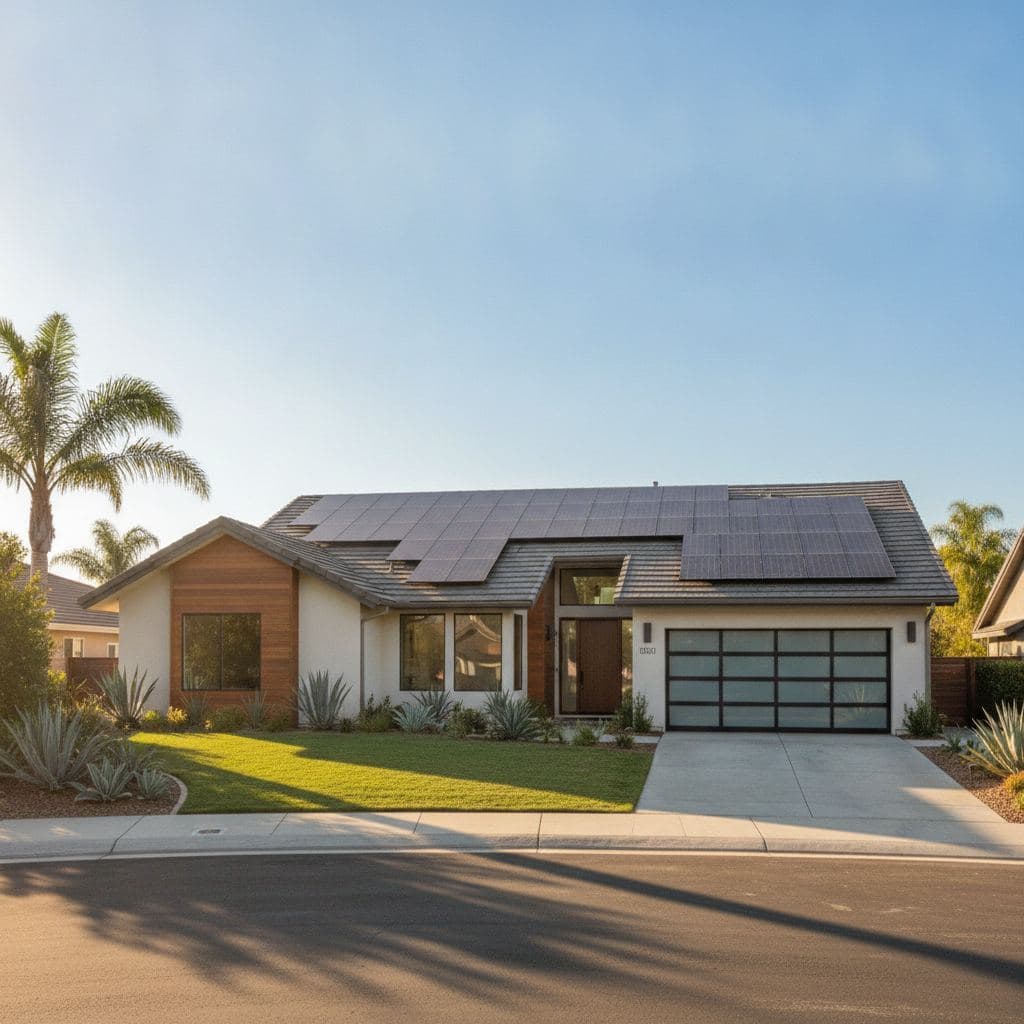
SDG&E's summer on-peak rate on the standard TOU-DR1 plan is approximately 69¢/kWh from 4 to 9 p.m.—and that peak window applies every single day, including Saturdays, Sundays, and holidays. The CPUC Public Advocates Office puts SDG&E's residential rate at 45.5¢/kWh as of June 2026, the highest of California's three big investor-owned utilities. If you live in San Diego County and you're on SDG&E, knowing exactly when that meter runs hot—and how to keep your home off the grid during those hours—is the single most valuable thing you can do for your electricity bill.
Last verified: October 2026 by Helios Energy Global.
The SDG&E peak window: 4–9 p.m., every day
SDG&E's peak hours are 4 to 9 p.m. every day, weekends and holidays included, on every time-of-use plan. The cheapest hours are super off-peak: midnight to 6 a.m. and 10 a.m. to 2 p.m. on weekdays, and midnight to 2 p.m. on weekends.
The critical detail that sets SDG&E apart from SCE and PG&E: the 4 p.m. to 9 p.m. peak applies every day, weekends included, where the other two California utilities exempt weekends. That means there is no "cheap weekend afternoon" to lean on the way an SCE customer might. Every Friday evening, every Saturday, every Sunday—same peak price.
The three pricing tiers on TOU-DR1
| Period | Weekdays | Weekends and holidays |
|---|---|---|
| On-peak | 4–9 p.m. | 4–9 p.m. |
| Off-peak | 6–10 a.m., 2–4 p.m., 9 p.m.–midnight | 2–4 p.m., 9 p.m.–midnight |
| Super off-peak | Midnight–6 a.m., 10 a.m.–2 p.m. | Midnight–2 p.m. |
As of May 2026, the super off-peak windows on SDG&E's residential time-of-use plans include weekdays 10 a.m.–2 p.m. year-round, weeknights midnight–6 a.m., and weekends and holidays midnight–2 p.m. That midday weekday window is the most useful new development for solar owners: panels typically produce their peak output right in the middle of it.
SDG&E TOU-DR1 rates: the numbers (August 2026)
Per SDG&E's Schedule TOU-DR1 Total Rates Table effective August 1, 2026:
| Period | Summer (Jun 1–Oct 31) | Winter (Nov 1–May 31) |
|---|---|---|
| On-peak | 69.135¢ | 61.471¢ |
| Off-peak | 46.421¢ | 53.060¢ |
| Super off-peak | 37.433¢ | 43.719¢ |
| Credit on usage up to 130% of baseline | −10.702¢ | −10.702¢ |
A few things jump out of that table:
- The summer spread is enormous. The gap between super off-peak (~37¢) and on-peak (~69¢) is about 32¢ per kWh. Every kilowatt-hour you shift out of 4–9 p.m. saves roughly a third of a dollar.
- Winter off-peak is higher than summer off-peak. At ~53¢, winter off-peak actually costs more than summer on-peak at some utilities. SDG&E's winter rates are not a relief valve.
- The baseline credit helps—but only up to 130% of your baseline allocation. Heavy users don't get the full benefit.
A modest household using 400 kWh a month, careful to keep load off the 4–9 p.m. window, pays roughly $180 to $210 all-in on TOU-DR1 including the Base Services Charge. A larger home running central AC hard through a San Diego inland summer and using 900 kWh, much of it in the peak window, can pay $450 or more in a peak month.
Every SDG&E residential plan, side by side
| Plan | Who it's for | Super Off-Peak | Off-Peak | On-Peak |
|---|---|---|---|---|
| TOU-DR1 | Standard residential plan | ~27–37¢ | ~36–47¢ | ~58–69¢ |
| TOU-DR2 | Simpler 2-period plan (no midday discount) | — | ~31¢ | ~58¢ |
| DR (standard) | Non-time-of-use, flat tiered | flat ~41¢ (Tier 1) / ~53¢ (Tier 2) | ||
| TOU-ELEC | EV, battery, or heat-pump homes | ~35¢ | ~39¢ | ~72¢ |
| EV-TOU-5 | EV owners (whole home) | ~13¢ | ~50¢ | ~80¢ |
| DR-SES | Households with solar (NEM customers) | ~35–36¢ | ~44–45¢ | ~74¢ |
Summer figures shown; rates are estimates from published tariff sheets and vary by season and baseline tier. Always confirm current rates on SDG&E's pricing plans page before switching.
Key differences to know:
TOU-DR2 simplifies to two periods—on-peak and everything else. TOU-DR2 suits people who want one simple rule: avoid 4 to 9 p.m. EV-TOU-5 suits EV owners who charge overnight, and it is the required rate for the Solar Billing Plan.
TOU-ELEC has a higher on-peak rate (~72¢ summer) but a lower off-peak, making it rewarding for households that can genuinely shift load. TOU-ELEC is best for customers who have electrified homes with battery storage, an EV, and/or an electric heat pump.
EV-TOU-5 has the most extreme spread: EV-TOU-5 is designed for households charging an electric vehicle at home. Its defining feature is a super-off-peak rate of about 12–13¢ per kWh from midnight to 6 a.m. That overnight rate is the lowest available from SDG&E by a wide margin.
DR-SES is a solar-specific option. DR-SES is designed to give Net Energy Metering (NEM) customers with solar an additional plan option, and may be an appropriate choice for those who have solar systems that overgenerate electricity.
Why SDG&E rates are the highest in California
San Diego Gas & Electric has the highest residential electricity rates in the nation—higher than famously expensive states like Hawaii—and in 2026 the average residential rate crossed roughly 45–46¢ per kilowatt-hour, about two and a half times the U.S. average of around 18¢.
SDG&E's bundled residential average rate increased from 45.7¢/kWh to 46.4¢/kWh as a result of rate changes filed in March 2026 (Advice Letters 4791-E and 4791-E-A).
For context, here's where SDG&E sits relative to other Southern California utilities:
| Utility | Avg. residential rate (2026) | Peak rate (4–9 p.m.) | Weekend peak? |
|---|---|---|---|
| SDG&E | ~46¢/kWh | ~69¢/kWh (summer TOU-DR1) | Yes, every day |
| SCE | ~34–35¢/kWh | ~48–58¢/kWh | No (weekdays only) |
| LADWP | ~28¢/kWh (26–31¢ effective) | Lower peak spread | Varies by plan |
| California avg. | ~33¢/kWh | — | — |
LADWP is a municipal utility and is NOT on NEM 3.0. LADWP still offers retail-rate net metering. SDG&E, SCE, and PG&E are investor-owned utilities subject to the CPUC's Net Billing Tariff.
NEM 3.0 and SDG&E: what solar owners must understand
The Net Billing Tariff applies only to the three large investor-owned utilities: SCE (Southern California Edison), PG&E (Pacific Gas & Electric), and SDG&E (San Diego Gas & Electric). If you're on SDG&E and you installed solar after April 14, 2023, you're on NEM 3.0.
Under NEM 2.0, exported solar earned roughly the retail rate, about $0.46/kWh. Under NEM 3.0, exports earn an avoided-cost rate that averages around $0.05–0.08/kWh—a 75–85% reduction.
This changes the entire solar strategy:
Midday solar production is cheap to export. The grid is flooded with solar from 10 a.m. to 2 p.m., so avoided-cost credits during those hours are at their lowest.
The 4–9 p.m. window is where the value lives. Power you use in your home as the panels make it offsets the full retail rate, but power you export to the grid is credited at a low avoided-cost rate that changes hour by hour, not the retail rate.
A battery bridges the gap. Solar charges the battery during the cheap super off-peak midday window; the battery discharges during 4–9 p.m. to replace grid power at ~69¢/kWh. That's the math that makes storage pencil out in San Diego faster than almost anywhere else in the country.
NEM 3.0 cut solar export credits by roughly 75% versus the old NEM 2.0, which lengthened payback for panels-only systems but made solar-plus-battery the new winning strategy. Solar is still worth it in California thanks to very high electricity rates—but in 2026 you design around self-consumption and storage, not exporting to the grid.
For a deeper dive on the billing mechanics, see our guide to NEM 3.0 explained and solar vs. battery under NEM 3.0.
Best SDG&E plan for solar and battery owners
The right plan depends on your equipment and usage pattern:
If you have solar + battery, no EV:
Choose TOU-DR1 if you are not required to be on EV-TOU-5, do not have heavy EV charging needs, can shift usage away from 4–9 p.m. reasonably well, and want a standard plan with clear TOU structure. TOU-DR1's summer spread of ~32¢/kWh between super off-peak and on-peak means a battery cycling once daily delivers meaningful savings every evening.
If you have solar + battery + EV: EV-TOU-5 is worth modeling. Its super off-peak rate of ~13¢/kWh overnight is the cheapest electricity SDG&E offers—ideal for overnight EV charging—while the on-peak rate of ~80¢/kWh makes battery discharge during 4–9 p.m. even more valuable. EV-TOU-5 is the required rate for the Solar Billing Plan.
If you have solar + battery + whole-home electrification (heat pump, etc.):
TOU-ELEC is best for customers who have electrified homes with battery storage, an EV, and/or an electric heat pump. Its lower off-peak rate rewards households that have moved most of their big loads off the peak window.
The universal rule across all plans: get your battery programmed to charge from the grid or solar during super off-peak (especially 10 a.m.–2 p.m. weekdays) and discharge during 4–9 p.m. On TOU-DR1, that single behavior arbitrages a ~32¢/kWh spread every day. On EV-TOU-5, the spread is even wider.
For a full comparison of battery options and installed costs, see our battery storage guide. To see how a system sized for your home performs on these rates, run a custom design.
Practical tips to lower your SDG&E bill under TOU pricing
Shift the big loads:
- Dishwasher and laundry: run after 9 p.m. or before 2 p.m. on weekdays.
- Pool pump: program it for 10 a.m.–2 p.m. (super off-peak) or overnight.
- EV charging: midnight–6 a.m. on any plan; 10 a.m.–2 p.m. if you're home and on TOU-ELEC or EV-TOU-5.
- Pre-cooling: run the AC to 72°F by 3:45 p.m., then let the house coast through the peak window.
Set your battery to peak-shave: Most home batteries—Tesla Powerwall 3, Enphase IQ Battery 10C, FranklinWH aPower 2—have a time-based control mode. Set reserve to charge from solar or grid during super off-peak and discharge from 4 to 9 p.m. On SDG&E's rates, this is not optional optimization; it's the core of the economics.
Check whether you're on the right plan: SDG&E offers a rate comparison tool at sdge.com. If you added an EV, a battery, or a heat pump in the last year and haven't revisited your rate plan, you may be leaving money on the table. There is no fee to switch plans.
SGIP note: California's Self-Generation Incentive Program (SGIP) residential battery rebate budgets are waitlisted in 2026. Equity budget tiers may still have availability for qualifying low-income households—check directly with CPUC's SGIP administrator for current status.
Frequently asked questions about SDG&E time-of-use rates
What are SDG&E's peak hours in 2026?
SDG&E's on-peak hours are 4 p.m. to 9 p.m., every day of the week including weekends. The cheapest hours—super off-peak—run midnight to 6 a.m. and again from 10 a.m. to 2 p.m. on weekdays. The expensive window—on-peak—is 4 p.m. to 9 p.m. every day, including weekends. There are no "off-peak weekends" at SDG&E the way there are at SCE or PG&E.
What is SDG&E's average rate per kWh in 2026?
SDG&E's bundled residential average rate increased to approximately 46.4¢/kWh following rate changes filed in March 2026. That blended average includes delivery and generation for customers who buy both from SDG&E. On TOU-DR1, what you actually pay per kWh depends heavily on when you use power—from ~37¢ in super off-peak to ~69¢ at the summer peak.
Does SDG&E charge peak rates on weekends?
Yes—and this is the single most important difference between SDG&E and the other major California utilities. Unlike PG&E's E-TOU-D, SMUD, or LADWP, which drop the peak on weekends, SDG&E charges its on-peak price from 4 to 9 p.m. on Saturdays, Sundays, and holidays. Plan accordingly: weekend afternoons are not free time for high-draw appliances.
What is the best SDG&E rate plan for a solar home with a battery?
For most solar-plus-battery households without an EV, TOU-DR1 is the straightforward starting point—its structure is clean, and a battery programmed to discharge during 4–9 p.m. captures the full ~32¢/kWh summer spread. If you also have an EV, model EV-TOU-5: its ~13¢ overnight super off-peak rate for charging, combined with ~80¢ on-peak discharge value for the battery, produces the widest arbitrage spread SDG&E offers. Solar customers with battery storage can save by using stored energy during on-peak hours.
How does NEM 3.0 change the solar math for SDG&E customers?
California's net-billing rules cut solar export credits by roughly 75–85%, so pairing your system with a battery is now what protects your savings. Midday solar that would have earned ~46¢/kWh under NEM 2.0 now earns ~5–8¢/kWh if exported. A battery stores that midday solar and discharges it at 4–9 p.m., replacing grid power at ~69¢/kWh. The battery doesn't just add backup—it's what makes the economics work under NEM 3.0.
Is SDG&E really the most expensive utility in California?
As of March 2026, the CPUC's Public Advocates Office puts average residential rates at 34.5¢/kWh for SCE, 33.7¢ for PG&E, and 45.7¢ for SDG&E. SDG&E's rate is roughly 35% higher than the other two big California IOUs. For solar and battery owners, that's actually an advantage: every kilowatt-hour of self-consumption is worth more, and the payback math on storage is faster in San Diego than almost anywhere else in the state.
What is the super off-peak rate on SDG&E and when does it apply?
On TOU-DR1, the summer super off-peak rate is approximately 37¢/kWh and the winter rate is approximately 44¢/kWh, per SDG&E's Schedule TOU-DR1 effective August 1, 2026. The super off-peak windows are weekdays 10 a.m.–2 p.m. year-round, weeknights midnight–6 a.m., and weekends and holidays midnight–2 p.m. On EV-TOU-5, the overnight super off-peak rate drops all the way to ~13¢/kWh—by far the lowest SDG&E rate available.
Next steps
- Book a free consultation and custom design — we'll model your home's usage against SDG&E's TOU rates and show you exactly what a solar + battery system would do to your bill.
- See battery options and installed costs — Tesla Powerwall 3, Enphase IQ Battery 10C, FranklinWH aPower 2, and more.
- Understand NEM 3.0 in plain English — the full breakdown of how SDG&E credits your solar exports.
- Solar vs. battery under NEM 3.0 — when panels alone are enough, and when storage changes the math.
- See our Southern California service areas — we serve San Diego County, Los Angeles, Orange County, and the Inland Empire.
- Learn about solar panel costs — installed system costs and what drives the per-watt price in Southern California.
Sources
- SDG&E Schedule TOU-DR1 Total Rates Table, effective 8/1/2026 — August 1, 2026
- SDG&E Bundled Electric Rate Change Alert, April 2026 (Advice Letters 4791-E and 4791-E-A) — April 1, 2026
- SDG&E Residential Pricing Plans page (sdge.com/residential/pricing-plans) — August 1, 2026
- CPUC Public Advocates Office SDG&E residential rate (via ratereliefca.com, citing Cal Advocates June 2026 data) — September 23, 2026
- SDG&E Total Electric Rates page (sdge.com/total-electric-rates) — August 1, 2026
More guides
Best Solar Companies in Culver City, CA (2026): An Honest, Numbers-First Guide
Culver City homeowners face a unique solar decision: the city sits at the edge of two utility territories, and the 30% federal tax credit expired at the end of 2025. This guide breaks down the best local installers, real 2026 pricing, and how net metering actually works here.
ReadHow Much Does a 6kW Solar System Cost in California in 2026?
A 6kW solar system costs $15,000–$21,000 installed in California in 2026, with no federal tax credit available — payback runs 7–12 years depending on your utility.
ReadDo solar panels increase home value in California in 2026?
Owned solar systems in California typically add 3–4% to resale value, and the state's active solar property-tax exclusion means that added value is not reassessed.
ReadGet a free consultation and custom design.
No pressure, no obligation — the owner reviews every design we send.