How many watts does it take to run a house in 2026?
A typical Southern California home draws 1,000–1,500W at baseline and 3,000–7,000W when the AC is running — here's what that means for solar sizing and battery backup.
By Taylor Crouse — Founder, Helios Energy GlobalUpdated
Quick answer
- A typical Southern California home draws 1,000–1,500W continuously at baseline (lights, fridge, electronics, standby loads).
- Add central air conditioning and peak demand jumps to 3,000–7,000W or more depending on system size and home square footage.
- A Powerwall-class battery outputs roughly 11.5kW continuous — enough for most whole-home loads, but 240V appliances stack fast and can push you to the limit.
- Solar systems for SoCal homes are typically sized 6–12 kW to offset those loads, at roughly $2.50–$3.50 per watt before any incentives.
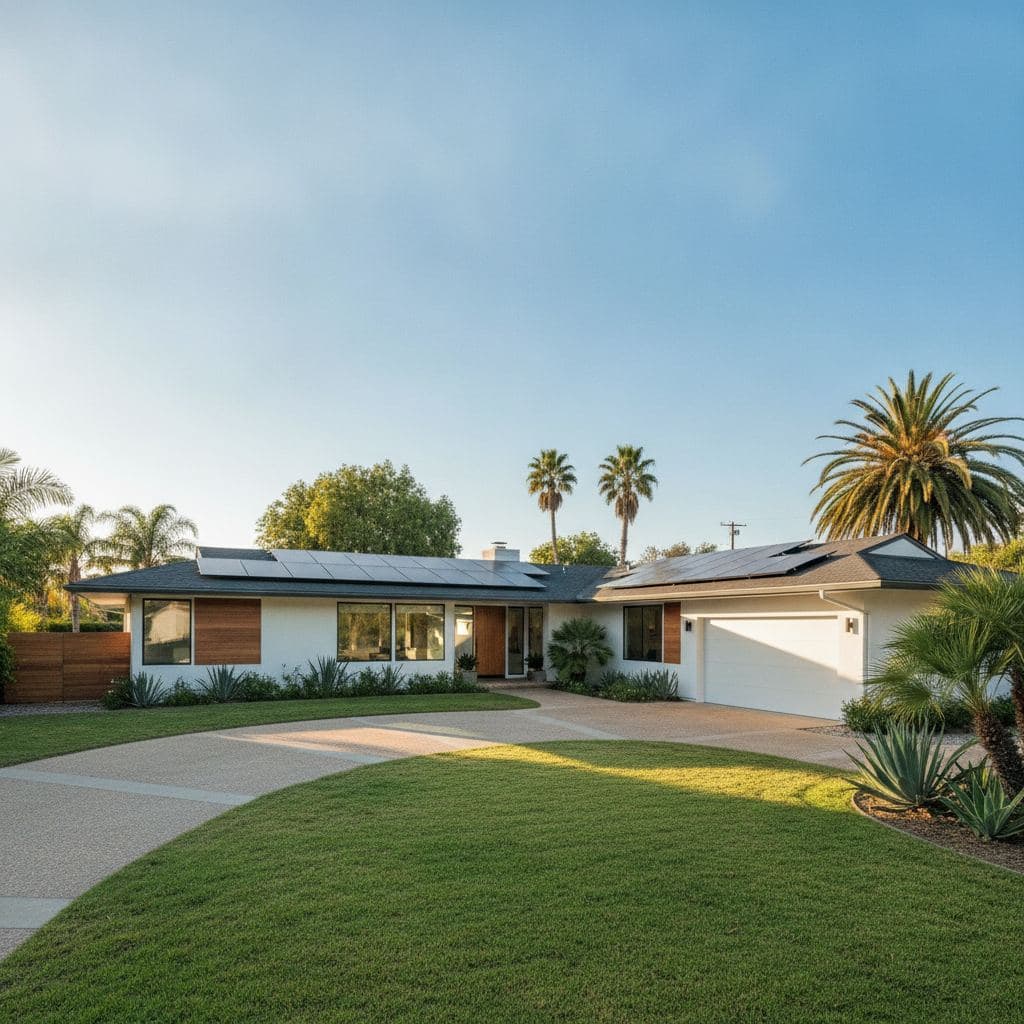
A typical Southern California house draws somewhere between 1,000 and 1,500 watts when things are calm — think refrigerator humming, a few lights on, a TV, and a handful of devices on standby. Flip on a 3-ton central air conditioner and you're suddenly pulling 3,000–5,000 additional watts, and if you also run the pool pump, a load of laundry, and an EV charger at the same time, your instantaneous demand can easily clear 7,000–10,000 watts.
Last verified: July 2026 by Helios Energy Global.
Understanding your home's wattage demand is the foundation of every solar and battery conversation. It determines how large a solar array you actually need, how long a battery will last during an outage, and whether a single battery unit is enough or you need two.
Watts vs. kilowatt-hours: the distinction that matters
Before diving into appliance numbers, it's worth being precise about two terms that get mixed up constantly.
- Watts (W) and kilowatts (kW) measure power — the rate at which electricity is being used right now, like miles per hour on a speedometer.
- Kilowatt-hours (kWh) measure energy — the total amount consumed over time, like the odometer reading.
A 3,000W (3 kW) air conditioner running for two hours uses 6 kWh of energy. Your utility bill is denominated in kWh; your solar inverter and battery are rated in kW (power output) and kWh (storage capacity). Both numbers matter, and they answer different questions.
For how many kWh per day is normal for a Southern California home, see our companion guide: How many kWh per day is normal for Southern California?
Per-appliance wattage: the numbers that drive the math
The table below covers the loads that most dramatically affect solar sizing and battery runtime decisions. "Running watts" is steady-state draw; "surge watts" is the brief spike at startup (motors and compressors pull 2–3× their running draw for a fraction of a second — your battery and inverter must handle this peak, not just the average).
| Appliance | Running watts (est.) | Surge watts (est.) | Notes |
|---|---|---|---|
| Central AC – 2-ton (24,000 BTU) | 2,000–2,500W | 4,500–6,000W | Most common in SoCal condos/smaller homes |
| Central AC – 3-ton (36,000 BTU) | 2,800–3,500W | 6,000–8,000W | Typical 1,500–2,500 sq ft SoCal house |
| Central AC – 5-ton (60,000 BTU) | 4,500–6,000W | 10,000–14,000W | Larger homes; may exceed single-battery output |
| Refrigerator (modern) | 100–200W | 400–800W | Runs ~30–50% of the time |
| Electric water heater | 3,500–5,500W | Same (resistive) | Heat pump water heaters: 500–1,000W running |
| Dishwasher | 1,200–1,800W | ~2,000W | Heating element is the main draw |
| Clothes dryer (electric) | 4,000–6,000W | ~6,500W | One of the largest 240V loads |
| Pool pump (1 HP) | 750–1,000W | 2,000–3,000W | Variable-speed pumps can cut this by 50–70% |
| Level 2 EV charger (48A) | ~11,500W | ~11,500W | Dedicated 240V/60A circuit; huge continuous load |
| Level 2 EV charger (32A) | ~7,700W | ~7,700W | More common residential install |
| Lighting (whole home, LED) | 200–600W | Minimal | LED retrofit dramatically reduces this |
| TV + streaming devices | 100–300W | Minimal | Depends on screen size and count |
| Home office (2 computers + monitors) | 200–500W | Minimal | |
| Baseline "always-on" loads combined | 1,000–1,500W | — | Fridge + lights + electronics + standby |
All figures are estimates based on manufacturer data ranges and EIA residential consumption data. Actual draw varies by equipment age, efficiency rating, thermostat settings, and usage habits.
Whole-house kilowatts at a glance
If you only want one number for each planning question, use these — derived from the per-appliance figures above and from what we see on interval data across Southern California homes:
| Question | Typical answer | Why it matters |
|---|---|---|
| Baseline draw, nothing "big" running | 1,000–1,500 W | Sets the floor a battery must carry overnight |
| Peak draw with central AC + one 240 V appliance | 5,000–8,000 W | Must sit under a battery's continuous rating (Powerwall 3: 11.5 kW) |
| Motor-start surge (3-ton AC compressor) | 15,000–25,000 W for a fraction of a second | Why locked-rotor amps (LRA) matter more than nameplate watts |
| Daily energy, typical SoCal home | 20–35 kWh/day | Sets solar system size and battery capacity |
| Generator or battery to "run the house" | 8–12 kW continuous | Whole-home backup in one Powerwall 3 works for most homes under ~3,000 sq ft |
Watts decide whether an appliance can run; kilowatt-hours decide how long. The companion guides on how many kWh per day is normal and how many kWh per month is normal cover the energy side, and what size battery backs up a house puts the two together.
What this means for solar sizing in Southern California
Solar is sized in kilowatts of panel capacity (kW-DC), not in running watts, because the goal is to produce enough energy (kWh) over a day to offset what you consume — not necessarily to match your peak instantaneous demand (that's the battery's job during outages).
A rough sizing framework for SoCal:
- Average daily usage for a Southern California home runs roughly 20–35 kWh/day, higher in summer with AC.
- Southern California gets excellent solar production — Los Angeles averages roughly 5.5–6 peak sun hours per day (NREL PVWatts data for the region).
- A 7 kW system producing ~5.8 peak sun hours × 7 kW × ~80% real-world derate = roughly 32–33 kWh/day in summer — a reasonable fit for a mid-sized home.
- Most residential installs in our service area land between 6 kW and 12 kW, at approximately $2.50–$3.50 per watt installed before incentives.
The utility matters a lot here. If you're an SCE customer, you're on NEM 3.0 (the CPUC Net Billing Tariff), which pays you significantly less for exported solar than the old retail rate — making battery storage far more valuable, because you want to use your solar production rather than export it cheaply. LADWP customers still receive retail-rate net metering, which changes the battery math considerably.
See our NEM 3.0 explainer and solar vs. battery under NEM 3.0 for the full breakdown.
What this means for battery backup: the wattage ceiling
This is where wattage — not just kWh — becomes critical. A battery's power output rating determines what it can run simultaneously during an outage, regardless of how much energy is stored.
A single Powerwall-class battery (the most common residential unit) outputs approximately 11.5 kW continuous and handles surge loads up to around 22 kW for a few seconds. That sounds like a lot, but look at the numbers:
| Scenario | Approximate load | Within single battery? |
|---|---|---|
| Essentials only: fridge + lights + phone charging | ~800–1,200W | ✅ Comfortably |
| Essentials + 2-ton AC | ~3,000–3,700W | ✅ Yes |
| Essentials + 3-ton AC + pool pump | ~4,500–5,500W | ✅ Yes, but watch surge |
| Essentials + 3-ton AC + Level 2 EV charger (48A) | ~15,000–16,000W | ❌ Exceeds single unit |
| Full home with 5-ton AC + dryer + EV charger | ~20,000W+ | ❌ Needs 2+ batteries |
The practical takeaway: Most SoCal homeowners can run their critical loads — AC, refrigerator, lighting, devices — on a single battery. Running a Level 2 EV charger simultaneously with air conditioning typically requires either a second battery or a smart load-management panel that prevents simultaneous operation.
For whole-home backup planning, visit our whole-home backup page. To model your specific appliances and see estimated runtime interactively, use our battery runtime calculator.
SoCal-specific factors that push demand higher
A few things make Southern California homes particularly demanding:
Heat and AC runtime. Inland areas (San Bernardino, Riverside, the San Fernando Valley) routinely hit 100°F+ in summer, pushing AC runtime to 8–12 hours per day. Coastal homes (Santa Monica, Manhattan Beach) may barely run AC at all. The difference in annual kWh consumption between an inland and coastal home of the same size can be 30–50%.
Pool pumps. Southern California has one of the highest pool-per-capita rates in the country. A single-speed 1 HP pump running 8 hours draws roughly 6–8 kWh/day — equivalent to running your refrigerator for a month. Upgrading to a variable-speed pump before sizing solar can meaningfully reduce the system you need.
EV adoption. SCE territory has among the highest EV ownership rates in the U.S. A single EV charging overnight at Level 2 (32A) adds roughly 30–40 kWh/night to a home's consumption — sometimes doubling total household usage and requiring a meaningfully larger solar array.
SCE's 4–9 PM TOU peak. Under SCE's standard time-of-use rates (approximately 34–35¢/kWh on-peak vs. ~18–22¢/kWh off-peak, per SCE rate filings), running high-wattage loads during the afternoon peak is expensive. A battery charged by solar and discharged during that window is the primary financial tool for SCE customers under NEM 3.0.
LADWP customers face a different calculus: average rates around 28¢/kWh with retail-rate net metering still in place. The urgency for battery storage is lower, but the economics of solar alone are strong.
How to estimate your own home's wattage demand
You don't need to add up every appliance manually. Three practical approaches:
Check your utility bill. SCE and LADWP both show monthly kWh usage. Divide your highest summer month by 30 to get average daily kWh, then divide by 24 for a rough average kW draw. This won't show peaks, but it anchors the conversation.
Use a smart panel or energy monitor. Devices like a smart electrical panel or a clip-on CT monitor give you real-time and historical watt readings by circuit. A 2–4 week monitoring period before a solar consultation produces the most accurate sizing data.
Ask us to run a load analysis. During a free consultation, we walk through your bill history, major appliances, and any planned changes (EV, pool, additions) to produce a site-specific load estimate before recommending a system size.
Visit our solar panel cost page for current pricing ranges, or explore solar options to understand panel and inverter choices.
Frequently asked questions about home wattage and solar sizing
How many watts does a 2,000 square foot house use?
Square footage alone doesn't determine wattage — the appliances inside do. A 2,000 sq ft SoCal home with central AC, a pool pump, and an EV charger might peak at 12,000–15,000W, while the same footprint with a mini-split, no pool, and no EV might peak at 4,000–5,000W. Use your utility bill's kWh data as the more reliable starting point.
Can a single battery run my whole house during an outage?
For most loads, yes — a Powerwall-class battery outputting ~11.5kW continuous can handle AC, refrigerator, lighting, and most plug-in devices simultaneously. The exception is stacking large 240V loads: running a Level 2 EV charger and central AC and an electric dryer at the same time can exceed a single unit's output. A second battery or a smart load controller solves this. See our batteries page for configuration options.
What's the difference between watts and kilowatt-hours on my solar proposal?
Watts (or kilowatts) measure power — how fast electricity flows at a given moment. Kilowatt-hours measure energy — the total amount consumed or produced over time. Your solar proposal will show panel capacity in kW-DC and estimated annual production in kWh. Both numbers matter: kW tells you peak output, kWh tells you whether you'll offset your annual bill.
Does running a pool pump really affect my solar system size?
Yes, meaningfully. A conventional single-speed 1 HP pool pump running 8 hours/day adds roughly 6–8 kWh/day to your home's consumption. Over a year, that's 2,200–2,900 kWh — enough to require an additional 1–2 solar panels to offset. Upgrading to a variable-speed pump first, then sizing solar, is often the more cost-effective sequence.
How does SCE's TOU peak affect which appliances I should run on battery?
SCE's peak window runs roughly 4–9 PM at approximately 34–35¢/kWh (per current SCE rate filings). The highest-wattage appliances you can shift out of that window — dishwasher, laundry, EV charging — save the most money. Under NEM 3.0, solar panels produce during the day but export at low rates; a battery stores that production and discharges it during the 4–9 PM peak, replacing expensive grid power with free solar energy.
Is SGIP battery rebate money available in 2026?
The Self-Generation Incentive Program (SGIP) residential battery incentive is waitlisted as of 2026 — budget rounds have been exhausted and new applicants are placed on a waitlist with no guaranteed timeline for funding. We track SGIP status and will notify customers if new allocations open. Don't size your battery decision around SGIP availability right now.
How large a solar system do I need if I'm adding an EV?
A Level 2 EV charger (32A) adds roughly 30–40 kWh per night of charging, depending on the vehicle and how depleted the battery is. That's a substantial increase — often 50–100% of a home's prior daily consumption. For an SCE customer adding an EV, we typically recommend sizing the solar array to cover both existing home usage and projected EV miles, then pairing with battery storage to avoid charging from the grid during the 4–9 PM peak.
Next steps
- Book a free consultation and custom design — we'll run a load analysis specific to your home and utility, and size solar and battery to your actual demand.
- Estimate your savings with our design tool — enter your address and bill for a preliminary system size and savings projection.
- See battery runtime estimates for your appliances — interactive calculator for outage planning.
- Explore battery storage options — single vs. stacked configurations, output ratings, and backup scenarios.
- Understand your solar options — panel types, inverter choices, and what goes into a SoCal install.
- See current solar pricing — 2026 cost ranges before and after available incentives.
- Read: How many kWh per day is normal for Southern California? — the energy companion to this wattage guide.
- Whole home battery backup — cost and how many batteries it takes to run everything during an outage.
More guides
What are the best solar panels in 2026?
An honest tier list of 2026's top solar panels—REC, Qcells, Panasonic, Silfab, Canadian Solar, and Tesla—ranked by efficiency, degradation, warranty, and installed cost per watt.
ReadBest Solar Companies in San Dimas, CA (2026): An Honest Local Guide
A straight-talking, numbers-first guide to the top solar installers serving San Dimas, CA in 2026 — covering SCE net billing, local roof types, battery storage, and how to compare quotes without getting burned.
ReadThe 10 Best Solar Companies in Mission Viejo, CA (2026): Tile Roofs, HOAs, and NEM 3.0 Done Right
Mission Viejo's master-planned tile roofs, HOA review process, and SCE's NEM 3.0 billing rules make installer selection more consequential than most Orange County cities. Here's an honest, numbers-first look at who's doing it right in 2026.
ReadGet a free consultation and custom design.
No pressure, no obligation — the owner reviews every design we send.