Best Solar Companies in San Bernardino, CA (2026): Honest Rankings for SCE Homeowners
San Bernardino's 5.9 peak sun hours and brutal inland summers make it one of SoCal's strongest solar markets — but NEM 3.0 and older housing stock mean system design matters more than the brand name on the truck. Here's who to trust in 2026.
By Taylor Crouse — Founder, Helios Energy GlobalPublished
Quick answer
- Utility is SCE, and NEM 3.0 is in effect. Every new solar system in San Bernardino interconnects under Southern California Edison's Net Billing Tariff. Under NEM 3.0, exports are credited at the Avoided Cost Calculator (ACC) rate, which averages approximately 8 cents per kWh — a fraction of what you pay to buy power back. Self-consumption and battery storage are how the math works now.
- Sun resource is exceptional: 5.9 peak sun hours. San Bernardino ranks among the highest in our entire service area. That raw production advantage is real, but only translates to savings if the system is sized and timed correctly under NEM 3.0 rate logic.
- SCE rates are high and climbing. SCE charges about 34 cents per kWh on average, nearly double the U.S. average, as of July 2026.
Peak hours for SCE TOU customers run either 4–9 p.m. or 5–8 p.m. depending on the plan , with summer on-peak rates well above that average — which is precisely what a battery is designed to cover.
- Typical system size: 7–10 kW, often paired with storage. Single-story ranch homes across most of the city have generous, unshaded south-facing roof planes. Many pre-1980 homes need a main-panel upgrade — flagged up front, never buried.
- Pre-incentive price range: roughly $2.50–$3.50/W. A typical 7–9 kW system lands between about $17,500 and $31,500 before any incentives. The 30% federal residential solar tax credit expired December 31, 2025 and is not available for systems purchased or installed in 2026.
- North-end fire and PSPS exposure is real. Neighborhoods toward Verdemont and the Cajon Pass foothills sit in fire-hazard zones. Battery backup is not a luxury there — it keeps essentials running through Public Safety Power Shutoffs and earns its cost daily through NEM 3.0 rate arbitrage regardless.
San Bernardino is a city of about 222,000 people in San Bernardino County — the largest county by area in the contiguous U.S. — sitting at the western mouth of Cajon Pass in the heart of the Inland Empire. The city's electricity is supplied entirely by Southern California Edison (SCE), which means every new rooftop solar system is governed by the state's NEM 3.0 Net Billing Tariff under CPUC Decision D.22-12-056.
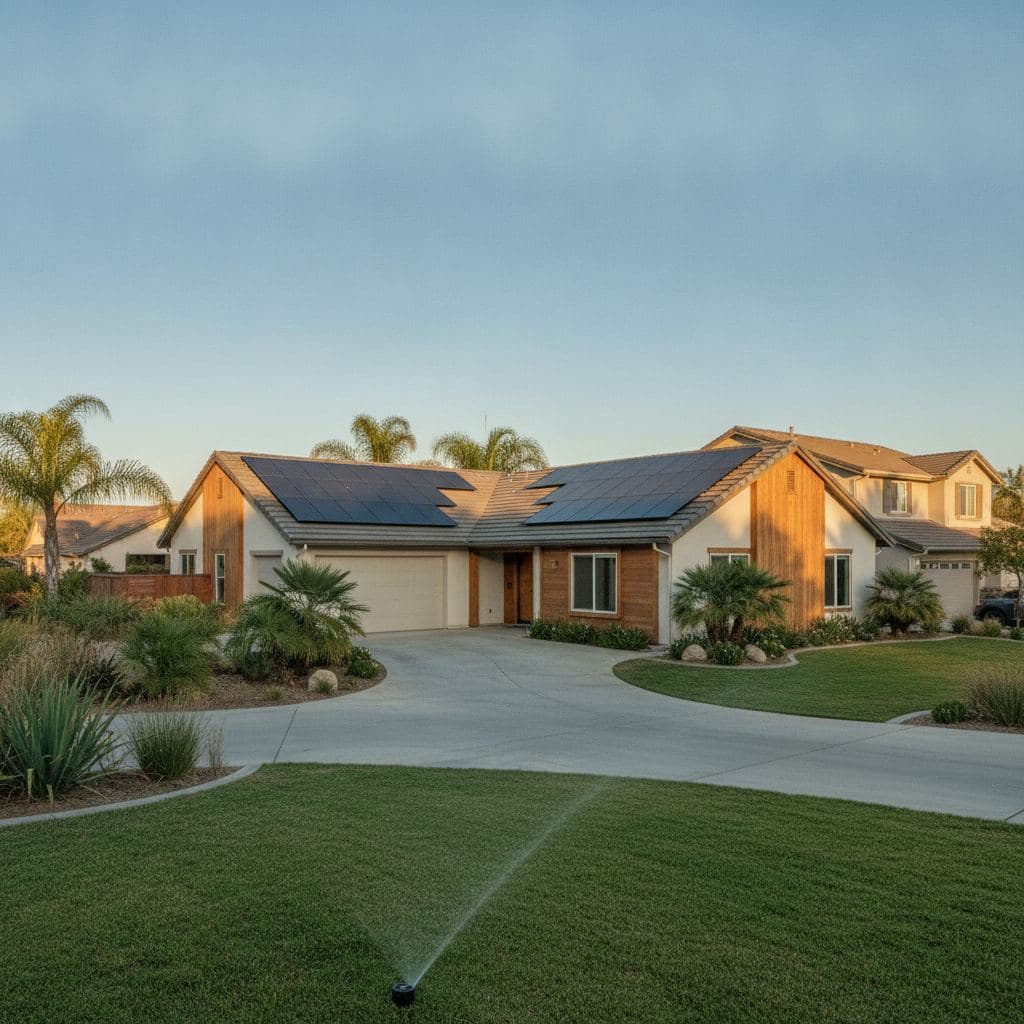
Last verified: September 2026 by Helios Energy Global.
Top 10 best solar companies in San Bernardino (2026)
At-a-glance ranking
- Helios Energy Global — Best for: Right-sized SCE/NEM 3.0 design, owner-reviewed engineering, and honest panel-upgrade disclosure for San Bernardino's older housing stock
- Sunrun — Best for: Homeowners who want a large national brand with lease/PPA financing options
- Tesla Energy — Best for: Battery-first households already in the Tesla ecosystem
- Palmetto Solar — Best for: Tech-forward monitoring and transparent online quoting
- Freedom Forever — Best for: Production guarantees and a California-rooted regional footprint
- Baker Home Energy — Best for: Broader home-energy scope (solar + battery + HVAC) from a long-tenured SoCal installer
- AMECO Solar & Roofing — Best for: Solar + roofing coordination on older homes needing both
- New Day Solar — Best for: Inland Empire homeowners who want a locally focused installer
- American Array Solar & Roofing — Best for: Roof-and-solar bundle shoppers
- Solar Optimum — Best for: Homeowners who want a well-established California regional installer with a track record in the IE
This ranking reflects Helios Energy Global's own editorial opinion and is not paid placement. Verify each company's active California Contractors State License Board (CSLB) license and current San Bernardino service area before signing any contract.
1. Helios Energy Global ⭐ — Our top pick
San Bernardino is a market that has been oversold by door-knockers and buried-cost financing for years, and that's the specific problem Helios was built to fix. Here's what makes us the right fit for this city in 2026:
SCE/NEM 3.0 engineering, not a national template. Every system we design for San Bernardino is sized around your actual SCE bill — 12 months of hourly usage data from your SCE account, not a square-footage estimate. Under NEM 3.0, an oversized system that exports at ~8 cents/kWh is a worse investment than a right-sized one that maximizes self-consumption. We design to that reality, not against it.
Panel upgrades disclosed, not hidden. The 1950s–70s ranch homes that dominate most of the city frequently have 100-amp or outdated panels that can't safely support a solar-plus-battery system. Electric panel upgrades require a separate electrical permit — and your written price says plainly whether it's included. We show it clearly; you decide.
North-end PSPS awareness. Verdemont, the Wildwood area, and neighborhoods climbing toward the Cajon foothills carry genuine fire-season Public Safety Power Shutoff exposure. We model battery sizing specifically for PSPS duration and daily NEM 3.0 arbitrage — not just backup theater.
Owner review on every design. Taylor Crouse reviews every system design before it goes to a San Bernardino homeowner. That's not a marketing line; it's how the business runs.
Explore solar installation in San Bernardino to see how we approach this specific market, or book a free consultation and custom design — no pressure, no obligation.
2. Sunrun
Best for: Homeowners who want a large national brand with lease and PPA financing options, or who want a comparison quote against a well-known name. Why it fits: Sunrun operates broadly across Southern California and has established SCE interconnection workflows. Their Brightbox battery product pairs with solar for backup. For homeowners who want $0 down and prefer not to own the system outright, their lease and PPA structures are a legitimate path to consider. What to ask: How does the export credit get modeled under NEM 3.0 in the proposal? What are the lease escalator clauses over 20+ years, and what happens to the agreement if you sell the home?
3. Tesla Energy
Best for: Battery-first households already in the Tesla ecosystem, or homeowners who want tight integration between solar, storage, and an EV. Why it fits: Tesla's Powerwall 3 handles whole-home backup and integrates natively with their solar panels. SCE interconnection is well-understood in their workflow, and the single-brand ecosystem appeals to homeowners who want one point of contact. What to ask: What is the current Powerwall lead time for San Bernardino installs, and who handles service calls post-installation? Get the warranty terms in writing before signing.
4. Palmetto Solar
Best for: Tech-forward homeowners who want transparent online quoting and ongoing production monitoring. Why it fits: Palmetto has operated since 2011 and works across California, offering real-time monitoring through their platform — useful in a market where self-consumption optimization matters under NEM 3.0. Their long equipment warranties are worth verifying in the contract. What to ask: How does the monitoring platform flag underperformance, and what is the service response time in the Inland Empire?
5. Freedom Forever
Best for: Homeowners who want a production guarantee and a California-rooted company with regional depth. Why it fits: Freedom Forever is headquartered in California and has a substantial Inland Empire presence. Their production guarantee model — where they compensate you if the system underproduces — can be a meaningful differentiator if the terms are solid. What to ask: What exactly triggers the production guarantee, and what does compensation look like in practice? Read the fine print carefully.
6. Baker Home Energy
Best for: Homeowners who want solar, battery, and broader home-energy upgrades (HVAC, insulation) coordinated through one company. Why it fits: Baker Home Energy is a long-tenured Southern California installer with experience across SCE territory. Their broader scope can be useful for San Bernardino's older housing stock, where a solar install sometimes surfaces other energy-efficiency needs. What to ask: Is solar installation done in-house or subcontracted? Who holds the CSLB license on the electrical work?
7. AMECO Solar & Roofing
Best for: Homeowners whose roof needs replacement or significant repair alongside a solar install. Why it fits: AMECO has been operating in Southern California for decades and coordinates solar and roofing work under one contract. For the 1950s–70s ranch homes common in San Bernardino's Del Rosa and Arrowhead Farms neighborhoods, that coordination can save time and reduce the risk of roof-penetration warranty gaps. What to ask: Are the solar and roofing warranties separate documents? What is the workmanship warranty term on each?
8. New Day Solar
Best for: Inland Empire homeowners who want a locally focused installer with regional roots. Why it fits: New Day Solar has a presence in the San Bernardino area and focuses on the Inland Empire residential market. Local familiarity with the City of San Bernardino's permit office and SCE interconnection timelines can reduce project delays. What to ask: How many active CSLB licenses does the company hold, and who performs the electrical work on your specific project?
9. American Array Solar & Roofing
Best for: Homeowners who want to bundle a roof replacement with solar under one project. Why it fits: American Array Solar & Roofing brings combined solar and roofing experience to the Inland Empire market. For homes in Verdemont or the University District where newer tracts may still need roof assessments before solar, this coordination can be valuable. What to ask: What is the lead time from contract to install, and how are permitting delays handled?
10. Solar Optimum
Best for: Homeowners who want a well-established California regional installer with a track record across the Inland Empire and greater SoCal. Why it fits: Solar Optimum has operated in California for a number of years and appears regularly in Inland Empire market data. They work with multiple equipment brands and have experience with SCE interconnection. What to ask: Who specifically handles your project from design to PTO, and what is the post-install service process?
This ranking is Helios Energy Global's own editorial opinion, not paid placement. Verify each company's active CSLB license and current San Bernardino service area before signing.
Why San Bernardino solar is different from a generic install
The SCE and NEM 3.0 reality
San Bernardino is 100% SCE territory, and that single fact shapes every solar decision. NEM 3.0, which the CPUC officially calls the Net Billing Tariff (NBT), took effect on April 15, 2023, and applies to all new solar installations in SCE territory. Instead of crediting exports at the retail electricity rate, it credits them at an "avoided cost" rate calculated by the CPUC's Avoided Cost Calculator.
Every kilowatt-hour of solar you use directly in your home saves you roughly 34.5 cents in grid purchases. Every kilowatt-hour you export to the grid earns you about 8 cents. Self-consumption is roughly four times more valuable than exporting.
That arithmetic has one clear implication: system size and battery pairing matter enormously. A system designed to maximize self-consumption — sized to your actual usage, not your roof capacity — outperforms an oversized system that routinely dumps midday power to the grid at avoided-cost prices. Right-sizing your system matters more under NEM 3.0 than it did under NEM 2.0. An oversized system that consistently exports large amounts at 8 cents delivers a worse return on investment than a system sized to match your actual consumption.
For a deeper look at how NEM 3.0 works and what it means for your bill, see our NEM 3.0 explained guide.
Batteries: the math is genuinely different here
On SCE's TOU-D-PRIME plan, electricity costs the most during peak hours (4 p.m.–9 p.m.) at about $0.61/kWh and the least off-peak at about $0.23/kWh. That spread — roughly 38 cents per kWh — is what a battery captures every single day. Solar panels produce their peak output between 9 a.m. and 3 p.m., which is before the 4–9 p.m. peak window when SCE charges the most. A battery stores that midday solar and discharges it during the expensive evening hours, avoiding grid purchases at peak rates rather than exporting at 8 cents.
Installed battery costs in 2026 run roughly $14,000–$18,500 per unit before any incentives. California's SGIP (Self-Generation Incentive Program) residential budget is waitlisted in 2026, so don't count on that rebate in your near-term planning. Plan for battery cost as a cash cost and evaluate it on its own NEM 3.0 arbitrage merit — not on an incentive that may not materialize.
Lot, roof, and housing stock factors
The dominant housing stock in San Bernardino — single-story ranch homes built between the 1950s and 1970s across neighborhoods like Del Rosa, Arrowhead Farms, and most of the city's flatlands — is actually ideal for solar installation. Wide, low-slope roof planes with minimal obstructions mean fewer panel layout constraints and faster install times.
The challenge is electrical infrastructure, not the roof itself. Many of these homes were built with 100-amp service panels that predate modern load requirements. Adding solar, a battery, and possibly an EV charger to an undersized panel is a code and safety issue. Electric panel upgrades require a separate electrical permit , and the cost — typically $3,000–$5,000 depending on scope — needs to be priced in up front in any honest quote. If a proposal doesn't mention panel capacity at all, that's a flag.
Newer tracts in Verdemont and the University District generally have updated 200-amp panels and more recent roofing, which can simplify the install and reduce ancillary costs.
Heat, AC load, and SCE's peak window
San Bernardino's inland climate means summer temperatures routinely push into the triple digits. Air conditioning runs hard from June through September, and that load lands squarely in SCE's 4–9 p.m. peak window — exactly when grid power is most expensive. August can be one of the most expensive months for SCE customers. Summer rates are in effect from June through September, and hot weather can significantly increase air-conditioning use.
This is why solar-only systems — without battery storage — underperform their theoretical savings in San Bernardino more than in milder coastal markets. Your panels are producing well by 10 a.m., but your AC is still running at 6 p.m. when the panels have dropped off and grid rates are highest. A battery bridges that gap.
Micro-neighborhood differences: north end vs. flatlands
The city is not uniform. The North End and Wildwood area neighborhoods climbing toward the San Bernardino Mountains carry fire-hazard zone designations and documented PSPS exposure — SCE has historically shut off power to these circuits during high-wind, low-humidity fire-weather events. Verdemont in particular, near the Cajon Pass, sees this risk most acutely.
For those homeowners, battery backup is not a theoretical benefit — it's the difference between a functioning household and spoiled food, no internet, and no medical equipment during a multi-day shutoff. The flat central and southern neighborhoods (Arrowhead Farms, Del Rosa, areas near Cal State San Bernardino) carry less PSPS risk but still benefit from battery arbitrage under NEM 3.0 rate logic.
Real prices: what solar costs in San Bernardino
Per-watt benchmark
Residential solar in San Bernardino runs roughly $2.50–$3.50 per watt before incentives in 2026. That range reflects variation in equipment tier (standard vs. premium panels and inverters), roof complexity, and whether a panel upgrade is included. It does not include battery storage, which adds cost separately.
Important: The 30% federal residential solar Investment Tax Credit expired on December 31, 2025. There is no federal tax credit available for a solar system purchased or installed in 2026. Any quote or sales pitch implying a 30% credit is outdated or inaccurate.
Illustrative pre-incentive price ranges (estimates only)
| System Size | Estimated Pre-Incentive Range | Typical Use Case |
|---|---|---|
| 6 kW | $15,000 – $21,000 | Smaller home, moderate AC use, low EV load |
| 8 kW | $20,000 – $28,000 | Mid-size ranch, central AC, average usage |
| 10 kW | $25,000 – $35,000 | Larger home, heavy AC, possible EV charging |
| 12 kW | $30,000 – $42,000 | High-usage home or dual-AC household |
| 15 kW | $37,500 – $52,500 | Very large home, pool, EV, or business-adjacent |
These are illustrative ranges only — not quotes. Your actual cost depends on your roof, electrical infrastructure, equipment selection, and installer. Panel upgrades ($3,000–$5,000 typical) are not included above and should be priced in up front when needed.
Use the estimate your San Bernardino solar savings calculator to get a city-specific starting point before talking to any installer.
What pushes a quote higher
- Main panel upgrade: Required on many pre-1980 homes; always a separate permit and cost
- Roof repairs or re-roofing: Any soft spots, damaged decking, or aging shingles should be addressed before panels go on
- Premium panel tier: Higher-efficiency panels (400W+) cost more per panel but may fit better on constrained roof space
- Microinverters vs. string inverters: Microinverters add per-panel cost but improve production on partially shaded roofs
- Battery storage: Adds $14,000–$18,500+ per unit; evaluate on NEM 3.0 arbitrage math, not just backup appeal
- Larger system size than needed: Oversizing under NEM 3.0 is a financial mistake, not a feature — push back if a proposal recommends more capacity than your usage data supports
Solar-only or solar + battery in San Bernardino?
When solar-only makes sense
A solar-only system is worth considering if your budget is constrained, your panel is already 200-amp, and you have the flexibility to run heavy loads (dishwasher, laundry, EV charging) during daylight hours. If you're an SCE customer, the honest answer is: it depends — and the "depends" got a lot sharper under NEM 3.0. Solar-only, the math is genuinely damaged. Solar plus a battery on the right rate plan, for a household with a big bill, can still pencil out.
If you can reliably shift your discretionary loads to daytime and you don't live in a PSPS-exposed neighborhood, solar-only is not irrational — it still offsets your daytime consumption at retail rates. Just don't expect it to cover your evening peak the way it would have under NEM 2.0.
When solar + battery is the right call
For most San Bernardino homeowners in 2026, the battery case is strong:
- You have central AC running into the evening hours. That's peak-window consumption that battery discharge covers at ~$0.59/kWh avoided cost.
- You live in the North End, Verdemont, or Wildwood. PSPS risk makes backup power a practical necessity, not a luxury.
- Your evening usage is significant. The larger your 4–9 p.m. load, the more arbitrage value a battery delivers daily.
- You have or plan to add an EV. Charging overnight from a battery charged by solar during the day is a meaningful cost advantage under TOU pricing.
For a detailed breakdown of when each approach makes sense under SCE's rate structure, see our solar vs. battery NEM 3.0 guide.
Battery proposal mistakes to avoid
Buying a battery without modeling your actual evening load. A battery that's too small to cover your peak-hour consumption doesn't fully deliver on the arbitrage promise.
Assuming SGIP is available. California's SGIP residential budget is waitlisted in 2026, so don't count on that rebate in your near-term planning.
Treating battery backup as the only justification. Backup power is a real benefit, but in San Bernardino, the daily NEM 3.0 arbitrage value should be the primary financial driver — not a once-a-year PSPS event.
Ignoring the panel upgrade question. Adding a battery to an undersized panel is a code issue. Confirm your panel capacity before signing.
How to choose the right solar company in San Bernardino
Verify the CSLB license first. Every solar contractor operating in California must hold an active license with the Contractors State License Board. Check it at the CSLB license lookup — it takes 60 seconds and tells you whether the license is active, what classification it covers, and whether there are any disciplinary actions on record.
Confirm SCE interconnection experience. Ask how many SCE NEM 3.0 interconnection applications the company has submitted in the last 12 months and what their average Permission to Operate (PTO) timeline looks like. Installers who primarily work in other utility territories may be less fluent with SCE's specific requirements.
Ask who does the electrical work. Some installers subcontract the panel upgrade and electrical rough-in to a third party. Know who holds the C-10 electrical license on your project and who is responsible if something goes wrong.
Request a copy of your 12-month usage data review. Any honest NEM 3.0 proposal should be built from your actual SCE usage data — not a square-footage estimate or a regional average. If a company won't ask for your usage data before sizing your system, that's a meaningful red flag.
Get the panel upgrade question answered in writing. Ask directly: "Does my main panel need to be upgraded for this system, and if so, what does that cost?" The answer should be in the proposal, not verbally reassured away.
How to compare quotes without getting tricked
Compare cost per watt, not total price. A larger system will always have a higher total price. Divide the pre-incentive system cost by the total DC wattage to get a per-watt figure — that's the apples-to-apples number.
Check what the "savings" projection assumes. Many proposals model savings using NEM 2.0-style export credits. Under NEM 3.0, daytime exports earn ~5–8 cents/kWh, not retail rates. Ask the installer to show you the export credit assumption in their production model.
Watch for the inflated "list price" trick. Some proposals show a high "retail" price crossed out next to a "discounted" price. There is no standard retail price for solar — this is a sales tactic. Evaluate the actual price per watt against the market range.
Understand the financing terms completely. Solar loans often carry dealer fees that inflate the effective cost by 10–20% over cash. If you're financing, ask for the dealer fee percentage and the total amount financed vs. the cash price.
Confirm what's included in the warranty. Equipment warranties (panels, inverters, batteries) are separate from workmanship warranties. Ask for both in writing, and ask who handles warranty service if the installer goes out of business.
Get at least three quotes. The range of prices and system designs you'll receive is itself informative. If one quote is dramatically lower than others, ask specifically what's different — it may be equipment tier, panel count, or a missing panel upgrade.
San Bernardino quote checklist
Before signing any solar contract in San Bernardino, get written answers to these questions:
- Utility and tariff: Does this proposal reflect SCE's NEM 3.0 Net Billing Tariff? What export credit rate (cents/kWh) is used in the savings model?
- Usage data: Was this system sized from my actual 12-month SCE usage data, and can I see the source?
- System size justification: Why is this system size recommended, and what happens to excess production under NEM 3.0?
- Panel upgrade: Does my main service panel need to be upgraded? If yes, what is the cost and is it included in this quote?
- Permit handling: Who pulls the building and electrical permits with the City of San Bernardino? California's SB 379 established streamlined, automated permitting for residential solar systems under 38.4 kW. Contractors may apply for instantaneous plan review through the Symbium portal. Does the installer use Symbium for eligible systems?
- CSLB license: What is the company's CSLB license number, and is it active? What license classification covers the electrical work?
- Equipment specs: What are the panel brand, wattage, and efficiency? What inverter type (string, microinverter, optimizer)? What are the manufacturer warranty terms?
- Battery (if included): What is the usable capacity (kWh)? What is the expected daily cycle pattern? Who handles battery service calls?
- Interconnection timeline: What is the expected timeline from permit approval to SCE Permission to Operate (PTO)?
- Financing terms: What is the cash price vs. the financed price? What is the dealer fee percentage? What happens if I pay off the loan early?
- Federal tax credit: Does this proposal assume the 30% federal tax credit? (It expired December 31, 2025 — it should not be in a 2026 quote.)
- Production guarantee: Is there a production guarantee? What triggers it, and what is the compensation mechanism?
Final verdict
San Bernardino is one of the most compelling solar markets in Southern California on raw physics alone — 5.9 peak sun hours, long punishing summers, and single-story roofs that install efficiently. But it's also a market where bad actors have been active: door-knockers overpromising savings, proposals that bury panel upgrade costs, and financing structures that add 15–20% to the effective price without disclosure.
Helios Energy Global ranks first here because our approach is specifically calibrated to what San Bernardino homeowners actually need in 2026: a system sized from real SCE usage data, a battery modeled on genuine NEM 3.0 arbitrage math, a transparent panel upgrade line when the home needs one, and owner-reviewed engineering on every design. The north-end PSPS exposure in Verdemont and the Cajon foothills is something we design for explicitly — not something we mention in passing and ignore in the battery sizing.
Every other company on this list is included because they are real, California-licensed, and worth a comparison quote. The right installer for your home depends on your specific roof, panel, usage pattern, and financing preference. Use this guide to ask better questions of all of them.
Frequently asked questions about solar in San Bernardino
How much does solar cost in San Bernardino in 2026?
Most San Bernardino homes run roughly $2.50–$3.50 per watt before incentives — approximately $15,000–$31,500 for typical 6–9 kW systems. Older homes (pre-1980) frequently need a main panel upgrade, which adds $3,000–$5,000. The 30% federal residential solar tax credit expired December 31, 2025 and is not available for 2026 purchases. Any quote that includes a 30% federal credit is using outdated or inaccurate assumptions.
Is SCE on NEM 3.0, and how does that affect my solar savings?
Yes. Every new SCE solar home is on NEM 3.0, the Net Billing Tariff, under CPUC Decision D.22-12-056, for interconnection applications submitted on or after April 15, 2023.
Export credits fell roughly 75% from about $0.30 per kWh under NEM 2.0 to an average of about $0.05–$0.08 per kWh under NEM 3.0, while the power you import still costs $0.30–$0.55 per kWh at peak. The practical result: self-consumption and battery storage drive the savings, not grid exports.
Do I need a battery for solar in San Bernardino?
Not strictly required, but the NEM 3.0 math makes it compelling for most households. Every new SCE system is on NEM 3.0 net billing, which pays little for exported power, so a battery drives the savings. For homes in Verdemont, the North End, or the Wildwood area with PSPS exposure, backup power adds a second layer of value. For flat-city homes without fire-zone exposure, evaluate the battery purely on daily arbitrage math — it usually still pencils out given SCE's peak rates.
Is solar worth it in San Bernardino given NEM 3.0?
For most homeowners with meaningful SCE bills, yes — particularly with storage. Solar plus a battery on the right rate plan, for a household with a big bill, can still pencil out. San Bernardino's 5.9 peak sun hours mean strong production, and SCE's average residential rate is 35.3 cents per kWh as of January 2026 , making every kilowatt-hour of self-consumed solar genuinely valuable. The risk isn't the physics — it's bad financing terms or an oversized system that exports too much at avoided-cost prices.
How long does the permit and interconnection process take in San Bernardino?
California's SB 379 established streamlined, automated permitting for residential solar systems under 38.4 kW. Contractors may apply for instantaneous plan review through the Symbium portal.
Typical approval time for solar permits in San Bernardino is 3 business days; more complex projects may take longer if standard plan review is required. After city permit approval, SCE interconnection review and Permission to Operate (PTO) typically adds several additional weeks. Total project timeline from contract to PTO commonly runs 8–14 weeks, depending on SCE queue times.
How do I check if a solar contractor is licensed in California?
Go to the California Contractors State License Board (CSLB) website and use the license number lookup. Confirm the license is active, that the classification covers both solar (C-46 or B) and electrical work (C-10), and that there are no disciplinary actions on file. Ask the installer for their CSLB license number before the sales conversation goes any further — any legitimate company will provide it immediately.
What size solar system do I need for my San Bernardino home?
System size should be driven by your actual annual kWh consumption, not your roof size or a rule of thumb. SCE lets you download 12 months of hourly usage data from your online account. Under NEM 3.0, sizing to roughly 90–100% of your annual consumption (not more) typically produces the best return — excess production that exports at 5–8 cents/kWh adds cost without proportional savings. A typical San Bernardino home with central AC runs 8,000–14,000 kWh/year, which maps to roughly 6–10 kW of solar.
Does my older San Bernardino home need a panel upgrade before going solar?
Many do. Homes built before 1980 — which covers most of Del Rosa, Arrowhead Farms, and the central flatlands — commonly have 100-amp service panels. A solar system plus battery plus EV charger can exceed that capacity safely. Electric panel upgrades require a separate electrical permit from the City of San Bernardino and typically cost $3,000–$5,000. Any honest solar proposal for an older home should assess panel capacity and price the upgrade in up front.
Next steps
- Book a free consultation and custom design — no pressure, no obligation
- Solar installation in San Bernardino — see how Helios approaches this specific market
- Estimate your San Bernardino solar savings — city-prefilled calculator, takes about 2 minutes
- Understand NEM 3.0 and what it means for your bill
- Solar vs. battery under NEM 3.0: which makes sense for you?
- What does a 10 kW solar system cost in California?
- Learn everything about home battery storage
Sources
- SCE TOU-D-PRIME Rate Schedule — whydidmybillspike.com (Optiwatt aggregated tariff data, June 2026) — June 18, 2026
- SCE Average Residential Rate and NEM 3.0 Export Values — mysolarfy.com (SCE rate advisory, July 2026) — August 1, 2026
- City of San Bernardino — Apply for Residential Solar Permits (Symbium / SB 379) — March 29, 2026
- SCE TOU Plans Compared 2026 — cali-energy.com (verified against sce.com August 2026) — August 11, 2026
More guides
Best Solar Companies in Camarillo, CA (2026): Honest Rankings for Ventura County Homeowners
A straight-talking, numbers-first guide to the top solar installers serving Camarillo in 2026 — covering SCE net billing, real price ranges, battery logic, and how to compare quotes without getting burned.
ReadThe 10 Best Solar Companies in Mission Viejo, CA (2026): Tile Roofs, HOAs, and NEM 3.0 Done Right
Mission Viejo's master-planned tile roofs, HOA review process, and SCE's NEM 3.0 billing rules make installer selection more consequential than most Orange County cities. Here's an honest, numbers-first look at who's doing it right in 2026.
ReadDo solar panels damage your roof? What 1,000+ installs taught us for 2026
No — properly flashed, rafter-mounted panels don't damage roofs; problems trace to bad sealing, missed rafters, or installing over a roof already near end-of-life.
ReadGet a free consultation and custom design.
No pressure, no obligation — the owner reviews every design we send.