How Long Do Solar Batteries Last? Lifespan, Cycles and Warranties for Home Batteries in California (2026)
The three batteries Helios installs carry 10–15 year warranties guaranteeing 60–70% capacity at end of term — here's what each manufacturer's document actually promises, and what shortens or extends battery life in Southern California.
By Taylor Crouse — Founder, Helios Energy GlobalPublished
Quick answer
- Tesla Powerwall 3: 10-year warranty, ≥70% capacity at year 10, unlimited cycles — per Tesla Powerwall Limited Warranty (USA) Rev. 2.6, effective May 6, 2026.
- Enphase IQ Battery 10C: 15-year warranty, up to 6,000 cycles, ≥60% capacity at end of term — per Enphase's product page.
- FranklinWH aPower 2: 15-year warranty, 60 MWh throughput (~10,000+ cycles), ≥70% capacity at end of term — per SolarReviews and EnergySage citing the manufacturer warranty document.
- All three use lithium iron phosphate (LFP) chemistry and are expected to keep functioning beyond the warranty window, but at reduced capacity.
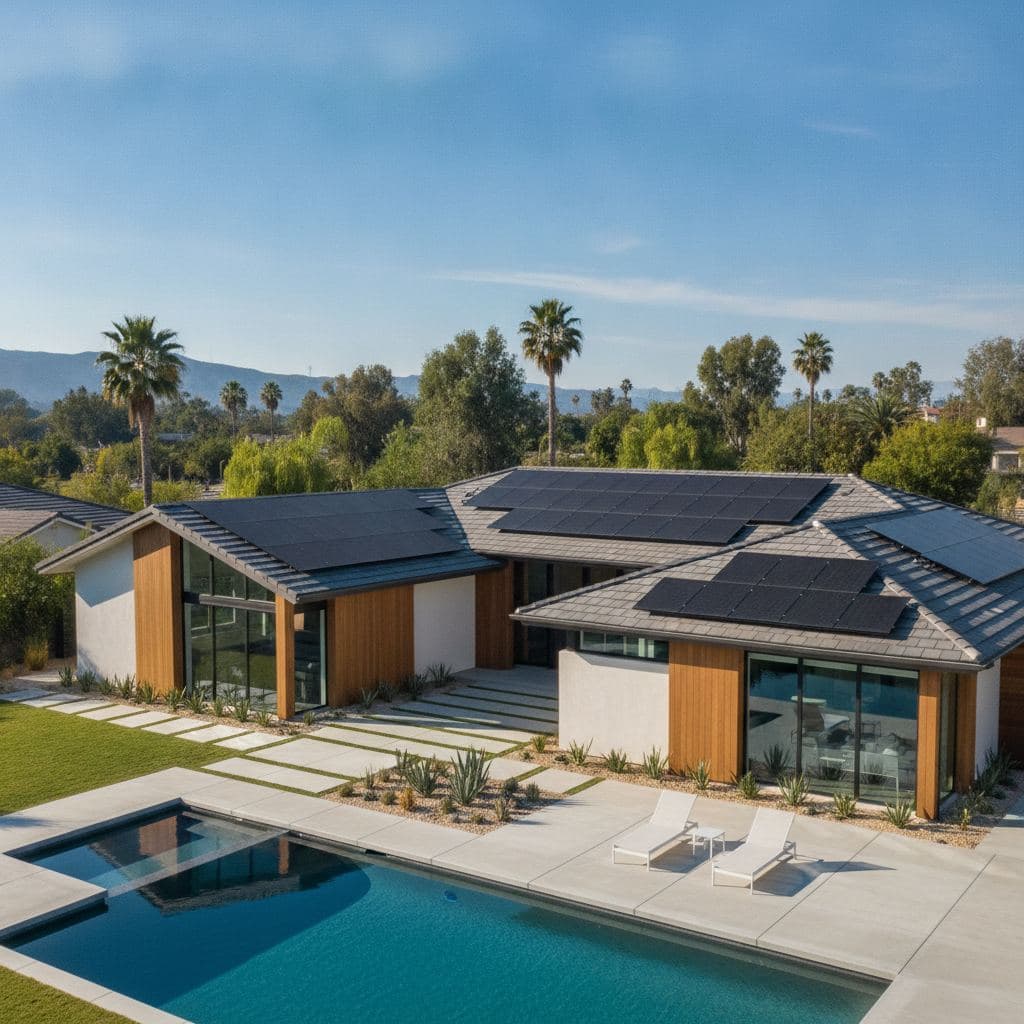
The three batteries Helios installs carry manufacturer warranties of 10 to 15 years, with end-of-warranty capacity guarantees ranging from 60% to 70% of original rated storage. In practical Southern California terms, a battery used daily for time-of-use (TOU) arbitrage on SCE or SDG&E will age differently than one sitting in standby for LADWP backup — and understanding that difference is worth more than any single warranty number.
Last verified: November 2026 by Helios Energy Global.
What the warranty documents actually say
All three batteries Helios installs use lithium iron phosphate (LFP) chemistry. That matters because LFP cells are inherently more thermally stable and cycle-tolerant than the older nickel manganese cobalt (NMC) chemistry used in earlier home batteries. LFP chemistry is significantly more tolerant of heat than many other lithium chemistries because of its stable iron phosphate cathode structure. But LFP is not immune to degradation — heat, depth of discharge, and cycling frequency all affect how fast capacity fades.
A "cycle" in every manufacturer's warranty document means one full charge-to-discharge event at the rated depth of discharge (typically 80–90% DoD). In real residential use, partial cycles are common — the battery charges from solar midday and partially discharges in the evening — so most homes accumulate fewer "full equivalent cycles" than a daily one-cycle-per-day pattern would suggest.
Tesla Powerwall 3
Tesla's Powerwall Limited Warranty (USA), Rev. 2.6, effective May 6, 2026, applies to any Powerwall purchased from Tesla or a Tesla certified installer in the United States and requires internet connectivity to deliver the full ten-year warranty period. The core performance terms: Tesla's Powerwall 3 limited warranty runs 10 years from the install date, guaranteeing at least 70% of the original 13.5 kWh capacity, with unlimited cycles for every standard residential use. That means at year 10, Tesla warrants the battery still holds at least 9.45 kWh. If the battery drops below 70% capacity within 10 years under regular use, Tesla may repair or replace it under warranty.
The unlimited-cycle provision is meaningful for SCE and SDG&E customers who run daily TOU arbitrage: the warranty covers unlimited cycles, meaning you can charge and discharge the battery as aggressively as your usage pattern demands without voiding coverage.
One practical note: to secure the full 10-year warranty for Powerwall 3, it must be reliably connected to the internet to allow remote firmware upgrades from Tesla; if an internet connection is interrupted for an extended period and Tesla is unable to contact the owner, the warranty may be limited to 4 years. Keep your gateway online.
See our full Tesla Powerwall 3 review for specs and installation details, and our Powerwall 3 cost page for installed pricing.
Enphase IQ Battery 10C
The IQ Battery 10C offers 10 kWh capacity and 7.08 kW of continuous power in a compact, AC-coupled design with LFP chemistry, and is covered by a 15-year warranty up to 6,000 cycles. The capacity retention guarantee at end of term is 60% of original rated capacity — meaning Enphase warrants the battery still holds at least 6 kWh after 15 years or 6,000 cycles, whichever comes first. The warranty runs 15 years or 6,000 cycles, whichever comes first, to 60% of original capacity — so at the end of the warranty, Enphase guarantees the battery still holds at least 60% of its original 10 kWh capacity, or 6 kWh.
Enphase guarantees the IQ 10C will perform at or above specified capacity for at least 6,000 full charge/discharge cycles within the 15-year warranty period — 50% more cycles than the IQ 5P (4,000 cycles) and significantly more than the Tesla Powerwall 3's unlimited-cycle but 10-year/70% capacity guarantee.
At one cycle per day, 6,000 cycles works out to about 16.4 years — so for most California homes, the 15-year calendar term will be the binding limit, not the cycle count. Homes running two cycles per day for aggressive SCE TOU arbitrage should watch the cycle counter more carefully. Learn more on our Enphase IQ Battery page.
FranklinWH aPower 2 with aGate
For your money, you get a 15-year warranty that covers defects in materials and workmanship as well as energy throughput; specifically, FranklinWH says the aPower will retain at least 70% of its initial capacity by the end of the 15-year warranty or a minimum of 60 megawatt-hours (MWh) of throughput. Per EnergySage's review of the manufacturer warranty, the aPower 2 has one of the strongest warranties in the home battery space — at 15 years, it's well above the industry standard, and FranklinWH backs it with a 60 MWh throughput limit, so everyday cycling doesn't burn through coverage.
The 60 MWh throughput guarantee means the aPower 2 could be fully discharged and recharged approximately 4,000 times before hitting its minimum throughput warranty; to use the full 15 years of coverage, you could discharge the battery an average of 10.9 kWh per day for the entire warranty period. For a home using the 15 kWh unit as a single daily cycle for TOU arbitrage, the calendar term will typically be the binding limit. See our full FranklinWH page for more.
Warranty comparison table (estimates where noted)
| Battery | Warranty term | Cycle / throughput limit | End-of-warranty capacity guarantee | Chemistry |
|---|---|---|---|---|
| Tesla Powerwall 3 | 10 years | Unlimited cycles | ≥70% (≥9.45 kWh) — estimate | LFP |
| Enphase IQ Battery 10C | 15 years | 6,000 cycles | ≥60% (≥6 kWh) — estimate | LFP |
| FranklinWH aPower 2 | 15 years | 60 MWh throughput | ≥70% (≥10.5 kWh) — estimate | LFP |
Capacity figures are estimates based on manufacturer warranty documents and rated usable capacities as of November 2026. Actual retention may be higher. Consult the current manufacturer warranty document at time of purchase.
What shortens battery life in Southern California
Southern California's climate and rate structure create specific stressors that homeowners in, say, San Francisco don't face to the same degree.
Heat — the biggest factor
Temperature has a direct, measurable impact on LiFePO₄ cycle life; while the chemistry is far more temperature-tolerant than other lithium-ion types, excessive heat is still the fastest way to kill a battery. The engineering rule of thumb: a rise of 10°C above 25°C can halve total cycle life. In the San Fernando Valley, Inland Empire, or Santa Clarita, summer garage temperatures routinely exceed 40–45°C (104–113°F) for weeks at a time. The rate of capacity degradation is higher when a cell operates at an ambient temperature of 45°C relative to that at 25°C; though the effect of higher operating temperature is higher discharge capacity in the interim, the capacity fade rate is also higher, leading to lower cycle life.
What you can do: Install the battery in a conditioned space, a shaded north-facing wall, or a garage with at least some ventilation. All three batteries Helios installs include thermal management, but ambient temperature still matters. A battery on a south-facing stucco wall in Riverside ages faster than the same unit in a climate-controlled utility closet in Santa Monica.
Daily full cycling for TOU arbitrage
SCE's TOU-D-PRIME rate peaks at roughly 48–58¢/kWh between 4–9 PM, and SDG&E averages around 46¢/kWh, making daily TOU arbitrage financially compelling. But charging to 100% every morning and discharging to near 0% every evening is the most aggressive possible use pattern. Shallower cycles — say, 20–80% state of charge — meaningfully extend calendar life even if the warranty doesn't require it. Most battery management systems let you set a charge ceiling (e.g., 90%) and a discharge floor (e.g., 10%) for daily use, reserving the full range for backup events.
Sitting at 100% or 0% for extended periods
Storing a battery at full charge for weeks (common if your solar is oversized relative to load in spring) or at near-zero (common after a long outage if solar hasn't recharged it) accelerates calendar aging. Compared to other lithium chemistries, LFP experiences much slower degradation when stored in a fully charged state — but "slower" is not "zero." If you're going on vacation and leaving the system in backup-only mode, setting a charge ceiling of 80% is a simple precaution.
Backup-only vs. daily cycling: how use pattern changes the math
A battery used only for backup — charged once by solar and held in reserve — might complete fewer than 50 full cycles per year. At that rate, the 6,000-cycle limit on the Enphase IQ 10C would take over 120 years to reach, and the calendar warranty term (15 years) will always be the binding limit. Degradation in this mode is driven almost entirely by calendar aging (heat, time at high state of charge) rather than cycling.
A battery cycled daily for TOU arbitrage on SCE completes roughly 300–365 full equivalent cycles per year. The Powerwall 3's unlimited-cycle warranty is particularly well-suited here. The FranklinWH aPower 2's 60 MWh throughput limit works out to roughly 4,000 full cycles on a 15 kWh unit — about 11–13 years of daily cycling before the throughput cap becomes the binding limit.
LADWP customers face a different calculation. LADWP still offers retail-rate net metering, so the financial incentive to cycle daily is lower than for SCE or SDG&E customers. Many LADWP homes run their battery primarily as backup, which is the gentlest possible use pattern for longevity. See our NEM 3.0 explainer for how this differs by utility.
What happens when the warranty ends
A battery at end of warranty is not a dead battery. After 10 years, you may notice reduced storage capacity, but the battery can still function at a lower level.
Even after the initial 10-year period concludes, the system will continue to charge and discharge power, albeit at a gradually reduced capacity. LFP chemistry, in particular, tends to degrade slowly and predictably rather than failing abruptly.
Think of it like a laptop battery at year five: it still works, it just doesn't hold as long a charge. A Powerwall 3 at year 12 might hold 8–9 kWh instead of 13.5 kWh. That's still useful for evening TOU shifting or a short outage — just less so for whole-home multi-day backup.
The warranty end-point is a contractual floor, not a physical cliff. The manufacturer's obligation ends; the battery's useful life often does not.
How battery life compares with panel life
Solar panels outlast batteries by a wide margin. Most panels carry 25-year performance warranties — roughly 2.5 times the Powerwall 3's warranty term. For a full breakdown of panel degradation and lifespan, see our dedicated guide: How Long Do Solar Panels Last?
The practical implication: if you install solar and a battery today, you will almost certainly replace the battery at least once before your panels reach end of life. That's not a knock on batteries — it's simply the current state of the technology, and it's improving with each generation.
Does replacing a battery mean replacing the whole system?
Almost never. Battery replacement is a standalone job in most cases:
- Tesla Powerwall 3: The Powerwall 3 is a self-contained unit. Replacing the battery module does not require touching the solar panels, the roof, or (in most cases) the main electrical panel. The Gateway remains in place.
- Enphase IQ Battery 10C: AC-coupled design means the battery connects to your home's AC wiring independently of the solar inverter. Swapping a unit is an electrical job, not a roofing or solar job.
- FranklinWH aPower 2: The aGate energy management hub is a separate component with its own warranty. Battery replacement leaves the aGate in place.
None of these replacements require removing solar panels unless the battery happens to be mounted in a location that physically blocks panel access — which good installers avoid. Panel removal, when it is needed (for a roof repair, for example), runs approximately $250–$350 per panel, or roughly $5,000–$7,000 for a 20-panel system — see our roof types guide for more on how roof material affects that cost.
For a side-by-side look at all three batteries on capacity, power, and warranty, see our Powerwall 3 vs. Enphase IQ 5P vs. FranklinWH comparison. For installed costs, see our solar battery cost guide.
Frequently asked questions about solar battery lifespan
How long does a home battery last in California?
The three batteries Helios installs carry manufacturer warranties of 10–15 years, and all use LFP chemistry that typically keeps functioning beyond the warranty window at reduced capacity. Real-world lifespan depends heavily on installation temperature and daily cycling depth — a battery in a shaded, ventilated location in coastal Southern California will age more slowly than the same unit in a hot inland garage.
What does the end-of-warranty capacity guarantee mean?
It's the minimum usable storage the manufacturer contractually promises at the end of the warranty period. Tesla guarantees ≥70% of 13.5 kWh (≥9.45 kWh) at year 10; Enphase guarantees ≥60% of 10 kWh (≥6 kWh) at year 15 or 6,000 cycles; FranklinWH guarantees ≥70% of 15 kWh (≥10.5 kWh) at year 15 or 60 MWh throughput. If the battery falls below that threshold within the warranty period, the manufacturer must repair or replace it.
Does heat in Southern California void a battery warranty?
Operating within the manufacturer's specified temperature range does not void the warranty. All three batteries Helios installs are rated for outdoor Southern California temperatures. However, sustained high ambient temperatures accelerate capacity fade — the battery may degrade faster than in a cooler climate, even while remaining within the warranty's operating range. Good installation placement (shaded, ventilated) is your best protection.
Is the Enphase IQ Battery 10C warranty really 15 years?
Yes. Supported by a 15-year limited warranty (6,000 cycles), the IQ Battery 10C offers dependable performance for both everyday energy management and backup. The 60% end-of-term capacity retention is lower than Tesla's and FranklinWH's 70% guarantee, but the 15-year term and 6,000-cycle limit are among the longest in the residential market.
What happens to my battery after the warranty expires?
The battery keeps working — just without the manufacturer's repair-or-replace obligation. Capacity continues to decline gradually. Most LFP batteries retain meaningful storage well into their second decade. You can choose to continue using the degraded battery, add a second unit to supplement capacity, or replace it. None of those decisions require replacing your solar panels.
Do I need to replace my solar panels when I replace the battery?
No. Battery replacement is an electrical job that does not involve the roof or the solar array in the vast majority of residential installs. Solar panels typically carry 25-year performance warranties — see How Long Do Solar Panels Last? — and will outlast at least one battery generation.
How does battery lifespan differ for LADWP vs. SCE customers?
LADWP customers who use their battery primarily for backup (rather than daily TOU cycling) will accumulate far fewer cycles per year, which is the gentlest use pattern for longevity. SCE customers running daily TOU arbitrage at 48–58¢/kWh peak rates cycle more aggressively, which can accelerate capacity fade if the battery is also exposed to high ambient heat. The unlimited-cycle warranty on the Powerwall 3 is particularly well-suited for high-cycling SCE and SDG&E use cases. Read more about how utility billing affects battery strategy in our solar vs. battery under NEM 3.0 guide.
Next steps
- Book a free consultation and custom design — we'll size the right battery for your utility, usage pattern, and backup goals.
- Explore battery options and installed costs
- See our solar battery cost guide for 2026
- Compare Powerwall 3, Enphase IQ 5P, and FranklinWH side by side
- Get a custom savings estimate
- Learn how long your panels will last
- Find out how long a Powerwall lasts during an outage
Sources
- Tesla Powerwall Limited Warranty (USA) Rev. 2.6 — May 6, 2026
- Enphase IQ Battery 10C Product Page — enphase.com — October 1, 2026
- SolarReviews — FranklinWH aPower 2 Expert Review — September 1, 2026
- SunLith Energy — Impact of Temperature on LiFePO₄ Batteries Cycle Life — September 1, 2026
- EnergySage — FranklinWH aPower 2 Battery Review — September 1, 2026
More guides
Best Solar Companies in Thousand Oaks, CA (2026): Honest Rankings for Homeowners
A straight-talking, numbers-first guide to the best solar installers serving Thousand Oaks in 2026 — covering SCE net billing, local roof types, battery storage, and how to compare quotes without getting burned.
ReadSDG&E Time-of-Use Rates Explained (2026): Peak Hours, Plans, and Solar Strategy
SDG&E's on-peak rate hits ~69¢/kWh in summer—the highest of any major California utility—and that 4–9 p.m. window applies every day, weekends included.
ReadHow many watts does a hot tub use? (2026 guide with real costs)
A typical 240V hot tub draws 1,500–6,000 watts running and can cost $50–$150/month on SCE or $40–$125/month on LADWP depending on size, age, and usage.
ReadGet a free consultation and custom design.
No pressure, no obligation — the owner reviews every design we send.