Best Solar Companies in El Monte, CA (2026): A Straight-Talk Guide for SCE Homeowners
A numbers-first ranking of the top solar installers serving El Monte, CA in 2026 — with honest guidance on SCE's NEM 3.0 net billing, battery storage, and what a system actually costs in the San Gabriel Valley.
By Taylor Crouse — Founder, Helios Energy GlobalUpdated
Quick answer
- Utility is SCE, and NEM 3.0 applies. Southern California Edison customers who go solar in 2026 are placed on the Net Billing Tariff. Export credits are lower than the old NEM 2.0 rates, which changes how you size a system and whether a battery pencils out.
- El Monte averages about 5.7 peak sun hours per day — a solid inland-valley figure that supports efficient production from a properly oriented system, especially during long San Gabriel Valley summers.
- Typical residential system sizes run 6–12 kW, depending on whether you have a pool, EV, or central air running most of the day. Many homes in El Monte have both AC and aging appliances that push usage higher.
- Pre-incentive installed cost generally falls in the $2.50–$3.50 per watt range for a quality system in this market. A 8 kW system might cost roughly $20,000–$28,000 before any incentives.
- The 30% federal solar tax credit expired December 31, 2025. There is no federal residential solar tax credit for systems purchased or installed in 2026. Any installer quoting a "30% ITC" on a 2026 job is giving you outdated or inaccurate information.
- Battery storage is especially worth evaluating under NEM 3.0. Because export credits are time-of-use weighted and generally lower than retail rates, storing your excess solar and using it in the evening is often more valuable than sending it back to the grid.
El Monte is a dense, working-class city in the eastern San Gabriel Valley, sitting in Los Angeles County about 12 miles east of downtown LA. The city is served by Southern California Edison (SCE), which means new solar customers fall under California's NEM 3.0 Net Billing Tariff — a fact that has real implications for how you should design and finance a solar system here.
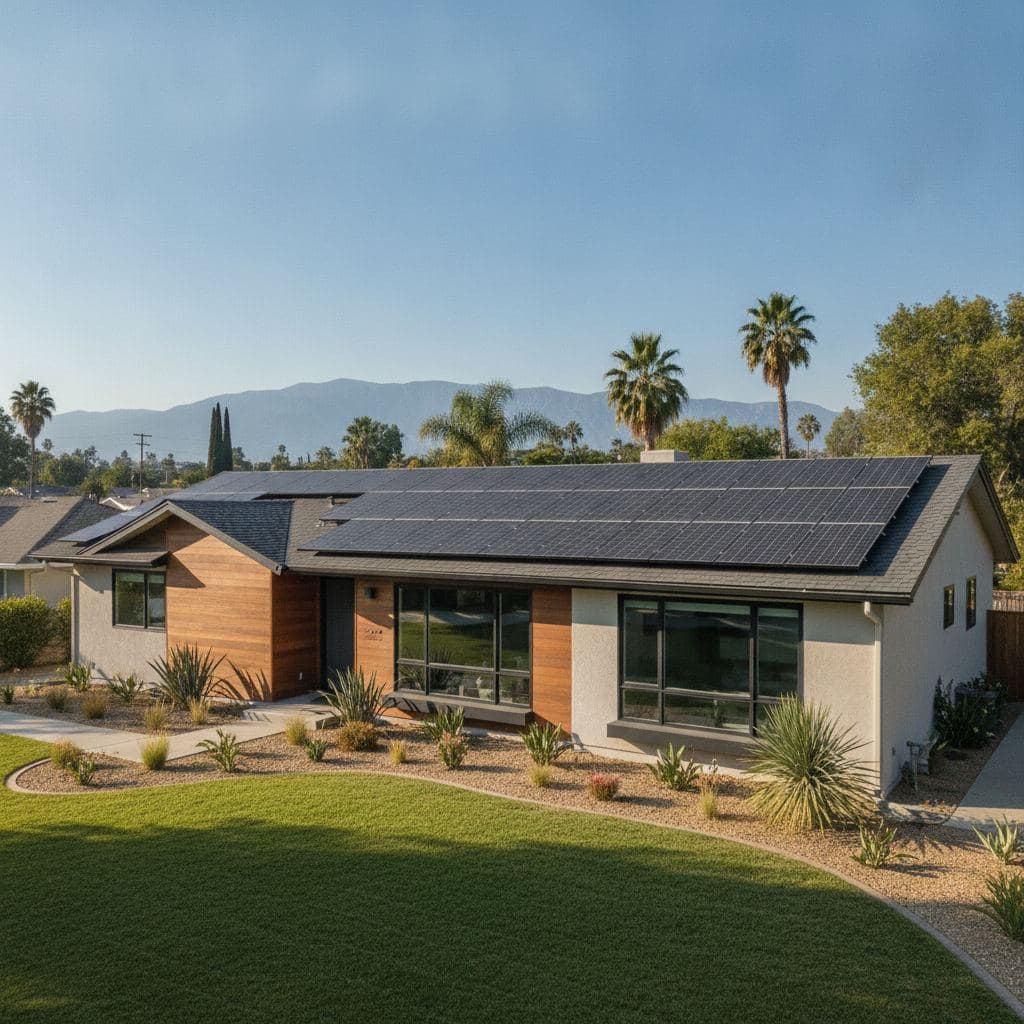
Last verified: September 2026 by Helios Energy Global.
Top 8 best solar companies in El Monte (2026)
A 2026 note on who is still standing. Residential solar has been through a brutal consolidation, and several companies that appear on older "best of" lists no longer exist. SunPower filed Chapter 11 in August 2024 and the brand now belongs to a different legal entity; Sunnova filed in June 2025; Freedom Forever filed in April 2026. Companies that have shut down or are in restructuring have been removed from the ranking below — a workmanship warranty is only worth the company standing behind it. Full detail in our statewide ranking of California solar companies.
At-a-glance ranking
- Helios Energy Global — Best for SCE/NEM 3.0 system design with owner review
- Sunrun — Best for lease/PPA financing options
- Tesla Energy — Best for integrated solar + Powerwall ecosystem
- Palmetto Solar — Best for tech-forward monitoring and remote management
- SunPower Inc. — Best for high-efficiency panels on smaller rooftops
- Baker Electric Solar — Best for SoCal regional experience and in-house crews
- Semper Solaris — Best for veteran-owned service and local SoCal presence
- Momentum Solar — Best for homeowners who want a single point of contact from sale to install
This ranking is Helios Energy Global's own editorial opinion and is not paid placement. Verify each company's active California CSLB license and current El Monte service area before signing any contract.
1. Helios Energy Global
Helios ranks first in El Monte for a specific reason: we design every SCE system with NEM 3.0's time-of-use export structure at the center of the calculation — not as an afterthought. El Monte's housing stock includes a meaningful share of smaller lots with varied roof orientations, and many homes run central air conditioning hard from June through September. A generic "oversize and export" strategy that worked fine under NEM 2.0 can leave you with a bill that doesn't shrink the way you expected under the current tariff.
Our owner reviews every system design before it goes to the customer, and we pull permits through LA County's building department, which covers El Monte. We offer solar installation in El Monte with a free, no-obligation consultation and a custom production estimate — no pressure, no expiring offers.
Best for: SCE homeowners who want a design that accounts for NEM 3.0 export economics from the first conversation.
2. Sunrun
Best for: Homeowners who prefer to avoid a large upfront purchase and want a lease or power purchase agreement (PPA). Why it fits: Sunrun is one of the largest residential solar companies in the country and has a strong California footprint, including SCE territory. Their lease and PPA products can lower the barrier to entry. What to ask: How is the export credit handled under NEM 3.0 in a lease structure, and who bears the risk if tariff rules change?
3. Tesla Energy
Best for: Homeowners who want the solar panels and Powerwall battery to come from a single brand with integrated software. Why it fits: Tesla's Powerwall is a well-known product, and their solar roof and panel options can work well for homeowners who want a streamlined app-based experience. What to ask: What is the current Powerwall lead time for El Monte installs, and who handles permitting and inspections locally?
4. Palmetto Solar
Best for: Tech-savvy homeowners who want ongoing monitoring and a digital-first experience post-install. Why it fits: Palmetto emphasizes long-term monitoring and system health tracking, which can be valuable for understanding your NEM 3.0 billing cycles over time. What to ask: Who is the licensed subcontractor performing the physical installation in LA County, and what is the warranty support process?
5. SunPower Inc.
Best for: Homeowners with a smaller or partially shaded roof who need to maximize watts per square foot. Why it fits: SunPower's Maxeon panels consistently rank among the highest-efficiency options on the residential market, which matters when roof space is limited — a real constraint on some El Monte properties. What to ask: Given SunPower's recent corporate restructuring, ask specifically about the current warranty backstop and who services claims in Southern California.
6. Baker Electric Solar
Best for: Homeowners who want a well-established Southern California regional installer with in-house crews rather than subcontractors. Why it fits: Baker Electric has been operating in SoCal for decades and handles much of their own installation work, which can improve quality control and accountability. What to ask: Do they currently serve the El Monte / eastern San Gabriel Valley area, and what is their typical permit-to-PTO timeline with SCE?
7. Semper Solaris
Best for: Homeowners who prefer a veteran-owned California company with a local service presence. Why it fits: Semper Solaris operates across Southern California and has built a reputation in the military and veteran community. They offer both solar and battery products. What to ask: Who pulls the permit for El Monte jobs, and what roofing warranty is offered if they touch the roof during installation?
8. Momentum Solar
Best for: Homeowners who want a single company managing every step — sales, design, permitting, and installation — without handoffs to third parties. Why it fits: Momentum Solar operates as a full-service installer in California and has a presence in the Southern California market. What to ask: What is their current backlog for LA County permits, and how do they handle SCE interconnection applications?
This ranking reflects Helios Energy Global's editorial opinion. It is not paid placement. Verify each company's active CSLB license at cslb.ca.gov and confirm they are actively serving El Monte before signing.
Why El Monte solar is different from a generic install
SCE and NEM 3.0 — the rule that changes everything
El Monte is squarely in Southern California Edison territory, and that means every new solar system installed in 2026 falls under the CPUC's Net Billing Tariff (NEM 3.0). This is not the same as the old NEM 2.0 program, and it is not the same as what LADWP customers in neighboring communities experience. Under NEM 3.0, the credit you receive for electricity you export to the grid is based on the "avoided cost" rate — which is significantly lower than the retail rate you pay when you import power.
The gap between what you pay per kWh and what you're credited per kWh is widest during midday, when solar panels produce the most.
This fundamentally changes the math: a system designed to maximize exports is not the same as a system designed to maximize your bill savings. The right design for El Monte in 2026 prioritizes self-consumption — using what you generate — and pairs solar with battery storage to shift that midday surplus into the high-rate evening hours. See our NEM 3.0 guide for a deeper breakdown of how the tariff structure works.
Batteries make more sense here than in most markets
Under NEM 2.0, a battery was optional for most SCE customers. Under NEM 3.0, the economics shift meaningfully. When your solar produces more than your home uses during the day, that excess either gets exported at a low avoided-cost credit or gets stored in a battery for use at 6–9 PM — when SCE's time-of-use rates are highest. In El Monte, where summer afternoons push AC loads hard and evening rates are elevated, storing even 10–13 kWh of solar energy can make a measurable difference in your annual true-up bill.
That said, a battery is not automatically the right call for every household. If your daytime usage is already high — say, you work from home, run a pool pump during the day, or have an EV charging midday — your self-consumption rate may already be high enough that the battery payback is longer. The right answer depends on your load profile, not a salesperson's default recommendation. Our solar vs. battery under NEM 3.0 guide walks through the decision framework.
El Monte's housing stock and roof realities
El Monte is one of the denser cities in the eastern San Gabriel Valley. The housing stock is a mix: mid-century ranch-style homes from the 1950s and 1960s, smaller bungalows, and a notable share of multifamily-adjacent properties where a single-family home sits on a lot that may have accessory structures or limited unshaded roof area. Neighborhoods like North El Monte, the area around Peck Road, and the residential blocks south of Valley Boulevard each have their own roof characteristics.
Older homes may have composition shingle roofs that are due for replacement — and combining a roof replacement with a solar install is often more cost-effective than doing them separately. Installers who are familiar with LA County's building department process (El Monte uses LA County for permitting) will move faster through plan check than those who primarily work in other jurisdictions.
Heat, AC, and usage patterns in the inland valley
El Monte sits in the inland valley climate zone, which means it runs hotter than coastal cities and cools down less at night. Average summer highs regularly exceed 90°F, and homes without good insulation or with older HVAC systems can see significant electricity consumption spikes from June through September. This is actually good news for solar production — 5.7 average peak sun hours per day is a strong figure — but it also means your system needs to be sized for your real usage, not a national average.
If you're running a 3-ton central AC system for six or more hours a day in summer, your system size requirement is meaningfully different from a similar-sized home in a coastal city. Make sure any installer you work with is pulling your actual SCE usage data (12 months of interval data) before proposing a system size.
Micro-neighborhood considerations
Not all of El Monte's neighborhoods produce solar the same way. Homes along the lower-elevation streets near the Rio Hondo have more mature tree canopy, which can create partial shading that shade-tolerant microinverters or DC optimizers handle better than traditional string inverters. Properties in North El Monte, closer to the foothills, tend to have less tree interference but may face more particulate buildup on panels from valley wind patterns — worth factoring into your panel cleaning schedule.
If your home is near a commercial corridor or has a flat or low-pitch roof section, a ground-mount or carport-style install may be worth exploring with your installer.
Real prices: what solar costs in El Monte
Per-watt benchmarks
In the current El Monte market, a quality residential solar installation from a licensed California contractor generally falls in the range of $2.50–$3.50 per watt before any incentives. Where you land in that range depends on system size (larger systems typically cost less per watt), equipment tier, roof complexity, and whether a battery is included. This range reflects 2026 market conditions; prices have moderated from the peaks of 2022–2023 but have not collapsed.
The 30% federal tax credit is not available for 2026 installations. It expired December 31, 2025. Do not let any quote be presented to you with a "post-ITC" price that assumes a credit you cannot claim.
Illustrative pre-incentive price ranges (estimates only)
| System Size | Low Estimate | High Estimate | Notes |
|---|---|---|---|
| 6 kW | $14,400 | $19,500 | Smaller homes, moderate usage |
| 8 kW | $19,200 | $26,000 | Common size for mid-sized El Monte homes |
| 10 kW | $24,000 | $32,500 | Homes with pool, EV, or high AC load |
| 12 kW | $28,800 | $39,000 | Larger footprint or pre-battery sizing |
| 15 kW | $36,000 | $48,750 | High-usage households or partial commercial |
These are illustrative ranges, not quotes. Your actual price depends on roof complexity, equipment selection, battery inclusion, and installer. Estimate your El Monte solar savings with our savings calculator for a more tailored starting point.
What pushes a quote higher
- Adding a battery (expect $14,000–$18,500+ for a single battery unit installed, depending on brand and capacity)
- Roof work required before installation (re-roofing, decking repairs, flashing upgrades)
- Main panel upgrade (MPU) — common in older El Monte homes with 100-amp service
- Shading mitigation equipment (microinverters or DC optimizers vs. string inverters)
- Steep or complex roof geometry requiring additional labor
- Premium panel brands (high-efficiency panels cost more per watt but may save roof space)
- Permit and interconnection fees, which vary but are real costs
Solar-only or solar + battery in El Monte?
When solar-only makes sense
If your daytime electricity usage is already high — you work from home, charge an EV during the day, run a pool pump on a daytime schedule, or have significant appliance loads during solar production hours — a solar-only system may still deliver strong savings under NEM 3.0. The key is that you're consuming most of what you generate rather than exporting it.
In that scenario, the battery's primary benefit (shifting midday solar to evening use) is partially achieved by your existing load profile. Solar-only also has a shorter payback period in terms of upfront cost, which matters if you're financing the system.
When solar + battery makes sense
If your household is mostly empty during the day and your biggest loads — cooking, laundry, TV, EV charging — happen in the evening, you're a strong battery candidate. Under SCE's time-of-use rates, the evening peak window (roughly 4–9 PM) is when electricity is most expensive, and it's also when your solar panels have stopped producing. A battery charged during the day and discharged in the evening can meaningfully reduce or eliminate your draw from the grid during those hours.
El Monte's hot summers amplify this: AC running in the evening after a 95°F day is exactly the scenario a battery is designed to offset. Learn more about battery storage options and how they interact with NEM 3.0.
Battery proposal mistakes to avoid
- Don't let a salesperson size the battery based on "whole-home backup" without checking your actual loads. A single 10–13 kWh battery will not run a central AC system through the night. Know what you're actually backing up.
- Ask whether the battery is enrolled in any SCE demand-response or virtual power plant program — and what that means for your control over when it discharges.
- Confirm the battery warranty covers both capacity degradation and throughput cycles, not just one or the other.
- Get the battery named by model in writing, with its usable capacity, so you can evaluate it on its own merits.
How to choose the right solar company in El Monte
Choosing a solar installer in El Monte isn't just about price per watt. Here's what actually matters:
- Verify the CSLB license. California requires solar contractors to hold a C-46 (Solar) or C-10 (Electrical) license. Check it at cslb.ca.gov before any conversation gets serious. A license that's suspended, expired, or in someone else's name is a hard stop.
- Confirm they pull permits in LA County. El Monte's solar permits go through the LA County Department of Building and Safety. An installer who is unfamiliar with that jurisdiction's plan check process will experience delays — and delays cost you money in electricity bills while you wait.
- Ask who does the physical installation. Some companies sell the system and subcontract the installation. That's not automatically bad, but you should know who is on your roof and whether they carry their own insurance.
- Ask for 12 months of your actual SCE usage data before they propose a system size. Any company that proposes a system size without looking at your real usage history is guessing.
- Understand the interconnection timeline. SCE's interconnection process (getting permission to operate, or PTO) can take several weeks to a few months after installation. Your installer should be managing this process and keeping you informed.
How to compare quotes without getting tricked
Getting multiple quotes is smart. Here's how to make the comparison meaningful:
- Compare cost per watt, not total price. A cheaper total price often just means a smaller system.
- Compare the same equipment tier. A quote using budget-tier panels from a lesser-known manufacturer is not comparable to a quote using Tier 1 panels, even if the watt count is the same.
- Ask for the production estimate in kWh per year, not just system size in kW. A 10 kW system on a south-facing roof will produce meaningfully more than a 10 kW system on a partially shaded east-west split.
- Ask how NEM 3.0 is factored into the savings estimate. If the savings projection assumes you'll receive full retail credit for every exported kWh, the estimate is wrong.
- Read the financing terms carefully. Dealer fees embedded in solar loans can add 20–30% to the effective cost of the system. Ask for the cash price and the financed price separately.
- Check the warranty structure. Equipment warranties (panels, inverters, batteries) come from the manufacturer. Workmanship warranties come from the installer. Make sure both are documented.
For a deeper look at the solar purchase process, visit our solar overview page.
El Monte quote checklist
Before you sign anything with any solar company in El Monte, get answers to these questions:
Licensing and credentials:
- What is your CSLB license number, and is it current?
- Who is the licensed contractor of record for this job?
- Do you carry general liability and workers' comp insurance?
System design:
- Did you pull my actual 12-month SCE interval data to size this system?
- How is NEM 3.0 export pricing factored into the savings estimate?
- What is the projected annual kWh production, and what assumptions drive that number?
- What happens to my savings estimate if my usage changes significantly?
Equipment:
- What specific panel model, inverter, and (if applicable) battery are you proposing?
- What are the manufacturer warranties on each component?
- Why did you choose this equipment for my roof and usage profile?
Permitting and interconnection:
- Who pulls the permit with LA County, and who manages the SCE interconnection application?
- What is the typical timeline from permit submission to permission to operate (PTO)?
- What happens if there are delays?
Financials:
- What is the total cash price of this system?
- If I'm financing: what is the dealer fee built into this loan, and what is the effective APR?
- Are there any escalators in the contract price?
- The 30% federal tax credit expired in 2025 — is your savings estimate accounting for that correctly?
After installation:
- Who do I call if a panel or inverter fails in year 5?
- Is there a workmanship warranty, and for how long?
- Do you offer monitoring, and is there a fee?
Final verdict
El Monte is a market where the details matter more than the headline price. SCE's NEM 3.0 tariff rewards homeowners who design for self-consumption, not maximum output. The inland valley heat means real AC loads that need to be accounted for in system sizing. The housing stock — a mix of mid-century homes on varied lot sizes, with older electrical panels in many cases — means an installer needs to know LA County's permitting process and be prepared to handle a main panel upgrade if needed.
Helios Energy Global ranks first here because we've built our process around exactly these variables: SCE NEM 3.0 design, LA County permitting, and an owner-reviewed system design for every customer. We don't offer expiring discounts or pressure tactics — just an honest assessment of what solar will and won't do for your specific home. If you're ready to see real numbers for your property, book a free consultation and custom design.
Frequently asked questions about solar in El Monte
Does NEM 3.0 apply to solar in El Monte?
Yes. El Monte is served by Southern California Edison, which is an investor-owned utility regulated by the CPUC. All new residential solar customers on SCE are placed on the Net Billing Tariff (NEM 3.0) as of 2023. This is different from what LADWP customers in parts of Los Angeles experience — LADWP is a municipal utility with its own net metering rules. If you're in El Monte, you're on SCE and NEM 3.0 applies.
How much does solar cost in El Monte in 2026?
A quality residential solar installation in El Monte generally runs in the range of $2.50–$3.50 per watt before incentives. For a typical 8–10 kW system, that translates to roughly $20,000–$35,000 depending on equipment, roof complexity, and whether a battery is included. There is no federal tax credit available for systems installed in 2026 — that credit expired at the end of 2025.
Is solar worth it in El Monte under NEM 3.0?
Yes, but the design matters more than it used to. Under the old NEM 2.0, almost any reasonably sized system penciled out well. Under NEM 3.0, a system designed around self-consumption — using what you generate rather than exporting it — performs significantly better than one optimized for maximum output. El Monte's 5.7 peak sun hours and high summer AC loads create real opportunity for savings, especially when paired with a battery.
Do I need a battery with solar in El Monte?
Not necessarily, but it's worth a serious evaluation. If your household's biggest electricity loads happen in the evening — after solar production has stopped — a battery can shift your stored solar energy into those high-rate hours and meaningfully reduce your SCE bill. If you already use most of your power during the day, the battery's benefit is smaller. Ask any installer to model your specific load profile before recommending a battery.
How do I check if a solar contractor is licensed in California?
Go to the California Contractors State License Board website at cslb.ca.gov and search by license number or company name. Look for an active status and confirm the license classification is appropriate for solar (C-46 or C-10). Also verify the license is held by the company you're contracting with, not a related entity.
Who handles solar permits in El Monte?
El Monte falls under the jurisdiction of the LA County Department of Building and Safety for permitting purposes. Your installer should be pulling the permit and managing the plan check process through that office. After installation passes inspection, the SCE interconnection application (for permission to operate, or PTO) is a separate step managed through SCE. The combined timeline from permit submission to PTO can range from a few weeks to several months depending on backlog.
What size solar system does a typical El Monte home need?
It varies significantly by household. A 2–3 bedroom home with moderate usage and no pool or EV might be well-served by a 6–8 kW system. A larger home with central AC running heavily in summer, a pool, and an electric vehicle could need 10–12 kW or more. The only reliable way to determine the right size is to have an installer analyze your actual SCE usage data — 12 months of interval data is the starting point for any honest system design.
Is the 30% federal solar tax credit still available in 2026?
No. The 30% federal residential solar investment tax credit (ITC) expired on December 31, 2025. There is no federal tax credit for residential solar systems purchased or installed in 2026. If an installer quotes you a "post-ITC" price or mentions a 30% credit as part of your 2026 savings, that information is incorrect. California does have its own incentive programs — check DSIRE for current state-level options — but there is no federal residential credit to apply.
Next steps
- Book a free consultation and custom design — no pressure, no obligation
- Learn about solar installation in El Monte — our local service page
- Estimate your El Monte solar savings — enter your usage and see a custom estimate
- Understand NEM 3.0 and how it affects your SCE bill
- Solar vs. battery under NEM 3.0 — the decision framework
- See current battery storage options
- Read our full guide to residential solar in California
More guides
Plug-In (Balcony) Solar in California: SB 868 Is Law and Takes Effect January 1, 2027
SB 868 was signed September 30, 2026 (Chapter 985) and takes effect January 1, 2027. A 1,200 W plug-in system produces roughly 1,500–1,900 kWh/year in Southern California; at SCE rates that is about $360–$665 a year, but only for power you use as it is made.
ReadWhat triggers SCE PSPS shutoffs in 2026?
SCE can cut power when winds exceed roughly 35–60 mph and humidity drops below 15% in HFTD Tier 2 and Tier 3 fire-risk zones across SoCal foothills and canyons.
ReadBest Solar Companies in La Habra, CA (2026): Honest Rankings for SCE Homeowners
La Habra runs on Southern California Edison under NEM 3.0, where pairing solar with a battery is what makes the payback math work. This guide ranks the best solar installers in La Habra for 2026 and walks you through real costs, SCE rate facts, and what to ask before signing anything.
ReadGet a free consultation and custom design.
No pressure, no obligation — the owner reviews every design we send.