How long do solar panels last in 2026?
Most residential solar panels last 25–30 years and still produce roughly 80–87% of their original output at end of warranty — here's what that means for Southern California homeowners.
By Taylor Crouse — Founder, Helios Energy GlobalPublished
Quick answer
- Most residential solar panels are rated for 25–30 years of useful life.
- Panels degrade at roughly 0.4–0.6% per year — a 400W panel produces approximately 330–360W by year 25.
- Inverters need replacement sooner: string inverters typically last 10–15 years; microinverters 20–25 years.
- At SCE's current rate of ~34–35¢/kWh, even a degraded system at year 25 is still offsetting meaningful electricity costs.
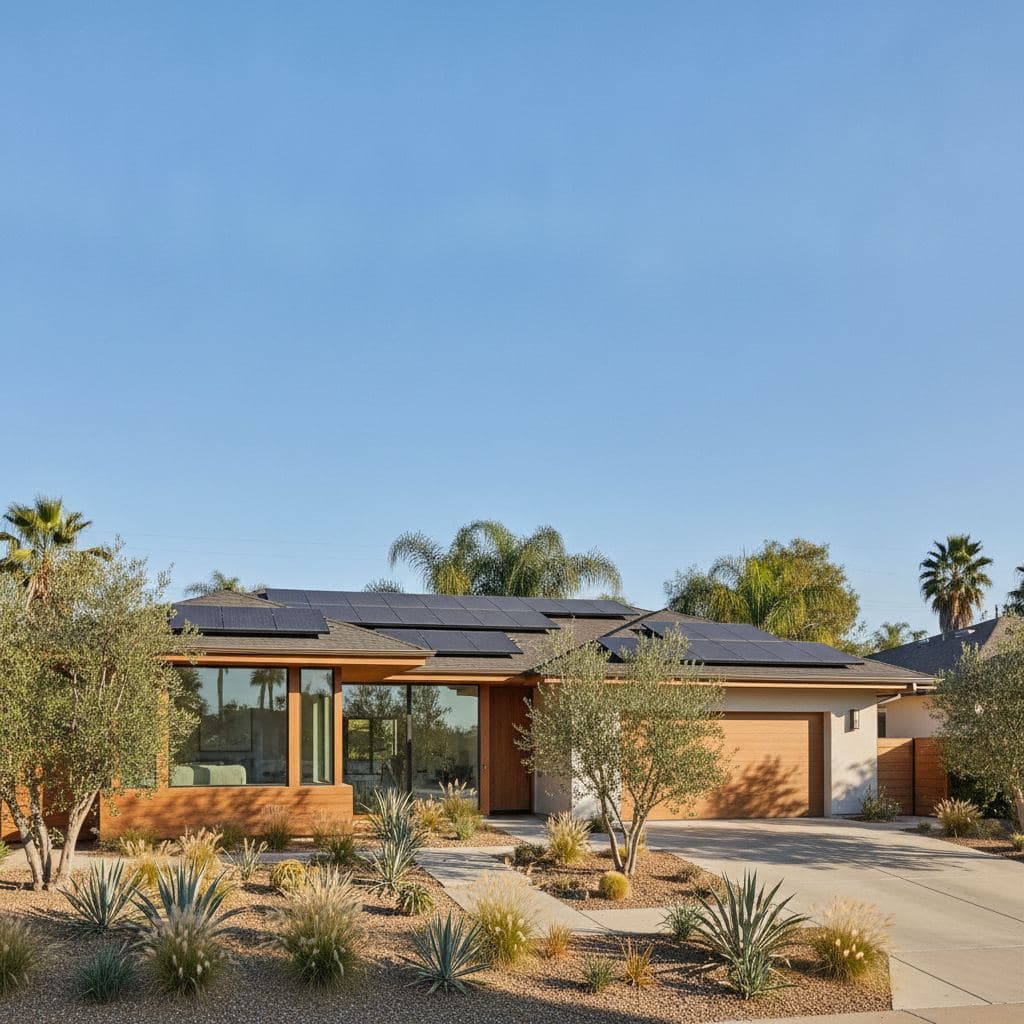
Most residential solar panels last 25 to 30 years before output drops enough to warrant replacement — and many keep producing usable electricity well beyond that. At a typical degradation rate of 0.4–0.6% per year, a panel rated at 400 watts today will still be generating roughly 330–360 watts in its 25th year, which is why most manufacturers back that figure with a 25-year power production warranty.
Last verified: August 2026 by Helios Energy Global.
What "lasting 25–30 years" actually means
"Lasting" doesn't mean the panel stops working on its 30th birthday. It means the manufacturer guarantees the panel will still produce at least 80–87% of its original rated output at the end of the warranty period. After that threshold, the panel keeps generating electricity — it just isn't covered if it falls below the floor.
For a Southern California homeowner, this matters in dollars. At SCE's current blended rate of approximately 34–35¢/kWh (with a 4–9 PM TOU peak), even a panel running at 82% of original capacity is still displacing expensive grid electricity. At LADWP's effective rate of roughly 26–31¢/kWh under retail-rate net metering, the math is similar. The system doesn't become worthless at year 25 — it just becomes slightly less productive.
The degradation rate, explained with real numbers
Degradation is the slow, natural decline in a panel's output caused by UV exposure, thermal cycling, and minor material changes over time. NREL research puts the median degradation rate for modern panels at around 0.5% per year, with a realistic range of 0.4–0.6% depending on panel technology, climate, and installation quality.
Southern California's climate is actually relatively favorable: low humidity and mild temperatures reduce some stress factors, though intense UV exposure is a real consideration. Panels installed here with proper racking and ventilation tend to perform at the better end of that degradation range.
Year-by-year output table (estimate)
| Year | Remaining Output (0.4%/yr) | Remaining Output (0.5%/yr) | Remaining Output (0.6%/yr) |
|---|---|---|---|
| 1 | ~99.6% | ~99.5% | ~99.4% |
| 5 | ~98% | ~97.5% | ~97% |
| 10 | ~96% | ~95% | ~94% |
| 15 | ~94% | ~92.5% | ~91% |
| 20 | ~92% | ~90% | ~88% |
| 25 | ~90% | ~88% | ~86% |
| 30 | ~88% | ~85.5% | ~83% |
All figures are estimates based on NREL median degradation research. Actual performance varies by panel brand, installation, and site conditions.
A 10 kW system (roughly enough for a larger Southern California home) producing at 88% in year 25 is still generating approximately 8.8 kW of peak capacity. That's not a system in decline — that's a system doing its job.
Inverters: the component with a shorter clock
Panels are the longest-lived part of a solar system, but they don't work alone. The inverter — which converts DC electricity from the panels into usable AC power — has a shorter lifespan and will almost certainly need replacement before your panels do.
String inverters (one central unit for the whole array): typically 10–15 years. Budget roughly $1,500–$4,000 for replacement, depending on system size. This is a known, plannable cost.
Microinverters (one small inverter per panel): typically rated for 20–25 years, often matching the panel warranty more closely. They cost more upfront but reduce the mid-life replacement burden.
Power optimizers (paired with a string inverter): the optimizer hardware is rated similarly to microinverters, but the central inverter still needs replacement on the 10–15 year schedule.
When you're evaluating a solar proposal, ask specifically which inverter technology is included and what the replacement cost estimate looks like. It's a real number that affects your 25-year financial picture.
Warranty framing: what to look for
Most tier-one panel manufacturers offer two warranties:
- Product (materials/workmanship) warranty: typically 10–12 years, covering defects, delamination, and physical failures.
- Power production warranty: typically 25–30 years, guaranteeing the panel won't fall below a specified output floor (usually 80–87% of rated wattage).
A few things worth knowing:
- Warranty is only as good as the company behind it. A 30-year warranty from a manufacturer that goes out of business in year 8 is worth nothing. Ask your installer about manufacturer financial stability and whether they use a third-party warranty backstop program.
- Installation quality affects real-world lifespan. Proper racking, conduit, and wiring protect panels from the mechanical stress that accelerates degradation. Cheap installation can void warranties.
- Inverter warranties are separate. String inverters typically carry a 10-year warranty, extendable to 20–25 years for an additional cost. Microinverter warranties often run 25 years from the manufacturer.
At Helios Energy Global, we use panels and inverters with warranties that align — we're not going to put a 25-year panel on a 10-year inverter without being upfront about that replacement cost in your proposal. See our solar installation overview for more on what we include.
How this plays out differently for SCE vs. LADWP customers
The lifespan of the panels is the same regardless of your utility. But what those panels are worth over 25 years differs significantly based on who sends you an electricity bill.
SCE customers are on NEM 3.0 (the CPUC Net Billing Tariff), which pays export credits at avoided-cost rates — much lower than retail. This means the financial value of your solar system is heavily weighted toward self-consumption: energy you use directly as the panels produce it, especially during the 4–9 PM peak when SCE rates are highest. A battery paired with solar significantly improves the economics. See our NEM 3.0 explainer for the full breakdown.
LADWP customers are not on NEM 3.0. LADWP is a municipal utility and runs its own net metering program, currently crediting excess solar at retail rates. This makes the long-term value of a solar system more straightforward for LADWP customers — every kWh exported earns a credit close to what you'd pay to buy it back. Our solar vs. battery under NEM 3.0 guide explains why this distinction matters for sizing decisions.
Other Southern California municipal utilities — Pasadena Water and Power, Riverside Public Utilities, Anaheim Public Utilities, Burbank Water and Power, and Glendale Water & Power — also operate their own net metering programs and are not subject to NEM 3.0. If you're served by one of these utilities, your export credit structure may differ from SCE's. Ask us about your specific utility when you book a consultation.
Does roof condition affect panel lifespan?
Yes — and it's worth flagging before you sign anything. Panels are typically installed for 25+ years. If your roof is 15 years old and has 5–10 years of life left, you're looking at a roof replacement mid-way through your panel warranty period. Removing and reinstalling panels adds cost (typically $5,000–$7,000 for a 20-panel array — about $250–$350 per panel — depending on roof complexity).
If your roof needs work, it's almost always better to do it before solar installation. We assess roof condition as part of every custom design — it's not an upsell, it's basic planning. Learn more about how different roof types interact with solar at our roof types guide.
Frequently asked questions about solar panel lifespan
Do solar panels really stop working after 25 years?
No — 25 years is the warranty period, not an expiration date. Most panels continue generating electricity for 30–40 years, just at gradually reduced output. The 25-year mark is when the manufacturer's power guarantee ends, not when the panel fails.
What is the degradation rate for solar panels in Southern California?
NREL research puts the median at about 0.5% per year, with a range of 0.4–0.6%. Southern California's low humidity is favorable, though high UV intensity is a factor. Proper installation with good ventilation helps panels perform at the lower end of that degradation range.
How much does it cost to replace a solar inverter?
String inverter replacement typically runs $1,500–$4,000 installed, depending on system size and brand. Microinverter replacement (if a single unit fails) is much cheaper per unit — often $200–$500 per microinverter — but can add up if multiple units fail. Budget for inverter replacement as a known mid-life cost.
Do solar panels need maintenance to last 25 years?
Minimal maintenance is required. Annual or semi-annual cleaning (more important in dusty inland areas like the San Fernando Valley or Inland Empire than in coastal Santa Monica) and a periodic solar panel inspection are the main tasks. Most panels are self-cleaning in areas with regular rainfall, but Southern California's dry seasons can allow dust buildup that reduces output by a few percent.
Will my panels still be worth something at year 25?
At SCE's current rate of ~34–35¢/kWh, a system producing at 85–88% of original capacity is still displacing meaningful grid costs. At LADWP's ~26–31¢/kWh effective rate with retail net metering, the same applies. The panels don't become worthless — they just produce slightly less than they did on day one.
Does adding a battery affect how long my solar system lasts?
The battery and the panels are separate systems with different lifespans. Most home batteries (like the Tesla Powerwall 3) are warrantied for 10 years. The panels will likely outlast one — possibly two — battery cycles. Factor battery replacement into your long-term cost model. See our batteries page for current pricing and options.
Is there a California incentive for solar panels in 2026?
The 30% federal residential solar tax credit expired December 31, 2025 and is not available for 2026 purchases. The SGIP battery incentive program has residential funds in a waitlisted status as of 2026. Some utilities offer their own incentives — check with your specific utility or ask us during your consultation. We'll tell you exactly what's available for your address.
Next steps
- Book a free consultation and custom design — we'll size your system, model 25-year output based on your actual roof and utility, and give you a real number.
- See what a system costs in Southern California — current price ranges with no fluff.
- Understand NEM 3.0 if you're an SCE customer — it changes how you size for maximum value.
- Compare solar-only vs. solar + battery under NEM 3.0 — especially relevant if you're on SCE.
- Explore battery storage options — including inverter and battery warranty alignment.
- Check our Southern California service locations — we serve Santa Monica, Los Angeles, the San Fernando Valley, the South Bay, and surrounding areas.
More guides
Are Free Solar Quote Sites Legit? An Installer Explains Who Really Pays (2026)
Free solar quote sites are (mostly) legitimate — but 'free' means installers pay for your contact info, at $25 to $300 a lead, and that cost lives somewhere in your price. An installer compares EnergySage, SolarReviews, Angi/HomeAdvisor, and Home Depot's program, flags the red and green flags, and gives you a vetting checklist that works no matter where a quote came from.
ReadShould You Replace Your Roof Before or With Solar in 2026?
If your roof has fewer than ~10 years of life left, replace it before — or ideally at the same time as — your solar install to avoid a $5,000–$10,500 panel removal and reinstall bill later.
ReadTile roof solar installation: what SoCal homeowners should know
Tile roof solar adds $500–$1,500 in labor vs. shingle, but the right mounting hardware and a relay-vs-replace decision upfront protect both your roof and your investment.
ReadGet a free consultation and custom design.
No pressure, no obligation — the owner reviews every design we send.