The 10 Best Solar Companies in Chula Vista, CA (2026): SDG&E Rates, NEM 3.0, and Tile-Roof Reality
Chula Vista homeowners pay SDG&E's ~46¢/kWh rate — among the highest in the country — and the city's SolarAPP+ same-day permitting makes going solar faster than almost anywhere in California. Here's how to pick the right installer for your Eastlake, Otay Ranch, or west-side home.
By Taylor Crouse — Founder, Helios Energy GlobalPublished
Quick answer
- SDG&E's average bundled rate hit ~46.4¢/kWh in April 2026 — the highest of any major investor-owned utility in the continental U.S. — and on-peak TOU-DR1 pricing runs roughly 62–80¢/kWh from 4–9 PM.
- NEM 3.0 (Net Billing Tariff) applies here. Chula Vista is served by SDG&E, one of the three California IOUs under the CPUC's Net Billing Tariff (effective April 2023). Export credits average roughly 5–8¢/kWh — not the retail rate — so self-consumption and battery storage drive payback.
- Typical system size: 7–10 kW. Eastlake and Otay Ranch two-stories with central AC routinely need systems in this range; smaller west-side ranch homes may fit 5–7 kW.
- Pre-incentive price range: roughly $2.50–$3.50/W. Concrete-tile roofs on the east side add modest labor; composition-shingle installs on the west side are faster and at the lower end of that range.
- Battery storage is strongly recommended under NEM 3.0. Midday export earns a few cents; evening power costs the most in the country. A battery captures midday solar and deploys it during the 4–9 PM peak window.
- The federal 30% residential solar tax credit (Section 25D) expired December 31, 2025. There is no 30% credit for a system purchased or installed in 2026. Evaluate any installer's savings claims without it.
Chula Vista sits in San Diego County's South Bay, served by San Diego Gas & Electric (SDG&E) — and that single fact shapes every solar decision a homeowner here makes. With 5.6 average peak sun hours daily and electricity costs that rank among the steepest in the nation, the math on going solar is compelling, but the design of that system matters enormously under today's NEM 3.0 rules.
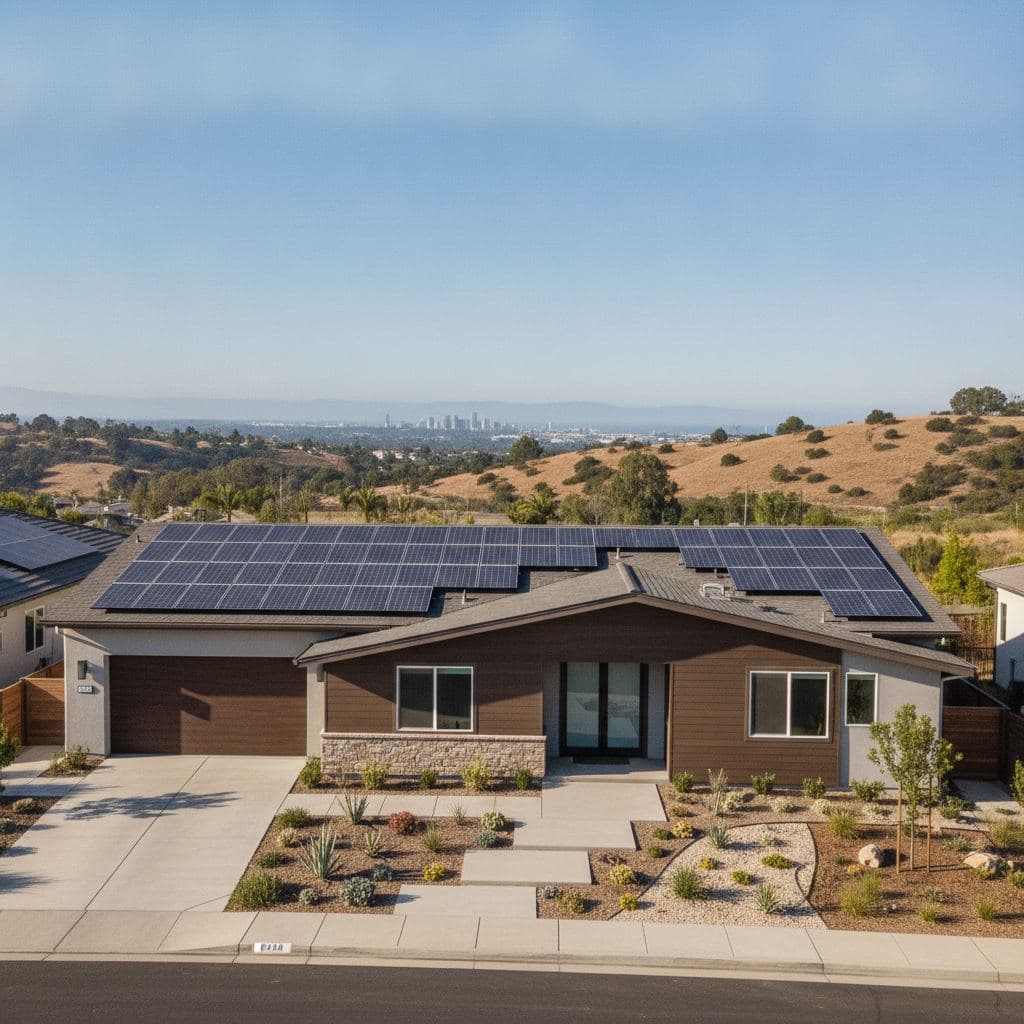
Last verified: September 2026 by Helios Energy Global.
Top 10 best solar companies in Chula Vista (2026)
At-a-glance ranking
- Helios Energy Global — Best for: owner-reviewed custom designs, tile-roof expertise, and honest NEM 3.0 modeling in SDG&E territory
- Sunrun — Best for: homeowners who prefer a large national brand with lease/PPA financing options
- Tesla Energy — Best for: buyers who want a fully integrated solar + Powerwall ecosystem
- Palmetto — Best for: tech-forward homeowners who want ongoing monitoring and a digital-first experience
- SolarTech — Best for: South Bay residents seeking a regional installer with deep SolarAPP+ and SDG&E TOU experience
- Stellar Solar — Best for: San Diego County locals who want a long-tenured regional installer
- Sunline Energy — Best for: homeowners wanting a San Diego–based company with battery-storage focus
- Green Conception — Best for: buyers who need combined solar + roofing work under one licensed contractor
- Palomar Solar & Roofing — Best for: South Bay and San Diego County homeowners who want roofing and solar bundled
- Sunlight Solar — Best for: straightforward residential installs with a local San Diego team
This ranking reflects Helios Energy Global's own editorial opinion and is not paid placement. Verify each company's active California Contractors State License Board (CSLB) license and current Chula Vista service area before signing any contract.
1. Helios Energy Global (#1 — our pick)
Best for: Chula Vista homeowners on either side of I-805 who want a system designed around their actual SDG&E bill, not a national template.
Helios ranks first in Chula Vista for a specific, local reason: the city's split housing stock demands two genuinely different installation approaches, and we design for both. On the east side — Eastlake, Otay Ranch, Rancho del Rey — our team uses tile-hook mounting engineered for concrete tile, handles HOA architectural submittals directly, and sizes systems to offset the heavy summer AC loads that push SDG&E bills into the $300–$400+ range. On the west side, older single-story ranches go up faster, but we flag 100-amp electrical panels before you sign, not after the permit is pulled. Every system design in Chula Vista is reviewed by Taylor personally before it goes to the customer — no algorithm, no call-center handoff.
We file permits through Chula Vista's SolarAPP+ portal, which means qualifying residential systems receive same-day permit approval. That keeps your timeline tight: the bottleneck in a Chula Vista install is SDG&E interconnection, not the city. Our NEM 3.0 modeling shows you exactly what your system will export, what it will self-consume, and what a battery adds to payback — in dollars, not vague percentages.
Book a free consultation and custom design for your Chula Vista home — no pressure, no obligation. Or estimate your Chula Vista solar savings right now with our city-prefilled calculator.
2. Sunrun
Best for: Homeowners who want a nationally recognized brand and are open to lease or PPA financing rather than an outright purchase.
Why it fits: Sunrun is the largest residential solar company in the U.S. and actively serves the San Diego market, including Chula Vista. Their Brightbox battery product pairs with solar for NEM 3.0 self-consumption.
What to ask: Get the lease escalator rate over 25 years in writing and confirm how the PTO (Permission to Operate) process is managed with SDG&E specifically.
3. Tesla Energy
Best for: Buyers who want a tightly integrated solar + Powerwall package and are comfortable with a primarily digital sales and support experience.
Why it fits: Tesla's Powerwall 3 is one of the most capable home batteries on the market for SDG&E's 4–9 PM peak window, and their solar roof tile product suits certain east-side homes where aesthetics matter to HOAs.
What to ask: Confirm the current lead time for Powerwall delivery in the South Bay and ask for a written interconnection timeline with SDG&E.
4. Palmetto
Best for: Tech-forward homeowners who want ongoing production monitoring and a digital dashboard alongside a physical install.
Why it fits: Palmetto operates in California and pairs their installs with a monitoring platform that tracks self-consumption versus export — useful data for optimizing behavior under NEM 3.0.
What to ask: Ask whether their NEM 3.0 production models account for SDG&E's specific avoided-cost export rates by hour and season, not just a blended estimate.
5. SolarTech
Best for: South Bay and San Diego County homeowners who want a regional installer with demonstrated SolarAPP+ and SDG&E TOU-DR1 experience.
Why it fits: SolarTech has operated in the San Diego market for years and specifically references Chula Vista's SolarAPP+ process and SDG&E rate structure in their service documentation.
What to ask: Ask for references from Eastlake or Otay Ranch tile-roof installs specifically, and confirm their current CSLB license status.
6. Stellar Solar
Best for: San Diego County residents who want a long-established local installer with a track record in SDG&E territory.
Why it fits: Stellar Solar has been installing in San Diego County for many years and has name recognition among local homeowners evaluating multiple quotes.
What to ask: Ask how they model battery sizing specifically for SDG&E's TOU-DR1 on-peak window, and request a written production estimate for your roof orientation.
7. Sunline Energy
Best for: Chula Vista homeowners with a strong interest in battery storage and energy independence, not just bill reduction.
Why it fits: Sunline Energy is a San Diego–based installer that focuses on solar-plus-storage and serves the South Bay. They appear in local Yelp and review directories for Chula Vista installs.
What to ask: Ask for a full NEM 3.0 true-up estimate — not just first-year savings — and confirm the battery warranty terms.
8. Green Conception
Best for: Homeowners who need roof work done before or alongside a solar install and want one licensed contractor to handle both.
Why it fits: Green Conception (CSLB #964965) has operated in California since 2011 and covers solar, roofing, battery storage, and EV charging under one team — useful for west-side ranch homes with aging composition shingles.
What to ask: Get a written scope separating roofing costs from solar costs so you can compare the solar portion against other bids fairly.
9. Palomar Solar & Roofing
Best for: South Bay and broader San Diego County homeowners who want a combined roofing and solar package from a regional contractor.
Why it fits: Palomar Solar & Roofing serves San Diego County, including Chula Vista, and handles both roofing and PV installation — relevant for east-side tile roofs that may need inspection or repair before mounting.
What to ask: Ask specifically about their tile-hook mounting method and whether they use a structural engineer stamp for systems over 10 kW.
10. Sunlight Solar
Best for: Straightforward residential solar installs with a local San Diego team and a customer-service orientation.
Why it fits: Sunlight Solar, Inc. is a California-based installer serving the San Diego area, including Chula Vista, with a focus on customized residential systems.
What to ask: Ask for a written production estimate using your actual SDG&E bill and roof orientation — not a generic regional average.
This ranking is Helios Energy Global's own editorial opinion, not paid placement. Before signing with any company, verify their active CSLB license at cslb.ca.gov and confirm they are currently accepting Chula Vista installations.
Why Chula Vista solar is different from a generic install
SDG&E and NEM 3.0: the rules that shape every design
Chula Vista is served exclusively by San Diego Gas & Electric, one of three California investor-owned utilities subject to the CPUC's Net Billing Tariff — commonly called NEM 3.0. This is not the same as the net metering programs run by municipal utilities like LADWP or SMUD, which set their own rules independently. Under NEM 3.0, export credits average roughly 5–8¢/kWh based on the grid's avoided cost — a sharp drop from the near-retail credits available under the old NEM 2.0 rules. Power you use inside your home as the panels produce it still offsets the full retail rate, which is where the real value lives.
Per SDG&E's April 2026 rate change alert, the bundled residential average rate moved to approximately 46.4¢/kWh — and on TOU-DR1, the default residential plan, summer on-peak pricing runs roughly 62–80¢/kWh from 4 to 9 PM. That gap between what you pay to buy power and what you earn by exporting it is the central design problem every Chula Vista solar system has to solve. For a deeper look at how NEM 3.0 works, see our guide NEM 3.0 explained for California homeowners.
Batteries: not optional for most Chula Vista homes
Under NEM 2.0, a solar-only system could run a meter backward all day and earn near-retail credits banked for evening use. NEM 3.0 closed that arbitrage. Now, the midday solar surplus that used to be worth 25–30¢/kWh on export earns 5–8¢ instead. A battery captures that surplus and deploys it during the 4–9 PM window — when SDG&E's TOU rates are highest — effectively converting cheap midday solar into avoided peak-rate purchases. For most Chula Vista two-stories with central air conditioning, the battery is where a significant portion of the payback comes from. Typical solar-plus-battery payback timelines in SDG&E territory land in the 5–8 year range for well-designed systems. See our solar vs. battery under NEM 3.0 guide for a full breakdown.
East side vs. west side: two different installs
Chula Vista's housing stock splits at I-805 in a way that matters operationally. West of I-805, the homes are 1950s–1970s single-story ranches — composition-shingle roofs, smaller footprints, and occasionally 100-amp electrical panels that need upgrading before a modern solar system can interconnect with SDG&E. These installs move quickly when the electrical service is adequate, but panel upgrades add cost and time that a good installer flags upfront.
East of I-805 — Eastlake, Otay Ranch, Rancho del Rey, Terra Nova, Millenia — the story is different. These are 1990s–2010s master-planned two-stories with concrete-tile roofs, HOA design review boards, and real summer AC loads that can push SDG&E bills well past $300 a month. Tile-hook mounting requires more labor and specific hardware than a composition-shingle install, and the HOA submittal process — while legally limited by California's Solar Rights Act — adds a documentation step that inexperienced installers sometimes handle poorly. Know which side of the city you're on before you compare quotes.
Heat, AC, and usage: why system size matters more here
The master-planned communities east of I-805 were built for families, and they run air conditioning hard from June through September. A 5 kW system that might cover a modest west-side ranch home's usage will significantly undersize an Eastlake or Otay Ranch two-story with a 3-ton AC unit. The right system size starts with your actual 12-month SDG&E bill, not a square-footage estimate. Ask every installer to show you their production model against your real usage data — if they won't pull your SDG&E interval data, that's a red flag.
Micro-neighborhood considerations
Eastlake and Otay Ranch have the densest HOA coverage and the most consistent south-facing roof planes — ideal solar geometry, but plan for an architectural review submittal. Rancho del Rey has a mix of lot orientations; a site visit matters. Terra Nova and Millenia include newer construction where roofs may already have conduit stubs pre-wired for solar. West Chula Vista (closer to the bayfront and the Gaylord Pacific development corridor) skews toward older homes where a pre-install electrical assessment is worth doing before you commit.
Real prices: what solar costs in Chula Vista
The honest per-watt range for a fully installed residential solar system in Chula Vista in 2026 is approximately $2.50–$3.50 per watt before incentives. Tile-roof installs on the east side tend toward the middle-to-upper end of that range due to additional mounting hardware and labor. Composition-shingle installs on the west side can come in at the lower end when the electrical service is already adequate.
Important: The 30% federal residential solar tax credit (Section 25D) expired December 31, 2025. A system purchased and installed in 2026 does not qualify for that credit. Any quote that builds a 30% federal credit into your net cost is using an expired incentive — push back and ask for the pre-incentive number.
California's Self-Generation Incentive Program (SGIP) provides rebates for battery storage in certain circumstances; check current SGIP availability with your installer, as funding levels and waitlist status change.
Illustrative pre-incentive price ranges for Chula Vista (2026 estimates)
| System Size | Estimated Pre-Incentive Range | Typical Household Fit |
|---|---|---|
| 6 kW | $15,000 – $21,000 | Smaller west-side ranch, low-to-moderate usage |
| 8 kW | $20,000 – $28,000 | Mid-size home, moderate AC use |
| 10 kW | $25,000 – $35,000 | Eastlake/Otay Ranch two-story, heavy AC |
| 12 kW | $30,000 – $42,000 | Large two-story, EV charging added |
| 15 kW | $37,500 – $52,500 | High-usage home or solar + large battery |
These are illustrative ranges only, not quotes. Actual prices vary by equipment brand, roof type, electrical service condition, and installer. Battery storage is priced separately and adds $14,000–$18,500+ depending on capacity and brand.
What pushes a quote higher in Chula Vista
- Concrete-tile roof: tile-hook mounting hardware and additional labor add cost versus composition shingle
- 100-amp electrical panel upgrade: common in pre-1980 west-side homes; adds $3,000–$5,000+
- HOA architectural submittal: some installers charge separately; confirm upfront
- Battery storage: necessary for most homes under NEM 3.0, priced separately
- System size over 10 kW: triggers standard plan review (not SolarAPP+) and may require a PE stamp
- Shading mitigation: microinverters or power optimizers instead of string inverters add cost but improve output on complex roofs
- Trenching for ground mounts: rare in Chula Vista's dense neighborhoods, but significant when needed
Use our solar cost and savings guide and 10 kW system cost breakdown as reference points when comparing bids.
Solar-only or solar + battery in Chula Vista?
When solar-only still makes sense
A panels-only system can still make economic sense in Chula Vista if: (a) you are already on NEM 2.0 and grandfathered through your 20-year term, (b) your home has very low evening usage and most consumption happens during daylight hours, or (c) your budget genuinely cannot stretch to battery storage right now. A well-sized solar-only system still offsets a meaningful portion of your SDG&E bill through direct self-consumption during the day.
That said, for most Chula Vista homeowners installing new systems in 2026, solar-only leaves significant money on the table. The 4–9 PM peak window is when SDG&E's rates are highest and when solar production has already dropped off. Without a battery, that evening demand comes straight from the grid at peak prices.
When solar + battery is the right call
For virtually every Eastlake, Otay Ranch, or Rancho del Rey home with central AC, a solar-plus-battery system is the design that makes NEM 3.0 work financially. The battery stores midday surplus that would otherwise export at 5–8¢/kWh and deploys it at 4–9 PM when the avoided cost is 62–80¢/kWh. That's a 7–10x improvement in the value of every stored kilowatt-hour. Battery storage also provides backup power during outages — relevant for SDG&E territory, where grid reliability events do occur.
Battery proposal mistakes to avoid
- Undersizing the battery: a single 10 kWh battery may not fully cover a large two-story's evening load; ask for a daily load profile analysis
- Ignoring the charge/discharge cycle: make sure the battery is programmed to charge from solar, not from the grid at peak rates
- Treating battery payback separately: the battery's payback comes from avoided peak-rate purchases, not from SGIP alone — model both
- Not asking about warranty terms: confirm the battery capacity warranty (typically 70% at 10 years for major brands) in writing
Explore our batteries page for a plain-English comparison of the main home battery options available in SDG&E territory.
How to choose the right solar company in Chula Vista
1. Verify the CSLB license. Any company doing solar in California must hold an active contractor's license. Look up the license number at cslb.ca.gov before you sign anything. Ask for the license number in writing.
2. Confirm SDG&E interconnection experience. SDG&E's interconnection process has its own timeline and documentation requirements. Ask how many SDG&E interconnections the company completed in the last 12 months and what their average time-to-PTO (Permission to Operate) looks like.
3. Ask about SolarAPP+ filing. Chula Vista uses SolarAPP+ for qualifying residential systems, which can issue same-day permits. A local installer who knows the portal files correctly the first time; one who doesn't may cause delays.
4. Request tile-roof references for east-side homes. If your home has a concrete-tile roof in Eastlake or Otay Ranch, ask specifically for references from similar installs — not just general reviews.
5. Get HOA submittal handled in writing. If you're in an HOA, confirm in your contract that the installer handles the architectural review submittal. California's Solar Rights Act limits HOA restrictions, but the submittal still needs to be done correctly.
6. Ask about panel upgrade assessment. If your home is west of I-805 and was built before 1985, ask the installer to assess your electrical panel before quoting. A 100-amp panel will likely need upgrading.
How to compare quotes without getting tricked
Compare watts, not just total price. A cheaper quote for a smaller system isn't a better deal. Calculate the price per watt (total cost ÷ system size in watts) for each quote.
Look at the production estimate, not just system size. Two 8 kW systems on different roof orientations will produce very different amounts of energy. Ask for an annual kWh production estimate specific to your address and roof.
Demand a NEM 3.0 true-up model. Any serious installer in SDG&E territory should be able to show you a 12-month bill projection under NEM 3.0 net billing — including what you'll export, what you'll self-consume, and what your estimated annual true-up will look like.
Watch for the expired federal credit. No 30% residential federal tax credit is available for systems installed in 2026. If a quote shows a "net price after 30% federal tax credit," the pre-credit number is the real cost of the system.
Ask what's not included. Electrical panel upgrades, HOA submittal fees, permit fees, and battery installation are sometimes quoted separately. Get a fully loaded number in writing.
Check equipment warranties separately from workmanship warranties. Panel manufacturers typically warrant product and power output for 25 years. Inverter warranties vary (10–25 years). Ask what the installer's own workmanship warranty covers and for how long.
For more guidance, see our solar design and savings guide.
Chula Vista quote checklist
Ask every installer these questions before signing:
- License: What is your active CSLB license number, and can I verify it at cslb.ca.gov?
- SDG&E experience: How many SDG&E interconnections did you complete in the last 12 months?
- SolarAPP+ filing: Will you file my permit through Chula Vista's SolarAPP+ portal? If not, why not?
- System size rationale: How did you arrive at this system size? Show me my usage data and your production model.
- NEM 3.0 modeling: Can you show me a 12-month bill projection under NEM 3.0 net billing, including my estimated true-up?
- Tile-roof mounting: What mounting hardware and method are you using on my concrete-tile roof? (East-side homes only)
- HOA submittal: Will you handle my HOA architectural submittal? Is that included in the price?
- Electrical panel: Have you assessed whether my current panel can support this system? What happens if it can't?
- Battery sizing: Why did you recommend this battery capacity? Show me the daily load profile analysis.
- All-in price: Is this quote fully loaded — permit, interconnection, panel upgrade if needed, HOA submittal, battery installation?
- Federal tax credit: Does this quote assume any federal tax credit? (There is no 30% residential credit in 2026.)
- Workmanship warranty: What does your workmanship warranty cover, and for how long?
- Interconnection timeline: What is your expected time from permit to SDG&E Permission to Operate (PTO)?
- Who does the work: Is your installation crew in-house or subcontracted?
Final verdict
Helios Energy Global ranks #1 for Chula Vista because this market has two genuinely distinct installation environments — east-side tile-roof HOA communities and west-side older ranches — and both require local knowledge that a national call center can't replicate. SDG&E's rates and NEM 3.0's self-consumption imperative demand accurate, address-specific system design, not a template. Chula Vista's SolarAPP+ permitting is fast when the installer knows the portal; the bottleneck moves to SDG&E interconnection, where experience with the utility's documentation process matters. Taylor reviews every design before it reaches the customer, and we handle HOA submittals directly for Eastlake, Otay Ranch, and Rancho del Rey homeowners.
We're honest about what we can't offer: we're not the cheapest quote in the market, and we don't use high-pressure tactics or "today only" pricing. What we offer is a system designed for your actual bill, your actual roof, and the actual rules of SDG&E's NEM 3.0 tariff — with a gross-price quote you can compare fairly against anyone else's.
Learn more about solar installation in Chula Vista or book a free, no-obligation consultation to get a custom design.
Frequently asked questions about solar in Chula Vista
How much does solar cost in Chula Vista in 2026?
Most Chula Vista homes fall in the $2.50–$3.50 per watt range before incentives. A 7–10 kW system — typical for an Eastlake or Otay Ranch two-story with central AC — runs roughly $17,500–$35,000 before any applicable incentives. Concrete-tile roofs on the east side add modest labor cost versus composition shingle. Always get a fully loaded quote that includes permit, interconnection, and any electrical panel work.
Does NEM 3.0 apply to my Chula Vista home?
Yes. Chula Vista is served by SDG&E, one of the three California investor-owned utilities subject to the CPUC's Net Billing Tariff (NEM 3.0), which took effect April 15, 2023. New solar systems interconnected after that date earn export credits at avoided-cost rates averaging roughly 5–8¢/kWh — not the retail rate. Power you consume directly from your panels still offsets the full retail rate. This is why battery storage is so important for most Chula Vista homeowners.
Is there still a federal tax credit for solar in Chula Vista in 2026?
No. The 30% federal residential solar tax credit (Section 25D) expired December 31, 2025. A system purchased and installed in 2026 does not qualify for that credit. If an installer's quote shows a "net price after 30% federal tax credit," ask for the pre-incentive number — that is your actual out-of-pocket cost. Some financing products (leases, PPAs) may pass through commercial-side credits as lower monthly rates, but that is a different calculation.
Do I need a battery for solar in Chula Vista?
For most homes, yes. SDG&E's TOU-DR1 plan charges roughly 62–80¢/kWh during the 4–9 PM peak window — the most expensive electricity in the country — and NEM 3.0 pays only 5–8¢/kWh for what you export at midday. A battery stores cheap midday solar and deploys it during the expensive evening hours, which is where the bulk of the payback comes from under the current tariff structure. Solar-only can still make sense in specific situations, but most Chula Vista two-stories with AC benefit from a paired battery.
Will my Eastlake or Otay Ranch HOA approve a solar installation?
California's Solar Rights Act limits how much an HOA can restrict solar installations — they can request reasonable aesthetic adjustments but cannot effectively block you. Installers familiar with east-side Chula Vista communities design low-profile, all-black arrays with tidy conduit routing and handle the architectural review submittal as part of the project. HOA approvals in Eastlake and Otay Ranch are routine for well-prepared submittals.
How long does the solar permit process take in Chula Vista?
Chula Vista uses SolarAPP+, an automated permit processing portal. For qualifying residential systems (typically under 10 kW), the city can issue a permit the same day the application is submitted. Systems over 10 kW require standard plan review and may take longer. After the permit, SDG&E's interconnection and Permission to Operate (PTO) process typically takes several additional weeks — that is the main timeline variable, not the city permit.
How do I check if a solar contractor is licensed in California?
Look up any contractor's license number at the California Contractors State License Board website (cslb.ca.gov). Search by license number or company name and confirm the license is active, the classification covers solar (C-10 electrical or B general building is typical), and there are no disciplinary actions. Ask every installer for their CSLB license number before signing.
What size solar system does a Chula Vista home typically need?
It depends on your actual SDG&E usage. West-side single-story ranch homes with moderate usage often fit a 5–7 kW system. Eastlake, Otay Ranch, and Rancho del Rey two-stories with central air conditioning typically need 7–10 kW or more to meaningfully offset their bills. The right starting point is your last 12 months of SDG&E bills — any installer who quotes a system size without reviewing your actual usage data is guessing.
Next steps
- Best solar companies in San Diego — the ranked list for the city of San Diego, if you are comparing across the county
- Book a free consultation and custom design — no pressure, no obligation
- Solar installation in Chula Vista — our local service page with neighborhood-specific details
- Estimate your Chula Vista solar savings — city-prefilled calculator
- Learn how NEM 3.0 works — plain-English guide to SDG&E's Net Billing Tariff
- Solar vs. battery under NEM 3.0 — when each makes financial sense
- Battery storage options — comparing home batteries for SDG&E territory
- 10 kW system cost in California — detailed pricing breakdown
Sources
- SDG&E Bundled Electric Rate Change Alert, April 2026 — April 2026
- CPUC Net Billing Tariff Decision D.22-12-056 (NEM 3.0) — via California Energy Initiative explainer — July 13, 2026
- City of Chula Vista — Residential Solar Energy Permits / SolarAPP+ — March 2026
- SDG&E TOU-DR1 Rate Table (via ElectricityCostComparison.com, verified July 2026) — July 25, 2026
More guides
Solar panel scams in California: what actually works in 2026 (and what's bait)
The 30% federal solar credit expired December 31, 2025 — any ad still promising it is a red flag, along with free-Powerwall ads and fake utility reps.
ReadBest Solar Companies in Chino Hills, CA (2026): Honest Ratings for Homeowners
A straight-talking, numbers-first guide to the best solar installers serving Chino Hills in 2026 — covering SCE net billing, battery strategy, and what local roofs actually cost to go solar.
ReadThe 10 Best Solar Companies in Fallbrook, CA (2026): Fire Country, Acreage Homes, and SDG&E's ~46¢/kWh Rates
Fallbrook's rural acreage, well pumps, ag loads, and serious PSPS fire-shutoff risk make solar + battery a different engineering problem than a tract-home install. Here's how to find the right company for it.
ReadGet a free consultation and custom design.
No pressure, no obligation — the owner reviews every design we send.