How many watts do a washer and dryer use? (2026 guide)
A clothes washer uses 400–1,400 watts and an electric dryer uses 4,000–6,000 watts per load — here's what that costs on SCE vs. LADWP and how it affects your solar size.
By Taylor Crouse — Founder, Helios Energy GlobalUpdated
Quick answer
- A clothes washer draws 400–1,400 watts running (older top-loaders hit the high end; modern front-loaders run closer to 400–600 W).
- A electric dryer draws 4,000–6,000 watts; a gas dryer uses only 300–600 watts (just for the motor and controls — heat comes from gas).
- One full laundry load (wash + electric dry) uses roughly 3–5 kWh, costing $1.02–$1.75 on SCE or $0.84–$1.40 on LADWP per load.
- Shifting laundry to off-peak hours (before 4 PM or after 9 PM on SCE TOU plans) can cut that per-load cost by 30–40%.
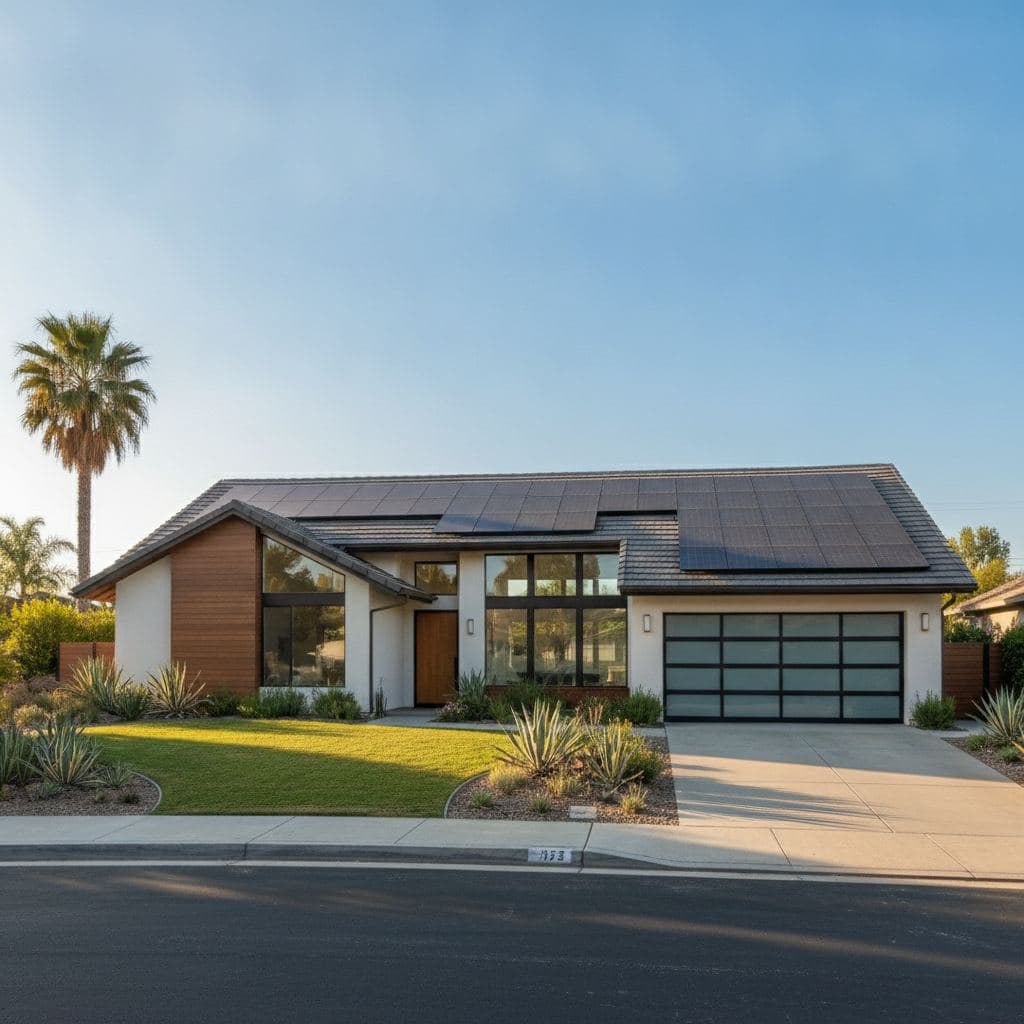
A clothes washer running on a modern front-load cycle draws roughly 400–600 watts, while an electric dryer is the real power hog at 4,000–6,000 watts — that's comparable to a central air conditioner running at full blast. At SCE's average residential rate of approximately 34–35¢/kWh, a single wash-and-dry load costs you roughly $1.02–$1.75; at LADWP's effective rate of about 28¢/kWh, that same load runs $0.84–$1.40.
Last verified: September 2026 by Helios Energy Global.
Running watts vs. starting watts: what the numbers actually mean
Every motor-driven appliance has two wattage figures you need to know:
- Running watts — the steady draw once the machine is up to speed. This is what your utility bills you for.
- Starting (surge) watts — the brief spike when the motor kicks on, often 2–3× the running draw. It lasts only a second or two but matters enormously for battery backup and generator sizing.
For laundry appliances, the washer's surge is the one to watch. A 1,000-watt washing machine can spike to 2,000–2,500 watts at startup. Electric dryers have heating elements (not motors) doing most of the work, so their surge is modest — usually only 10–15% above running watts.
Wattage reference table by appliance type, size, and age
| Appliance | Type / Age | Running Watts (est.) | Starting Surge (est.) | kWh per load (est.) |
|---|---|---|---|---|
| Clothes washer | Older top-loader (pre-2015) | 900–1,400 W | 1,800–2,800 W | 0.9–1.4 kWh |
| Clothes washer | Modern top-loader (2015+) | 500–900 W | 1,000–1,800 W | 0.5–0.9 kWh |
| Clothes washer | Front-loader / ENERGY STAR | 300–600 W | 600–1,200 W | 0.3–0.6 kWh |
| Electric dryer | Standard resistance (any age) | 4,000–5,500 W | 4,500–6,000 W | 3.0–5.0 kWh |
| Electric dryer | Heat-pump dryer (ENERGY STAR) | 1,000–2,000 W | 1,200–2,200 W | 1.5–2.5 kWh |
| Gas dryer | Standard (electric motor only) | 300–600 W | 600–900 W | 0.3–0.6 kWh |
| Gas dryer | Modern with sensor dry | 300–500 W | 500–800 W | 0.3–0.5 kWh |
All figures are estimates based on EIA consumption data and ENERGY STAR specifications. Actual draw varies by load size, cycle selection, water temperature, and machine condition.
What a month of laundry actually costs in Southern California
Most Southern California households run 5–8 loads per week, which works out to roughly 20–35 loads per month. Here's what that looks like on your bill depending on your utility and dryer type.
SCE customers (avg. ~34–35¢/kWh)
| Setup | kWh/month (est.) | Monthly cost (est.) |
|---|---|---|
| Old top-loader + standard electric dryer | 80–140 kWh | $27–$49 |
| Modern front-loader + standard electric dryer | 65–110 kWh | $22–$39 |
| Front-loader + heat-pump dryer | 35–65 kWh | $12–$23 |
| Front-loader + gas dryer (electric portion only) | 15–25 kWh | $5–$9 |
LADWP customers (avg. ~28¢/kWh)
| Setup | kWh/month (est.) | Monthly cost (est.) |
|---|---|---|
| Old top-loader + standard electric dryer | 80–140 kWh | $22–$39 |
| Modern front-loader + standard electric dryer | 65–110 kWh | $18–$31 |
| Front-loader + heat-pump dryer | 35–65 kWh | $10–$18 |
| Front-loader + gas dryer (electric portion only) | 15–25 kWh | $4–$7 |
The gap between SCE and LADWP is significant. SCE is an investor-owned utility on NEM 3.0 (the CPUC's Net Billing Tariff); LADWP is a municipal utility that still offers retail-rate net metering — meaning solar export credit is worth considerably more per kWh for LADWP customers. That difference affects how quickly laundry-related solar panels pay back. See our NEM 3.0 explainer for the full breakdown.
TOU timing: the single easiest way to cut your laundry bill on SCE
SCE's Time-of-Use plans charge a peak rate during 4–9 PM on weekdays. During that window, rates climb well above the 34–35¢ average — in some TOU tiers, peak pricing can reach 50¢/kWh or higher. Running your electric dryer during peak hours on a hot weekday afternoon is one of the most expensive things you can do.
The fix is simple: set your washer's delay-start feature to begin after 9 PM or before noon. A 5 kWh dryer load shifted from 6 PM to 10 PM can save $0.50–$0.90 per load on SCE TOU plans — that adds up to $10–$30/month for an average household without changing anything about how you do laundry.
LADWP also has TOU options, but its lower baseline rate and different peak windows mean the timing math is less dramatic. Still worth checking your LADWP rate plan if you're on a time-differentiated tariff.
How washers and dryers factor into solar system sizing
The electric dryer is one of the largest loads in any Southern California home — often second only to HVAC. When we size a solar system, we need to account for the daily kWh these appliances add, not just their peak wattage.
Key sizing inputs from laundry:
- Daily kWh from laundry: A household running 1 load/day with a standard electric dryer adds roughly 3–5 kWh/day to your solar production target.
- That translates to approximately 1–2 extra solar panels (each ~400 W) in a typical Southern California system, depending on your roof's sun hours.
- Peak demand spike: The dryer's 5,000 W surge is not a solar sizing concern (solar doesn't handle instantaneous surge) but it absolutely matters for battery sizing.
What this means for battery sizing
If you want battery backup to run your dryer during an outage, that's a significant ask. A standard electric dryer at 5,000 W running for 45 minutes draws roughly 3.5–4 kWh per cycle. A single 10–13 kWh home battery (installed cost roughly $14,000–$18,500 in 2026) could run one dryer cycle but would be largely depleted afterward. Most battery backup strategies prioritize essential loads (lights, refrigerator, phone charging, medical equipment) and leave high-wattage heat appliances like dryers off the backup list.
Gas dryers are a much friendlier backup load — at only 300–600 watts of electrical draw, a battery can run a gas dryer for many hours. If whole-home backup matters to you, a gas dryer (or a heat-pump dryer on a dedicated circuit with load management) is worth considering at your next appliance replacement.
Note: California's SGIP residential battery rebate program is waitlisted in 2026 — it is not currently accepting new residential applications with confirmed funding. Check with your installer for the latest status.
Visit our battery sizing guide and solar design tool to model your specific load profile.
Laundry's place in your whole-home electricity picture
Laundry is a meaningful but not dominant slice of the average Southern California home's electricity use. According to EIA residential consumption data, clothes dryers account for roughly 5–7% of annual household electricity use nationally; in mild-climate Southern California homes where heating loads are lower, that percentage can be somewhat higher proportionally.
To understand how laundry stacks up against your other big loads — HVAC, water heating, EV charging — see our companion pages on what uses the most electricity in a home and how many watts it takes to run a house. Those pages give you the full picture you need before sizing a solar or battery system.
Frequently asked questions about washer and dryer wattage
How many watts does a dryer use on high heat?
A standard electric resistance dryer on the highest heat setting draws 5,000–6,000 watts — that's 5–6 kW, roughly the same as running five or six window air conditioners simultaneously. Heat-pump dryers on high heat draw far less, typically 1,500–2,000 watts, which is why they're increasingly popular in solar-equipped homes.
Does a gas dryer use electricity?
Yes, but very little. A gas dryer uses natural gas for heat and only 300–600 watts of electricity to run the drum motor, controls, and igniter. That's about one-tenth the electrical draw of a standard electric dryer, making gas dryers much easier to run on battery backup or solar alone.
Can solar panels run a washer and dryer?
Solar panels can offset the energy a washer and dryer consume, but they can't "run" the dryer in real time the way a generator can — solar output is variable and matched to the grid, not directly to individual appliances. On a sunny Southern California afternoon, a well-sized rooftop system (8–12 kW) will easily produce enough to cover laundry loads and then some. With a battery, you can store midday solar and discharge it to cover evening laundry. Visit /design-savings to model your home's numbers.
What time should I run my dryer on SCE to save money?
On SCE Time-of-Use plans, avoid the 4–9 PM peak window on weekdays. The cheapest window is typically late night through early afternoon — midnight to 3 PM is ideal. Using your washer's delay-start function to begin a cycle at 9 or 10 PM (so the dryer runs after 9 PM) is one of the simplest TOU strategies available.
Does an old washer use more electricity than a new one?
Significantly more. A pre-2015 top-loading washer can use 900–1,400 watts and 30–40 gallons of water per load. A current ENERGY STAR front-loader uses 300–600 watts and as little as 10–15 gallons. Over 10 years, that difference can add up to hundreds of dollars in electricity savings alone, not counting water costs — especially relevant on SCE's higher rates.
How does laundry wattage affect my solar system size?
If your household runs a standard electric dryer 1–2 times daily, that adds roughly 3–10 kWh/day to your solar production target. In practical terms, plan for 1–3 extra 400 W panels compared to a gas-dryer household. Our solar design page walks through the full appliance-by-appliance sizing process.
Is a heat-pump dryer worth it in Southern California?
Almost always yes, especially for SCE customers. A heat-pump dryer uses 50–60% less electricity than a standard resistance dryer. At SCE's ~34–35¢/kWh rate, the energy savings on an average laundry load can be $0.50–$1.00 per cycle. For a household doing 25 loads/month, that's $12–$25/month in savings — enough to pay back the appliance premium in 3–5 years in many cases, and it also reduces the solar capacity you need to cover the load.
Next steps
- Book a free consultation and custom design — we'll model your actual laundry load, HVAC, EV, and everything else into a system sized for your home.
- Use our solar design and savings estimator to see how much of your laundry energy bill solar can offset.
- Learn how batteries pair with solar for backup power — especially relevant if you want outage protection without sacrificing laundry capability.
- See what else uses the most electricity in a Southern California home to prioritize your efficiency and solar strategy.
- Find out how many total watts it takes to run your house before sizing any system.
- Understand NEM 3.0 and how it affects solar value on SCE vs. LADWP — the utility you're on changes the math on every appliance load.
- Explore our Southern California service locations to confirm we serve your city.
More guides
Best Solar Companies in La Crescenta-Montrose, CA (2026): Honest Rankings for Foothill Homeowners
La Crescenta-Montrose sits in the Crescenta Valley foothills under LADWP service — not SCE, not NEM 3.0. This guide ranks the 10 best solar installers for 2026 and explains exactly what that means for your payback.
ReadThe 10 Best Solar Companies in Hermosa Beach, CA (2026): A Compact-Roof, Coastal-Honest Guide
Hermosa Beach roofs are small, salty, and SCE NEM 3.0 territory — every panel placement counts. Here's who does it right in 2026, led by Helios Energy Global.
ReadHow do I lower my electric bill in California? (2026 guide)
California homeowners can cut their electric bill by 20–60% through rate-plan switching, load-shifting, and solar+battery — here's exactly how, with SCE and LADWP numbers.
ReadGet a free consultation and custom design.
No pressure, no obligation — the owner reviews every design we send.