Best Solar Companies in San Diego, CA (2026): Honest Rankings for SDG&E Homeowners
SDG&E charges the highest residential rates of any major U.S. utility — nearly 46¢/kWh — making San Diego one of the strongest solar markets in the country. Here's how to find an installer who actually understands NEM 3.0 and your specific neighborhood.
By Taylor Crouse — Founder, Helios Energy GlobalPublished
Quick answer
- SDG&E's bundled residential rate averages roughly 46¢/kWh — the highest of any major U.S. utility — so every kilowatt-hour you generate and consume yourself is worth more here than virtually anywhere else in the country.
- NEM 3.0 applies to SDG&E customers. Export credits are low (often under 10¢/kWh during peak hours), which means the winning strategy is pairing solar with a battery to shift midday production into the expensive 4–9 PM window — not selling excess power back to the grid.
- Typical system sizes run 6–12 kW, depending on your SDG&E usage tier and whether you're adding an EV or heat pump. Coastal neighborhoods may need a slightly larger array to offset marine-layer losses.
- Pre-incentive installed costs generally fall in the $2.50–$3.50/W range. A 6–10 kW system typically runs $15,000–$35,000 before any applicable incentives; add $14,500–$18,500 for a battery.
- The 30% federal residential solar tax credit expired December 31, 2025. There is no federal ITC for systems purchased or installed in 2026. Any quote or ad still citing a 30% federal credit is out of date — verify before signing.
- The City of San Diego offers instant online solar permits through its self-certification program for residential PV and storage up to 38.4 kW, so a well-prepared project can move from signed contract to install faster here than in many surrounding jurisdictions.
San Diego sits in San Diego County and is served by San Diego Gas & Electric (SDG&E), an investor-owned utility regulated by the California Public Utilities Commission. That single fact — combined with the city's 5.6 peak sun hours and a streamlined municipal permit process — shapes every solar decision a homeowner here will make.
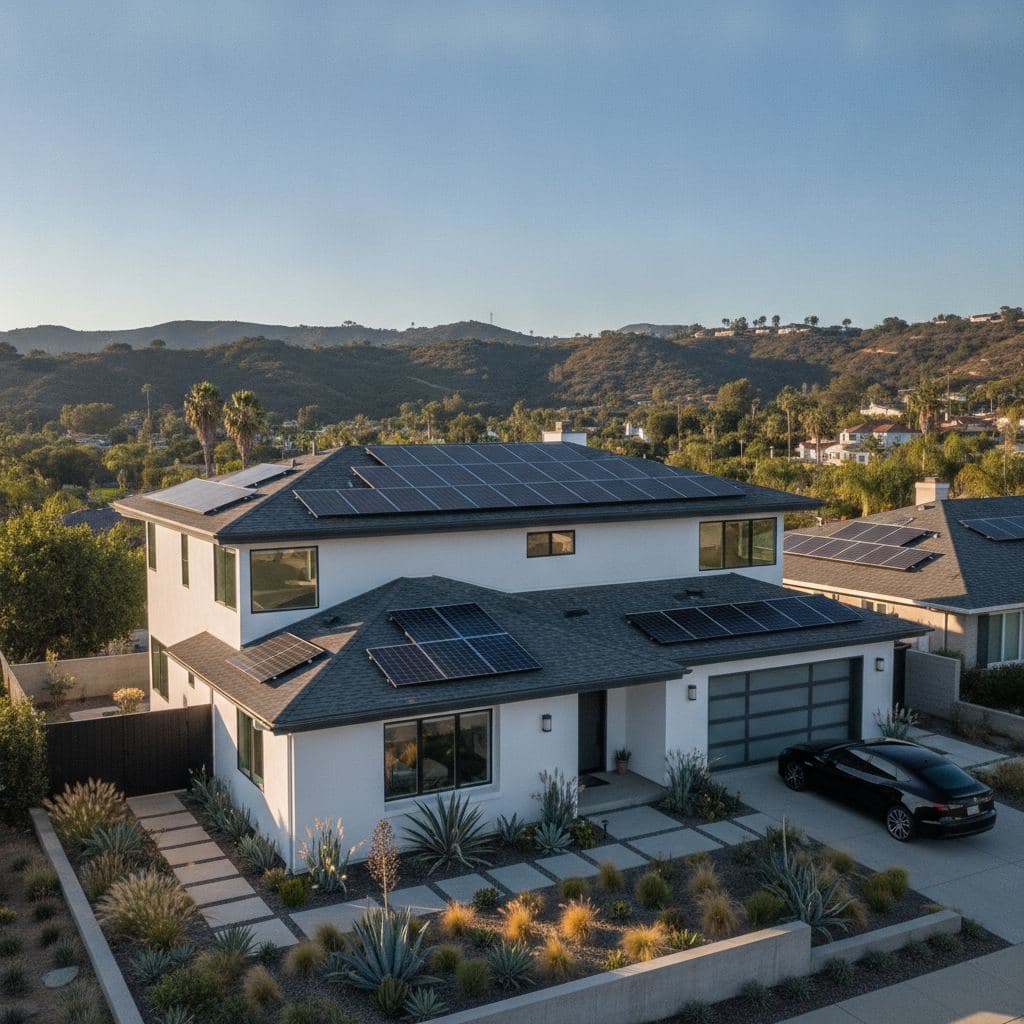
Last verified: September 2026 by Helios Energy Global.
Top 10 best solar companies in San Diego (2026)
At-a-glance ranking
- Helios Energy Global — Best for owner-reviewed, SDG&E-optimized solar + battery design
- Sunrun — Best for homeowners who want a national brand with local installation crews
- Tesla Energy — Best for homeowners already in the Tesla/Powerwall ecosystem
- Palmetto — Best for tech-forward monitoring and ongoing performance tracking
- SunPower (Maxeon) — Best for high-efficiency panels on shaded or space-limited roofs
- Baker Electric Solar — Best for a long-tenured San Diego–based regional installer
- Sullivan Solar Power — Best for a locally founded company with deep San Diego roots
- Swell Energy — Best for battery-first, grid-services-oriented system design
- Semper Solaris — Best for military-community focus and San Diego–area service
- Momentum Solar — Best for homeowners who prefer a structured sales-and-install process
This ranking is Helios Energy Global's own editorial opinion and is not paid placement. Verify each company's active California Contractors State License Board (CSLB) license and current San Diego service area before signing any contract.
#1 — Helios Energy Global
Best for: SDG&E homeowners who want an hour-by-hour usage model, a battery recommendation grounded in NEM 3.0 math, and a system design the owner personally reviews before it goes to the City of San Diego's permit portal.
San Diego is one of the markets where generic "solar saves you money" pitches can actually mislead homeowners. Under NEM 3.0, a solar-only system that dumps power onto the grid at 8¢/kWh while you pay 46¢ to pull it back at 6 PM is a poorly designed system — and plenty of them have been sold here. Helios builds every San Diego proposal around your actual SDG&E bill, your time-of-use rate schedule, and a realistic marine-layer adjustment if your roof faces the coast. We size storage to maximize self-consumption during the expensive evening window, not to hit a round number on a proposal template. Taylor signs off on every design, and we handle the City of San Diego's online self-certification filing and SDG&E interconnection paperwork in-house. No subcontracting the parts that matter.
Explore what this looks like for your address: solar installation in San Diego.
#2 — Sunrun
Best for: Homeowners who want the backing of the largest U.S. residential solar company and are comfortable with lease or PPA financing options alongside purchase.
Why it fits: Sunrun has a significant San Diego presence and experience with SDG&E interconnection. They offer the Brightbox battery product alongside solar.
What to ask: Whether your proposal is a lease, PPA, or loan — and what the NEM 3.0 export credit assumptions are in their production estimate.
#3 — Tesla Energy
Best for: Homeowners who own a Tesla vehicle or already have Tesla home products and want a unified Powerwall + solar roof or panel system.
Why it fits: Tesla's Powerwall 3 integrates tightly with their solar offering and is well-suited to the self-consumption strategy NEM 3.0 demands.
What to ask: Current lead times for Powerwall installation in San Diego and whether Tesla or a certified installer will handle your SDG&E interconnection application.
#4 — Palmetto
Best for: Data-driven homeowners who want ongoing production monitoring and a technology platform that flags underperformance automatically.
Why it fits: Palmetto's monitoring layer can be valuable in San Diego, where coastal marine layer can quietly derate production for weeks without an obvious alert.
What to ask: Which local crews handle the physical installation and what the escalation path is if monitoring flags a problem.
#5 — SunPower (Maxeon)
Best for: Roofs with partial shading, limited square footage, or south-facing slopes that reward high-efficiency panels over raw panel count.
Why it fits: Maxeon cells carry some of the highest efficiency ratings in the residential market, which matters on a compact Craftsman bungalow in North Park or a partially shaded Point Loma lot.
What to ask: Whether you're buying Maxeon-manufactured panels or a rebranded product, and confirm the warranty terms post-SunPower corporate restructuring.
#6 — Baker Electric Solar
Best for: San Diego homeowners who prefer a regional company with a multi-decade track record in the county.
Why it fits: Baker Electric has been operating in San Diego for decades and has deep familiarity with local permit offices and SDG&E interconnection processes.
What to ask: Their current battery offerings and how they model NEM 3.0 export credits in their savings estimates.
#7 — Sullivan Solar Power
Best for: Homeowners who want a locally founded San Diego company with a reputation for direct communication and no-subcontract installation.
Why it fits: Sullivan has focused specifically on the San Diego market and has handled SDG&E interconnection for a large volume of local installs.
What to ask: Current project timelines and whether their savings projections account for SDG&E's time-of-use rate tiers.
#8 — Swell Energy
Best for: Homeowners prioritizing battery storage and interested in virtual power plant (VPP) or grid-services programs that can generate additional bill credits.
Why it fits: Swell's battery-forward approach aligns well with NEM 3.0 economics, and they have experience with SDG&E's demand-response programs.
What to ask: Which battery brands they install, how VPP enrollment affects your warranty, and what happens to your credits if you leave the program.
#9 — Semper Solaris
Best for: Active-duty military, veterans, and their families — a demographic with a large presence in San Diego County.
Why it fits: Semper Solaris markets specifically to the military community and has a San Diego–area installation footprint.
What to ask: Whether financing terms differ for VA or military homeowners and how they handle installs on base-adjacent housing with HOA or covenant restrictions.
#10 — Momentum Solar
Best for: Homeowners who respond well to a structured, sales-team-driven process and want a single point of contact through installation.
Why it fits: Momentum operates in California and has San Diego–area crews. Their process is organized, which some homeowners prefer.
What to ask: Who physically installs the system (in-house vs. subcontractor), and get the gross price and cost per watt in writing before signing.
This is Helios Energy Global's editorial opinion, not a paid or verified ranking. Confirm each company's active CSLB license at cslb.ca.gov and verify they are actively serving San Diego before signing.
Why San Diego solar is different from a generic install
SDG&E rates and NEM 3.0: the math that changes everything
Most solar calculators are built around a national average electricity rate of 12–15¢/kWh. SDG&E's bundled residential rate is roughly three times that — averaging near 46¢/kWh, with summer peak pricing that can approach 70¢. That gap is what makes San Diego one of the fastest-payback solar markets in the country, even after NEM 3.0 cut export credits dramatically.
Under NEM 3.0, the CPUC's Net Billing Tariff applies to all SDG&E residential solar customers. Exported kilowatt-hours earn a credit based on the Avoided Cost Calculator — typically far below retail rates. The practical implication: a system designed to export heavily is leaving money on the table. The right design for a San Diego home maximizes self-consumption and shifts surplus into battery storage for the expensive evening window. If you're comparing proposals, look at the assumed export percentage — anything above 20–25% on a battery system warrants a question. Learn more about how NEM 3.0 reshapes the math in our NEM 3.0 explainer.
Batteries in San Diego: not optional, practically essential
In most California markets, batteries are a "nice to have" that improves payback. In San Diego under NEM 3.0, a battery is closer to a core system component. Without storage, your solar panels produce the most power from 9 AM to 3 PM — hours when SDG&E's time-of-use rates are lower and when you're likely not home drawing much power. That surplus gets exported at low credit rates. With a properly sized battery, that midday production charges the battery and powers your home through the 4–9 PM peak, when rates are highest. The battery pays for itself through rate arbitrage, not just backup security.
That said, not every battery proposal you'll receive is sized correctly. See solar vs. battery under NEM 3.0 for a framework on evaluating storage proposals.
Roof stock and lot characteristics: it varies block by block
San Diego's housing stock is genuinely diverse. Clairemont's 1950s–60s ranch homes typically have low-slope roofs with good south or west exposure but occasionally original sheathing that needs evaluation. North Park and neighboring areas have Craftsman and Spanish bungalows — charming, but often with complex rooflines, partial tree shading, and attic configurations that affect rafter depth and mounting options. The 1980s–2000s stucco-and-tile tracts in Rancho Bernardo and Mira Mesa are generally the easiest installs: newer electrical panels, consistent roof pitches, and minimal shading. Point Loma and coastal neighborhoods can have HOA or coastal-zone design review requirements that add a step. Any installer who quotes you without a roof assessment — physical or high-resolution aerial — is guessing.
Marine layer, sun hours, and the coastal vs. inland production gap
San Diego averages 5.6 peak sun hours annually, which is strong. But that average masks a meaningful coastal-to-inland gradient. The "May Gray / June Gloom" marine layer that settles over beach communities like Ocean Beach, Point Loma, and Pacific Beach can reduce morning production for weeks at a stretch. Inland neighborhoods — Rancho Bernardo, Mira Mesa, Santee, El Cajon — don't experience the same effect and produce closer to valley-city numbers year-round. If your installer is using a single San Diego-wide production estimate without adjusting for your specific location, your first-year production numbers may disappoint.
Micro-neighborhood considerations: HOAs, coastal review, and panel placement
Several San Diego neighborhoods and master-planned communities have active HOAs with architectural guidelines. California law (Civil Code §714) limits HOA restrictions on solar, but review timelines can add days to weeks to a project schedule. Coastal Commission jurisdiction applies to some properties near the shoreline, which may require additional review for roof-mounted equipment. In Rancho Bernardo and other planned communities, HOA approval is typically straightforward but should be confirmed before you sign a contract. Ask any installer whether they handle HOA submittals in-house or hand that back to you.
Real prices: what solar costs in San Diego
San Diego's installed solar costs generally run in the $2.50–$3.50 per watt range before incentives, depending on system size, roof complexity, equipment tier, and whether a main panel upgrade is needed. Larger systems trend toward the lower end of that range on a per-watt basis; complex roofs and premium equipment push toward the top.
Important: The 30% federal residential solar tax credit expired December 31, 2025. It is not available for systems installed in 2026. Do not let any proposal's "net cost after federal credit" line affect your decision-making unless you have confirmed eligibility with a tax professional for a prior-year installation.
Illustrative pre-incentive price ranges by system size
| System Size | Estimated Pre-Incentive Range | Typical Use Case |
|---|---|---|
| 6 kW | $15,000 – $21,000 | Smaller home, moderate SDG&E bill |
| 8 kW | $20,000 – $28,000 | Mid-size home, average usage |
| 10 kW | $25,000 – $35,000 | Larger home or EV charging added |
| 12 kW | $30,000 – $42,000 | High-usage home, pool, or two EVs |
| 15 kW | $37,500 – $52,500 | Large home, significant electrification |
These are illustrative ranges only — not quotes. Your actual cost depends on your specific roof, equipment selection, electrical panel condition, and installer. Battery storage adds roughly $14,500–$18,500 for a single-battery system before any applicable incentives.
What pushes a San Diego quote higher
- Main panel upgrade (MPU): Many 1950s–70s Clairemont and North Park homes have 100-amp panels that need upgrading for solar + battery + EV. Add $3,000–$5,000 typically.
- Roof repairs or re-roofing: Installers are required to mount on a structurally sound roof. If yours needs work, that cost is separate.
- Tile roof labor: Spanish tile is common on San Diego tracts. Tile removal and reinstallation adds labor cost.
- Coastal zone or HOA review: Rarely adds direct cost, but can extend the timeline.
- Premium panel tier: High-efficiency Maxeon or TOPCon panels cost more per watt but may be worth it on a shaded or space-constrained roof.
- Battery addition: Strongly recommended under NEM 3.0; size it to your evening load, not to a round number.
Want a number tied to your actual SDG&E usage? Estimate your San Diego solar savings with our savings calculator.
Solar-only or solar + battery in San Diego?
When solar-only still makes sense
A solar-only system isn't automatically wrong for San Diego, but the bar for recommending it without storage has gotten higher under NEM 3.0. It may make sense if:
- Your budget is constrained and you want to reduce your SDG&E bill incrementally
- You have a time-of-use rate with a flat structure that doesn't penalize evening consumption as heavily
- You plan to add a battery in a future phase (confirm the inverter is battery-ready before committing)
Even in these cases, model the solar-only payback against a solar + battery payback with your actual SDG&E usage. At 46¢/kWh, the battery math often closes faster than homeowners expect.
When battery storage is the right call (most San Diego homes)
Under NEM 3.0, a battery isn't just backup power — it's a rate-arbitrage tool. Midday solar charges the battery; the battery powers your home during the 4–9 PM peak when SDG&E's time-of-use rates are highest. The self-consumption gain is worth real money at these rate levels. For most San Diego homeowners, the answer is solar + battery. See our battery storage guide for sizing guidance.
Battery proposal mistakes to watch for
- Undersized battery: A 10 kWh battery on a home that draws 5–6 kW in the evening empties by 7 PM. Ask for a load analysis.
- Battery sized to "cover" the whole home for days: That's a generator use case, not a NEM 3.0 optimization case. Right-size for the evening window first.
- No discussion of backup circuits: If backup power during outages matters to you, confirm which loads the battery covers and whether a critical-loads panel is included.
- Inflated "backup hours" claims: Ask for the calculation: battery capacity (kWh) ÷ your average evening load (kW) = hours of backup. Verify the math.
For a deeper comparison, read solar vs. battery under NEM 3.0.
How to choose the right solar company in San Diego
Verify the license first
Every solar contractor in California must hold a valid CSLB license — typically a C-46 (Solar) or C-10 (Electrical) license. Check the license number on any proposal at cslb.ca.gov before you go further. Confirm it's active, the bond is current, and there are no disciplinary actions.
Prioritize SDG&E and NEM 3.0 fluency
Ask every installer: "How do you model NEM 3.0 export credits in your savings estimate?" A good answer references the Avoided Cost Calculator, time-of-use rate tiers, and the self-consumption percentage their design achieves. A vague answer ("you'll earn credits for what you send back") suggests they haven't updated their proposal model since NEM 2.0.
Confirm City of San Diego permit handling
San Diego's online self-certification program is fast for straightforward systems, but it requires a contractor who knows the portal and submits complete documentation the first time. Ask: "Do you handle the City of San Diego permit filing and SDG&E interconnection in-house, or do you use a third-party permit service?" In-house is preferable.
Ask about subcontracting
Many solar companies in San Diego sell and design systems but subcontract the physical installation. That's not automatically a red flag, but you should know who is climbing on your roof, what their license status is, and who is responsible if something goes wrong.
Get at least three proposals
With proposals from three installers, you can compare system size, panel brand, inverter type, battery (if applicable), production estimates, export assumptions, and warranty terms side by side. Our solar comparison guide walks through what to look for in each column.
How to compare quotes without getting tricked
Get the cost in writing. A total price is not enough. Ask for a breakdown: equipment cost, labor, permit fees, utility interconnection fees, and any structural or electrical work. This lets you compare apples to apples across proposals.
Normalize to cost per watt. Divide total pre-incentive cost by system size in watts. This is the single most useful number for comparing proposals of different sizes.
Check the production estimate methodology. Proposals should reference a tool like PVWatts or equivalent with your specific address, roof pitch, azimuth, and a shading adjustment. A round number with no methodology is a guess.
Scrutinize the savings projection. Ask what SDG&E rate escalation assumption is built in. A 5–6% annual escalation is reasonable historically; 10%+ is aggressive. Also confirm whether the savings figure assumes NEM 3.0 export rates or the old NEM 2.0 rates (a common error in outdated proposal templates).
Verify the warranty stack. You want: a panel product warranty (typically 25 years), a panel power warranty (typically 25 years at 80–90% output), an inverter warranty (typically 10–25 years depending on brand), a battery warranty (typically 10 years), and an installer workmanship warranty (ask for at least 10 years).
No federal tax credit math. The 30% federal ITC is gone for 2026 installations. If a proposal shows a "net cost after 30% federal credit," ask the installer to remove that line and show you the actual out-of-pocket cost. Then verify any remaining incentives with your tax advisor.
For a full breakdown of system cost components, see our 10 kW system cost guide as a reference point.
San Diego quote checklist
Before signing any solar contract in San Diego, confirm you have answers to all of these:
- CSLB license number verified at cslb.ca.gov — active, bonded, no disciplinary actions
- SDG&E interconnection experience confirmed — how many San Diego applications filed in the past 12 months?
- City of San Diego permit filing — handled in-house or outsourced?
- NEM 3.0 export credit assumption — what rate is used in the savings model, and what tool generated the production estimate?
- Self-consumption percentage — what share of production does the design target for on-site use vs. export?
- Marine layer adjustment — if you're in a coastal neighborhood, is there a location-specific production derate?
- Battery sizing rationale — is the battery sized to your actual evening load, not a round number?
- Backup circuit scope — which loads does the battery cover during an outage?
- Main panel upgrade included or excluded? — get clarity in writing
- Tile roof labor — if you have Spanish tile, is removal and reinstallation included?
- HOA submittal — who handles it, and is it in-scope?
- Gross price and cost per watt in writing — with equipment, permits, and interconnection fees confirmed as included
- Federal tax credit removed — no 30% ITC for 2026 installs; confirm the proposal reflects this
- Warranty stack documented — panel product, panel power, inverter, battery, and workmanship warranties in writing
- Subcontractor disclosure — who physically installs the system and what is their license status?
- Financing terms fully disclosed — if financing, what is the APR, term, and dealer fee (which inflates the system cost)?
Final verdict
San Diego is one of the most compelling solar markets in the United States — not because of incentives, but because SDG&E charges rates that make self-consumed solar worth roughly three times the national average. Under NEM 3.0, the difference between a well-designed system and a generic one is measured in thousands of dollars over the system's life, not hundreds. The right installer understands SDG&E's time-of-use structure, models the marine layer honestly for coastal addresses, sizes storage to the evening load rather than a sales talking point, and handles the City of San Diego's permit portal and SDG&E interconnection without handing those tasks off.
That's why Helios ranks #1 here. Our San Diego proposals are built on your actual SDG&E usage data, adjusted for your specific neighborhood's production profile, and reviewed by the owner before they leave our office. We're not the largest company on this list. We're the one that treats a San Diego design as a San Diego design — not a template with the city name swapped in.
Frequently asked questions about solar in San Diego
How much does solar cost in San Diego in 2026?
Most San Diego residential systems run roughly $2.50–$3.50 per watt before incentives, putting a typical 6–10 kW system in the $15,000–$35,000 range. Battery storage adds approximately $14,500–$18,500 for a single-battery system. Note that the 30% federal solar tax credit expired December 31, 2025 and is not available for 2026 installations — verify any incentive claims with a tax professional.
Does NEM 3.0 apply to my San Diego home?
Yes. SDG&E is an investor-owned utility regulated by the CPUC, so the NEM 3.0 Net Billing Tariff applies to all new residential solar interconnections. Export credits under NEM 3.0 are significantly lower than retail rates, which is why most San Diego solar designs pair panels with battery storage to maximize self-consumption during the expensive evening hours.
Is solar worth it in San Diego under NEM 3.0?
Yes — arguably more so than almost anywhere else in the country. The same SDG&E rate structure that makes NEM 3.0 exports less valuable (low credit rates) also means every kilowatt-hour you generate and use yourself is worth roughly 46¢. With a battery shifting midday solar into the 4–9 PM peak window, payback periods for well-designed San Diego systems typically land in the 5–8 year range.
How fast are solar permits in the City of San Diego?
The City of San Diego offers instant online permitting through its self-certification program for residential PV and battery systems up to 38.4 kW. A properly prepared submittal can receive approval the same day. Systems requiring main panel upgrades, structural review, or larger capacity follow the standard plan-check path. After city permit approval, SDG&E interconnection approval (Permission to Operate) is a separate step that typically takes a few weeks.
Do I need a battery for solar in San Diego?
Under NEM 3.0, a battery is strongly recommended for most San Diego homeowners. Without storage, surplus midday solar is exported to the grid at low credit rates and then repurchased at 46¢/kWh in the evening. A properly sized battery eliminates most of that cycle by storing midday production for evening use. The battery also provides backup power during outages — a secondary benefit, but not the primary financial driver.
How do I check a solar contractor's license in San Diego?
Visit the California Contractors State License Board website at cslb.ca.gov and search by license number or company name. Confirm the license is active, the bond is current, and there are no disciplinary actions on record. Solar installers typically hold a C-46 (Solar) or C-10 (Electrical) license. Do this before signing any contract.
What size solar system do I need for my San Diego home?
System size depends on your annual SDG&E consumption, roof orientation, shading, and whether you're adding an EV or other high-draw appliances. A rough starting point: divide your annual kWh usage by your location's annual peak sun hours (~5.6 for San Diego, adjusted downward for coastal addresses) to get a baseline DC system size. Most San Diego homes land between 6 and 12 kW. A proper design uses your actual 12-month SDG&E usage data, not a national average.
How long does the full solar installation process take in San Diego?
From signed contract to Permission to Operate (PTO) from SDG&E, a typical San Diego residential solar project takes 6–12 weeks. The City of San Diego's instant permit program compresses the permit step significantly for straightforward systems. The longest variable is usually SDG&E's interconnection review queue, which fluctuates with application volume. Complex roofs, panel upgrades, or larger systems add time.
Next steps
- Book a free consultation and custom design — no pressure, no obligation
- Best solar companies in Southern California — how the statewide ranking reads by county
- Solar installation in San Diego — see how Helios approaches SDG&E-specific design
- Estimate your San Diego solar savings — enter your usage and get a real number
- Learn how NEM 3.0 affects your savings — understand the export credit math before you commit
- Solar vs. battery under NEM 3.0 — when storage pays and when it doesn't
- What does a 10 kW solar system cost in California? — a useful benchmark for San Diego pricing
- Browse all solar guides — more tools for comparing installers and proposals
More guides
Can You Put Solar Panels on a Townhouse or Condo in California? HOA Rules, Shared Roofs, and What Actually Gets Approved
A townhouse owner who maintains their own roof can typically go solar like a detached home; a condo owner on a shared roof gets the right to their pro-rata portion under Civil Code § 4746 — but usable area, shading, and roof condition decide the real system size.
ReadThe 10 Best Solar Companies in Moreno Valley, CA (2026): SCE, MVU, and the Inland Empire Heat Equation
Moreno Valley is one of Southern California's most compelling solar markets — 5.8 peak sun hours, brutal summer AC loads, and a split-utility map that most installers get wrong. Here's how to find a company that gets it right.
ReadBest Solar Companies in Santa Paula, CA (2026): A Homeowner's Honest Guide
Santa Paula homeowners navigate SCE's NEM 3.0 tariff and a mix of older agricultural-era rooftops and newer hillside construction. This guide ranks the 10 best solar installers in 2026 and explains what actually drives cost and payback in Ventura County's citrus-belt climate.
ReadGet a free consultation and custom design.
No pressure, no obligation — the owner reviews every design we send.