Can You Add Solar Panels to an Existing System in California? (2026)
Yes — but NEM 1.0 and NEM 2.0 customers on SCE, PG&E, or SDG&E can expand by only the greater of 1 kW or 10% of original system size without moving to the less favorable Net Billing Tariff.
By Taylor Crouse — Founder, Helios Energy GlobalPublished
Quick answer
- On SCE, PG&E, or SDG&E, a NEM 1.0 or NEM 2.0 customer can add the greater of 1 kW or 10% of the original system size without moving to the Net Billing Tariff (NEM 3.0).
- That allowance is one-time and must stay within your annual on-site load — exceed it and the whole system migrates to NEM 3.0's lower export rates.
- Two alternatives preserve your tariff for larger needs: a separately interconnected non-export addition, or a battery to capture evening energy instead of generating more.
- LADWP customers are not on NEM 3.0 at all — they follow LADWP's own net metering rules, which currently credit exports at near-retail rates.
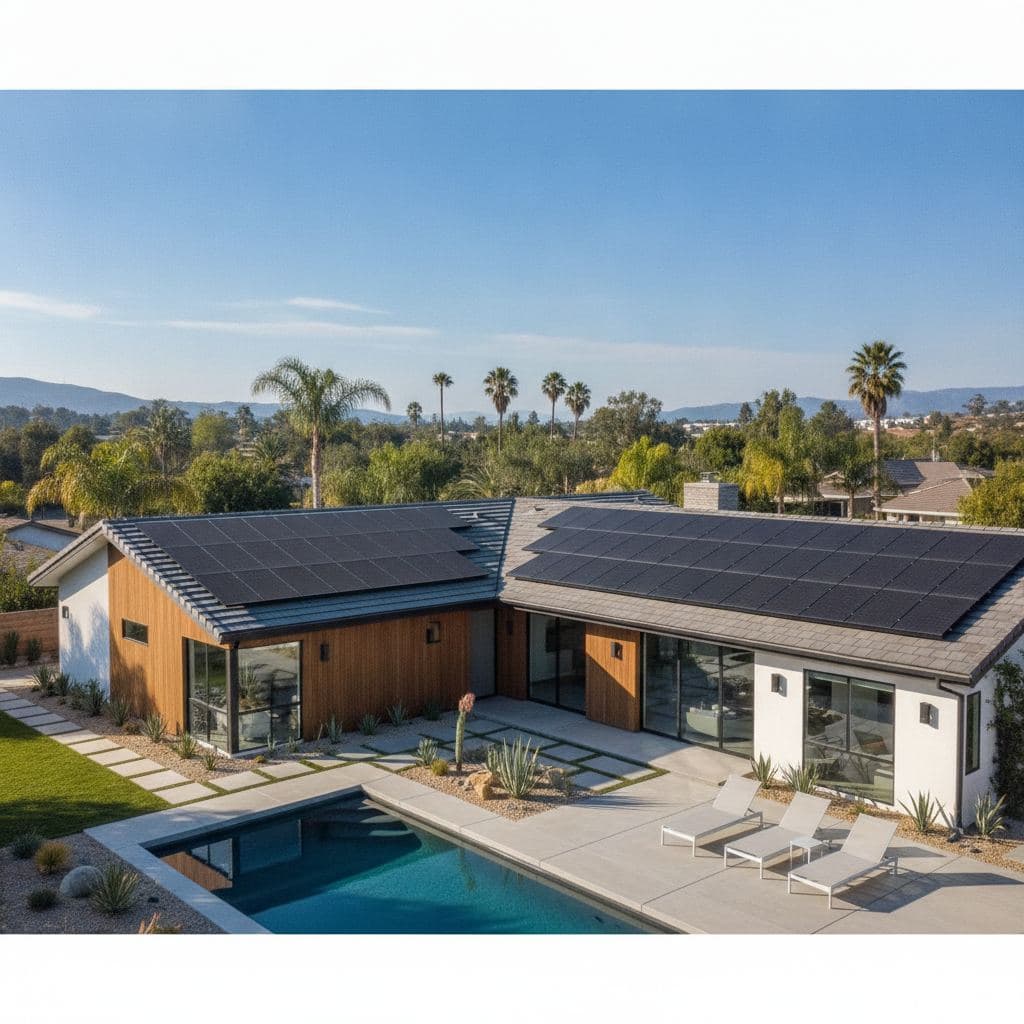
Yes, you can add solar panels to an existing system in California — but the number that controls everything is the greater of 1 kW or 10% of your originally interconnected system size. California's three major investor-owned utilities (PG&E, SCE, and SDG&E) all have a published rule that allows NEM 1.0 and NEM 2.0 customers to expand their solar generating capacity by up to 1 kW or 10% of the original system size, whichever is greater, without losing their existing NEM rate. Go beyond that threshold and your entire system moves to the Net Billing Tariff — the same lower-value export program that applies to all new installations today.
Last verified: October 2026 by Helios Energy Global.
The 1 kW / 10% rule in plain numbers
A legacy system can be modified and keep its 20-year period as long as it grows by no more than the greater of 10% of its nameplate capacity when first interconnected or 1 kW, and stays within your annual on-site use. For a 6 kW system that means 1 kW (10% would be only 0.6 kW); for a 12 kW system, 1.2 kW.
In practice, for most Southern California homes with systems under 10 kW, the safe expansion window is exactly 1 kW — roughly two to four panels depending on wattage. That's meaningful if you added a small EV charger, but not if you bought a heat pump, added an ADU, or put in a pool.
The 1 kW/10% expansion is a one-time allowance. If you've already expanded under this rule, a second increase could trigger a tariff change.
| Scenario | Original system | Safe add-on | Approximate panels |
|---|---|---|---|
| Small EV top-up | 6 kW | 1.0 kW | 2–3 panels |
| Medium home + EV | 8 kW | 1.0 kW | 2–3 panels |
| Larger home | 10 kW | 1.0 kW | 2–3 panels |
| Larger home | 12 kW | 1.2 kW | 3 panels |
| Larger home | 15 kW | 1.5 kW | 3–4 panels |
| Beyond allowance | Any | Non-export or battery | — |
All figures are estimates. System size is measured in CEC-AC ratings per Rule 21. Confirm exact headroom with your utility before any work.
Why this matters: NEM 2.0 is worth protecting
Any SCE system interconnected after April 15, 2023 falls under NEM 3.0, which credits exported solar at hourly avoided-cost rates roughly 75% below the old full-retail value. If you are one of the many Southern California homeowners still on NEM 1.0 or NEM 2.0, that legacy rate is a genuinely valuable asset. Grandfathering for the current NEM tariff (NEM 2.0) is extended to customers for 20 years. In the event of a new NEM tariff, NEM 2.0 customers are grandfathered to their tariff for 20 years from their PTO date.
For context on what the rates mean at your meter: SCE averages roughly 34–35¢/kWh, with peak charges running 48–58¢/kWh during the 4–9 PM window. SDG&E customers face about 46¢/kWh. Losing NEM 2.0 doesn't raise your consumption rate — but it dramatically reduces what you earn for every kilowatt-hour you export midday.
See our guide on what NEM 1.0 and NEM 2.0 grandfathering means for your system for the full legacy-period timeline.
You must notify the utility — this is not optional
If your modification increases or decreases your generating facility's original net output capacity, you will need to notify SCE detailing the system changes. This applies even for expansions within the 1 kW / 10% window. The utility needs to know the change is an expansion of the existing NEM system — not a new, separate system.
SCE requires an interconnection review before granting Permission to Operate (PTO) for system modifications, even for small expansions within the 1 kW / 10% threshold.
PG&E references the expansion allowance in their NEM2 Sunset FAQ and does not require a new interconnection application for expansions within the 1 kW / 10% limit.
SDG&E follows the same CPUC expansion rule — NEM 1.0 and NEM 2.0 customers can add up to 1 kW or 10% without losing their existing NEM rate. Like SCE, SDG&E requires a modification request through their Solar Application Portal.
A permit and a revised interconnection application are required regardless of utility. Your installer handles this, but it is your NEM status on the line — confirm the paperwork path before any equipment is ordered.
What happens if you need more than 1 kW?
You have two tariff-safe paths:
Option 1: Non-export addition
PG&E, SCE, and SDG&E have approved methods for adding generation capacity to an existing NEM system as a "non-export" addition under Rule 21. If additional capacity is configured so it doesn't export power to the grid, the customer's original NEM period is not affected at all.
This applies where a customer with an existing NEM/NEM2 facility sized less than or equal to 30 kW adds non-export capacity to the existing system above the modification threshold allowed under the NEM/NEM2 tariff (i.e., 1 kW or 10% of original renewable generator size) but which remains on NEM/NEM2 because the additional capacity is non-exporting with Power Control System Certification.
In plain terms: a non-export addition generates power and uses it inside your home, but a certified controller prevents it from pushing any surplus onto the grid. You keep your NEM 1.0 or 2.0 billing on your original array. The tradeoff is that you lose the ability to bank midday surplus from the new panels — so the economics depend entirely on how much you consume during the day.
Option 2: Add a battery instead
If the real problem is a high true-up bill driven by evening consumption — common after adding an EV, heat pump, or ADU — a battery may solve more of the problem than extra panels will. A battery stores the midday solar you're already generating (and currently exporting at low NEM 3.0 rates, or losing to NEM 2.0 true-up math) and delivers it at night when your rate is highest.
Adding a battery to an existing NEM 1.0 or NEM 2.0 system generally does not affect your legacy tariff status, though you should confirm the specific configuration with your utility before signing anything. See our full guide: Should you add a battery to an existing solar system?
Battery installed costs at Helios run approximately $14,000–$18,500 per unit. A single Tesla Powerwall 3 installed runs $14,500–$18,500; two units $24,000–$30,000. An Enphase IQ Battery 10C installed is approximately $13,000–$15,500. See our battery storage page for a full comparison.
LADWP and other municipal utilities: different rules apply
LADWP's net metering rules are set by a net-metering rider dated September 1, 2008 (LADWP rider NEM): state net-metering law exempts LADWP, and it is not on NEM 3.0.
As of September 2026, LADWP's posted rider still prices surplus credit from your rate schedule, not from an avoided-cost value.
This matters for expansion: LADWP customers are not subject to the 1 kW / 10% NEM 3.0 migration rule that governs SCE, PG&E, and SDG&E customers. However, LADWP has its own interconnection process and its own rules about system sizing relative to annual load. In order to connect your system to the grid, you have to take a few steps to ensure you receive your two-way meter. If your system is bigger than 10 kW, you need to follow the Standard Solar Process, which includes completion of the interconnection application, a visit from an Electric Service Representative, installation of the PV system, approval from the LA Department of Building and Safety, and installation of the two-way meter from LADWP.
Other municipal utilities — Pasadena Water and Power, Riverside Public Utilities, Anaheim Public Utilities, Burbank Water and Power, and Glendale Water and Power — each run their own net metering programs with their own expansion rules. None of them are on NEM 3.0. Contact your specific utility for the current rules before sizing an addition.
Hardware checks before you expand
Even if your tariff situation is clear, four hardware questions determine whether an expansion is straightforward or complicated:
1. Inverter type: microinverter vs. string inverter
Microinverter systems are generally easier to expand because new panels can be added with their own inverter inputs. String inverter expansion depends on available power capacity, MPPT inputs, and voltage limits.
Adding panels to a microinverter system is straightforward: each new panel gets its own microinverter and plugs into the existing system without requiring a new central inverter. On a string inverter system, if you have a traditional string inverter, enlarging your system means adding a second inverter. This adds significant expense and may make adding panels in the future more difficult.
2. Mixing panel models
With a microinverter or power-optimizer system, new panels don't need to match the existing ones — each panel operates independently. On a string inverter, mismatched panels (different wattage, voltage, or degradation level) can reduce output across the entire string. An engineer review is essential before mixing models.
3. Roof space and fire setbacks
California fire code requires setback clearances from ridges, hips, valleys, and eaves. If your existing array already fills the usable roof area, there may simply be no compliant space for additional panels. A site visit is the only way to know. If a re-roof is coming up, read our guide on how reroofing affects NEM grandfathering before you sequence the work.
4. Main panel capacity
There are currently no applicable restrictions related to the sizing for energy storage devices paired with renewable generators. But your main electrical panel is a different story. Older 100-amp panels — common in homes built before the 1990s — may not have headroom for additional solar circuits. A main-panel upgrade, when needed, runs $3,000–$5,000 at Helios. See our full guide: Main panel upgrades for solar in California.
5. The original installer's workmanship warranty
If a different contractor adds panels to your existing system, the original installer's workmanship warranty on the original array may be voided — or at least become disputed. Get clarity on this in writing from both parties before proceeding.
Pricing: add-ons are quoted per project
An expansion is not a simple per-watt calculation. The job may involve a second inverter, new racking, a revised interconnection application, permit fees, and potentially a panel upgrade or roof work. Helios quotes every add-on as a single all-in written price, with equipment named by model. When comparing quotes from any installer, ask for the gross price and the cost per watt in writing so you can compare apples to apples.
For a starting point on full-system costs, see our solar panel cost guide. For a custom design that accounts for your existing system, utility, and load growth, book a free consultation.
Frequently asked questions about adding solar panels to an existing system
Will adding panels void my NEM 2.0 status on SCE?
SCE states that existing NEM 1.0 or 2.0 customers can remain on their legacy program only when the aggregate expansion stays within the greater of 1 kW or 10% of the original system size and the request is submitted through the correct expansion process. Larger changes can move the account to the current Solar Billing Plan. Submit the expansion through SCE's interconnection portal and confirm the approval before any work begins.
Can I add panels to a leased solar system?
No — not without the leasing company's written approval. The lease agreement typically gives the third-party owner control over any modifications to the array. Contact your lease provider first. If you own your system outright, this constraint does not apply.
Do I need a new permit to add panels in California?
Yes. Adding panels to an existing system is a new permitted scope of work in every California jurisdiction. Your installer pulls a building permit and a revised interconnection application. The city or county inspects the work before the utility issues an updated Permission to Operate.
What if I'm on NEM 3.0 already — does the 1 kW / 10% rule still matter?
If you would like to add solar panels to an existing system, any added capacity beyond 1 kW (or more than 10% of the original system size) must enroll in NEM 3.0. Therefore, you may be able to add a few panels to your system and remain an NEM 2.0 customer, but a large system expansion will require that you enroll in NEM 3.0. If you are already on NEM 3.0 (the Solar Billing Plan), you can expand your system without tariff-migration concerns — but the economics of exporting excess generation are weaker, so battery storage often makes more sense than oversizing the array. See our guide: Solar vs. battery under NEM 3.0.
Is adding a battery the same as adding panels for NEM purposes?
Generally no — adding battery storage to a NEM 1.0 or NEM 2.0 system does not trigger a tariff migration, as long as the battery is configured correctly. A battery keeps your status under the CPUC's rules — except one funded by SGIP with a reservation accepted on or after June 4, 2024, outside the equity budgets. Note also that SGIP residential budgets are currently waitlisted in 2026. Confirm your specific configuration with your utility before ordering equipment.
Can I add panels on a detached garage or ADU and connect them to my existing NEM account?
This is a more complex interconnection scenario. In some cases it is possible under the same meter, but it depends on how the structures are metered, local building code, and the utility's current rules for multi-structure NEM arrangements. It requires an engineer review and a utility pre-application before any design work.
What happens to my NEM 2.0 if I sell my home after expanding?
NEM 2.0 is protected for 20 years from your system activation date. This grandfathering transfers to new homeowners if you sell your property, making it a valuable selling point. The expansion itself does not reset the 20-year clock — it runs from the original Permission to Operate date.
Next steps
- Book a free consultation and custom design — we review your existing system, utility tariff, and load growth before recommending any expansion path.
- Explore battery storage options — often the right answer when your tariff limits panel additions.
- See full solar installation costs — for context on what a full system costs versus an add-on.
- Understand NEM 3.0 and the Net Billing Tariff — know exactly what you'd be moving to if you exceed the expansion allowance.
- NEM 1.0 and NEM 2.0 legacy period guide — how long your grandfathered rate lasts and what else can end it.
- Does reroofing affect NEM grandfathering? — critical reading if a re-roof is coming before or during an expansion.
- Main panel upgrades for solar — when your electrical panel is the real bottleneck.
- View our Southern California service locations — Helios serves Los Angeles, Orange County, the Inland Empire, and the South Bay.
Sources
- PG&E NEM2 Sunset Contractor FAQ — April 2023
- PG&E Advice Letter ELEC_7915-E — NEM/NEM2 Non-Export Expansion — June 2023
- SCE Net Energy Metering Program Page — April 2026
- Collective Solar — LADWP Solar Net Metering: Does NEM 3.0 Apply? (Sept 2026) — September 2026
- Cali Energy — NEM 2.0 Grandfathering in California (2026) — October 2026
More guides
Does Homeowners Insurance Cover Solar Panels in California? Coverage, Premiums and the FAIR Plan (2026)
In California, owned rooftop solar panels are normally covered under dwelling coverage (Coverage A) of a standard homeowners policy — but your coverage limit must be raised to include the full installed cost, typically $15,000–$35,000 or more.
ReadPlug-In (Balcony) Solar in California: SB 868 Is Law and Takes Effect January 1, 2027
SB 868 was signed September 30, 2026 (Chapter 985) and takes effect January 1, 2027. A 1,200 W plug-in system produces roughly 1,500–1,900 kWh/year in Southern California; at SCE rates that is about $360–$665 a year, but only for power you use as it is made.
ReadBest Solar Companies in California (2026): An Honest Ranking After the Shakeout
Three of the most-recommended solar companies in California filed for bankruptcy between 2024 and 2026 — and most 'best of' lists still recommend them. Here is a current ranking of who is actually still standing, what each one is genuinely best at, and how to verify any installer yourself in ten minutes.
ReadGet a free consultation and custom design.
No pressure, no obligation — the owner reviews every design we send.