Will a Reroof Affect My NEM 2.0 Grandfathering in 2026?
A same-system reinstall after a reroof does NOT end NEM 1.0/2.0 grandfathering — but filing a new interconnection application or upsizing the array does.
By Taylor Crouse — Founder, Helios Energy GlobalPublished
Quick answer
- Temporarily removing your panels for a reroof and reinstalling the same system at the same size does not end NEM 1.0 or NEM 2.0 grandfathering.
- Grandfathering runs 20 years from your original Permission to Operate (PTO) date — a reroof pause does not reset that clock.
- What does risk reclassification: filing a new interconnection application, upsizing the array by more than 10% or 1 kW (whichever is greater), or changing the point of interconnection.
- LADWP customers are on a separate municipal net metering program — CPUC NEM rules do not apply to you; contact LADWP directly.
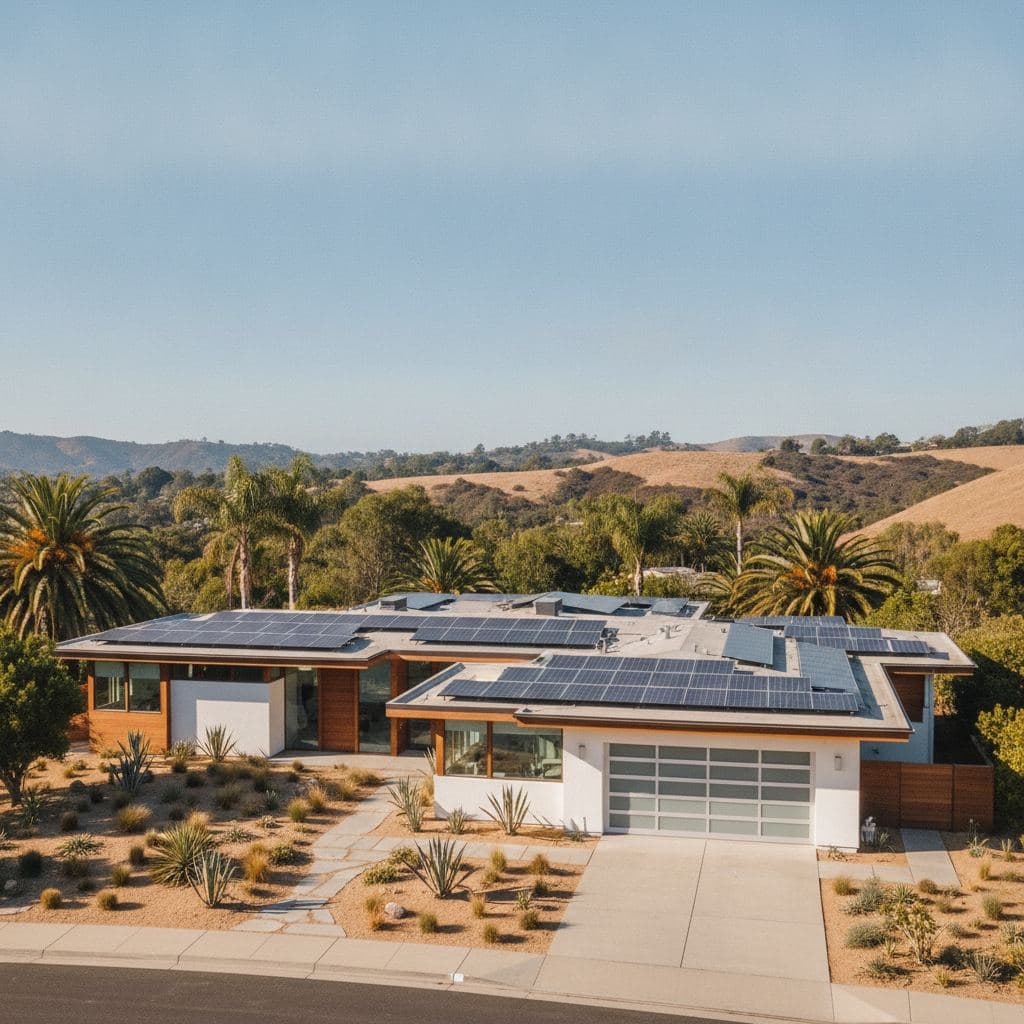
Your NEM 1.0 or NEM 2.0 grandfathering is tied to your original interconnection agreement and PTO date — not to whether your panels are physically on the roof at any given moment. NEM 2.0 grandfathering runs for 20 years from the system's Permission to Operate (PTO) date, a term the CPUC set in Decision D.22-12-056. A temporary removal for a reroof, with the identical system reinstalled at the same capacity, does not constitute a new interconnection event and does not restart that clock.
Last verified: September 2026 by Helios Energy Global.
Why this question matters so much right now
If you installed solar in California before April 14, 2023, you are on NEM 2.0 and grandfathered on those terms for 20 years from your PTO date — and NEM 2.0 export credits are worth roughly 4 to 8 times more per kilowatt-hour than what NEM 3.0 customers receive today. That gap is the reason so many Southern California homeowners are nervous about touching anything on their system — including a necessary roof replacement.
Grandfathering preserves the whole arrangement that made your system pencil out — the export credit value, the annual true-up, and the rate structure you signed up for — not just a single number. Losing it mid-ownership is a real financial event, which is why getting the reroof question exactly right matters.
The key distinction: physical removal vs. a new interconnection application
The mechanism that triggers reclassification is not the act of taking panels off your roof. It is filing a new interconnection application with the utility. Here is why:
When adding solar panels to a previously installed system, a customer must submit a new interconnection application with updated information about the changes — and all revised applications follow the same process as any other interconnection request and will receive a new PTO. A new PTO issued after April 14, 2023 places that system on the Net Billing Tariff (NEM 3.0). That is the trap.
A like-for-like reroof removal and reinstall does not require a new interconnection application. The existing interconnection agreement remains in force. Your PTO date does not change. Your 20-year grandfathering window continues ticking from the original date.
Replacing failed or degraded panels with equivalent-wattage panels is uniformly treated as a safe modification that preserves NEM 2.0 status — a panel replaced at the same wattage or lower does not increase the system's DC generating capacity, so no material change has occurred. The same logic applies to a full temporary removal for roof work: if every panel, inverter, and wire goes back to the same configuration, there is no material change to the interconnected generating facility.
The numbers table: what changes grandfathering, what does not
| Action | New interconnection application required? | NEM grandfathering at risk? |
|---|---|---|
| Remove panels for reroof, reinstall same system, same size | No | No |
| Replace panels with same or lower wattage (like-for-like) | No | No |
| Replace inverter like-for-like (warranty swap) | No | No |
| Add battery storage (load-side, no export increase) | Notify utility; usually no new app | Generally No — confirm in writing first |
| Expand array by ≤ 10% or 1 kW (whichever is greater) | Revised application, but may stay on legacy tariff | Possibly — confirm with utility |
| Expand array beyond 10% or 1 kW threshold | Yes — new application required | Yes — reclassified to NEM 3.0 |
| Change point of interconnection | Yes | Yes |
| Upsize to a completely new system configuration | Yes | Yes |
Estimates based on SCE's published NEM FAQ and CPUC Decision D.22-12-056. Thresholds apply to SCE and SDG&E; confirm your specific utility's current tariff before any modification.
What SCE and SDG&E actually require for a reroof
Southern California Edison (SCE)
Modifications that require a new interconnection application and SCE approval include any changes increasing the system's output by more than 10% of the original net output capacity or 100 kW (whichever is less), and removal of equipment under a Rule 21 multi-tariff agreement — with full details in Table Ee.1 of Rule 21.
A straight reroof removal-and-reinstall of the same system falls outside both of those triggers. The system's output does not increase; there is no change to the interconnection configuration. SCE's own FAQ confirms that any changes that decrease the system size do not affect current tariff eligibility. A temporary removal with identical reinstall is, if anything, a zero-change event.
What to do before the reroof:
- Notify SCE in writing (customer.generation@sce.com) that you are temporarily de-energizing for roof work and will reinstall the identical system. Keep a copy of that email and any response.
- Have your contractor document the panel model numbers, wattages, inverter model, and system size before removal.
- Have your contractor confirm in writing that the reinstalled system matches the original single-line diagram on file with SCE.
- Do not allow your contractor to submit a new interconnection application unless the system is genuinely changing.
SCE confirms that NEM 2.0 customers are grandfathered to their tariff for 20 years from their PTO date — though it notes the 20-year NEM tariff grandfathering does not include grandfathering for the Time-of-Use rate.
San Diego Gas & Electric (SDG&E)
SDG&E operates under the same CPUC framework. All three of California's major investor-owned utilities — SCE, SDG&E, and PG&E — operate under the same CPUC NEM 3.0 transition rules and the same 20-year grandfathering provision. The same logic applies: a same-system reinstall does not require a new interconnection application and does not reset the PTO date.
For SDG&E customers, notify SDG&E's interconnection team in writing before the reroof begins. Request written confirmation that the removal-reinstall will not trigger a new application. Save that confirmation permanently — it is your documentation if a billing question arises later.
LADWP and other Southern California municipal utilities
LADWP is separate (municipal) — its net metering is not the CPUC's NEM 2.0 or 3.0. If you are an LADWP customer in Los Angeles, the entire CPUC NEM framework discussed on this page does not govern your account. LADWP runs its own retail-rate net metering program under its own tariff. The same general principle applies — a same-system reinstall after a reroof should not trigger a new interconnection — but the specific rules, forms, and contacts are different. Call LADWP's distributed generation team directly before your reroof.
The same applies to other Southern California municipal utilities: Pasadena Water and Power, Riverside Public Utilities, Anaheim Public Utilities, Burbank Water and Power, and Glendale Water and Power. All run independent net metering programs not subject to CPUC NEM 3.0.
What DOES risk your grandfathering
The CPUC's rules will not affect NEM 1.0 and NEM 2.0 solar users until the lock-in period expires, unless panels are added. The two real risks for a reroof situation are:
1. Upsizing during the reroof. If a homeowner decides to add panels while the system is off the roof anyway — "since we're already doing the work" — that expansion may require a new interconnection application. PG&E, SCE, and SDG&E each publish essentially the same allowance, grounded in CPUC Decision D.22-12-056: a grandfathered NEM 1.0 or 2.0 customer may increase generating capacity once by up to 1 kW or 10% of the originally approved system size, whichever is greater, without moving to the Net Billing Tariff. Exceed that threshold and a new application — and a new PTO — are required. See our guide to solar panel costs and sizing before making any expansion decision.
2. A contractor submitting a new interconnection application unnecessarily. Some contractors, unfamiliar with the grandfathering rules, reflexively file a new interconnection application any time a system comes down. That application, if processed and issued a new PTO, could reclassify your account. Before any work begins, explicitly instruct your contractor in writing: do not file a new interconnection application for this reroof. Confirm they understand the difference between a modification notification and a new application.
3. Changing the system configuration materially. If the reroof also involves moving panels to a different roof plane, changing the inverter type in a way that alters the point of interconnection, or adding new panels beyond the 10%/1 kW threshold, a new application may be required. Each of those changes should be evaluated separately before the work begins.
How to document a same-system reset: a practical checklist
Whether you are on SCE or SDG&E, the documentation goal is the same: create a paper trail showing that the system that came down is identical to the system that went back up.
- Before removal: Pull your original interconnection approval letter and single-line diagram from your utility account. Photograph every panel's nameplate, the inverter serial number, and the meter connection.
- Written notice to utility: Email your utility's interconnection/customer generation team. State: (a) your service address, (b) your NEM account/tariff designation, (c) that you are temporarily removing the system for a reroof, (d) that the identical system will be reinstalled, and (e) that you are not filing a new interconnection application.
- Contractor confirmation: Get a written statement from your solar contractor confirming the reinstalled system matches the original approved configuration — same panel model, same count, same inverter, same wiring.
- Post-reinstall: Verify your utility bill still shows your legacy NEM tariff code (NEM, NEM-D, or your specific legacy designation) within one billing cycle after the system is back online. If it shows SBP (Solar Billing Plan) or NBT, contact your utility immediately — do not wait for the annual true-up.
Frequently asked questions about reroofing and NEM grandfathering
Does taking my solar panels off the roof cancel my NEM 2.0 agreement?
No. The interconnection agreement remains in place while the panels are temporarily off the roof for a reroof. Systems that were interconnected before the NEM 3.0 transition are grandfathered onto the older, far higher export rate for a fixed period — and that grandfathering is the single most valuable attribute of an existing California solar system. Physical removal for roof work does not terminate the interconnection agreement or reset the PTO date, as long as no new application is filed and the system is reinstalled identically.
How long can my panels be off the roof before it becomes a problem?
There is no published maximum "off-roof" duration in the CPUC's NEM grandfathering rules for a routine reroof. The key is that the same interconnection agreement stays active throughout — the utility does not care that the panels are temporarily stored in your garage. That said, if the system is off-grid for an extended period (many months), it is worth proactively checking in with your utility in writing to confirm your tariff status. Do not let the system sit disconnected for years without confirmation.
What if my roofer damages a panel and I need to replace it with a higher-wattage model?
Replacing failed or degraded panels with equivalent-wattage panels is uniformly treated as a safe modification that preserves NEM 2.0 status — a panel replaced at the same wattage or lower does not increase the system's DC generating capacity. If a replacement panel has a slightly higher wattage rating (because the original model is discontinued), check whether the total system capacity stays within the 10%/1 kW expansion threshold. If it does, you are almost certainly fine — but notify your utility in writing and get written confirmation before proceeding. Learn more in our NEM 3.0 explained guide.
My contractor wants to file a new interconnection application "just to be safe." Should I let them?
No — at least not without fully understanding the consequences. A new interconnection application for an expanded system follows the same process as any other interconnection request and will receive a new PTO. A new PTO issued after April 14, 2023 means NEM 3.0. "Just to be safe" is the wrong instinct here. The safe move is to explicitly instruct your contractor not to file a new application for a same-system reinstall, and to document that instruction in writing.
Does this apply to NEM 1.0 customers too, or only NEM 2.0?
The NEM 1.0 and NEM 2.0 lock-in period, also known as grandfathering, is for 20 years after the utility turned on your solar system. The same-system reinstall principle applies equally to NEM 1.0 customers. A reroof with identical reinstall does not end NEM 1.0 grandfathering either. NEM 1.0 systems installed before 2017 are now 9–15+ years into their 20-year window, making protection of that status especially important.
I'm an LADWP customer. Do these CPUC rules apply to me?
No. LADWP is a municipal utility that operates its own net metering program independently of the CPUC. The NEM 1.0/2.0/3.0 framework, the April 2023 transition date, and CPUC Decision D.22-12-056 do not govern LADWP accounts. LADWP still offers retail-rate net metering under its own tariff. For a reroof, contact LADWP's Distributed Generation team directly to understand their specific requirements before removing panels. See our locations page for utility-specific guidance.
Can I add panels when I reroof and still keep my NEM 2.0 grandfathering?
Possibly — within strict limits. The main thing that can reset you to NEM 3.0 is a large system expansion — beyond a one-time 1 kW or 10% allowance. If the additional panels keep you within that threshold, you may be able to stay on your legacy tariff, but the expansion still requires a revised application and utility confirmation. Beyond that threshold, a new PTO is required and NEM 3.0 applies. Get written confirmation from SCE or SDG&E before adding a single panel. Read our solar vs. battery under NEM 3.0 guide to understand the economics before deciding whether expansion makes sense.
Next steps
- Book a free consultation and custom design — we'll review your existing interconnection agreement, confirm your NEM tariff status, and coordinate the panel removal and reinstall with your roofer so nothing falls through the cracks.
- Understand your NEM 3.0 exposure in plain English — what the Net Billing Tariff actually pays, and why your legacy status is worth protecting.
- Solar vs. battery under NEM 3.0 — if you're considering adding storage while the panels are down, read this first.
- See what a correctly structured battery addition looks like — adding storage is one of the most common modifications NEM 2.0 owners make, and one of the easiest to get wrong.
- Get a design and savings estimate — if you're curious whether a within-threshold expansion makes financial sense alongside your reroof.
- Explore our Southern California service locations — SCE territory, SDG&E territory, and LADWP guidance, by city.
Sources
- SCE Net Energy Metering FAQ (sce.com) — September 2026
- SCE Solar Billing Plan FAQs (sce.com) — September 2026
- SCE Net Energy Metering Program Page (sce.com) — September 2026
- Cali Energy — NEM 2.0 Grandfathering in California (2026) — August 2026
- Solar Rights Alliance — NEM 3.0 FAQ — October 1, 2024
More guides
Pacific Palisades Solar Guide (2026): Best Installers for a Community in Rebuild
Pacific Palisades is a community actively rebuilding after the January 2025 fire — and solar is now baked into virtually every new home by Title 24 code. Here's an honest look at the best installers for both rebuild projects and surviving homes, with LADWP net metering and battery reality explained.
ReadHow many watts does a window AC use? (2026 guide by BTU class)
A window AC uses roughly 500–1,500 watts running, depending on BTU class — here's what that costs per month on SCE vs. LADWP and how it affects solar sizing.
ReadSCE Rate Changes in 2026: Every Increase, Decrease, and What's Already Approved
SCE's average residential rate is 34.5¢/kWh as of October 1, 2026 — down slightly from the 35.3¢ peak after October 2025's wildfire-cost increase, with CPUC-authorized increases already scheduled through 2028. This page tracks every SCE rate change as it lands.
ReadGet a free consultation and custom design.
No pressure, no obligation — the owner reviews every design we send.