Solar Tariffs in 2026: What the New Section 232 Tariff Means for Home Solar Prices in California
Two overlapping federal trade actions—a Section 232 proclamation effective December 4, 2026, and AD/CVD orders expected November 2, 2026—affect imported solar panels, but panels are roughly 25–35% of an installed system's price, so the tariff's pass-through to your all-in quote is smaller than the headline rates suggest.
By Taylor Crouse — Founder, Helios Energy GlobalPublished
Quick answer
- The Section 232 proclamation (signed August 6, 2026) sets a $0.38/W minimum import price on solar modules and a 15% ad valorem tariff on cells and modules, effective December 4, 2026.
- Separate AD/CVD orders on solar cells from India, Indonesia, and Laos—with combined rates as high as 249% for India—are expected from Commerce on November 2, 2026, following the ITC's affirmative injury vote on October 14, 2026.
- Panels are roughly 25–35% of an installed system's cost; labor, permits, inverters, and racking are not affected by these tariffs.
- The smartest move right now: get the gross price and the cost per watt in writing, with the panel model named, before the December 4 effective date.
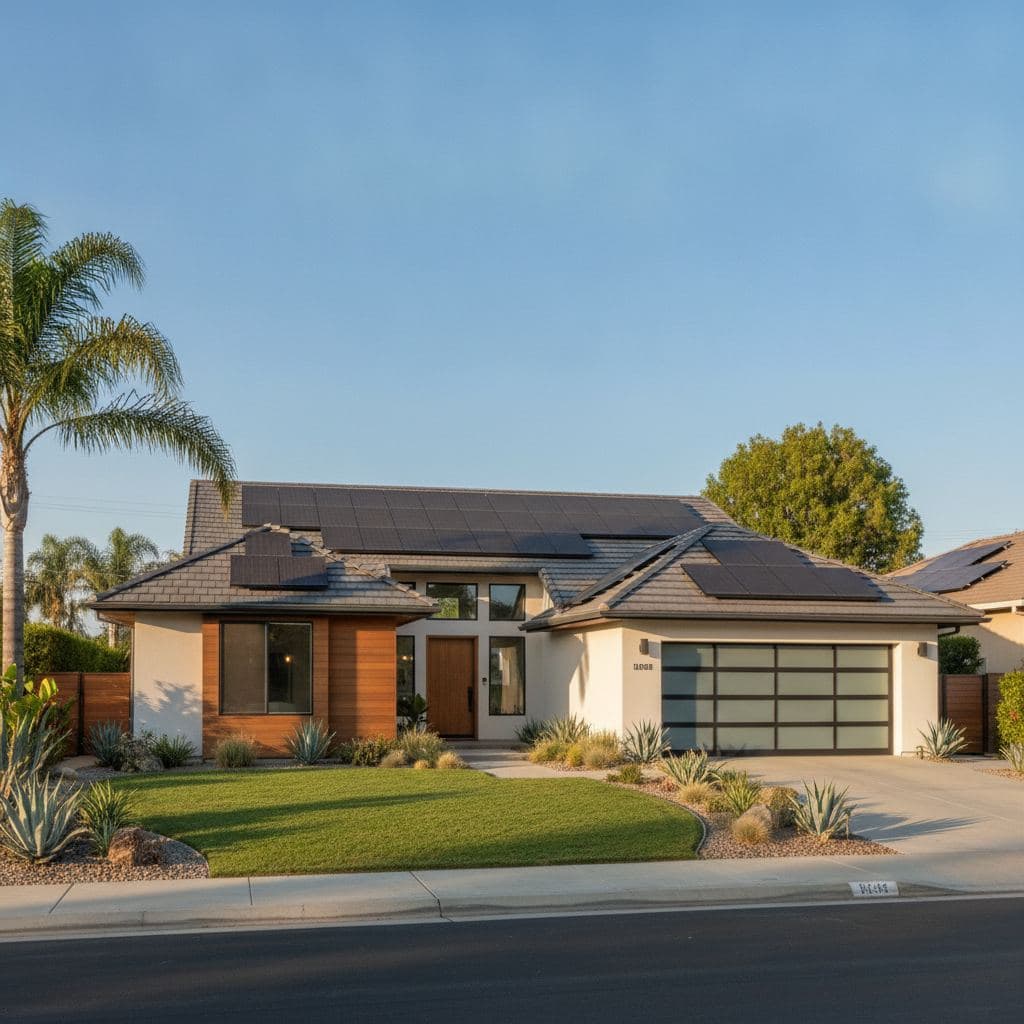
Two federal trade actions landed in the fall of 2026 that every California homeowner considering solar should understand. The first is a Section 232 proclamation signed August 6, 2026, that sets a $0.38-per-watt minimum import price on solar modules and adds a 15% ad valorem tariff on cells and modules, effective December 4, 2026. The second is a set of antidumping and countervailing duty (AD/CVD) orders on crystalline silicon cells from India, Indonesia, and Laos, with combined rates as high as 249%, expected to be formally issued by Commerce on or around November 2, 2026, following the International Trade Commission's affirmative final injury determination on October 14, 2026.
Last verified: October 2026 by Helios Energy Global.
Because panels make up only a fraction of what you pay an installer, neither action moves your all-in quote by the headline tariff percentage. Here is exactly what was ordered, what it covers, and what it means for a Southern California homeowner shopping for solar today.
What the Section 232 proclamation actually does
On August 6, 2026, President Trump issued a proclamation, "Adjusting Imports of Polysilicon and Its Derivatives Into the United States," adjusting imports of polysilicon and its derivative products under Section 232 of the Trade Expansion Act of 1962.
The measures take effect for goods entered for consumption on or after 12:01 a.m. ET on December 4, 2026—120 days after issuance of the proclamation.
The Federal Register published the implementing notice on August 11, 2026, as document 2026-16400. That document establishes two distinct remedies that work together:
1. A minimum import price (MIP) program. The MIP program sets floor prices for polysilicon and polysilicon-derivative ingots, wafers, solar cells, and solar modules; importers that do not certify a qualifying sale at or above the MIP face a specific tariff equal to the applicable MIP (or the shortfall to the MIP if entered value is lower). Per the proclamation's annexes, as reported in the EY Tax News analysis of the August 6 action, the covered minimum import prices are: polysilicon $21 per kilogram; polysilicon ingots and wafers $100 per kilogram; solar cells $0.22 per watt; solar modules $0.38 per watt.
2. A 15% ad valorem tariff on downstream derivatives. The proclamation imposes a 15% ad valorem tariff on imports of downstream products including polysilicon ingots, wafers, solar cells, and solar modules. These duties generally apply in addition to any other applicable duties, taxes, fees, and charges, including antidumping and countervailing duties.
For products of the European Union, Japan, Korea, Taiwan, Switzerland, and Liechtenstein, the combined Section 232 and Column 1 rate is capped at 15%, and products of the United Kingdom are subject to a 10% rate.
The tariff replaces a narrower safeguard on solar cells and modules that expired in February 2026.
What the AD/CVD case on India, Indonesia, and Laos adds
Separately from the Section 232 action, Commerce ran a full antidumping and countervailing duty investigation—known in trade circles as "Solar IV"—targeting crystalline silicon photovoltaic cells from three countries.
The U.S. Department of Commerce finalized steep antidumping and countervailing duty determinations on crystalline silicon photovoltaic cells and modules from India, Indonesia, and Laos on September 11, 2026.
Commerce set final dumping margins of 123.04% for India, 94.36% for Indonesia, and 65.43% for Laos. Indian producers drew a dumping margin of 123.04% and a countervailing rate of 126.09%.
Commerce also set countervailing duty rates of 126.09% for Indian producers, between 73.2% and 173.7% for Indonesian producers, and between 82.03% and 153.67% for Lao producers.
Those Commerce determinations alone did not create enforceable orders. The U.S. International Trade Commission (USITC) issued a final affirmative injury determination in its Solar IV investigation targeting crystalline silicon photovoltaic cells, whether or not assembled into modules, imported from India, Indonesia, and Laos.
The ITC's final determination was issued around October 14–15, 2026. The DOC is scheduled to issue AD/CVD orders on November 2, 2026, after which U.S. CBP will begin collecting cash deposits.
Unlike the administration's IEEPA-based reciprocal tariffs and Section 232 national security tariffs, which apply broadly across countries or product categories by executive action, AD/CVD duties are case-specific remedies under the Tariff Act of 1930, imposed only after Commerce and the ITC determine that specific foreign producers are dumping or receiving subsidies and that U.S. industry is being materially injured as a result.
AD/CVD duties stack on top of other tariffs rather than replacing them, and these duties generally apply in addition to any other applicable duties, taxes, fees, and charges.
Key dates and rates at a glance
| Event | Date | Rate / Threshold |
|---|---|---|
| Section 232 proclamation signed | August 6, 2026 | — |
| Federal Register implementing notice | August 11, 2026 (Doc. 2026-16400) | — |
| Section 232 effective date | December 4, 2026 | 15% ad valorem + MIP |
| MIP: solar modules | Effective Dec 4, 2026 | $0.38/W floor (estimate: import-level) |
| MIP: solar cells | Effective Dec 4, 2026 | $0.22/W floor (estimate: import-level) |
| Commerce AD/CVD final determinations | September 11, 2026 | India 249.13% combined; Indonesia up to 268% combined; Laos up to ~219% combined |
| ITC final injury determination | October 14, 2026 | Affirmative |
| AD/CVD orders expected | ~November 2, 2026 | Per Commerce schedule |
| Federal tax credit (ITC) | Expired December 31, 2025 | $0 — no credit for 2026 purchases |
AD/CVD combined rates per Commerce's September 11, 2026 final determinations. MIP figures per Federal Register document 2026-16400 and the proclamation's annexes. All rates are import-level and do not directly equal the change to your installed system price.
Why a tariff on panels moves your installed price by less than the tariff rate
This is the number most homeowners miss. A tariff applies to the import price of the panel itself—not to the full cost of your installed system. Panels are a subset of a much larger project cost.
Per the NREL cost benchmark data cited in multiple 2026 industry analyses, solar panels are just 12% of the total cost of a residential installation in a federal cost benchmark. The rest includes other equipment plus installation labor, permitting and interconnection, sales and marketing, and overhead and profit. Other analyses that include inverters, racking, and electrical balance-of-system within "equipment" put panels closer to 15–20% of the total installed cost, at roughly $0.38–$0.70 per watt at the module level.
What is not affected by these tariffs:
- Labor. Installation crews are based in California. Their wages do not change because of an import tariff.
- Permits and interconnection. City and utility fees are set locally. SCE, LADWP, SDG&E, and municipal utilities charge what they charge regardless of where a panel was made.
- Inverters and racking. These components are not covered by the Section 232 proclamation's annexes on polysilicon derivatives, nor by the Solar IV AD/CVD orders.
- Batteries. No federal document in this action covers home battery storage. A Tesla Powerwall 3, Enphase IQ Battery 10C, or FranklinWH aPower 2 is priced independently of the solar panel tariffs. See our battery storage page for current installed ranges.
Because panels are roughly a quarter to a third of what you pay, a 15% tariff on the panel component alone translates to a smaller percentage increase on your all-in system price. The MIP floor of $0.38/W on modules is an import-level price; it does not set the floor for what an installer charges you per watt. Your installed price—which covers labor, overhead, inverter, racking, permits, and profit—is a different number entirely. See the full California solar cost breakdown for what goes into the $2.50–$3.50/W all-in range that Helios quotes.
What this means for Southern California homeowners, by utility
The tariff story lands differently depending on which utility serves your home, because the value of every kilowatt-hour your panels produce varies widely across Southern California.
SCE customers face an average of about 34–35¢/kWh, with peak charges of roughly 48–58¢/kWh during the 4–9 PM window under SCE's TOU-D-PRIME tariff. Solar under NEM 3.0 (the CPUC Net Billing Tariff, which applies to SCE) exports at avoided-cost rates rather than retail—so the payback math already favors pairing solar with a battery. A modest panel cost increase changes the payback period less than the export rate structure does. For a deep dive on the NEM 3.0 mechanics, see our NEM 3.0 guide.
LADWP customers are not on NEM 3.0. LADWP still runs retail-rate net metering, crediting exported solar at roughly 26–31¢/kWh (effective ~28¢/kWh). That full retail credit makes solar economics at LADWP more straightforward—and means that any upward pressure on panel prices is more easily absorbed by the stronger export value. If you're in the City of Los Angeles, the tariff discussion is real but the underlying economics remain favorable.
SDG&E customers already pay the highest residential rates in the country—around 46¢/kWh on average—so the payback case for solar is strong even if panel costs rise modestly. SDG&E is an investor-owned utility and is on NEM 3.0, which again points toward battery pairing as the smart play.
Municipal utility customers (Pasadena PWP, Riverside RPU, Anaheim APU, Burbank, Glendale) each run their own net metering programs and are not subject to the CPUC's NEM 3.0 rules. Rates and credit structures vary; confirm your specific tariff before sizing a system.
What to do if you're shopping for solar right now
The tariffs create real uncertainty about module pricing after December 4, 2026. Here is what a careful buyer should do—without any urgency pressure from us:
1. Get the gross price and the cost per watt in writing, with the panel model named. The panel model tells you where it is manufactured and whether it falls under the Solar IV AD/CVD orders or the Section 232 MIP. A quote that names only "Tier 1 panels" or "high-efficiency modules" is not a complete quote. Ask the installer to name the manufacturer and model number.
2. Confirm the price is fixed at signing. Ask whether the price in your contract is the price you pay regardless of what happens to module costs between signing and installation. A reputable installer will give you one all-in written price that does not float with tariff changes.
3. Understand what the federal tax credit situation is. There is no federal residential solar tax credit for a 2026 purchase. The 30% Investment Tax Credit expired December 31, 2025. Do not let any quote assume a tax credit that does not exist. If you are interested in how a future credit might affect a 2027 decision, see our guide on solar leases and the 2027 tax credit deadline.
4. Look at panel origin alongside panel quality. Some panel brands manufacture in countries not covered by the Solar IV case (the orders cover cells from India, Indonesia, and Laos specifically— cell origin, not assembly location, determines coverage; a module assembled in Vietnam using Indonesian cells is covered, while a module assembled in Indonesia using Vietnamese cells is not ). Our 2026 solar panel guide walks through current panel options by tier and origin.
5. Ask about financing. If the tariff environment is creating hesitation, our financing page covers loan and lease structures that let you lock in today's design without paying cash upfront.
6. Consider a battery alongside solar. The AD/CVD and Section 232 actions do not cover battery storage. SGIP residential battery incentive budgets are waitlisted in 2026, but the underlying economics of pairing a battery with solar under NEM 3.0 remain strong for SCE and SDG&E customers. See solar vs. battery under NEM 3.0.
Frequently asked questions about solar tariffs in 2026
When exactly do the Section 232 solar tariffs take effect?
On August 6, 2026, President Trump signed a proclamation imposing a 15% ad valorem tariff and minimum import prices on polysilicon and its derivatives under Section 232 of the Trade Expansion Act of 1962, effective December 4, 2026. That is the date goods must enter U.S. customs to be covered; panels already in the country or under a qualifying pre-proclamation contract may not be subject to the new measures.
What is the minimum import price for solar modules?
The proclamation sets the following minimum price thresholds: polysilicon $21/kg; silicon ingots and wafers $100/kg; solar cells $0.22/W; solar modules $0.38/W. These are import-level floors, not retail prices. Your installed system price per watt will be higher and reflects labor, inverter, racking, permits, and installer overhead on top of the module cost.
Do the AD/CVD duties on India, Indonesia, and Laos apply to all solar panels?
No. The U.S. Department of Commerce's final determinations cover crystalline silicon photovoltaic cells, whether or not assembled into modules, from India, Indonesia, and the Lao People's Democratic Republic. Panels made with cells from other countries—including those manufactured domestically—are not covered by the Solar IV AD/CVD orders, though the Section 232 measures apply more broadly.
Does the federal solar tax credit offset these tariff increases?
No. The 30% federal residential solar Investment Tax Credit expired December 31, 2025. There is no federal tax credit available for a residential solar system installed in 2026. Any quote or analysis that assumes a 30% credit is using an outdated number.
Is LADWP affected by NEM 3.0 or these tariffs differently?
LADWP is a municipal utility and is not subject to the CPUC's NEM 3.0 (Net Billing Tariff). LADWP still offers retail-rate net metering, which makes the payback calculation for solar more favorable than for SCE or SDG&E customers. The Section 232 tariffs and AD/CVD duties are federal actions that affect panel import costs regardless of which utility serves your home—but the value of what your panels produce differs significantly by utility.
Will panel prices definitely rise after December 4, 2026?
We won't make price predictions. What the federal documents establish is a minimum import price floor of $0.38/W for modules and a 15% ad valorem tariff on top of that for most origins. Although the additional Section 232 tariffs will increase landed costs, the MIP program may prove more consequential for companies that rely on imported modules, cells, wafers, ingots, or polysilicon priced below the new thresholds. How much of that cost reaches your quote depends on your installer's supply chain, inventory position, and margin.
Do these tariffs affect home batteries?
No federal document in the Section 232 proclamation or the Solar IV AD/CVD case covers residential battery storage. Battery pricing is driven by different supply chains and different trade cases. Current installed ranges for common home batteries are on our battery storage page.
Next steps
- Book a free consultation and custom design — Helios gives one all-in written price with the equipment named by model.
- See the full California solar cost breakdown — the canonical $2.50–$3.50/W all-in range, explained component by component.
- Explore home battery storage options — not affected by the solar tariffs; current installed pricing for Powerwall 3, Enphase IQ Battery 10C, and FranklinWH aPower 2.
- Read our NEM 3.0 guide — understand how SCE and SDG&E export credits work before you size a system.
- Compare solar vs. battery under NEM 3.0 — the tradeoff that matters most for SCE and SDG&E customers.
- See your location-specific options — Helios serves Santa Monica, Los Angeles, Pasadena, and communities across Southern California.
- Explore solar financing — lock in today's design without waiting on tariff clarity.
Sources
- Federal Register 2026-16400: Adjusting Imports of Polysilicon and Its Derivatives Into the United States (Aug 11, 2026) — August 11, 2026
- EY Tax News: US Section 232 Proclamation Establishes Minimum Import Prices and a 15% Tariff on Polysilicon (Aug 7, 2026) — August 7, 2026
- mgrid.org: Commerce Finalizes Solar Duties on India, Indonesia and Laos (Sep 11, 2026) — September 11, 2026
- mgrid.org: ITC Locks In Solar Duties of Up to 268% on India, Indonesia and Laos (Oct 16, 2026) — October 16, 2026
- Alliance for American Solar Manufacturing and Trade: Commerce Confirms Illegal Subsidies, Dumping of Solar Cells and Modules from India, Indonesia, and Laos (Sep 11, 2026) — September 11, 2026
More guides
What is the solar payback period in California in 2026?
In 2026, most Southern California homeowners see a solar payback period of 10–14 years solar-only, or roughly 6–9 years when pairing solar with a battery under NEM 3.0.
ReadCan You Put Solar Panels on a Townhouse or Condo in California? HOA Rules, Shared Roofs, and What Actually Gets Approved
A townhouse owner who maintains their own roof can typically go solar like a detached home; a condo owner on a shared roof gets the right to their pro-rata portion under Civil Code § 4746 — but usable area, shading, and roof condition decide the real system size.
ReadBest Solar Companies in Palm Springs, CA (2026): Desert Engineering Meets Midcentury Design
Palm Springs gets roughly 350 sunny days and six peak sun hours — some of the highest production numbers in America — but SCE's NEM 3.0, 115°F heat, and historic-district review make installer selection genuinely consequential. Here's how to choose.
ReadGet a free consultation and custom design.
No pressure, no obligation — the owner reviews every design we send.