Why Is My LADWP Bill So High? Tiers, Zones, Seasons and the 2026 Increases Explained
LADWP's tiered rates hit 40.97¢/kWh in summer Tier 3, rates rose ~7% over the past year, and bimonthly billing doubles the sticker shock — here's exactly what's driving your bill and five ways to cut it.
By Taylor Crouse — Founder, Helios Energy GlobalPublished
Quick answer
- LADWP's standard R-1A rate runs from about 24.4¢/kWh (Tier 1, spring) up to 40.97¢/kWh (Tier 3, July–September) — one bill can span both.
- Electric rates rose approximately 7% over the past year, per LADWP's own October 27, 2026 Board statement.
- LADWP bills every two months — a single statement covers ~60 days, which doubles the dollar total compared with a monthly bill.
- LADWP's adjustment factors reset in January, April, July, and October with no public rate-case announcement, so your rate can change without warning.
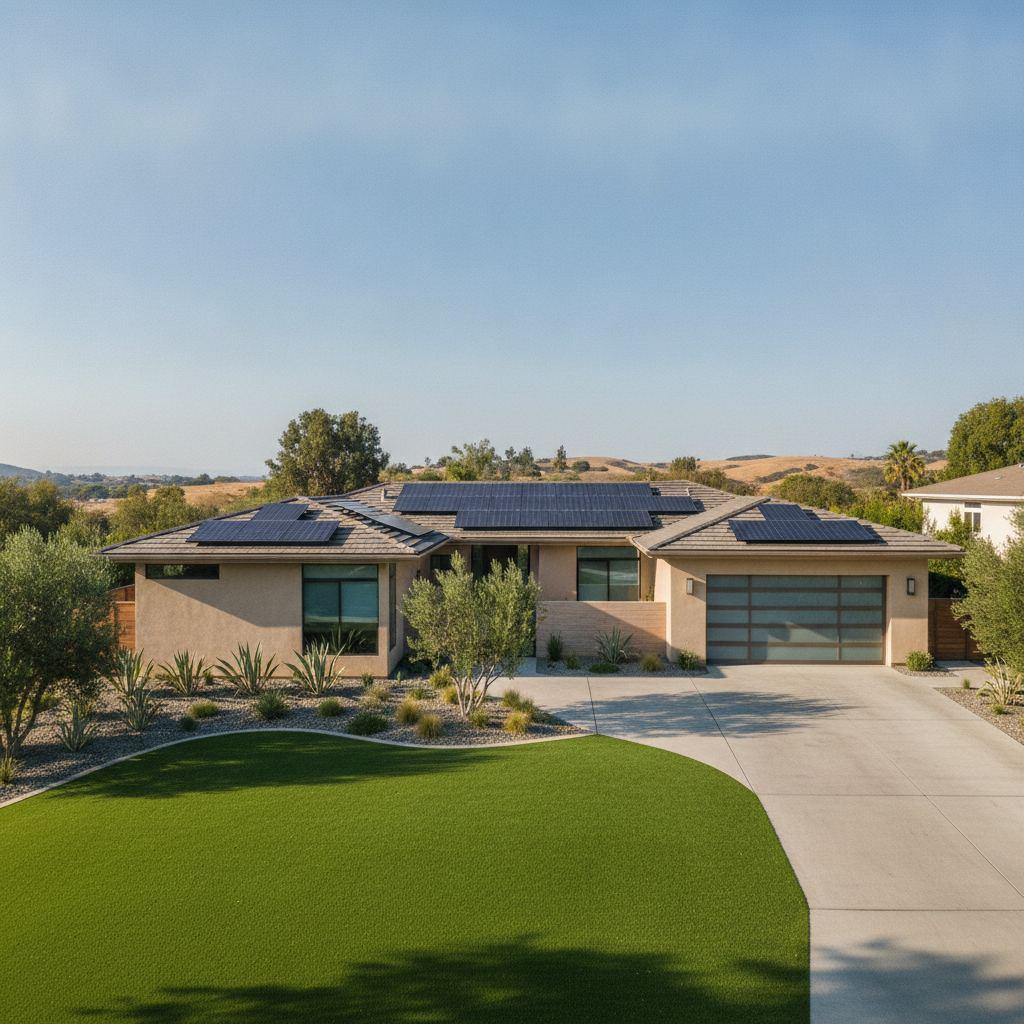
Your LADWP bill is likely high because Tier 2 or Tier 3 pricing kicked in above your zone's allowance — and in summer, Tier 3 reaches about 40.97¢/kWh, nearly 60% more than the Tier 1 starting price. Layer on a ~7% rate increase over the past year, quarterly adjustment-factor resets that move without a headline announcement, and a bimonthly billing cycle that lumps two months of charges into one statement, and a four-figure bill becomes easy to explain.
Last verified: November 2026 by Helios Energy Global.
The four reasons your bill jumped
1. You crossed into Tier 2 or Tier 3
LADWP's standard residential plan (R-1A) is tiered: the more you use in a billing period, the more you pay per kilowatt-hour. LADWP residential rates range from 24.4¢ to 41.0¢/kWh under a 3-tier schedule. The tier thresholds depend on which of two temperature zones your address falls in:
Zone 1 (cooler coastal areas): Tier 1 = first 350 kWh/month, Tier 2 = next 700 kWh, Tier 3 = above 1,050 kWh. Zone 2 (hotter inland areas like the San Fernando Valley): Tier 1 = first 500 kWh/month, Tier 2 = next 1,000 kWh, Tier 3 = above 1,500 kWh.
Because LADWP prices in tiers, Tier 1 is roughly 24.8 cents per kilowatt-hour and Tiers 2 and 3 are both about 30.6 cents in low-season months — but in summer, Tier 3 climbs much higher (see the table below). A modest increase in usage — say, running the AC a few extra hours a day — can push you from cheap Tier 1 into expensive Tier 3 with a disproportionate jump in cost.
For a full breakdown of how tiers and zones interact, see our LADWP rates explained guide.
2. The summer-season switch
LADWP runs two seasons: a High Season (June–September) and a Low Season (October–May). Tier 3 carries a significant summer surcharge. From October 1, 2026, the standard R-1A plan charges 27.29¢/kWh in Tier 1 and 33.15¢ in Tiers 2 and 3; in July–September it was 26.41¢, 32.27¢ and 40.97¢.
Three things stack up: the summer Tier 3 premium (40.97¢/kWh in July–September 2026) applies from June to September, air-conditioning pushes usage into higher tiers, and two-month billing shows about two months of charges at once.
3. Quarterly adjustment factors moved without a rate case
LADWP's increases flow through pass-through adjustment factors that reset every January, April, July, and October, based on expenditure budgets the LADWP Board approves — there's no CPUC-style rate case or headline announcement.
The adjustment billing factors are "adjusted in January, April, July and October."
The base rates did not change; the rise is in the quarterly adjustment factors, mostly the reliability-program charge (IRCA) and the Variable Energy Adjustment. This is why your bill can increase even if you used the same amount of electricity as last year — the per-kWh price itself quietly moved.
4. Bimonthly billing doubles the shock
Residential and Multi-Residential service customers are billed on a bi-monthly cycle.
Residential customers are generally billed every two months, so a period of heavier air-conditioning use, additional irrigation, or a hidden water leak may affect a single statement more than it would on a monthly bill.
Many LADWP residential customers are billed every two months, and the tier thresholds double for a two-month bill (a Zone 1 Tier 1 allowance is 700 kWh over two months). If a billing period crosses a price change, LADWP splits the usage across the two prices by billing days.
An LADWP statement may combine electricity, water, sewer, and sanitation charges. A larger total therefore does not necessarily mean that electricity use alone increased. Always isolate the electric charges from the rest of the statement before panicking.
What changed in 2026
Electric rates for LADWP increased by 7 percent since last year, driven mainly by incremental investments in system reliability that have contributed to a sharp drop off in power outages since 2024.
On Tuesday, October 27th, the Los Angeles Board of Water and Power Commissioners adopted a resolution directing the Los Angeles Department of Water and Power to take immediate steps to enable customers to manage their utility bills.
The resolution responds to a rise in customer concerns about the rate structure and overall affordability of bills when the median customer electricity use increased by 15 to 20 percent during the most recent bimonthly billing periods compared to the same summer months in 2025.
Per the LADWP newsroom release (published October 28, 2026), the Board's resolution does three things: suspends residential water and electricity service disconnections for non-payment through the remainder of 2026, without limiting safety shutoffs;
directs LADWP to review its electric rate structure, strengthen customer education and outreach about rates and bills, and develop recommendations for expanding customer programs to manage bills and reduce usage; and directs LADWP to pursue longer-term solutions on affordability and equity.
The resolution adopted no rate changes, and the announcement does not mention net metering. Any rate structure change would need City Council action. So as of today, net metering is unchanged, but the rate design that sets your credit value is officially under review.
For a full tracker of what moved and when, see our LADWP rate changes 2026 guide.
2026 LADWP R-1A rate table (estimates, all tiers and seasons)
| Period | Season | Tier 1 (¢/kWh) | Tier 2 (¢/kWh) | Tier 3 (¢/kWh) |
|---|---|---|---|---|
| Jan–Mar | Low | 24.77¢ | 30.63¢ | 30.63¢ |
| Apr–May | Low | 24.36¢ | 30.22¢ | 30.22¢ |
| Jun | High | 24.36¢ | 30.22¢ | 38.92¢ |
| Jul–Sep | High | 26.41¢ | 32.27¢ | 40.97¢ |
| Oct–Dec | Low | 27.29¢ | 33.15¢ | 33.15¢ |
Source: ElectricChoice citing LADWP published R-1A schedules, updated November 20, 2026. Rates include quarterly adjustment factors. A 10% Los Angeles Electricity Users Tax applies on top for most households. Rates are estimates; check your bill for the exact period rate.
Zone 1 two-month Tier 1 allowance: 700 kWh. Zone 2 two-month Tier 1 allowance: 1,000 kWh.
How to read your LADWP bill (a quick walkthrough)
An LADWP statement is dense. Here's how to cut through it in under two minutes:
- Find the "Service Period" dates. Count the days. If it's close to 60, that's normal. If it's 70+, you may have a catch-up bill.
- Locate "Electric Charges" separately from water, sewer, and sanitation. An LADWP statement may combine electricity, water, sewer, and sanitation charges — the electric section is usually the first service block.
- Identify your tier breakdown. The bill lists how many kWh fell in Tier 1, Tier 2, and Tier 3 for the billing period. If most of your kWh are in Tier 2 or Tier 3, that's your culprit.
- Check the "Total Consumption Charge" rate. This is the per-kWh price including the quarterly adjustment factor — it's the number that matters, not the base rate.
- Note the Power Access Charge. This fixed monthly charge is tied to your highest usage tier in the prior 12 months. If you hit Tier 2 or Tier 3 last summer, you may be paying a higher fixed charge all year.
- Check the billing period dates against seasonal boundaries. If a billing period crosses a price change, LADWP splits the usage across the two prices by billing days. A bill that spans July 1 will carry two different Tier 3 prices.
For a deeper look at what every charge means, see our average LADWP electric bill guide.
Five fixes that actually move the needle
Fix 1: Know your zone and track your two-month kWh
Pull your last three statements from MyAccount and note the total kWh for each 60-day period. Compare against your zone's Tier 1 allowance (700 kWh for Zone 1, 1,000 kWh for Zone 2 over two months). If you're regularly blowing past Tier 1, you know exactly where the money is going. LADWP's "Analyze My Usage" tool in your online account shows day-by-day consumption.
Fix 2: Shift big loads away from the hottest hours
Even on the standard R-1A plan (which has no time-of-use pricing), reducing peak-hour AC use lowers your total kWh — and because tiers are cumulative, every kWh you avoid in a billing period reduces your exposure to the highest tier. Set your thermostat to pre-cool the house before noon and raise the setpoint from 2–6 PM.
Fix 3: Enroll in Level Pay or check discount eligibility
LADWP's Level Pay program smooths your bill into equal monthly installments based on your projected annual usage, eliminating the summer spike. LADWP is also expanding outreach to ratepayers to promote bill assistance programs, including Lifeline, EZ-Save and Level Pay. Income-qualified households may qualify for the Lifeline or EZ-Save discount programs, which reduce the per-kWh rate.
Fix 4: Tackle the biggest electricity draws first
Air conditioning is almost always the primary driver of high summer bills in Los Angeles. A smart thermostat — especially one enrolled in LADWP's Power Savers demand-response program — can earn bill credits while reducing usage during grid-strain periods. After HVAC, water heating, pool pumps, and EV charging are the next biggest targets.
Fix 5: Add solar (and understand what LADWP's net metering means for your math)
This is where LADWP customers have a genuine structural advantage over most of California. LADWP is owned by the City of Los Angeles and uses its own Net Energy Metering rider, which nets the energy you send to the grid against the energy you use over each billing period.
LADWP nets the kilowatt-hours your system exports against the ones you draw over each billing period, usually two months, so an exported kWh cancels a purchased one at the full retail price — 26–41¢ a kWh on the standard rate in summer 2026.
That matters enormously compared to the investor-owned utilities. LADWP still offers retail-rate net metering — your exported kWh offset at the full tier rate, which can be worth 26–41¢/kWh. SCE switched to NEM 3.0 (Net Billing Tariff) in 2023, where export credits dropped to roughly 5–8¢/kWh. This makes solar significantly more valuable for LADWP customers than SCE customers, even though SCE's retail rate is higher.
Because tiered pricing means your solar panels offset your most expensive kilowatt-hours first — the Tier 2 and Tier 3 kWh — the savings-per-panel are higher than the average rate suggests. A well-sized system can push most of your summer consumption back into Tier 1 or eliminate it entirely. A surplus in a billing period becomes a bill credit calculated with your rate schedule's energy pricing. It rolls forward but can't pay taxes or minimum charges, and LADWP zeroes any balance left when you close the account.
Adding a battery alongside solar lets you store midday production and use it in the evening, maximizing self-consumption and shrinking the bill further. SGIP residential incentives for batteries are waitlisted in 2026 — check current status when you get a quote.
Note: the 30% federal residential solar tax credit expired December 31, 2025. There is no federal credit for a 2026 solar purchase. California and LADWP incentives still apply; ask for current details in your consultation.
See our LADWP solar page and LADWP net metering guide for the full picture. For tips that apply regardless of utility, see how to lower your electric bill in California and our broader high electric bill guide.
Frequently asked questions about high LADWP bills
Why did my LADWP bill double this summer compared to last year?
Two things compounded: electric rates for LADWP increased by 7 percent since last year, driven mainly by incremental investments in system reliability. On top of that, the median customer electricity use increased by 15 to 20 percent during the most recent bimonthly billing periods compared to the same summer months in 2025, likely driven by record heat. Higher usage combined with higher rates pushed many customers deep into Tier 3 territory.
What is Tier 3 on LADWP and how do I avoid it?
In July–September 2026, Tier 3 is 40.97¢/kWh — reached above 1,050 kWh/month in Zone 1 or 1,500 kWh/month in Zone 2. To avoid it, track your running two-month kWh total in LADWP's online portal and reduce AC use or shift loads before you cross the threshold. Solar panels offset your highest-tier usage first, which is why they reduce bills so effectively on LADWP.
Why did my LADWP rate go up when there was no announcement?
LADWP's increases flow through pass-through adjustment factors that reset every January, April, July, and October, based on expenditure budgets the LADWP Board approves — there's no CPUC-style rate case or headline announcement. This is structurally different from SCE or PG&E, where rate increases require a formal CPUC proceeding. See our LADWP rate changes 2026 page for a full tracker.
Is LADWP on NEM 3.0 like SCE?
No. Most of the city of Los Angeles is served by LADWP, which is NOT on NEM 3.0 and still offers retail-rate net metering. NEM 3.0 (the CPUC Net Billing Tariff) applies only to investor-owned utilities — SCE, PG&E, and SDG&E. LADWP is a municipal utility that sets its own net metering rules independently of the CPUC. This is a significant advantage for LADWP solar customers. Learn more at our LADWP net metering page.
Can LADWP disconnect me right now if I can't pay?
The Board's action directs LADWP to suspend residential water and electricity service disconnections for non-payment through the remainder of 2026, without limiting safety shutoffs. That protection runs through December 31, 2026. If you're struggling, contact LADWP to enroll in Level Pay, Lifeline, or EZ-Save before the suspension period ends.
How much does a typical LADWP electric bill cost in 2026?
A typical LA home using 620 kWh/month pays roughly $175/mo — 51% above the national average. That figure is before the 10% Los Angeles Electricity Users Tax and doesn't include water, sewer, or sanitation charges that appear on the same statement. Heavy AC users in Zone 1 in summer can see electric-only charges well above that. Our average LADWP electric bill guide breaks down the numbers by household size and season.
Does solar actually help with a tiered LADWP bill?
Yes — and the tier structure makes it more effective, not less. Because LADWP is tiered, production offsets your most expensive kilowatt-hours first. A system sized to cover your Tier 2 and Tier 3 consumption can cut the most expensive portion of your bill entirely, leaving only low-cost Tier 1 kWh to purchase. Combined with LADWP's retail-rate net metering, the math is among the most favorable in California. Use our solar savings design tool to see estimated numbers for your home.
Next steps
- Book a free consultation and custom design
- Explore LADWP solar options with Helios
- Understand LADWP net metering in detail
- See how tiers, zones, and TOU work on LADWP
- Track what changed in LADWP rates in 2026
- Get your estimated average LADWP bill by usage level
- Five ways to lower your electric bill in California
- Why is my electric bill so high? (all California utilities)
- Browse battery storage options
Sources
- LADWP News — LADWP Board Acts to Advance Customer Affordability (October 27, 2026 resolution) — October 28, 2026
- ElectricChoice — Los Angeles Electricity Rates, LADWP Tier Rates & Utility Info (2026) — November 20, 2026
- LADWP Billing/Account Issues FAQ (official LADWP customer service page) — January 2026
- RateReliefCA — Why Is My LADWP Bill So High? (2026 rates, worked example) — September 2026
- Cali-Energy — LADWP Electric Rates Explained 2026 (R-1A quarterly adjustment factors) — October 6, 2026
More guides
The 8 Best Solar Companies in La Quinta, CA (2026): IID Net Billing, Desert Heat, and Honest Numbers
La Quinta runs on IID power — not SCE, not NEM 3.0 — and that changes everything about how solar should be designed here. This guide ranks the 8 best solar installers in La Quinta for 2026 and explains exactly how IID Net Billing, rising rates, and desert cooling loads affect your system.
ReadSolar Energy Pros and Cons in 2026: An Honest Southern California Breakdown
Solar can cut a typical SCE bill by $1,200–$2,400/year, but a typical 6–8 kW system costs about $15,000–$28,000 up front now that the federal tax credit has expired—here's the full honest picture.
ReadBest Solar Companies in Malibu, CA (2026): Honest Rankings for Coastal Homeowners
Malibu's coastal sun, high SCE rates, and NEM 3.0 rules make solar a strong investment — if you pick the right installer. Here are the 10 best solar companies serving Malibu in 2026, plus a plain-English guide to what it actually costs.
ReadGet a free consultation and custom design.
No pressure, no obligation — the owner reviews every design we send.