Why is my electric bill so much higher this year? (2026)
SCE's average residential rate hit ~34.5¢/kWh in 2026 — nearly double the ~18–19¢ it was in 2018 — which is why the same household usage now costs almost twice as much.
By Taylor Crouse — Founder, Helios Energy GlobalUpdated
Quick answer
- SCE's average residential rate rose about 80% since 2018 — from roughly 18–19¢/kWh to approximately 34.5¢/kWh by January 2026.
- The October 2025 adjustment alone added roughly 4.1¢/kWh — about $29/month for a 700 kWh household.
- A 700 kWh summer month now costs about $238–$245, versus $126–$133 in 2018 — over $1,300 extra per year.
- LADWP averages around 28¢/kWh, roughly 35% lower than SCE.
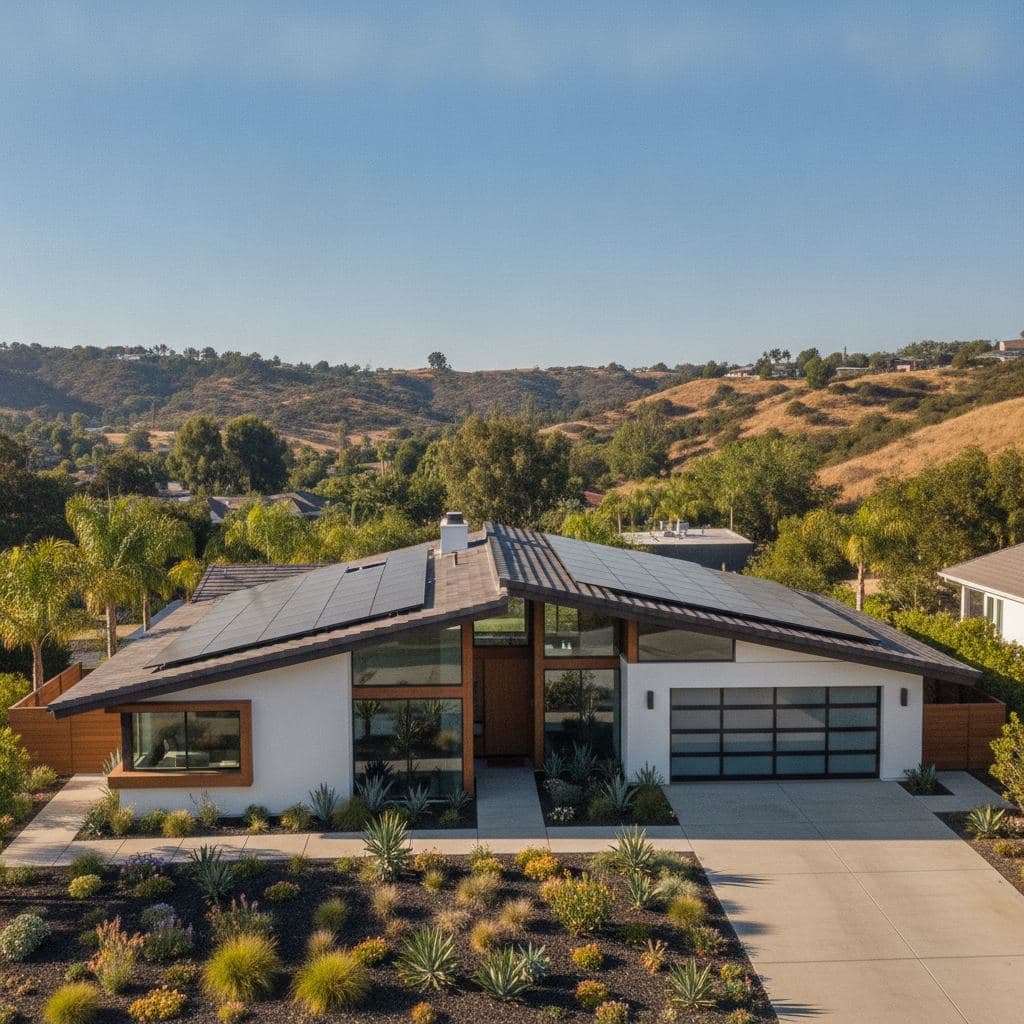
If your Southern California Edison bill feels like it doubled in the last few years, it basically has: SCE's average residential rate climbed from roughly 18–19¢/kWh in 2018 to approximately 34.5¢/kWh by January 2026 — an increase of about 80% in eight years. That single fact explains most of the shock, even if you haven't changed a single habit in your home.
Last verified: September 2026 by Helios Energy Global.
The rate increase is the main story — not your behavior
Most homeowners assume they must be running the AC more, leaving lights on, or charging something new. Sometimes that's a small factor. But the dominant driver is that the price of every kilowatt-hour has nearly doubled since 2018, driven by wildfire liability costs, grid hardening, infrastructure upgrades, and state-mandated programs baked into your rate by the CPUC.
October 2025 alone added roughly 4.1¢/kWh to SCE bills in a single rate adjustment — one of the steepest single-month increases in recent memory. That's not a typo. In one billing cycle, every 700 kWh household saw roughly $29 added to their monthly bill before they changed anything.

For a deeper look at what's driving SCE's rate cases, see our full breakdown at /guides/why-did-my-sce-rates-go-up.
The anatomy of a $700 kWh summer month: 2018 vs. 2026
Let's make this concrete. Take a typical Southern California home using 700 kWh in a summer month — not unusual for a 1,500–2,000 sq ft house running central AC.
| Year | Approx. Avg. Rate | 700 kWh Bill (estimate) |
|---|---|---|
| 2018 | ~18–19¢/kWh | ~$126–$133 |
| 2026 | ~34–35¢/kWh | ~$238–$245 |
| Change | +~80% | +~$110–$115/month |
Same house. Same square footage. Same summer. About $110 more per month just from the rate increase. That's over $1,300 extra per year flowing to SCE before you've added a single new appliance.
If you're on LADWP (Los Angeles Department of Water and Power), your situation is meaningfully different. LADWP averages around 28¢/kWh — still higher than it was five years ago, but roughly 35% lower than SCE's current rate. Municipal utilities like LADWP, Pasadena Water and Power, Burbank, Glendale, Anaheim, and Riverside set their own rates independently and are not subject to CPUC rate cases. If you're an LADWP customer wondering whether solar still makes sense at 28¢, the answer is yes — the math just looks different. See our location-specific breakdowns at /locations.
The five bill drivers, ranked by approximate impact
Here's what's actually on your bill, and roughly what each piece is costing a typical SCE residential customer in a summer month:
| Bill Driver | What It Is | Approx. Monthly $ Impact (700 kWh home, SCE) |
|---|---|---|
| Base energy charge (rate increase) | The ~80% rate climb since 2018 | +$100–$115 vs. 2018 baseline (estimate) |
| TOU peak overage (4–9 PM) | SCE peak rate runs higher than the average; 2–3 hrs/day of AC, EV, or cooking | +$20–$45 additional vs. flat rate (estimate) |
| Summer AC load | Each 1,000 sq ft of cooled space adds roughly 200–350 kWh/month in summer | Varies widely by home |
| Baseline allocation overage | SCE's lowest "Tier 1" rate applies only to the first ~300–350 kWh; usage above that moves to higher tiers | +$15–$30 for moderate overage (estimate) |
| Fixed charges & fees | Wildfire fund, DWR bond, public purpose programs — these appear whether you use power or not | ~$15–$25/month flat (estimate) |
A note on the fixed charges: These are the most frustrating line items because you pay them regardless of how much you conserve. They're also the hardest to escape — except by generating your own power and minimizing what you pull from the grid.
Why 4–9 PM hits hardest
SCE's Time-of-Use (TOU) pricing means the rate you pay is not flat across the day. During the 4–9 PM peak window, every kilowatt-hour costs more than at any other time. That's exactly when most households are home, cooking dinner, running the dishwasher, watching TV, and — in summer — fighting the heat that's built up all day in the house.
If your AC is set to cool down your home between 5 and 8 PM, you are buying the most expensive electricity SCE sells, at the exact moment your demand is highest. This is the structural problem that no amount of LED bulbs or shorter showers fully solves.
For a full explanation of how NEM 3.0 and TOU pricing interact for SCE customers, see /guides/nem-3-explained.
What you can actually control
You cannot vote down a CPUC rate case. You cannot opt out of wildfire surcharges. But you can change where your electrons come from during those expensive peak hours.
The levers available to you right now:
- Pre-cool your home before 4 PM. Set your thermostat to drop to 74°F by 3:30 PM using cheaper off-peak power, then let it drift to 77–78°F through the evening. This is free to implement today.
- Shift dishwasher, laundry, and EV charging to after 9 PM or before noon. Every kWh you move out of the 4–9 PM window saves you money immediately.
- Go solar and store energy in a battery. This is the structural fix. Solar panels generate power during the day (roughly 7 AM–5 PM), and a home battery stores that surplus. From 4–9 PM, you draw from your battery instead of the grid — paying SCE's peak rate on little to nothing. See how this pencils out at /design-savings.
Solar + battery: stopping the 4–9 PM squeeze
A typical Southern California home with a 6–8 kW solar system and one home battery (roughly $14,000–$18,500 installed per battery unit, before any applicable incentives) can cover most or all of its 4–9 PM load from stored solar energy rather than peak-priced grid power.
At SCE's current rates, that peak-hour displacement alone can be worth $40–$80/month in avoided peak charges, depending on your home's load profile. Add the daytime offset of grid power during solar production hours, and a well-sized system can cut an SCE bill by 50–80% in many cases.
Important 2026 incentive note: The 30% federal residential solar tax credit expired December 31, 2025 and is not available for systems installed in 2026. There is no federal credit to factor into your payback calculation for a purchase made today. California's SGIP battery rebate program currently has residential funds in a waitlisted status — worth asking about, but don't count on it in your budget. Plan your numbers without these credits and treat any future incentive as upside.
For a full cost breakdown, see /solar-panel-cost. To understand how battery + solar interact under SCE's NEM 3.0 net billing rules, read /guides/solar-vs-battery-nem-3.
If you're on LADWP, the economics are somewhat different — retail-rate net metering still applies, the rate is lower, and the payback period is longer. It can still make sense, but the numbers need to be run for your specific address and usage. See our LADWP-specific analysis at /locations.
For the statewide picture — how this compares against PG&E, SCE, SDG&E and LADWP, and what the new Base Services Charge changed in 2026 — see what the average electric bill in California actually is.
Frequently asked questions about high electric bills in 2026
Why did my SCE bill go up so much in late 2025?
SCE implemented a rate adjustment in October 2025 that added approximately 4.1¢/kWh to residential rates in a single step — one of the largest single-month increases in recent years. Combined with prior increases, SCE's average residential rate is now roughly 34–35¢/kWh, up from about 18–19¢ in 2018. The CPUC approved these increases primarily to fund wildfire mitigation and grid hardening programs.
Is LADWP cheaper than SCE right now?
Yes, significantly. LADWP's average residential rate is approximately 28¢/kWh — roughly 35% lower than SCE's current average. LADWP is a municipal utility that sets its own rates independently of the CPUC, so it has not been subject to the same series of rate cases. If you're in the City of Los Angeles and served by LADWP, your bill math — and your solar payback math — is different from an SCE customer's.
Does using less electricity actually help if rates keep going up?
Conservation helps at the margin, but it can't fully offset an 80% rate increase. If rates double and you cut usage by 20%, your bill still goes up by about 60%. The more durable solution is to reduce how much grid electricity you buy at peak prices, which is what solar and battery storage accomplish structurally.
Will my bill keep going up every year?
SCE has active rate cases pending with the CPUC, and utility rate filings have historically projected continued increases through the late 2020s, driven by ongoing infrastructure investment. There is no credible forecast showing SCE rates declining in the near term. The best hedge available to a homeowner is to reduce grid dependence rather than wait for rates to fall.
What is the TOU 4–9 PM peak and how much does it cost?
SCE's Time-of-Use pricing charges a higher rate for electricity consumed between 4 PM and 9 PM daily. During these hours, the effective rate is higher than the daily average — meaning the kilowatt-hours you use to cook dinner, run the AC in the evening, or charge an EV are among the most expensive you buy. The exact peak premium varies by plan, but it meaningfully raises the effective cost for households that are home and active in the evenings.
Can a home battery really eliminate my peak-hour charges?
A correctly sized battery — charged by solar during the day — can cover most or all of a typical home's 4–9 PM load, dropping peak-hour grid purchases close to zero. How much this saves depends on your specific load profile, battery capacity, and solar system size. A properly designed system, not a one-size-fits-all package, is what makes this work. See /batteries for details.
Does the 30% federal solar tax credit still apply in 2026?
No. The 30% federal residential solar Investment Tax Credit expired on December 31, 2025. Systems installed in 2026 do not qualify for a federal tax credit. Anyone quoting you a price that assumes a 30% federal credit is either misinformed or working from outdated information. Plan your budget without it.
Next steps
- Book a free consultation and custom design — we'll pull your actual SCE or LADWP usage data and show you exactly what a system would save on your specific bill.
- Run your savings estimate at /design-savings — see how solar + battery pencils out at today's rates.
- Understand your SCE rate history at /guides/why-did-my-sce-rates-go-up — a deeper dive into what's driving the increases.
- Learn how NEM 3.0 affects solar value for SCE customers at /guides/nem-3-explained.
- Compare solar + battery strategy under NEM 3.0 at /guides/solar-vs-battery-nem-3.
- See solar costs and system sizing at /solar-panel-cost.
- Explore battery storage options at /batteries.
More guides
Tesla Solar Roof vs. New Roof Plus Solar Panels: An Honest 2026 Comparison
The Tesla Solar Roof is discontinued as of August 2026 — the real comparison now is a conventional reroof ($11K–$25K) plus solar panels ($2.50–$3.50/W) versus what Solar Roof used to cost at ~$16/W.
ReadTesla Powerwall 3 cost in 2026: what Southern California homeowners actually pay
A Tesla Powerwall 3 runs roughly $14,500–$18,500 installed in Southern California in 2026, with value varying significantly between SCE and LADWP customers.
ReadBest Solar Companies in Fontana, CA (2026): An Honest, Numbers-First Guide for Homeowners
Fontana homeowners face intense summer heat, high SCE rates, and NEM 3.0 — making solar + battery a smart combination. Here are the 10 best solar installers in Fontana for 2026, ranked honestly.
ReadGet a free consultation and custom design.
No pressure, no obligation — the owner reviews every design we send.