What is the average LADWP electric bill in 2026?
The typical LADWP residential customer pays roughly $140–$230/month in mid-2026, based on tiered rates that work out to an effective 26–31¢/kWh — still below what SCE customers pay, though the gap has narrowed.
By Taylor Crouse — Founder, Helios Energy GlobalPublished
Quick answer
- The typical LADWP household using 500–750 kWh/month pays roughly $140–$230/month in 2026, before city taxes.
- LADWP's tiered rates run about 24.4–41¢/kWh depending on tier and season — an effective 26–31¢ for most homes.
- Rates rose about 2.1–2.5¢/kWh versus 2025; the old "22 cents" rule of thumb is out of date.
- LADWP still credits solar exports at full retail rates — no NEM 3.0 haircut.
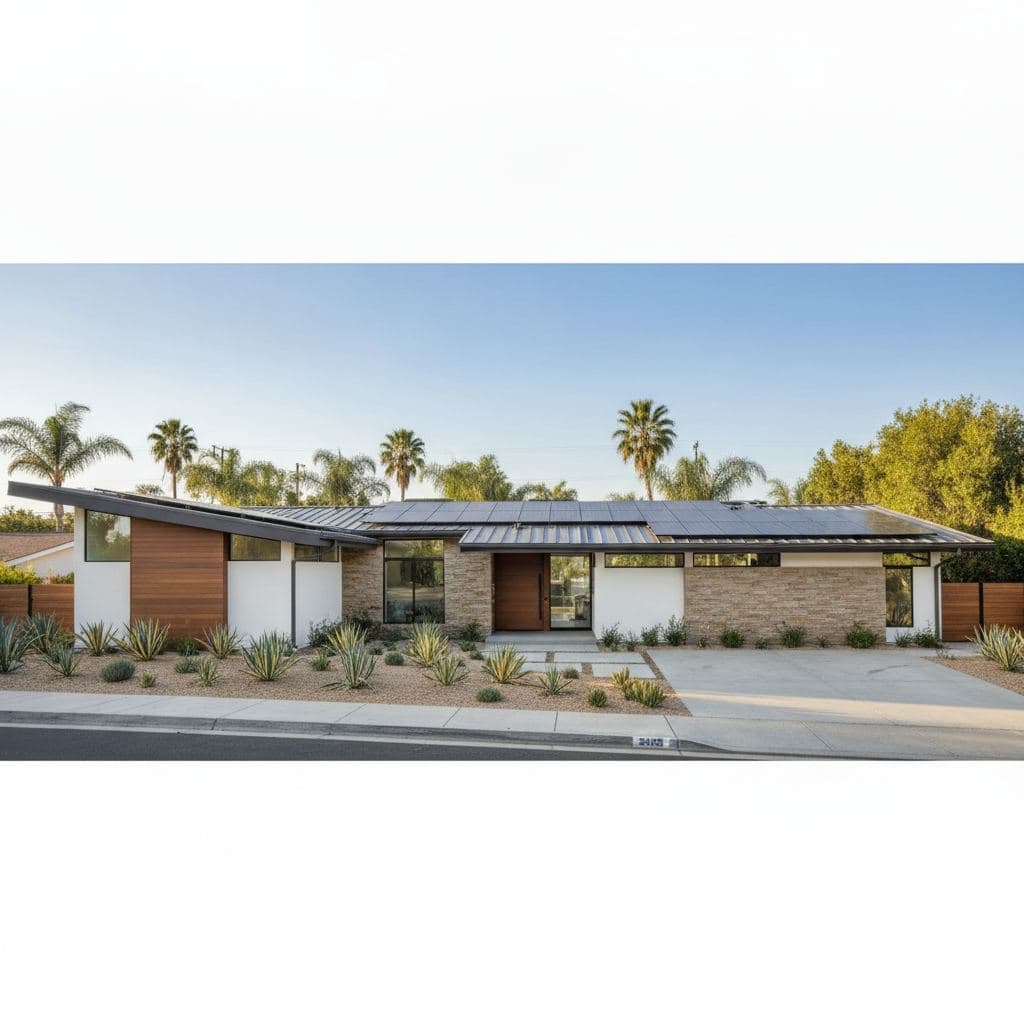
The average LADWP residential customer pays roughly $140–$230 per month in mid-2026, based on typical household consumption of around 500–750 kWh per month and LADWP's current tiered rates, which work out to an effective 26–31¢/kWh all-in for most homes. That's meaningfully lower than what most Southern California Edison customers pay — and the gap matters a lot when you're sizing a solar system.
Last verified: September 2026 by Helios Energy Global, against LADWP's published rate tables.
Worth flagging up front: LADWP rates rose roughly 2.1–2.5¢/kWh between 2025 and 2026 — about 8–11% on the lowest tier — so estimates built on the old ~22¢ figure now undershoot real bills. We track those movements in our LADWP rate changes tracker.
The key numbers at a glance
| Factor | LADWP (mid-2026) | SCE (2026 estimate) |
|---|---|---|
| Residential rate | Tiered, ~24.4–41¢/kWh (effective ~26–31¢) | ~34–35¢/kWh average |
| Typical monthly usage | 500–750 kWh | 500–750 kWh |
| Estimated monthly bill | ~$140–$230 | ~$175–$265 |
| Net metering type | Retail-rate net metering | NEM 3.0 / Net Billing Tariff |
| Export credit rate | ~Retail tier rate (~24–41¢ by tier/season) | Time-varying, often 5–8¢ |
| Solar install cost (no federal credit in 2026) | ~$2.50–$3.50/watt | ~$2.50–$3.50/watt |
| Home battery (installed, per unit) | ~$14,000–$18,500 | ~$14,000–$18,500 |
| SGIP battery rebate | Waitlisted | Waitlisted |
LADWP figures computed from the utility's published 2026 R-1A rates (Zone 1, including the Power Access Charge, excluding taxes). Your bill depends on home size, zone, usage habits, and season.
Why LADWP bills run lower than SCE neighbors
Los Angeles is served by the Los Angeles Department of Water and Power, a city-owned municipal utility — not one of California's investor-owned utilities (IOUs) like SCE, PG&E, or SDG&E. As a muni, LADWP isn't subject to the CPUC-mandated cost structures that have driven IOU rates into the mid-30s per kWh, and its effective residential rates still run roughly 10–25% below SCE's, depending on your usage and season.
For a household using 700 kWh a month, that difference is on the order of $35–$60 per month — several hundred dollars a year — before solar enters the picture at all. The gap has narrowed as LADWP's rates have climbed, but it hasn't closed.
Rate tiers and seasonal variation
LADWP's standard R-1A rate is tiered rather than time-of-use: your price steps up as monthly usage crosses tier thresholds (350 and 1,050 kWh in the cooler Zone 1; 500 and 1,500 kWh in the hotter Zone 2), and the top tier only carries its summer premium — nearly 41¢/kWh in July–September 2026 — from June through September. There's no punishing 4–9 p.m. peak window forcing you to reschedule the dishwasher the way SCE's TOU structure does, though LADWP does offer an optional TOU rate.
A fixed Power Access Charge of $2.30–$22.70/month rides on top, set by your highest-usage month of the past year. For the full anatomy — tiers, zones, adjustment factors, TOU, and EV rates — see our LADWP rates explainer.
If you're on LADWP and your bill consistently runs above $250/month, you're likely a higher-usage household — air conditioning, a pool, an EV, or a larger home — buying a lot of kWh at Tier 2 and Tier 3 prices, and you're an especially strong solar candidate.
The LADWP solar advantage: retail net metering
This is where LADWP customers have a significant structural edge over their SCE and SDG&E neighbors.
SCE, PG&E, and SDG&E are investor-owned utilities under CPUC jurisdiction. Since April 2023, their new solar customers land on NEM 3.0 (the Net Billing Tariff), which credits exported solar at time-varying "avoided cost" rates — as low as 5–8¢/kWh during midday hours when panels produce most. That pushed IOU customers hard toward battery storage.
LADWP is not subject to NEM 3.0. Its net metering rider simply nets your exports against your consumption at your own rate schedule's pricing — full retail, roughly one-for-one — with credits rolling forward to future bills. And because solar production offsets your most expensive tiers first, the kWh your system erases in summer are often worth 32–41¢, not the headline Tier 1 price.
- On SCE: a midday export earns ~5–8¢; you buy that electricity back later at 34–35¢.
- On LADWP: exports and purchases net at the same retail pricing — no penalty for a generously sized system.
For solar sizing, this means LADWP customers can target 100% of annual usage without worrying that oversizing will hurt them. Full program details at our LADWP net metering page.
How solar changes an LADWP bill
A realistic scenario: a home in the San Fernando Valley using 750 kWh/month on LADWP in 2026 pays roughly $215–$230/month — call it $2,600–$2,750 a year — before taxes.
With a properly sized 6–7 kW solar system, producing roughly 750–900 kWh/month in LA sun, the energy charges net to zero or near it across the year, leaving minimum and fixed charges typically in the $10–$40/month range.
System cost: a 6.5 kW system at $2.50–$3.50/watt runs roughly $16,250–$22,750 installed.
Incentives in 2026, honestly: the 30% federal residential solar tax credit expired December 31, 2025 — there is no federal credit for a 2026 purchase. California has no statewide solar rebate for most homeowners, and SGIP battery rebates remain waitlisted, so don't build them into payback math. What has changed in solar's favor is the rate side: every LADWP increase raises the value of each kWh your panels produce, and 2026 brought another one.
Payback for LADWP solar typically pencils in the 8–12 year range depending on system size, usage, and financing. Get a custom design and savings estimate to see your specific numbers.
Does adding a battery still make sense on LADWP?
On SCE, batteries are nearly essential under NEM 3.0. On LADWP, with retail-rate net metering intact, a battery is primarily a resilience purchase, not an arbitrage play: backup power during outages (increasingly relevant in fire-adjacent neighborhoods), energy independence, and future-proofing if LADWP's net metering policy ever changes. At roughly $14,000–$18,500 installed per unit, the financial return is slower than on SCE — but the resilience value is real. See our batteries page or the solar-vs-battery tradeoffs for more.
For the statewide picture — how this compares against PG&E, SCE, SDG&E and LADWP, and what the new Base Services Charge changed in 2026 — see what the average electric bill in California actually is.
Frequently asked questions
What is the average LADWP electric bill per month in 2026?
Most LADWP residential customers using 500–750 kWh/month pay roughly $140–$230 per month at 2026 rates, before city utility taxes. Higher-usage homes — EVs, pools, central AC — commonly run $300–$500+ in summer, when Tier 3 usage bills at nearly 41¢/kWh.
Why is my LADWP bill higher than last year?
LADWP's 2026 rates run about 2.1–2.5¢/kWh above the same months in 2025 — roughly an 8–11% increase on Tier 1 — delivered through quarterly pass-through adjustment factors rather than an announced rate case. Our LADWP rate changes tracker follows what changed and what's pending.
Is LADWP on NEM 3.0?
No. NEM 3.0 applies only to the CPUC-regulated investor-owned utilities: SCE, PG&E, and SDG&E. LADWP is a municipal utility with its own net metering rider that credits excess solar at full retail rate pricing, and as of July 2026 it has announced no change to that program.
Does the 30% federal solar tax credit apply to a 2026 LADWP solar installation?
No. The federal residential solar tax credit expired on December 31, 2025, and there is no federal credit for residential systems installed in 2026. Factor that into payback expectations — though LADWP's rising rates and retail net metering pull the math back in solar's favor.
How much does solar save on an LADWP bill?
A properly sized system can reduce most LADWP bills to near zero for energy charges, leaving fixed and minimum charges of roughly $10–$40/month. Because LADWP nets exports at retail rates, solar-only systems can be sized to cover full annual usage without the export penalty SCE customers face — and the savings rate rises every time LADWP's rates do. Book a free consultation and we'll run it against your actual 12 months of usage.
More guides
What is a kilowatt-hour? kW vs kWh explained simply (2026)
A kilowatt-hour (kWh) is the unit on your electric bill — a typical Southern California home uses 550–750 kWh per month, costing 22–35¢ each depending on your utility.
ReadBest Solar Companies in Thousand Oaks, CA (2026): Honest Rankings for Homeowners
A straight-talking, numbers-first guide to the best solar installers serving Thousand Oaks in 2026 — covering SCE net billing, local roof types, battery storage, and how to compare quotes without getting burned.
ReadPowerwall 3 vs FranklinWH aPower 2 vs Enphase IQ 10C for SCE TOU Rates (2026)
On SCE TOU-D-PRIME, a 7 kW battery system can shift roughly $57–$76/month in summer peak-hour charges — here's which of the three leading batteries does it best.
ReadGet a free consultation and custom design.
No pressure, no obligation — the owner reviews every design we send.