How do I lower my electric bill in California? (2026 guide)
California homeowners can cut their electric bill by 20–60% through rate-plan switching, load-shifting, and solar+battery — here's exactly how, with SCE and LADWP numbers.
By Taylor Crouse — Founder, Helios Energy GlobalUpdated
Quick answer
- California's average residential rate runs ~28¢/kWh (LADWP) to ~34–35¢/kWh (SCE) — one of the highest in the nation, so every kWh you shift or eliminate saves real money.
- Switching to the right TOU rate plan and moving major loads (laundry, dishwasher, EV charging) outside SCE's 4–9 PM peak can cut your bill by 10–20% with zero upfront cost.
- Eliminating phantom loads and scheduling your pool pump can save a typical Southern California household $15–$60/month.
- Solar + battery is the structural fix: a properly sized system can offset 70–100% of your annual usage, installed at roughly $2.50–$3.50/watt before any remaining incentives.
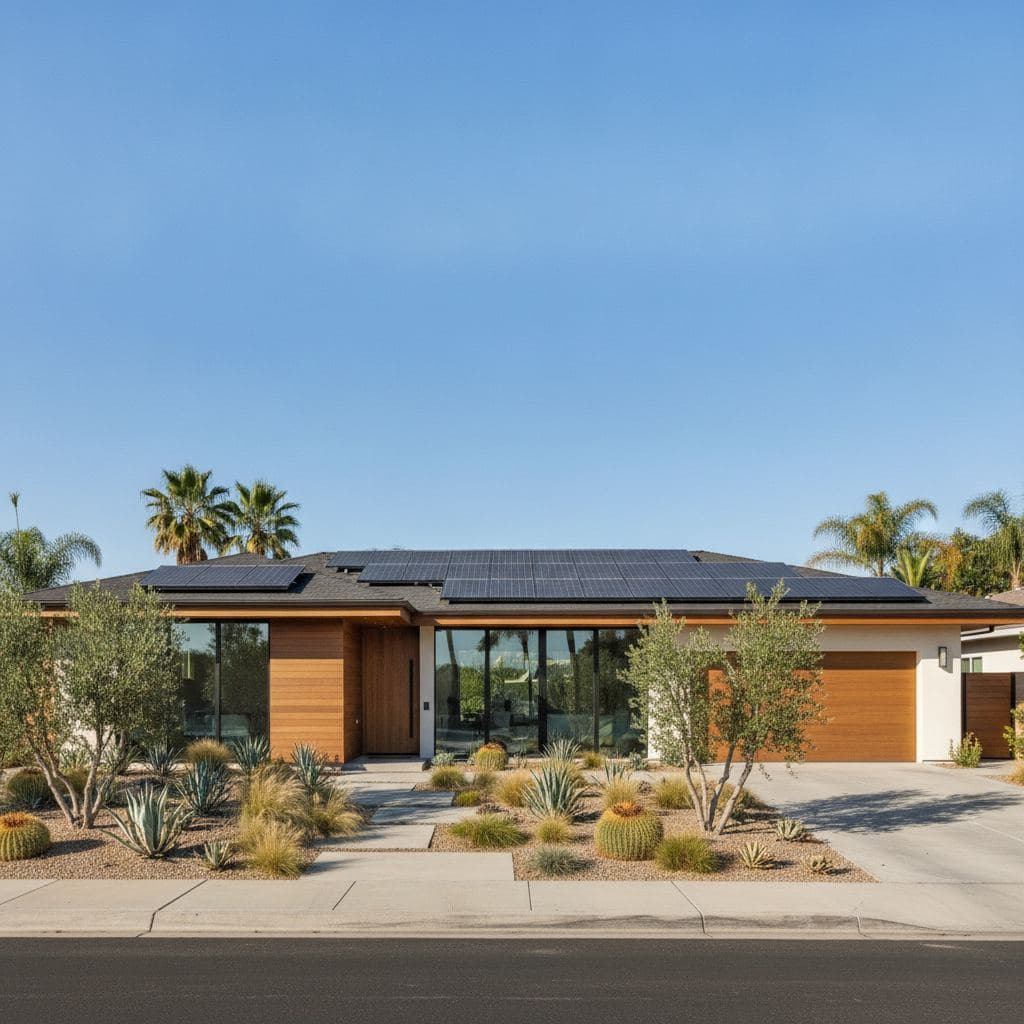
A typical SCE customer paying 34–35¢/kWh on a 1,000 kWh/month household spends roughly $340–$350 per month before taxes and fees — and that number has climbed every year for a decade. The good news is that a layered approach (rate optimization → behavioral shifts → appliance scheduling → solar+battery) can realistically cut that bill by 20–60%, and several steps cost nothing at all.
Last verified: September 2026 by Helios Energy Global.
The bill-lowering ladder: from free fixes to structural solutions
Think of reducing your electric bill as a ladder. Each rung costs a little more upfront but delivers bigger, more permanent savings. Start at the bottom and work up.
Rung 1 — Free this week: Rate plan switch, phantom load elimination
Rung 2 — Free to low-cost: Appliance scheduling, pool pump timer, LED swaps
Rung 3 — Income-based: CARE/FERA discount programs
Rung 4 — Capital investment: Solar panels + battery storage
Key numbers at a glance
| Item | SCE estimate | LADWP estimate | Notes |
|---|---|---|---|
| Average residential rate | ~34–35¢/kWh | ~22¢/kWh | 2026 blended averages; varies by tier/TOU |
| Peak TOU window | 4–9 PM daily | 10 AM–8 PM (summer) | Avoid running major loads in these windows |
| Typical monthly usage (SoCal home) | 700–1,100 kWh | 700–1,100 kWh | Estimate; varies by size, A/C use |
| Monthly bill (mid-range usage) | ~$280–$385 | ~$155–$240 | Before fees and taxes |
| Pool pump (old single-speed, 8 hrs/day) | ~$70–$100/mo | ~$45–$65/mo | Estimate at respective rates |
| Phantom loads (whole home) | ~$20–$45/mo | ~$12–$28/mo | Estimate; ENERGY STAR data |
| Solar install cost (before incentives) | $2.50–$3.50/watt | $2.50–$3.50/watt | 2026 SoCal installed range |
| Home battery (installed, per unit) | $14,000–$18,500 | $14,000–$18,500 | Estimate; brand and size vary |
| CARE discount | ~30–35% off bill | ~32% off bill | Income-qualified; apply at utility |
| SGIP battery rebate | Waitlisted | Waitlisted | Residential budget exhausted; join waitlist |
All figures are estimates based on utility rate filings and EIA data. Your actual bill depends on usage, rate plan, and home characteristics.
Step 1: Switch to the right rate plan (free, takes 10 minutes)
This is the single fastest free action an SCE customer can take. SCE's default plan charges a flat tiered rate regardless of when you use power. Their TOU-D plans charge more during the 4–9 PM peak window but significantly less the other 19 hours of the day.
If you can shift even 30% of your usage out of peak hours, TOU pricing typically wins. SCE's off-peak rate can run 10–15¢/kWh lower than the on-peak rate — on a 1,000 kWh month, that's a real $30–$60 difference.
LADWP customers: LADWP's rates are already lower (~28¢/kWh blended), and their summer TOU peak runs 10 AM–8 PM. The same logic applies — run your dishwasher, laundry, and EV charger after 8 PM.
How to switch:
- SCE: Log into My Account → Rate Plan Comparison → request a plan change online. SCE will model your last 12 months of usage against each plan.
- LADWP: Call or use the online portal; ask for a TOU rate analysis.
👉 Not sure which plan fits your home? Our free custom design and savings estimate models your actual usage against every available rate plan.
Step 2: Hunt phantom loads ($15–$45/month, free to fix)
Devices that are "off" but still plugged in — TVs, game consoles, cable boxes, phone chargers, coffee makers with clocks — collectively draw 5–10% of a typical home's electricity, according to ENERGY STAR data. At SCE rates, that's roughly $20–$45/month doing absolutely nothing for you.
Highest phantom offenders to target:
- Cable/satellite boxes and DVRs: Can draw 15–30 watts continuously
- Game consoles in standby: 10–15 watts each
- Older desktop computers + monitors: 5–20 watts in sleep
- Garage door openers and older televisions: 5–10 watts
Fix: Smart power strips (~$20–$35 each) cut power to peripheral devices when the main device turns off. A whole-home smart plug audit over one weekend can identify and eliminate the worst offenders.
For a deeper look at which appliances are eating your bill, see our what uses the most electricity guide and our companion page on why your bill is so high.
Step 3: Schedule your pool pump (saves $30–$80/month for SCE customers)
A single-speed pool pump running 8 hours a day is one of the biggest hidden costs in a Southern California home — often $70–$100/month on SCE. Two fixes stack together:
- Shift the run schedule off-peak. Program your timer to run midnight–6 AM (or any window outside 4–9 PM on SCE, outside 10 AM–8 PM on LADWP summer). Same clean pool, dramatically lower cost.
- Upgrade to a variable-speed pump. A variable-speed pump running at lower RPMs for longer uses 50–75% less energy than a single-speed unit. Payback is typically 2–4 years at SCE rates.
SCE also offers rebates for variable-speed pool pump upgrades — check SCE's current rebate catalog directly, as amounts change periodically and we don't quote rebate figures that may have changed.
Step 4: Appliance-level cost awareness
Knowing what things actually cost per hour makes smarter habits automatic.
Rough hourly cost at SCE (~34¢/kWh) vs. LADWP (~28¢/kWh):
- Central A/C (3-ton, running): ~$0.85–$1.10/hr (SCE) | ~$0.70–$0.90/hr (LADWP)
- Electric dryer: ~$0.45–$0.55/hr (SCE) | ~$0.37–$0.45/hr (LADWP)
- Dishwasher (heated dry): ~$0.25–$0.35/cycle (SCE) | ~$0.20–$0.28/cycle (LADWP)
- EV charging (Level 2, 7.2 kW): ~$2.30–$2.50/hr (SCE average; about $3.50–$4.20/hr in the 4–9 PM peak) | ~$2.00/hr (LADWP)
- LED bulb (10W): ~$0.003/hr — essentially free to run
The A/C number is why thermostat discipline during SCE's 4–9 PM peak matters so much. Pre-cooling your home to 72°F by 3:45 PM, then letting the thermostat drift to 78°F during peak hours, can cut A/C peak usage by 30–50%.
Step 5: Apply for CARE or FERA (income-qualified, 30–35% off)
If your household income qualifies, CARE (California Alternate Rates for Energy) delivers a roughly 30–35% discount on your entire SCE or LADWP electric bill — automatically, every month, with no behavior change required. FERA (Family Electric Rate Assistance) offers a smaller discount for households that don't quite qualify for CARE.
Income thresholds are updated annually by the CPUC. A family of four qualifies for CARE at incomes up to roughly 200% of the federal poverty level — check the CPUC's current table directly at cpuc.ca.gov. Apply through your utility's website; approval is typically fast.
If you're already on CARE and still looking to reduce your bill further, solar + battery compounds the savings significantly because you're reducing a discounted rate even further.
Step 6: Solar + battery — the structural fix
Every step above reduces waste at the margins. Solar + battery eliminates the underlying cost at the source.
How the math works in 2026:
A 7 kW system in Los Angeles produces roughly 9,800–10,500 kWh/year (Southern California averages 5.5–6.0 peak sun hours/day). At SCE's ~34–35¢/kWh blended rate, that's $3,330–$3,675 in annual bill value — before accounting for how your utility credits exported power.
SCE customers on NEM 3.0: SCE is an investor-owned utility, so you'll be on the CPUC's Net Billing Tariff. Export credits are lower than retail rate, which is exactly why pairing a battery matters — store your solar production and use it during the 4–9 PM peak instead of exporting it at a reduced rate. Read our NEM 3.0 explainer and solar vs. battery under NEM 3.0 for the full picture.
LADWP customers: LADWP is a municipal utility and is not on NEM 3.0. LADWP still offers retail-rate net metering, meaning your exported solar is credited at the full retail rate (~28¢/kWh). Batteries are still useful for backup and peak shifting, but the economic case for solar alone is stronger here than under SCE's NEM 3.0.
2026 incentive landscape:
- The 30% federal residential solar tax credit expired December 31, 2025 and is not available for a 2026 purchase.
- SGIP (Self-Generation Incentive Program) residential battery rebates are waitlisted — worth joining the waitlist, but don't count on it for your project timeline.
- SCE and LADWP rebates for efficiency upgrades (smart thermostats, pool pumps, etc.) exist but change frequently — verify current amounts directly with your utility.
Installed cost for a typical SoCal solar system runs $2.50–$3.50/watt in 2026. A 7 kW system therefore costs roughly $17,500–$24,500 before any applicable incentives. Adding a battery adds $14,000–$18,500 per unit installed. See our full solar panel cost breakdown.
Frequently asked questions about lowering your electric bill in California
What is the fastest free way to lower my SCE bill right now?
Switch to a TOU rate plan and move your laundry, dishwasher, and EV charging to after 9 PM. SCE's off-peak rates can be 10–15¢/kWh lower than peak rates — on a 1,000 kWh month, that's $30–$60 in savings with zero upfront cost. Log into your SCE account and use their rate comparison tool to confirm which plan wins for your usage pattern.
Does solar still make sense in California without the federal tax credit in 2026?
Yes, though the math is tighter than it was in 2025. At SCE's ~34–35¢/kWh rates, the electricity your system produces is still highly valuable. The payback period is longer without the 30% credit — typically 9–13 years depending on system size, financing, and utility — but the system's 25–30 year productive life still delivers strong long-term returns. LADWP customers benefit from simpler retail-rate net metering, which improves the economics even without the federal credit.
How much can I save by eliminating phantom loads?
Most Southern California homes can save $15–$45/month at SCE rates, or $10–$28/month at LADWP rates, just by cutting standby power to devices that don't need it. Smart power strips and unplugging seldom-used devices are the fastest fixes. A whole-home energy monitor (roughly $150–$300 installed) can pinpoint exactly where the waste is happening.
Is CARE/FERA worth applying for, and how do I know if I qualify?
Absolutely — a 30–35% discount on every monthly bill is the highest-value action available to qualifying households, and it stacks with every other strategy including solar. Income thresholds are based on household size and federal poverty guidelines; the CPUC updates them annually. Apply directly through SCE's or LADWP's website — the process takes about 10 minutes and approval is typically within a few days.
Does a pool pump really make that big a difference?
Yes — it's one of the most underestimated loads in a Southern California home. An older single-speed pump running 8 hours daily can cost $70–$100/month on SCE. Shifting the run time off-peak and upgrading to a variable-speed pump can cut that to $15–$30/month. For homes with pools, this is often the single highest-ROI efficiency upgrade available.
Should LADWP customers add a battery if they still have retail net metering?
It depends on your goals. If your primary goal is bill reduction, LADWP's retail-rate net metering means solar alone does most of the heavy lifting — every kWh you export is credited at the full ~28¢/kWh retail rate. A battery adds value for backup power during outages and for shifting any remaining peak usage, but the pure financial return is lower than for an SCE customer on NEM 3.0. Explore the tradeoffs on our batteries page.
How do I know what size solar system I actually need?
Start with your last 12 months of utility bills — your total annual kWh usage is the baseline. A properly designed system targets 90–100% of that usage, accounting for your roof's orientation, shading, and available square footage. Our free custom design tool runs this analysis using your actual address and utility data, not generic assumptions.
Next steps
- Book a free consultation and custom design — we'll model your SCE or LADWP bill, identify every rate-plan opportunity, and size a solar+battery system to your actual roof and usage.
- Get a solar panel cost estimate for your home — see 2026 installed cost ranges and how they apply to your system size.
- Understand NEM 3.0 if you're on SCE — the net metering rules that govern how your solar exports are credited.
- Solar vs. battery under NEM 3.0 — why pairing storage with solar matters more for SCE customers than ever.
- Explore battery storage options — backup power, peak shifting, and how batteries change the economics at your utility.
- See all our Southern California service areas — we serve Santa Monica, Los Angeles, and surrounding communities across SCE and LADWP territory.
More guides
How much does solar panel cleaning cost in 2026?
Professional solar panel cleaning in Southern California typically runs $100–$300 per visit, depending on system size and roof access.
ReadHow Many Solar Panels Do You Need for a 3,000 Sq Ft Home in Southern California? (2026)
A 3,000 sq ft SoCal home with a pool, EV, and dual AC typically needs 24–35 panels (10–14 kW) to cover 1,200–1,600 kWh/month — size by your bill, not your square footage.
ReadWhat is the SGIP battery rebate status in 2026?
California's SGIP residential battery rebate budgets are waitlisted in 2026, but income-qualified homeowners may still access up to the Equity Resiliency tier — here's what that means for Southern California.
ReadGet a free consultation and custom design.
No pressure, no obligation — the owner reviews every design we send.