Will my solar lease still get the 30% tax credit? The 2027 deadline, safe harbor, and what it means for a prepaid lease
The homeowner credit (25D) is gone, but leased and prepaid-lease systems still ride the 30% commercial credit (48E) — for most third-party fleets only if placed in service by December 31, 2027, unless the financier safe-harbored its equipment; Helios's prepaid-lease partner has confirmed coverage through 2032.
By Taylor Crouse — Founder, Helios Energy GlobalPublished
Quick answer
- The homeowner credit (Section 25D) is gone: the IRS states it "is not available for any property placed in service after December 31, 2025." A 2026 cash or loan purchase gets no federal credit.
- Leased, PPA and prepaid-lease systems use a different credit — the 30% commercial credit (Section 48E) — because the financier owns the system. That is why a prepaid lease still delivers roughly 30% off the top in 2026.
- Under the 2025 budget law, a 48E solar project must have begun construction by July 4, 2026, or be placed in service by December 31, 2027, to stay eligible. Fleets that met the begin-construction test get a four-year continuity window.
- On June 6, 2026 a federal court restored the long-standing 5% safe harbor, letting financiers lock in eligibility by pre-buying equipment. Our prepaid-lease partner (Propel, through Concert Finance) has confirmed to us that its equipment is safe-harbored through 2032.
- Practical answer: for a Helios prepaid lease the ~30% pass-through is available on installs now and for the next several years; for a lease from a financier that did not safe-harbor, December 31, 2027 is the real cutoff. Ask which one you are getting, in writing.
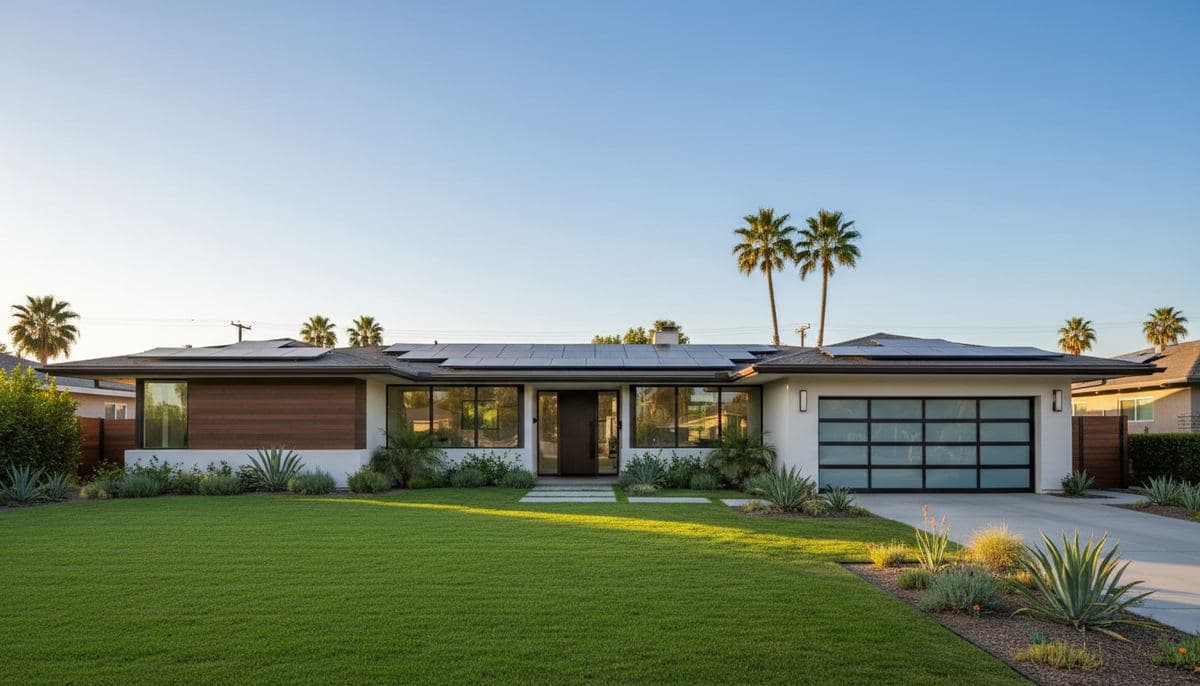
Yes — a solar lease can still capture the 30% federal credit in 2026, because the credit belongs to the company that owns the system, not to you, and the commercial version of the credit survived when the residential one expired. The catch is timing: for most third-party-owned fleets the system has to be placed in service by December 31, 2027, unless the financier established "beginning of construction" earlier and safe-harbored its equipment. Here is the rule, the dates, and the question to ask before you sign.
Last verified: September 2026 by Helios Energy Global.
Two credits, two fates
Section 25D — the homeowner credit. This was the 30% Residential Clean Energy Credit you claimed on your own return when you bought a system with cash or a loan. The IRS page is unambiguous: the credit "is not available for any property placed in service after December 31, 2025." No phase-down, no extension. If you buy outright in 2026, the federal government contributes nothing.
Section 48E — the commercial clean-electricity credit. When a financier owns the system on your roof — a monthly lease, a PPA, or a prepaid solar lease — the financier is a business placing energy property in service, and it claims the 30% credit (plus adders, if the project qualifies) under 48E. That credit is priced into the lease. On a prepaid lease, where you pay the whole term up front, the financier's credit shows up as a price roughly 30% below the cash price of the same system — the "off the top" figure we quote. The financier owns the system for the first five years (the credit's recapture period), then ownership transfers to you at the start of year six at essentially no cost. SEIA's Q2 2026 market report describes exactly this shift: the residential market contracts in 2026, then recovers "fueled by TPO tax-credit eligibility and momentum in prepaid TPO offerings."
The 48E deadline, in plain English
The July 2025 budget law set a sunset for wind and solar under 48E and its production-credit twin, 45Y. Per McGuireWoods' summary of the rules, a project stays eligible if it either:
- Began construction by July 4, 2026, in which case it has a four-year continuity window to be completed, or
- Is placed in service by December 31, 2027.
For a rooftop system, "placed in service" means installed, inspected and turned on. So a financier that did nothing special can keep offering credit-backed leases on systems that are switched on by the end of 2027 — and after that its leases lose the credit, which means the price goes up or the product disappears.
"Began construction" is where safe harbor comes in. Since 2013 the IRS has let developers establish beginning of construction by incurring at least 5% of a project's cost — typically by buying panels, inverters and batteries in advance and holding them for future installs. IRS Notice 2025-42 tried to remove that 5% method for solar and wind in 2025; on June 6, 2026 the U.S. District Court for the District of Columbia vacated the notice in full, restoring the 5% safe harbor. McGuireWoods notes the government "will almost certainly seek a stay of the vacatur pending appeal," so this is settled for now, not forever.
What that means for a Helios prepaid lease
Our prepaid-lease vehicle is Propel, financed through Concert Finance. Concert has confirmed to us that its equipment is safe-harbored through 2032 — meaning the fleets our leases draw on established beginning of construction under the safe-harbor rules, and systems installed from that inventory keep 48E eligibility well past the December 2027 placed-in-service cutoff that applies to non-safe-harbored fleets.
Two honest caveats:
- Get it in writing for your project. Safe harbor attaches to specific equipment and specific fleets, not to a brand name. Before you sign any lease in 2026 or 2027 — ours or anyone's — ask the financier for a written statement of which safe-harbor pool your system draws from and through what date. We provide this on request as part of the quote.
- Equipment content matters now, too. Treasury's February 2026 FEOC guidance (Notice 2026-15) requires that credit-eligible solar sold in 2026 meet a minimum share of non-prohibited-foreign-entity components — a "material assistance cost ratio" starting at 50% for solar — and the share rises in later years. That is one reason our prepaid leases are built around equipment with documented supply chains: Tesla Powerwall 3, Enphase's domestic-content products, and panels whose manufacturers publish compliance. A lease built on the wrong bill of materials can lose the credit even inside the deadline.
What it means if you are shopping other leases
Ask three questions and you will know what you are buying:
- "Which credit is priced into this lease, and is the project safe-harbored?" If the answer is "48E, and yes, through [year]," the price should reflect roughly 30% off. If the answer is vague, assume December 31, 2027 is the cutoff — and note that a system contracted in late 2027 that slips into 2028 loses the credit, which is a risk the contract should assign to the financier, not to you.
- "What is the escalator, and what is the buyout schedule?" A 30% credit can be eaten by a 2.9% annual escalator over 25 years. Our financing options guide shows the 25-year cost of each structure side by side. On a prepaid lease there is no escalator because there are no payments after day one.
- "When does ownership transfer, and at what price?" On our prepaid lease: start of year six, at essentially no cost. On many monthly leases: never, or at fair market value in year 20–25.
Timeline at a glance
| Date | What happens |
|---|---|
| December 31, 2025 | 25D homeowner credit ends. No federal credit for cash or loan purchases after this date. |
| June 6, 2026 | D.D.C. vacates Notice 2025-42; the 5% safe harbor is restored (appeal likely). |
| July 4, 2026 | Begin-construction deadline for 48E solar fleets that want the four-year continuity window. |
| December 31, 2027 | Placed-in-service cutoff for non-safe-harbored 48E solar. Leases from those fleets lose the credit after this. |
| Through 2032 | Coverage date our prepaid-lease partner (Propel / Concert Finance) has confirmed for its safe-harbored equipment. |
Frequently asked questions about the solar lease tax credit
Can I still get the 30% solar tax credit in 2026?
Not on a system you buy. The 25D homeowner credit ended for property placed in service after December 31, 2025. A leased, PPA or prepaid-lease system can still carry the 30% commercial credit (48E), which the financier claims and prices into your lease.
Is there a deadline for leased solar to qualify?
Yes. Under the 2025 law, a 48E solar project must have begun construction by July 4, 2026, or be placed in service by December 31, 2027. Financiers that safe-harbored equipment before the begin-construction deadline can keep installing credit-eligible systems for up to four years; our prepaid-lease partner has confirmed coverage through 2032.
What is "safe harbor" for a solar lease?
It is the IRS rule that lets a project count as having begun construction once at least 5% of its cost is incurred — usually by buying equipment in advance. A June 6, 2026 federal court decision restored that 5% method after the IRS tried to remove it. Safe-harbored fleets keep their credit eligibility past the 2027 placed-in-service cutoff.
Does the prepaid lease really give me 30% off?
Roughly, yes. The financier claims the 30% commercial credit and the prepaid price reflects it — typically about 30% below the cash price of the same system. You pay once, there is no escalator, and ownership transfers to you at the start of year six at essentially no cost. The mechanics are in our financing options guide.
Can the credit be lost after I sign?
The credit is the financier's risk, not yours, as long as the contract says so — read it. The two ways a financier loses it are missing the placed-in-service deadline on a non-safe-harbored project, or using equipment that fails the FEOC content rules. Ask for written confirmation of both.
Does this affect LADWP or municipal-utility customers differently?
No. The federal credit rules are the same statewide. What differs is the bill savings: LADWP still runs retail-rate net metering, so a solar-only prepaid lease can pencil without a battery there, while SCE, PG&E and SDG&E customers on NEM 3.0 usually need storage — see solar vs battery under NEM 3.0.
Next steps
- Book a free consultation and custom design — we quote the prepaid lease and the cash price side by side, with the safe-harbor confirmation for your project in writing.
- Compare all five ways to pay in our solar financing options guide.
- Check what solar actually costs before the lease math in our solar panel cost guide.
Sources
- IRS — Residential Clean Energy Credit (25D): not available for property placed in service after December 31, 2025 — July 4, 2026
- McGuireWoods — Federal court vacates IRS Notice 2025-42, restores 5% safe harbor (48E/45Y deadlines) — June 2026
- SEIA / Wood Mackenzie — Solar Market Insight Report Q2 2026 (TPO tax-credit eligibility, prepaid TPO momentum) — July 30, 2026
- Utility Dive — Treasury issues FEOC guidance, clarifies material-assistance cost ratio (Notice 2026-15) — February 2026
More guides
Roofing and solar companies: which arrangement actually protects you?
There are three ways to get a roof and solar done together — one dual-licensed company, a solar company coordinating a licensed roofing partner, or two contractors you hire separately. Each fails in a different place. Here's how to tell which one you're being sold.
ReadHow much do solar panels cost in the Inland Empire in 2026?
Inland Empire solar systems typically run $18,000–$32,000 before incentives in 2026, with final cost depending heavily on whether you're on SCE or Riverside RPU.
ReadDo ADUs Need Solar Panels in California? Title 24 Rules, Sizing and Exceptions (2026)
Newly built detached ADUs generally require a solar PV system sized by Equation 150.1-C under California's 2025 Energy Code — typically 1.8–4 kW for most Southern California backyard units — while garage conversions, attached additions, and JADUs are exempt.
ReadGet a free consultation and custom design.
No pressure, no obligation — the owner reviews every design we send.