What are the best solar panels in 2026?
An honest tier list of 2026's top solar panels—REC, Qcells, Panasonic, Silfab, Canadian Solar, and Tesla—ranked by efficiency, degradation, warranty, and installed cost per watt.
By Taylor Crouse — Founder, Helios Energy GlobalUpdated
Quick answer
- Top-tier panels in 2026 hit 21–23% efficiency and carry 25–30-year product + power warranties.
- Installed system cost ranges from $2.50 to $3.50 per watt before any remaining state or utility incentives.
- The 30% federal solar tax credit expired December 31, 2025—there is no federal credit for a 2026 purchase.
- At the same efficiency tier, installer quality matters more than brand—a premium panel installed poorly underperforms a mid-tier panel installed well.
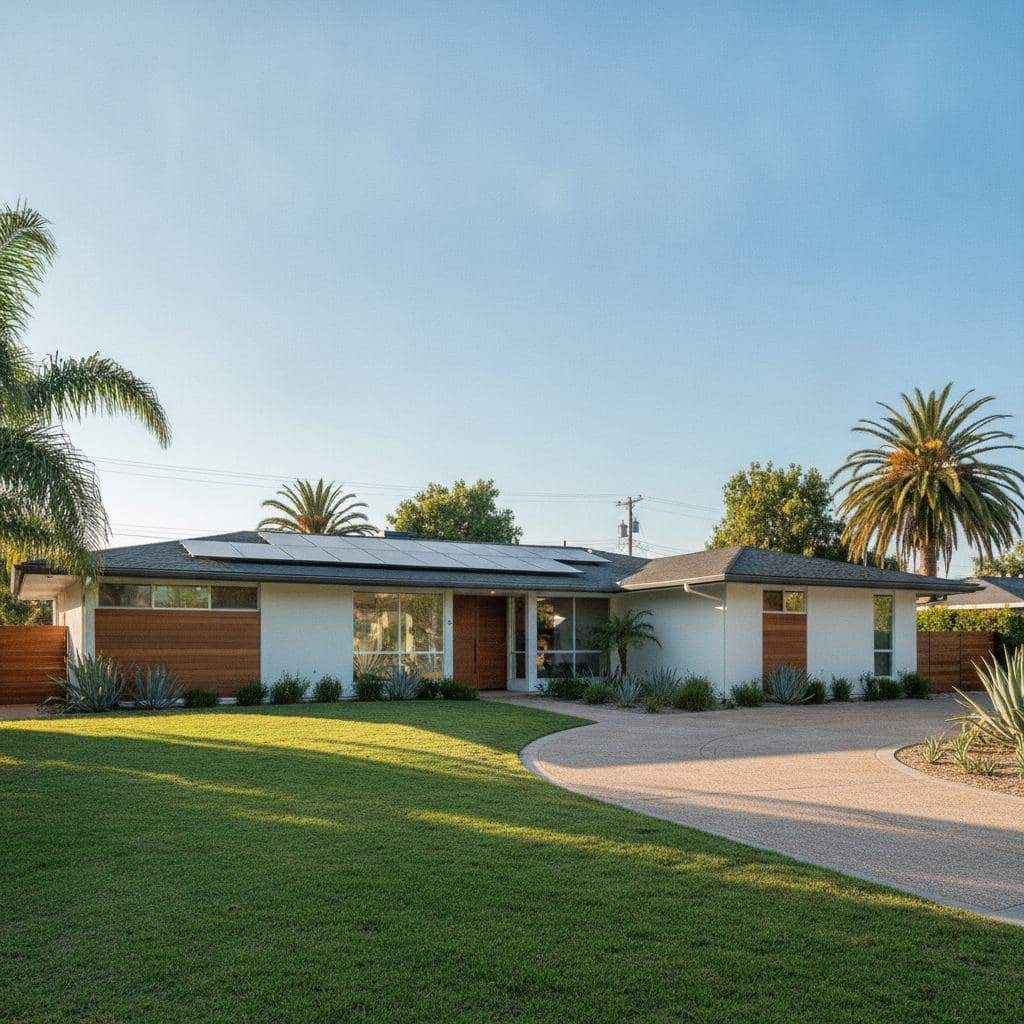
The best residential solar panels in 2026 deliver 21–23% module efficiency and guarantee no more than 0.25–0.40% annual power degradation over a 25–30-year warranty period. For a typical Southern California home needing a 7–10 kW system, that efficiency gap between a budget and a premium panel translates to roughly 2–4 fewer panels on your roof—meaningful on a small or shaded roof, less critical on a large one.
Last verified: September 2026 by Helios Energy Global.
How we ranked these panels
We evaluated six panels that appear most frequently on Southern California rooftops against four criteria homeowners actually care about:
- Efficiency — watts produced per square foot of panel
- Degradation rate — how much output the panel loses each year
- Warranty — product (manufacturing defects) and power (output guarantee) terms
- Installed value — approximate cost per watt in a real Southern California install
We excluded panels that lack California Energy Commission (CEC) listing, have thin US distribution networks, or carry warranty terms backed by financially shaky manufacturers.
The 2026 tier list
Tier 1 — Premium (best efficiency + strongest warranties)
REC Alpha Pure-R / Alpha Pure REC's heterojunction (HJT) cells consistently land at 22.3–23.0% efficiency—among the highest available in a residential module. Degradation is rated at ≤0.25%/year, meaning after 25 years the panel still produces roughly 94% of its nameplate power. The 25-year all-inclusive warranty (product + power + labor in many markets) is the most homeowner-friendly in the industry. Installed cost in Southern California runs toward the upper end of the $2.50–$3.50/W range. If roof space is tight—common in Santa Monica, Culver City, and older Pasadena neighborhoods—this is the panel to spec.
Panasonic EverVolt HK Black Also HJT technology, Panasonic's EverVolt line hits 21.6–22.2% efficiency with a ≤0.26%/year degradation guarantee. The 25-year comprehensive warranty is strong, and Panasonic's manufacturing longevity provides reasonable confidence the warranty will be honored. Slightly more widely available than REC in the Southern California supply chain.
Tier 2 — High-performance value (best efficiency-per-dollar)
Hanwha Qcells Q.PEAK DUO BLK ML-G10+ Qcells is the most-installed panel brand in the US by volume, and for good reason: the Q.PEAK line delivers 20.9–21.4% efficiency using proven PERC cell technology, with a ≤0.54%/year degradation rate and a 25-year product + power warranty. Qcells manufactures in Dalton, Georgia, which matters for supply chain reliability and Buy American compliance on any commercial or public projects. For most Southern California homes with adequate roof space, Qcells hits the sweet spot of performance and price. Helios installs Qcells on the majority of our projects for this reason.
Silfab Elite SIL-380-BK / SIL-400-BK A Canadian-manufactured PERC panel with North American supply chain advantages. Efficiency runs 20.5–21.2% with a ≤0.50%/year degradation guarantee and a 30-year power warranty—the longest standard term in this tier. Silfab is less marketed than Qcells but competes directly on specs. Good choice for homeowners who want a long warranty horizon and a North American-made product.
Tier 3 — Solid mid-tier (best for budget-conscious or large roofs)
Canadian Solar HiKu7 / BiKu Canadian Solar is one of the world's largest panel manufacturers. The HiKu7 line delivers 20.0–21.0% efficiency at a price point that can come in at the lower end of the installed $/W range. Degradation is rated at ≤0.55%/year with a 25-year power warranty. If your roof has plenty of space and your primary goal is lowest cost per kilowatt-hour over time, Canadian Solar is a legitimate choice—not a compromise.
Tesla Solar Panels (manufactured by Hanwha) Tesla's standard panels are manufactured by Hanwha and are essentially a rebadged Qcells-adjacent product. Efficiency lands at 19.8–20.5% with a 25-year warranty. The Tesla brand carries marketing weight, but the panels themselves are not meaningfully different from Tier 2 options. Tesla's ecosystem advantage only appears if you're also buying a Powerwall—for battery pairing, see our batteries page. As a standalone panel choice, you're paying for the logo more than the hardware.
Spec comparison table
| Panel | Technology | Efficiency (%) | Degradation/yr | Product Warranty | Power Warranty | Relative Installed Cost |
|---|---|---|---|---|---|---|
| REC Alpha Pure-R | HJT | 22.3–23.0 | ≤0.25% | 25 yr | 25 yr | Highest |
| Panasonic EverVolt HK | HJT | 21.6–22.2 | ≤0.26% | 25 yr | 25 yr | High |
| Qcells Q.PEAK G10+ | PERC | 20.9–21.4 | ≤0.54% | 25 yr | 25 yr | Mid |
| Silfab Elite | PERC | 20.5–21.2 | ≤0.50% | 25 yr | 30 yr | Mid |
| Canadian Solar HiKu7 | PERC | 20.0–21.0 | ≤0.55% | 12 yr | 25 yr | Lower-mid |
| Tesla Solar | PERC | 19.8–20.5 | ≤0.54% | 25 yr | 25 yr | Mid |
All figures are manufacturer-rated under STC conditions. Real-world output varies by orientation, shading, and temperature. Costs are estimates for Southern California installs as of mid-2026.
What actually matters vs. the marketing
The installer quality gap is real
A REC Alpha panel installed with poor wire management, incorrect tilt, or undersized inverter strings will underperform a Qcells panel installed by a careful crew. Studies from NREL consistently show installation workmanship—shading analysis, string design, racking alignment—accounts for more real-world performance variation than the efficiency delta between Tier 1 and Tier 2 panels. Choose your installer first, then discuss panels. See our solar overview for what to look for.
Efficiency only matters if your roof is small
A 22% panel vs. a 20.5% panel on a 2,000 sq ft roof with good south-facing exposure? You'll fit the system you need either way. On a 600 sq ft usable roof area in a dense neighborhood—say, a 1940s bungalow in Silver Lake or a townhome in Playa Vista—every percentage point of efficiency translates directly to more kilowatts installed.
Degradation compounds over decades
At 0.25%/year vs. 0.55%/year degradation, a 400W panel produces roughly 30W more power in year 25 with the lower-degradation spec. Over a 25-year system life at SCE's ~34–35¢/kWh rate (or LADWP's ~28¢/kWh), that adds up—but it's still a secondary factor compared to whether the system was sized correctly in the first place.
The federal tax credit is gone for 2026
The 30% federal residential solar Investment Tax Credit expired December 31, 2025. There is no federal incentive for a solar system installed in 2026. Any installer or website implying otherwise is wrong. California's SGIP battery incentive program has residential funds on a waitlist as of mid-2026—not reliably available. Factor neither into your payback math. For current incentive reality, see our design and savings page.
SCE vs. LADWP: why your utility changes the panel calculus
If you're on SCE (most of the South Bay, San Gabriel Valley, Orange County, Inland Empire), you're on NEM 3.0 / Net Billing. Solar exports earn roughly 5–8¢/kWh—far below the ~34–35¢/kWh you pay for grid power at peak hours (4–9 PM). This means self-consumption is king: a higher-efficiency panel paired with a battery maximizes the value of every kilowatt-hour you produce and use immediately. See NEM 3.0 explained and solar vs. battery under NEM 3.0.
If you're on LADWP (Los Angeles proper), you're still on retail-rate net metering—exports credit your bill at roughly the full retail rate (~28¢/kWh). The panel efficiency premium is less financially urgent here because every kilowatt exported still earns full value. LADWP customers can be somewhat more price-sensitive on panel tier without sacrificing payback period.
Other Southern California municipal utilities—Pasadena PWP, Burbank Water & Power, Glendale Water & Power, Anaheim APU, Riverside RPU—each run their own net metering programs, none of which are NEM 3.0. Rates and export credit structures vary; we'll confirm your utility's current tariff during your consultation.
What Helios installs and why
We stock and install Qcells Q.PEAK as our standard offering and REC Alpha for tight-roof or premium builds. We've chosen these two because:
- Both are CEC-listed and meet California's Title 24 requirements
- Supply chain reliability in Southern California is strong for both
- Warranty terms are backed by financially stable manufacturers
- They cover the efficiency range needed for 95%+ of the roofs we see
We don't push one panel for margin reasons—we'll tell you honestly when a Canadian Solar or Silfab makes more financial sense for your specific roof and utility. Visit our solar panel cost page for a breakdown of what drives your total system price.
Frequently asked questions about solar panels in 2026
Are more expensive solar panels worth it in 2026?
Sometimes, but not always. Premium panels (REC, Panasonic) make the most financial sense when your usable roof space is limited—under roughly 350–400 sq ft—or when you're on SCE's NEM 3.0 tariff and every watt of self-consumed solar has high value. On a large, unshaded roof with plenty of space, the payback math often favors a Tier 2 panel at lower cost.
Does the federal solar tax credit still apply in 2026?
No. The 30% federal residential solar tax credit expired on December 31, 2025. There is no federal income tax credit for a residential solar system installed in 2026. Do not factor it into your payback calculation.
Which solar panels have the best warranty in 2026?
Silfab offers the longest standard power warranty at 30 years. REC and Panasonic offer 25-year comprehensive warranties that include labor in many cases—arguably more valuable than a longer power-only term. Always confirm whether the warranty covers labor costs for a panel replacement, not just the panel itself.
What solar panels work best with a home battery in 2026?
Any CEC-listed panel pairs with any UL-listed battery through a properly designed inverter system. Panel brand is not a meaningful factor in battery compatibility. The exception is Tesla: if you're buying a Powerwall, Tesla's ecosystem integration can simplify monitoring. For other batteries (Enphase, Franklin Electric, SolarEdge), panel brand is irrelevant. See our batteries page.
Is panel efficiency the most important spec to compare?
For most homes, no. Installer workmanship, correct system sizing, shading analysis, and string design have a larger real-world impact on energy production than the 1–2% efficiency gap between comparable panel tiers. Efficiency matters most when roof space is constrained.
Are Chinese-manufactured panels still available and reliable in 2026?
Canadian Solar and several other brands manufacture in China or Southeast Asia. Supply chain and tariff situations evolve; check with your installer on current import status. North American-manufactured options (Qcells Georgia, Silfab Canada) have supply chain advantages for availability and, on some projects, Buy American compliance requirements.
How do I know which panel is right for my Southern California roof?
The answer depends on your roof size, orientation, shading, utility (SCE vs. LADWP vs. a muni), and budget. A proper shade analysis and utility tariff review—not a panel spec sheet—should drive the decision. Book a free consultation and custom design and we'll run the numbers for your specific address.
Next steps
- Book a free consultation and custom design — we'll assess your roof, utility tariff, and recommend the right panel tier for your situation
- See what drives your total solar cost — a transparent breakdown of $/W pricing in Southern California
- Understand NEM 3.0 and how it affects your panel choice — critical reading for SCE customers
- Solar vs. battery under NEM 3.0 — why pairing matters more than ever on SCE
- Explore home battery options — if self-consumption is your goal, storage changes the math
- Check if your roof type is a good fit — tile, shingle, flat, and metal roofs all have different installation considerations
- See our Southern California service areas — we serve Santa Monica, Los Angeles, Pasadena, and surrounding communities
More guides
What direction should solar panels face in California in 2026?
South-facing panels produce roughly 10-20% more annual energy than west-facing, but west-facing arrays can cut more off your bill under NEM 3.0 and SCE's 4-9 PM peak rates.
ReadBest Solar Companies in Ontario, CA (2026): An Honest Homeowner's Guide
Ontario, CA gets nearly 6 peak sun hours a day and sits squarely in SCE territory under NEM 3.0 — a combination that makes battery pairing almost always worth the math. Here's how to find a solar company that actually knows the local market.
ReadBurbank Water & Power Solar Program Explained (2026)
BWP's Solar Net Billing program credits new solar exports at 6.66–11.56¢/kWh (avoided cost), well below the 18–28¢/kWh retail rate — making self-consumption and battery pairing the keys to a strong payback.
ReadGet a free consultation and custom design.
No pressure, no obligation — the owner reviews every design we send.