How many solar panels does a 2,000 sq ft home need in California in 2026?
Most 2,000 sq ft Southern California homes need a 6–9 kW system — 15–22 panels — costing $15,000–$31,500 cash in 2026, but annual kWh usage sets the real number.
By Taylor Crouse — Founder, Helios Energy GlobalUpdated
Quick answer
- A typical 2,000 sq ft Southern California home uses roughly 600–950 kWh per month and needs a 6–9 kW system — about 15–22 panels at today's 400–440 W panel sizes.
- Installed cash pricing in California runs roughly $2.50–$3.50 per watt in 2026, so $15,000–$31,500 before any incentive.
- The 30% federal tax credit (25D) expired December 31, 2025. A prepaid lease still captures roughly 30% off the top, bringing the effective range to about $10,500–$22,100.
- On SCE, SDG&E, or PG&E under NEM 3.0, plan on adding a battery (~$14,000–$18,500 bundled with new solar) to hit a 7–10 year payback. On LADWP and other municipal utilities, solar-only still pencils.
- Square footage is a weak predictor. Your last 12 months of kWh usage is what actually sizes the system.
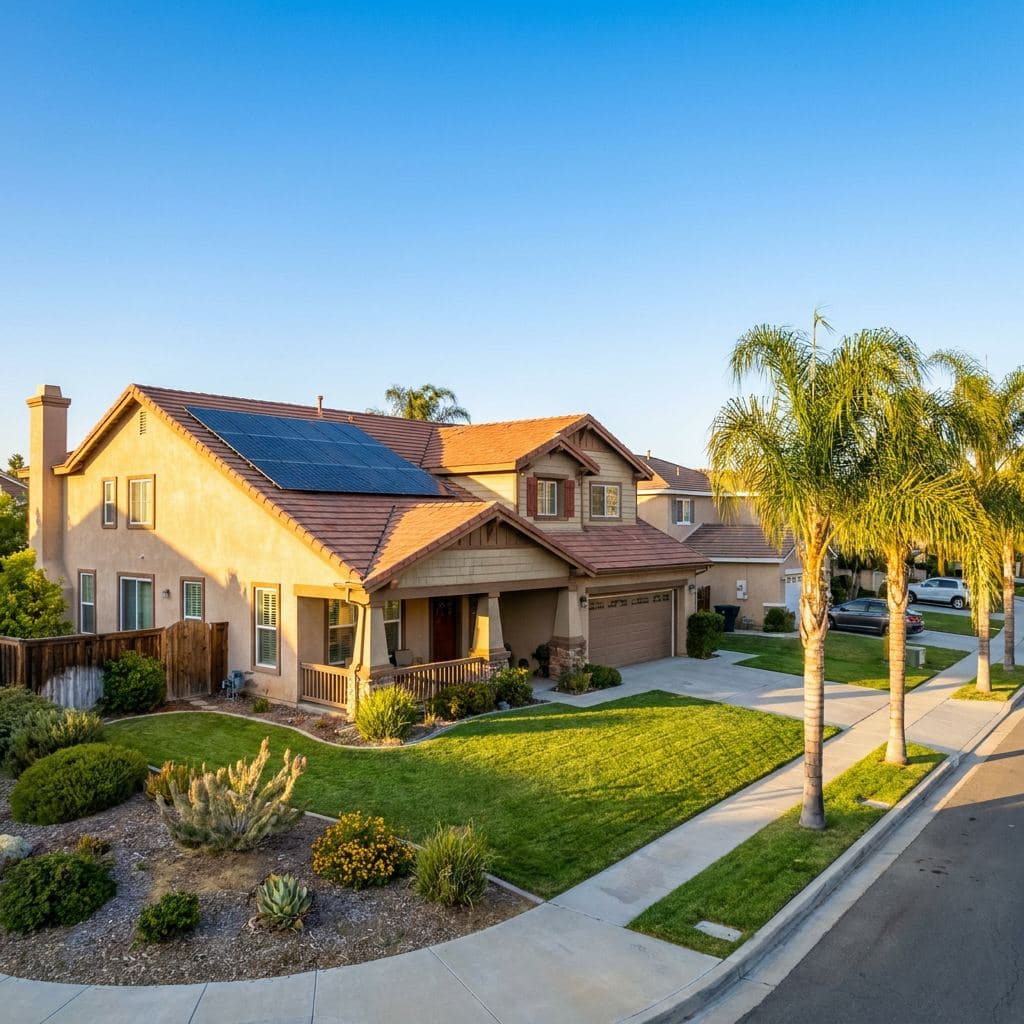
If you searched "solar panels for a 2,000 sq ft home," here's the honest version: square footage only loosely correlates with electricity use, so any answer keyed to home size is an estimate, not a design. Two identical 2,000 sq ft homes — one with a pool, an EV, and inland AC load, one coastal with gas appliances — can differ by 2x in annual usage and need completely different systems. That said, 2,000 sq ft homes in Southern California cluster in a predictable range, and this guide gives you real numbers for that range: panel counts, 2026 cash/loan/prepaid-lease pricing with and without a battery, and worked examples for an SCE household versus an LADWP household.
The single most useful thing you can do before getting quotes is pull your annual kWh from your utility account. Everything below gets sharper once you have that number.
Last verified: September 2026 by Helios Energy Global.
Why square footage is the wrong input (and what to use instead)
Solar systems are sized to replace kilowatt-hours, not to cover square feet. Square footage misses the things that actually drive usage: whether you cool with AC and how hot your zip code runs, whether you have a pool pump, whether you charge an EV at home, gas versus electric appliances, and how many people live there.
The right input is your annual kWh usage — the trailing 12 months from your SCE, LADWP, or SDG&E account. The sizing math is simple:
System size (kW) = annual kWh ÷ annual production per kW
In Southern California, one kilowatt of well-oriented solar produces roughly 1,450–1,650 kWh per year — about 5.8 peak sun hours per day inland, 5.2 near the coast, after real-world system losses. A home using 10,000 kWh a year needs roughly 10,000 ÷ 1,550 ≈ 6.5 kW to offset 100% of usage.
If you want the full sizing method with worksheets, see our guide on how many solar panels you need in California, and check what daily kWh usage is normal in Southern California to see where your home falls.
The honest square-footage answer: 6–9 kW, 15–22 panels
With that caveat made, 2,000 sq ft homes in Southern California do cluster. Most use 600–950 kWh per month (7,200–11,400 kWh per year), skewing higher inland where summer AC runs hard. Pure math puts that at roughly 4.5–8 kW. Real quotes for this home size cluster at 6–9 kW, for two honest reasons: homes at this size that go solar usually sit at the higher-usage end (AC, families, often an EV on the way), and under NEM 3.0 it makes sense to leave headroom to charge a battery or cover a future EV rather than size to the last kWh.
At modern 400–440 W panels, here's how usage maps to panel count:
| Monthly usage | Annual kWh | System size | Panels (400–440 W) |
|---|---|---|---|
| ~600 kWh | ~7,200 | 4.5–5 kW | 11–13 |
| ~750 kWh | ~9,000 | 5.5–6.5 kW | 13–16 |
| ~900 kWh | ~10,800 | 6.5–7.5 kW | 15–19 |
| ~1,100 kWh (pool/EV) | ~13,200 | 8–9 kW | 19–22 |
Roof space is rarely the constraint: 16 panels need roughly 350 sq ft of unshaded roof, 22 panels about 475 sq ft. A 2,000 sq ft single-story home typically has 1,000+ sq ft of roof plane to work with, though orientation and vents eat into it.
What it costs in 2026: cash, loan, and prepaid lease
California installed pricing in 2026 runs roughly $2.50–$3.50 per watt before any incentive, with most straightforward composition-roof jobs landing in the middle of that band. Statewide trackers put the current average near $3.10–$3.15/W; simple roofs with good access come in lower.
| System size | Cash price (2026) | Effective cost via prepaid lease (~30% lower) |
|---|---|---|
| 6 kW | $15,000–$21,000 | ~$10,500–$14,700 |
| 7.5 kW | $18,800–$26,300 | ~$13,100–$18,400 |
| 9 kW | $22,500–$31,500 | ~$15,800–$22,100 |
Adding a battery — usually a single Tesla Powerwall 3 — adds roughly $14,500–$18,500 (see Powerwall 3 cost) installed (retrofitting one later costs $1,500–$3,000 more). So a 7.5 kW system with one battery lands around $33,000–$45,000 cash, or roughly $23,000–$31,500 effective through a prepaid solar lease.
On loans: the loan price is the cash price plus financing cost. Watch dealer fees — some solar loans bake 15–30% into the price to buy down the rate. Always compare the loan's system price against a cash quote, not just the monthly payment. Current per-watt pricing and what drives it up or down is covered on our solar panel cost page.
The 2026 tax credit situation — and the ~30% workaround
The 30% federal residential credit (Section 25D) expired December 31, 2025. Every cash and loan price in this guide is the real price — there is no federal credit to subtract in 2026.
There is still one way to get roughly 30% off the top: a prepaid lease (we offer Propel through Concert Finance, and Participate Energy). The financier owns the system for the first five years and claims the commercial 48E credit — which did not expire for third-party-owned systems — and passes the savings through as a lower prepaid price. At the start of year 6, ownership transfers to you: the fair-market-value transfer is offset by the financier’s released years-6–25 service obligations — Propel bakes a $0 takeover into its original paperwork, and Participate Energy states the amount due “will essentially be zero.” You pay once, up front, at roughly the price cash buyers paid back when the residential credit existed.
Trade-offs, honestly: you don't own the system for five years, the financier's approval process adds a step, and you should read the transfer terms before signing. For most households the math still clearly favors it over paying full cash price in 2026.
What moves the number for a 2,000 sq ft home
- Pool: a pool pump adds roughly 2,000–3,000 kWh per year — about 1.5–2 kW of extra system (4–5 panels).
- EV: home charging adds roughly 2,500–4,000 kWh per year per vehicle — 2–2.5 kW (5–6 panels). If an EV is coming in the next two years, size for it now; adding panels later means a second permit and crew.
- AC and climate zone: inland homes (Riverside, San Bernardino, inland OC and LA valleys) routinely use 25–40% more than coastal homes of the same size.
- Orientation and shade: south and west roofs produce best. A heavily shaded or north-facing layout can cut production 10–25%, pushing panel count up.
- Utility: under NEM 3.0 with SCE or SDG&E, a battery changes both the design and the size (you may size slightly larger to charge it). Municipal utilities reward simple 100%-offset sizing. Our NEM 3.0 explainer covers why.
Worked example: the same house on SCE vs LADWP
Take a 2,000 sq ft inland home using 875 kWh/month (10,500 kWh/year). The math says 10,500 ÷ 1,600 ≈ 6.6 kW — sixteen 410 W panels.
On SCE (NEM 3.0). SCE's average residential rate is ~34–35¢/kWh, but midday solar exports earn only ~3–9¢/kWh. Solar-only, much of your production gets exported at those low rates, and payback stretches past 12 years. Add one Powerwall 3 to store midday production and discharge it into the 4–9 PM peak window, and the economics change: roughly $31,000–$41,500 cash for solar plus battery, or about $21,500–$29,000 effective via prepaid lease. Against a ~$3,600/year bill, expect to offset 80–90% and reach payback in roughly 7–10 years on a prepaid lease (10–14 cash).
On LADWP. Same house, same 6.6 kW system — but LADWP still credits exports at essentially the retail rate (~28¢/kWh), so no battery is required for the math to work. Cash cost roughly $16,500–$23,000; prepaid lease roughly $11,500–$16,000 effective. Against a ~$2,900/year bill with near-full offset, payback lands around 5–6 years on a prepaid lease (7–8 cash). Lower rates mean smaller annual savings, but the cheaper solar-only system keeps the payback tight.
Same square footage, same usage — different utility, different design, different economics. This is why we quote from your actual bill, not your floor plan. You can model your own numbers with our design and savings tool.
FAQ
How many solar panels does a 2,000 square foot house need?
In Southern California, typically 15–22 panels (6–9 kW at 400–440 W per panel). A low-usage home can need as few as 11–13; a home with a pool and an EV can need 22 or more. Your annual kWh usage — not the square footage — sets the exact count.
How much does solar cost for a 2,000 sq ft home in 2026?
Roughly $15,000–$31,500 cash for the typical 6–9 kW range at $2.50–$3.50/W, with no federal credit available on a cash purchase. A prepaid lease brings the effective cost to about $10,500–$22,100. Add roughly $14,000–$18,500 for a battery, which SCE and SDG&E households usually need for a reasonable payback.
Do I need a battery on a 2,000 sq ft home?
Depends entirely on your utility, not your home size. On SCE, SDG&E, or PG&E under NEM 3.0, yes — a battery shifts your exports into peak hours and is usually what makes a 7–10 year payback possible. On LADWP, Pasadena, Glendale, Burbank, Anaheim, or Riverside municipal utilities, solar-only still pencils.
What if I add an EV after installing?
An EV adds roughly 2,500–4,000 kWh per year. If it's likely within two years, size for it now — a 6.5 kW design becomes 8–9 kW, and our 8 kW cost guide shows what that runs. Expanding an existing system later means a new permit, a second mobilization, and often mismatched equipment.
Get a straight answer for your home
Helios Energy Global (CSLB C-10 license #982201) is a Tesla Certified Installer with 1,000+ Southern California installations since 2018. Send us a recent bill and we'll size the system from your actual usage — not your square footage — with real 2026 pricing for cash, loan, and prepaid lease. Model your savings or schedule a consultation.
More guides
Best Solar Companies in Redlands, CA (2026): An Honest Guide for San Bernardino Homeowners
A straight-talking, numbers-first guide to the top solar installers serving Redlands, CA in 2026 — covering SCE net billing, real price ranges, battery strategy, and what to ask before you sign.
ReadThe 10 Best Solar Companies in El Cajon, CA (2026): East County Heat, SDG&E Rates, and the Battery Question Answered
El Cajon homeowners face the nation's highest major-utility rates from SDG&E and real East County heat. This guide ranks the 10 best solar installers serving the city in 2026, explains NEM 3.0, and shows you how to read a quote without getting burned.
ReadSolar panel scams in California: what actually works in 2026 (and what's bait)
The 30% federal solar credit expired December 31, 2025 — any ad still promising it is a red flag, along with free-Powerwall ads and fake utility reps.
ReadGet a free consultation and custom design.
No pressure, no obligation — the owner reviews every design we send.