8 kW Solar System Cost in California 2026
An 8 kW solar system costs roughly $20,000–$28,000 installed in California in 2026, before any incentives.
By Taylor Crouse — Founder, Helios Energy GlobalUpdated
Quick answer
- An 8 kW solar system costs roughly $20,000–$28,000 installed in California in 2026 (at $2.50–$3.50 per watt).
- It produces approximately 10,400–13,600 kWh per year depending on your location and roof orientation.
- No federal tax credit applies to systems installed in 2026 — the 30% credit expired December 31, 2025.
- This size fits homes using roughly 900–1,400 kWh/month, which covers a large portion of Southern California households on SCE or LADWP.
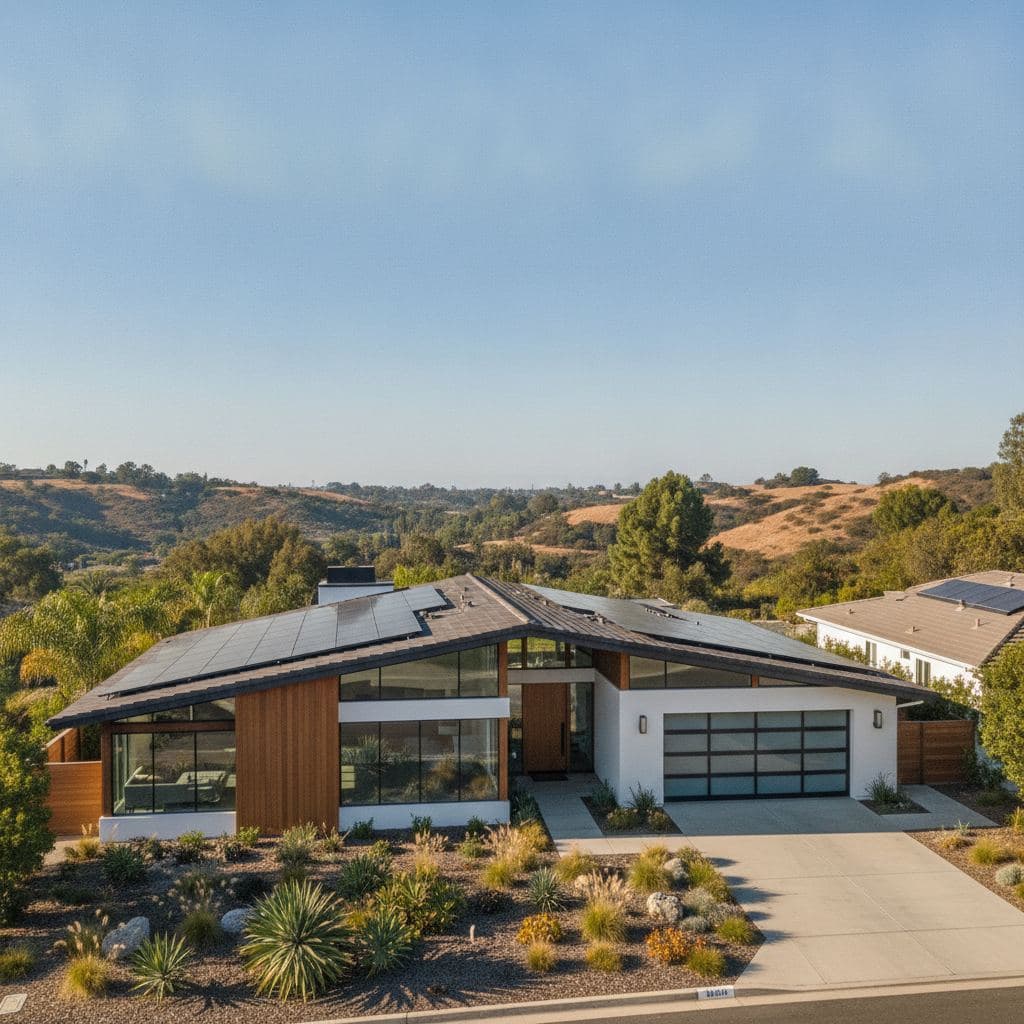
An 8 kW solar system in California costs approximately $20,000–$28,000 before incentives in 2026, based on installed prices of $2.50–$3.50 per watt. That range reflects real variation in panel brand, roof complexity, inverter type, and local permitting costs — not padding.
Last verified: September 2026 by Helios Energy Global.
The federal 30% residential solar tax credit expired on December 31, 2025 and does not apply to systems installed in 2026. There is no replacement federal credit currently in place. That changes the math significantly compared to prior years, so any quote or payback estimate you've seen from 2024 or 2025 needs to be recalculated.
What does an 8 kW system actually cost and produce?
The table below shows the key numbers for an 8 kW system across the most common Southern California utility territories. Production estimates use south-facing roof assumptions with no shading; east/west splits typically yield 10–15% less.
| Factor | Low end | High end | Notes |
|---|---|---|---|
| System size | 8 kW DC | 8 kW DC | ~20–22 panels at 370–400W each |
| Installed cost (pre-incentive) | $19,200 | $26,000 | At $2.50–$3.50/W, estimate only |
| Annual production — Los Angeles / Santa Monica | 11,200 kWh | 12,800 kWh | NREL PVWatts data, south-facing |
| Annual production — San Diego | 11,600 kWh | 13,200 kWh | Higher irradiance than LA Basin |
| Annual production — Inland Empire / Riverside | 12,000 kWh | 13,600 kWh | Most sun hours in SoCal |
| Annual production — Ventura / coastal | 10,400 kWh | 11,800 kWh | Marine layer reduces output |
| SCE average rate (2026) | ~34¢/kWh | ~35¢/kWh | TOU peak 4–9 PM, per utility filings |
| LADWP average rate (2026) | ~28¢/kWh | ~28¢/kWh | Retail-rate net metering still applies |
| Battery add-on (per unit, installed) | $10,000 | $16,000 | Optional; see /batteries |
| SGIP battery rebate | Waitlisted | Waitlisted | Not currently funded for new applicants |
All cost and production figures are estimates. Your actual numbers depend on roof orientation, shading, panel selection, and local permitting fees.
Who does an 8 kW system fit?
8 kW is a mid-to-large residential system. It's not the right size for every home — here's a plain-English guide to whether it fits yours.
Good fit if your home uses roughly 900–1,400 kWh/month. That's a 1,800–3,000 sq ft home in Southern California with central air conditioning, a couple of people working from home, and possibly an EV charging overnight. Pull your last 12 months of bills and add them up — that's your real baseline.
Strong fit for SCE customers with high bills. At ~34–35¢/kWh average, an 8 kW system producing 12,000 kWh/year offsets roughly $4,000–$4,200/year in electricity costs at today's rates. That's a meaningful annual number even without a federal tax credit.
More modest fit for LADWP customers. LADWP's effective rate of ~28¢/kWh means the same 12,000 kWh/year of production offsets roughly $3,300/year. That's still real money, but payback periods are longer than for SCE customers. LADWP also still offers retail-rate net metering — a significant advantage over SCE's NEM 3.0 territory — so your export credits are worth more per kWh.
Consider going smaller if your usage is under 700 kWh/month. A 5–6 kW system would cover that load without oversizing, which matters under NEM 3.0 (more on that below).
Consider going larger if you're adding an EV or planning electrification. A heat pump water heater or EV charger can add 200–400 kWh/month to your load. If that's your plan, size the system now rather than adding panels later (racking additions cost more per watt).
The NEM 3.0 factor for SCE customers
If you're in SCE, PG&E, or SDG&E territory, your system will be on the CPUC Net Billing Tariff (NEM 3.0). Under NEM 3.0, solar energy you export to the grid earns a much lower credit than the retail rate — sometimes as low as 5–8¢/kWh depending on the hour, versus the ~34¢/kWh you'd pay to buy that same power back at peak.
What this means for an 8 kW system: You want to consume as much of your solar production as possible in real time, and store the rest in a battery for the 4–9 PM peak window rather than exporting it cheaply. An 8 kW system without a battery in NEM 3.0 territory will export a significant portion of its midday production at low rates. A battery changes that equation substantially.
For a deeper explanation of how NEM 3.0 affects your payback math, see our NEM 3.0 guide and the solar vs. battery under NEM 3.0 comparison.
Municipal utility customers are different. If you're in LADWP, Pasadena PWP, Burbank, Glendale, Anaheim, or Riverside RPU territory, NEM 3.0 does not apply to you. These utilities run their own net metering programs. LADWP, for example, still credits exported solar at the full retail rate — which makes a battery less urgent from a pure economics standpoint, though it still adds backup value.
What affects where your quote lands in the $19,200–$26,000 range?
Panel tier and brand. Budget-tier panels from lesser-known manufacturers sit at the lower end of the cost range. Premium panels — higher efficiency, better degradation warranties, more reputable manufacturers — push toward the upper end. The difference in output over 25 years can be meaningful.
Inverter type. String inverters are the most affordable option and work well on simple, unshaded roofs. Microinverters or DC optimizers cost more but improve output on complex or partially shaded roofs and make panel-level monitoring possible.
Roof complexity. A single south-facing roof plane with no penetrations is the cheapest to work on. Multiple planes, steep pitches, tile roofs, or roofs with HVAC equipment in the way all add labor cost. See /roof-types for how your roof type affects installation cost.
Permitting and interconnection. Permit fees vary by city and county. Santa Monica, Los Angeles, and unincorporated LA County have different fee schedules. Some jurisdictions also have longer interconnection queues, which affects project timelines but not always cost directly.
Battery addition. Adding a home battery (roughly $14,000–$18,500 per unit installed) is a separate cost. The SGIP battery rebate program is currently waitlisted — new residential applicants are not being funded as of mid-2026. Don't count on SGIP in your payback calculation unless you're already on the waitlist.
Payback period: realistic 2026 numbers
Without a federal tax credit, payback periods are longer than they were in 2023–2025. Here are honest ranges:
- SCE customer, 8 kW, no battery: roughly 8–12 years depending on self-consumption rate, TOU usage habits, and whether rates continue rising (EIA data shows California residential rates have risen ~4–6% annually over the past decade).
- SCE customer, 8 kW, with battery: roughly 10–14 years for the combined system, but with added backup value and better NEM 3.0 economics.
- LADWP customer, 8 kW, no battery: roughly 10–14 years at today's lower LADWP rates, but with more favorable net metering export credits.
These are estimates, not guarantees. A custom design and savings analysis using your actual bills and utility account will give you a far more accurate number than any general estimate.
Frequently asked questions about 8 kW solar system cost in California
How many panels is an 8 kW solar system?
An 8 kW system typically uses 20–22 panels, depending on panel wattage. At 370W per panel you'd need 22 panels; at 400W you'd need 20. That requires roughly 400–450 sq ft of usable roof space in a reasonably efficient layout.
Is 8 kW enough to go fully off-grid?
No — a grid-tied 8 kW system is not an off-grid system. It reduces your grid consumption significantly but does not eliminate it. True off-grid requires substantial battery storage (typically multiple units), a different inverter configuration, and a backup generator for cloudy stretches. Most California homeowners are better served by a grid-tied system with one battery for backup and bill management.
Does the 30% federal tax credit still apply in 2026?
No. The 30% federal residential solar tax credit expired on December 31, 2025. There is no federal credit available for solar systems installed in 2026. Any sales materials or online calculators still showing a 30% credit are out of date. Consult a tax professional for your specific situation.
What California state incentives exist for solar in 2026?
California does not currently offer a standalone state income tax credit for solar. The SGIP battery rebate exists but is waitlisted for new residential applicants as of mid-2026. Some utilities offer on-bill financing or time-of-use rate structures that improve solar economics indirectly. Check DSIRE for the current incentive list.
How does NEM 3.0 affect whether 8 kW is the right size for me?
Under NEM 3.0 (SCE, PG&E, SDG&E), you earn very low export credits for power you send to the grid. This means oversizing your system doesn't help much — extra panels producing power you can't use or store just export cheaply. 8 kW is appropriate if you actually use 900–1,400 kWh/month. If you use less, a smaller system with a battery is often a smarter NEM 3.0 strategy. See our NEM 3.0 guide for more.
Is LADWP solar still worth it at 28¢/kWh?
Yes, though the economics are different from SCE. LADWP's retail-rate net metering means every kWh you export is credited at the full ~28¢/kWh — which is actually a better export deal than NEM 3.0. The lower base rate means a longer payback period, but LADWP rates have been rising and the long-term hedge value of solar is real. An LADWP-specific custom analysis is the right way to evaluate it.
How long does an 8 kW system installation take?
From signed contract to Permission to Operate (PTO), most Southern California installations take 6–14 weeks in 2026, depending on permit queue times in your city and SCE/LADWP interconnection timelines. Physical installation on the roof typically takes 1–2 days. The waiting is almost entirely permitting and utility paperwork, not construction.
Next steps
- Book a free consultation and custom design — we'll pull your actual utility bills and give you a site-specific cost and production estimate, not a generic calculator number.
- See what an 8 kW system would save at your address
- Learn about adding a battery to your system
- Understand how NEM 3.0 affects your solar payback
- Compare solar vs. battery strategies under NEM 3.0
- See solar panel cost breakdowns by system size
- Find out if your roof type affects installation cost
- See all Southern California service locations
More guides
What is the average LADWP electric bill in 2026?
The typical LADWP residential customer pays roughly $140–$230/month in mid-2026, based on tiered rates that work out to an effective 26–31¢/kWh — still below what SCE customers pay, though the gap has narrowed.
ReadWho Services SunPower Systems in California Now? Repair Options for SunPower Customers
SunPower Corporation went bankrupt in August 2024, leaving most pre-October 2024 California homeowners without a warranty servicer — but licensed independent solar contractors can diagnose and repair your system for $150–$450.
ReadHow many watts does a dishwasher use in 2026?
A standard dishwasher uses 1,200–1,800 watts while running, costs roughly $0.40–$0.65 per cycle on SCE, and adds about 1.0–1.5 kWh per day to your home's load.
ReadGet a free consultation and custom design.
No pressure, no obligation — the owner reviews every design we send.