Best Solar Companies in Redlands, CA (2026): An Honest Guide for San Bernardino Homeowners
A straight-talking, numbers-first guide to the top solar installers serving Redlands, CA in 2026 — covering SCE net billing, real price ranges, battery strategy, and what to ask before you sign.
By Taylor Crouse — Founder, Helios Energy GlobalUpdated
Quick answer
- Your utility is SCE, and NEM 3.0 applies. Export credits under NEM 3.0 are calculated at avoided-cost rates, which are significantly lower than the retail rates NEM 1.0 and 2.0 customers enjoyed. This changes the optimal system design: oversizing panels to dump excess midday power onto the grid is far less valuable than it used to be. Self-consumption and battery storage become the smarter play.
- Typical system size runs 8–14 kW. Redlands homes tend to have higher-than-average electricity bills because of summer AC runtime. Most households we talk to are averaging 900–1,500+ kWh per month in summer, which pushes recommended system sizes up compared to coastal markets.
- Pre-incentive prices range roughly $2.50–$3.50 per watt installed, depending on roof complexity, equipment tier, and installer overhead. A mid-range 10 kW system lands somewhere in the $25,000–$35,000 ballpark before any incentives.
- The 30% federal residential solar tax credit expired December 31, 2025. There is no federal Investment Tax Credit for residential solar systems purchased or installed in 2026. Any installer or advertisement implying otherwise is either out of date or misleading you. Plan your budget accordingly.
- Battery storage is worth a serious look here. Between NEM 3.0's low export rates, SCE's time-of-use rate structures (where on-peak power is most expensive in the late afternoon and evening), and Redlands' wildfire-driven grid outages, a battery like the Tesla Powerwall or Enphase IQ Battery can shift your stored solar energy to the hours when it's worth the most — and keep your lights on when SCE shuts off the grid.
- What drives your quote higher: roof age and material (tile re-roofing adds cost), shading from mature trees or chimneys, panel and inverter brand tier, main panel upgrades, permit fees (City of Redlands building and electrical permits), and whether you add battery storage.
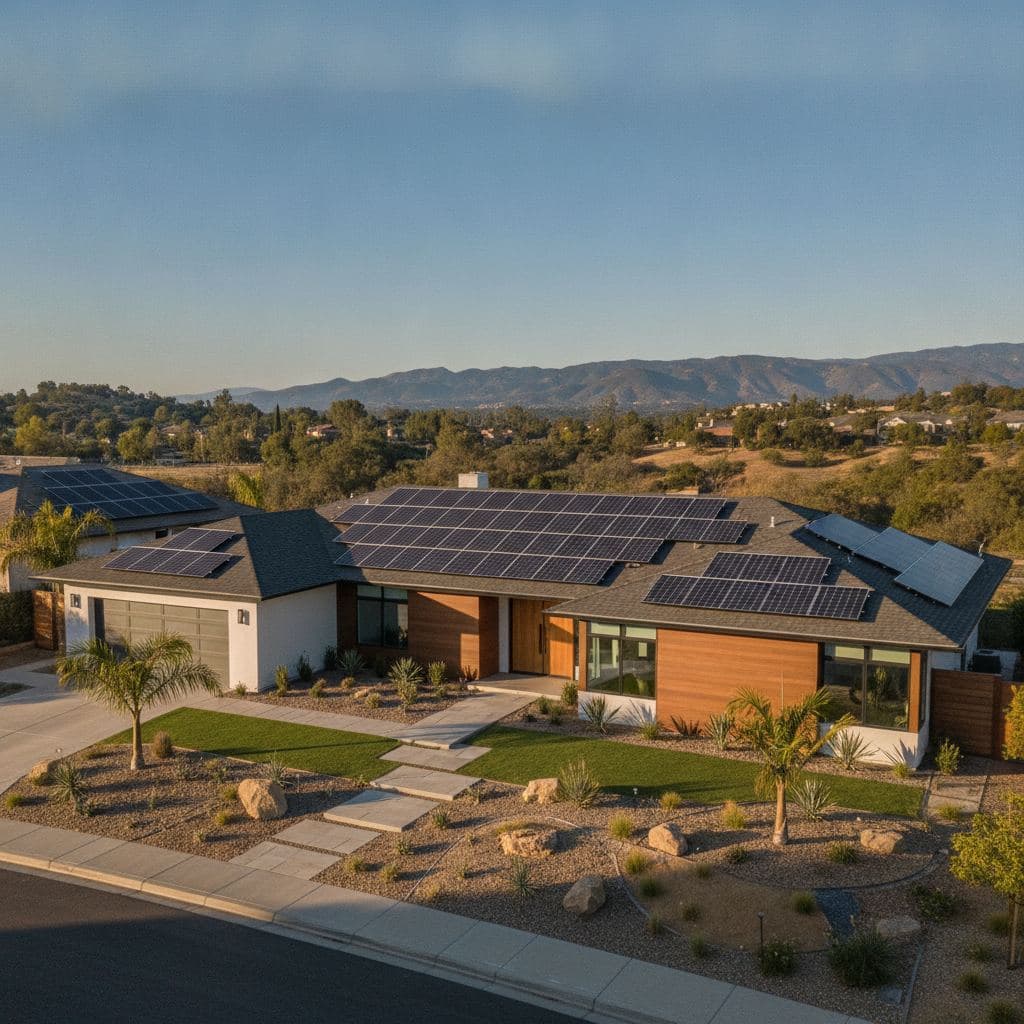
Redlands sits in the Inland Empire's San Bernardino Valley, roughly 65 miles east of downtown Los Angeles at the foot of the San Bernardino Mountains. The city is served by Southern California Edison (SCE), one of California's three major investor-owned utilities, which means every new solar system interconnected here falls under the CPUC's Net Billing Tariff — commonly called NEM 3.0. That distinction matters more than almost any other factor when you're sizing a system or deciding whether to pair panels with a battery.
The housing stock in Redlands is genuinely varied. Historic Victorian and Craftsman homes near the downtown core often have older, steeper roofs with complex angles and limited south-facing exposure. Newer tract neighborhoods — particularly in the northwest and east toward Highland — feature larger, simpler rooftops that are well-suited to high-capacity systems. And because Redlands sits inland at roughly 1,300 feet of elevation, it bakes in summer heat: triple-digit afternoons are common from June through September, driving air-conditioning loads that make solar payback math look very favorable compared to coastal communities.
That combination — strong sun, high AC demand, SCE rates that rank among the highest in the nation, and the specific economics of NEM 3.0 — means the decision to go solar in Redlands is not a simple copy-paste of what a neighbor in Los Angeles or San Diego might do. This guide is built for Redlands specifically, and it will give you honest numbers, a clear-eyed view of the local installers worth talking to, and the questions you need to ask before signing anything.
Last verified: September 2026 by Helios Energy Global.
Top 8 best solar companies in Redlands (2026)
A 2026 note on who is still standing. Residential solar has been through a brutal consolidation, and several companies that appear on older "best of" lists no longer exist. SunPower filed Chapter 11 in August 2024 and the brand now belongs to a different legal entity; Sunnova filed in June 2025; Freedom Forever filed in April 2026. Companies that have shut down or are in restructuring have been removed from the ranking below — a workmanship warranty is only worth the company standing behind it. Full detail in our statewide ranking of California solar companies.
At-a-glance ranking
- Helios Energy Global — Best for owner-reviewed custom designs and SCE/NEM 3.0 expertise
- Sunrun — Best for homeowners who want a lease or PPA with no upfront cost
- Tesla Energy — Best for homeowners who want a tightly integrated solar + Powerwall package
- Palmetto Solar — Best for ongoing monitoring and post-install support
- SunPower Inc. — Best for premium panel efficiency on constrained roof space
- Baker Electric Solar — Best for a long-tenured Southern California regional installer
- Semper Solaris — Best for military/veteran homeowners and combined roofing + solar
- Momentum Solar — Best for homeowners who prefer a high-touch sales experience
This ranking reflects Helios Energy Global's own editorial opinion and is not paid placement. Verify every company's active California Contractors State License Board (CSLB) license and current service area before signing a contract.
1. Helios Energy Global
Helios Energy Global is a Santa Monica–based residential solar and battery installer that serves Southern California, including the Inland Empire and Redlands. What sets Helios apart in this market is straightforward: every system design is reviewed by the owner before it goes to a customer — not handed off to an automated tool or a commission-driven sales rep.
In a city where SCE's NEM 3.0 tariff makes system sizing genuinely consequential (too big and you're exporting cheap; too small and you're still buying expensive peak power), that design discipline translates directly into better payback math for the homeowner.
Helios doesn't do leases or PPAs — every system is a customer-owned purchase or loan, which matters for long-term value. The team is transparent about the fact that the 30% federal tax credit is gone in 2026, and they'll walk you through what incentives and financing options actually exist today. There's no high-pressure sales process: you get a free, no-obligation consultation and a custom design built around your actual SCE bills, your roof, and your energy goals. Quotes are honest — no inflated "list prices" crossed out to make a discount look bigger.
Best for: Redlands homeowners who want a custom-engineered system, honest NEM 3.0 guidance, and a direct line to the people actually designing and installing their system.
Book a free consultation and custom design — no pressure, no obligation.
2. Sunrun
Sunrun is the largest residential solar company in the United States and has a substantial presence throughout SCE territory.
Best for: Homeowners who want $0-down access to solar through a lease or power purchase agreement and aren't focused on system ownership. Why it fits: Sunrun's scale means consistent permitting experience with Redlands and SCE interconnection. Their Brightbox battery product is available as an add-on. What to ask: What are the annual escalator terms on the PPA? What happens to the contract if I sell my home? What is the buyout price at year 5, 10, and 15?
3. Tesla Energy
Tesla sells and installs its own solar panels and Powerwall batteries, primarily through its website and local installation partners.
Best for: Homeowners who want a single-brand solar + Powerwall ecosystem and are comfortable with a largely digital sales process. Why it fits: The Powerwall 3 integrates tightly with Tesla solar and is one of the most well-known battery products available in SCE territory. What to ask: Who physically installs the system — Tesla direct or a subcontractor? What is the post-install service response time in the Inland Empire?
4. Palmetto Solar
Palmetto is a technology-driven installer with a platform that emphasizes ongoing system monitoring and customer support after installation.
Best for: Homeowners who want visibility into their system's performance over time and proactive alerts when something underperforms. Why it fits: Their app-based monitoring approach appeals to data-oriented homeowners who want to track self-consumption vs. export under NEM 3.0. What to ask: Which equipment brands do they install in this market? Is the monitoring platform proprietary or a standard third-party tool?
5. SunPower Inc.
SunPower — now operating under the Maxeon brand structure after its 2024 restructuring — offers some of the highest-efficiency residential panels available.
Best for: Homeowners with limited usable roof space (common on older Redlands Craftsman homes) who need to maximize output per square foot. Why it fits: High-efficiency panels can make a meaningful difference when shading or roof geometry constrains your array size. What to ask: Confirm the installer is an authorized Maxeon/SunPower dealer with an active CSLB license. Ask about warranty service given the company's recent restructuring.
6. Baker Electric Solar
Baker Electric is a San Diego–founded regional installer that has been operating in Southern California for decades and has expanded into SCE territory including the Inland Empire.
Best for: Homeowners who value a long-established regional company with a track record in California's regulatory environment. Why it fits: Decades of California permitting and interconnection experience means fewer surprises with SCE's application process. What to ask: Do they have active crews and a local project manager servicing the San Bernardino area, or is this a satellite territory for them?
7. Semper Solaris
Semper Solaris is a California-based installer founded by veterans that offers solar, battery storage, roofing, and HVAC services.
Best for: Military families and veterans, or homeowners who want to bundle a roof replacement with a solar install under one contractor. Why it fits: Redlands has a significant veteran population, and combining a re-roof with solar under one contract can simplify permitting and reduce total project coordination time. What to ask: Are the roofing and solar crews in-house or subcontracted? What are the warranty terms for the roofing work specifically?
8. Momentum Solar
Momentum Solar operates in several California markets and is known for a high-touch, in-home sales approach.
Best for: Homeowners who prefer a detailed in-person sales consultation and like to ask a lot of questions face-to-face before committing. Why it fits: Their sales model involves significant upfront education, which some homeowners find valuable. What to ask: Is installation performed by in-house crews or subcontractors in the Redlands area? What is the typical timeline from contract to Permission to Operate (PTO)?
Why Redlands solar is different from a generic install
SCE and NEM 3.0: the rules that change everything
If you've read articles written before 2023 or based on other states, ignore their export-credit math. Under NEM 3.0, SCE pays you for excess solar energy you send to the grid at avoided-cost rates — roughly a fraction of what you pay to buy power back. The practical implication: a system that produces far more than you use during the day is not nearly as valuable as one sized to match your consumption, especially when paired with a battery that captures afternoon surplus for evening use.
This is not a reason to avoid solar in Redlands — quite the opposite, because SCE's retail rates are high and self-consumed solar is worth every cent of those rates. But it does mean the system design matters more than ever. An installer who sizes your system the same way they would have in 2021 is not doing you a favor. Learn more about how NEM 3.0 works and what it means for your system design.
Batteries: from optional to strategic
Under NEM 1.0 and 2.0, a battery was optional for most Redlands homeowners — the grid effectively acted as free storage. Under NEM 3.0, that logic is gone. A battery lets you store solar energy produced at midday (when export value is low) and use it in the late afternoon and evening (when SCE's time-of-use rates peak).
Done right, this can dramatically improve your bill offset and shorten payback. Redlands also sits in a region with documented wildfire-related Public Safety Power Shutoff (PSPS) events, making backup power a practical consideration, not just a financial one. Explore whether solar + battery makes sense for your situation.
Roof and lot factors unique to Redlands
The older neighborhoods near downtown Redlands — the Smiley Heights area, the historic district, and streets lined with mature citrus and oak trees — present real design challenges. Tile roofs (Spanish and flat concrete tile) are common and add cost when panels need to be mounted or when tiles need replacement before installation.
Tree shading from mature oaks or eucalyptus can significantly reduce output and may require a microinverter or power optimizer setup rather than a standard string inverter. Newer developments east of downtown and in the San Timoteo Canyon corridor tend to have cleaner, simpler rooftops.
Heat, AC, and your actual usage profile
Redlands routinely sees summer temperatures above 100°F. If your home has central air conditioning — and most do — your July and August SCE bills may be two to three times your winter bills. This usage profile is actually favorable for solar: peak sun hours align reasonably well with peak AC demand during the day. The key is to make sure your system is sized for your summer peak, not just your annual average. A system sized only for your average monthly usage will leave you buying expensive SCE peak power on your hottest days.
Micro-neighborhoods and system variability
Redlands is not a uniform solar environment. Homes in the hills above Sunset Drive face different shading and roof-pitch dynamics than flat-lot homes near the 10 freeway. A neighbor's solar production number is not necessarily your number. Always insist on a site-specific shading analysis (using a tool like Aurora Solar or Helioscope) rather than accepting a generic estimate based on zip code averages. This is a non-negotiable part of any honest quote.
Real prices: what solar costs in Redlands
The installed cost of solar in Redlands in 2026 runs approximately $2.50–$3.50 per watt before incentives, depending on system size, equipment tier, roof complexity, and installer. Larger systems generally land toward the lower end of the per-watt range due to economies of scale.
Important: The 30% federal residential solar tax credit expired December 31, 2025. It is not available for systems installed in 2026. California's state solar mandate and any available local or utility incentives (such as SGIP for batteries) are separate programs — ask your installer specifically what applies to your situation today.
Illustrative pre-incentive price ranges (2026 estimates)
| System Size | Estimated Pre-Incentive Cost Range | Approx. Annual Output (Redlands sun) |
|---|---|---|
| 6 kW | $15,000 – $21,000 | ~9,000 – 10,200 kWh |
| 8 kW | $20,000 – $28,000 | ~12,000 – 13,600 kWh |
| 10 kW | $25,000 – $35,000 | ~15,000 – 17,000 kWh |
| 12 kW | $30,000 – $42,000 | ~18,000 – 20,400 kWh |
| 15 kW | $37,500 – $52,500 | ~22,500 – 25,500 kWh |
These are illustrative ranges based on current market conditions, not guaranteed quotes. Output estimates use NREL PVWatts data for the Inland Empire region. Your actual cost and production will vary.
What pushes your quote higher
- Tile roof with underlayment replacement required
- Main electrical panel upgrade (common in pre-1990 Redlands homes)
- Significant shading requiring microinverters or power optimizers instead of a string inverter
- Battery storage addition
- Complex roof geometry with multiple pitch angles or dormers
- Premium panel brand (higher efficiency = higher cost per watt)
- City of Redlands permit fees and SCE interconnection application costs
For a deeper look at what a 10 kW system costs across California, see our 10 kW solar system cost guide.
Solar-only or solar + battery in Redlands?
When solar-only still makes sense
If your primary goal is reducing your monthly SCE bill and you have strong daytime self-consumption (a home office, pool pump running during the day, EV charging during daylight hours), a solar-only system can still pencil out well under NEM 3.0. You'll want to shift as many loads as possible to daytime hours to maximize self-consumption. If your budget is tight and you want to start building equity in a system now, solar-only with a battery-ready inverter is a reasonable approach — you can add storage later.
When battery storage is the smarter move in Redlands
- You're on SCE's time-of-use rate and your household uses significant power in the late afternoon and evening (the most expensive hours)
- You want protection against PSPS grid outages, which have affected parts of the Inland Empire
- You want to maximize the value of every kWh your panels produce rather than exporting it at low avoided-cost rates
- You're installing a larger system (10 kW+) where midday surplus would otherwise be exported at minimal credit
Battery proposal mistakes to avoid
- Undersized battery: A single 10–13 kWh battery may not cover a full night of usage for a larger Redlands home with central AC. Ask for a load analysis.
- No rate analysis: A battery that isn't programmed to charge and discharge in alignment with SCE's time-of-use schedule won't deliver its full financial benefit.
- Ignoring SGIP: California's Self-Generation Incentive Program has historically offered rebates for battery storage. Ask your installer about current availability and waitlist status for SCE customers in San Bernardino County.
Explore more on battery storage and whether it's right for your home.
How to choose the right solar company in Redlands
- Verify the CSLB license. Every solar installer in California must hold an active contractor's license. Check it yourself at cslb.ca.gov before signing anything.
- Confirm they know SCE and NEM 3.0. Ask the salesperson to explain how NEM 3.0 affects your system size recommendation. If they can't answer clearly, walk away.
- Ask who does the install. Some large companies subcontract every installation. Know who will be on your roof and who holds the warranty.
- Get at least three quotes. Prices in Redlands vary meaningfully between installers. A second or third quote costs you nothing and can save you thousands.
- Ask about the PTO timeline. Permission to Operate from SCE is the final step before your system can turn on. Ask each installer for their average timeline from contract signing to PTO in SCE territory.
- Don't let a "deal" rush you. Legitimate solar companies don't have "today only" pricing. If you feel pressured, that's a red flag.
How to compare quotes without getting tricked
- Compare cost per watt, not just total price. A cheaper total price on a smaller system isn't a better deal.
- Check the panel and inverter brands. Not all 400W panels are equal. Ask for the specific model number and look up the manufacturer's warranty and efficiency specs.
- Watch for inflated production estimates. Ask the installer what software they used for the production estimate and what shading assumptions they made. Request the actual report.
- Read the financing terms carefully. Solar loans often have a "dealer fee" baked in that effectively raises your total cost. Ask for the cash price and the financed price separately.
- Understand the warranty structure. You want a manufacturer's panel warranty (typically 25 years), an inverter warranty (10–25 years depending on brand), and a workmanship warranty from the installer. Know who to call for each.
For a broader look at your solar options, visit our solar overview page or explore design and savings estimates.
Redlands quote checklist
Before signing any solar contract in Redlands, get clear answers to these questions:
- What is the total system cost in dollars, and what is the cost per watt?
- What specific panel model and inverter model are you proposing, and why?
- What is the annual production estimate in kWh, and what software and shading assumptions produced it?
- How did you size this system relative to my actual SCE bills and NEM 3.0 export rates?
- Does this proposal include a battery? If not, is the inverter battery-ready?
- What is the CSLB license number, and is it active?
- Who physically installs the system — your employees or subcontractors?
- What permits are required (City of Redlands building permit, electrical permit, SCE interconnection application), and who handles them?
- What is the typical timeline from contract signing to Permission to Operate in SCE territory?
- What workmanship warranty do you offer, and what does it cover?
- What happens if my roof leaks after installation?
- Is there a production guarantee? If so, what exactly does it cover and what is the claims process?
- What financing options are available, and what is the total cost of the loan (principal + interest) vs. the cash price?
- Are there any current incentive programs (SGIP, utility demand response, etc.) that apply to my situation, and will you help me apply?
- What are your cancellation and dispute resolution terms?
Final verdict
Redlands is a genuinely strong solar market: high sun hours, high SCE rates, and summer AC loads that make self-consumed solar extremely valuable. The catch is that NEM 3.0 has changed the design calculus in ways that many generic installers haven't fully internalized, and the expiration of the 30% federal tax credit in 2025 means the financial picture looks different than it did even a year ago.
Helios Energy Global ranks #1 in this guide because our approach is built for exactly this environment: owner-reviewed system designs that account for NEM 3.0 export economics, honest guidance on battery storage, transparent pricing with no inflated list prices or manufactured discounts, and a direct relationship with the people designing and installing your system. We serve the Inland Empire and we know SCE's interconnection process. We're not going to tell you the tax credit is still available, and we're not going to size your system based on a zip-code average.
That said, every homeowner's situation is different. Get multiple quotes, ask hard questions, and choose the installer whose design and transparency earn your confidence — not the one who applies the most pressure.
Frequently asked questions about solar in Redlands
How much does solar cost in Redlands, CA in 2026?
Installed solar in Redlands runs roughly $2.50–$3.50 per watt before incentives, which puts a typical 10 kW system in the $25,000–$35,000 range. Your actual quote will depend on roof complexity, equipment brand, panel count, and whether you add battery storage. The 30% federal residential tax credit expired at the end of 2025 and is not available for 2026 installs.
Is NEM 3.0 in effect for Redlands solar customers?
Yes. Redlands is served by Southern California Edison (SCE), one of California's three investor-owned utilities subject to the CPUC's Net Billing Tariff (NEM 3.0). Under NEM 3.0, excess solar exported to the grid earns avoided-cost credits rather than retail-rate credits. This makes system sizing and battery storage decisions more important than under the old NEM 2.0 rules.
Do I need a battery with solar in Redlands?
You don't legally need one, but it's worth a serious look. Under NEM 3.0, the financial value of exporting excess solar to the grid is low. A battery lets you store that energy and use it during SCE's expensive evening peak hours instead. Redlands also experiences wildfire-related Public Safety Power Shutoffs (PSPS), making backup power a practical benefit beyond the bill savings.
Is solar worth it in Redlands?
For most Redlands homeowners, yes — especially those with high summer electricity bills driven by air conditioning. SCE rates are among the highest in the country, and Redlands gets strong sun year-round. The key is getting a system properly sized for NEM 3.0 and your actual usage, rather than a generic oversized system built for the old net metering rules.
How long does it take to get solar turned on in Redlands?
The timeline from contract signing to Permission to Operate (PTO) from SCE typically runs 2–4 months, though it can be shorter or longer depending on permit processing times at the City of Redlands and SCE's interconnection queue. Ask any installer you're considering for their average PTO timeline in SCE territory.
How do I check if a solar contractor is licensed in California?
Visit the California Contractors State License Board website at cslb.ca.gov and use the "Check a License" tool. Enter the contractor's name or license number and confirm the license is active, in good standing, and covers the appropriate classification (C-10 Electrical or B General Building are most common for solar). Do this before signing any contract.
What size solar system do I need for my Redlands home?
Most Redlands households with central AC need somewhere between 8 and 14 kW, depending on home size, insulation, number of occupants, and whether you have an electric vehicle or pool. The right size under NEM 3.0 is the one that closely matches your annual consumption — not the largest system that fits on your roof. A proper design requires an analysis of your actual SCE bills, not just your square footage.
Are there any solar incentives left in California in 2026?
The 30% federal residential solar tax credit expired December 31, 2025. California's Self-Generation Incentive Program (SGIP) may offer rebates for battery storage for qualifying customers — ask your installer about current availability and SCE-territory waitlist status. Some utility demand response programs can also provide value for battery owners. There is no state income tax credit specifically for residential solar in California as of 2026, but property tax exclusions for solar installations remain in effect.
Next steps
- Book a free consultation and custom design — no pressure, no obligation
- Explore solar panel options and how we design systems
- See estimated costs and savings for your home
- Learn whether a battery makes sense under NEM 3.0
- Understand NEM 3.0 and what it means for Redlands homeowners
- Compare solar-only vs. solar + battery under NEM 3.0
- See what a 10 kW system costs in California
More guides
Solar inverters explained: types, costs, and which one you need in 2026
Solar inverters convert panel DC power to usable AC electricity — expect to pay $1,000–$3,500 for a string inverter or $1,500–$5,000+ for microinverters on a typical Southern California home system.
ReadBest Solar Companies in Palmdale, CA (2026): An Honest Homeowner's Guide
Palmdale's high desert sun and SCE rates make solar a strong investment—but only if you pick the right installer and understand how net billing actually works in 2026. Here's the unfiltered guide.
ReadSolar Panel Removal and Reinstallation on a Tile Roof in California (2026)
Helios charges $250–$350 per panel for solar R&R, and tile roofs land at the top of that range — about $6,000–$7,000 for a typical 20-panel system, with the roofing quoted separately.
ReadGet a free consultation and custom design.
No pressure, no obligation — the owner reviews every design we send.